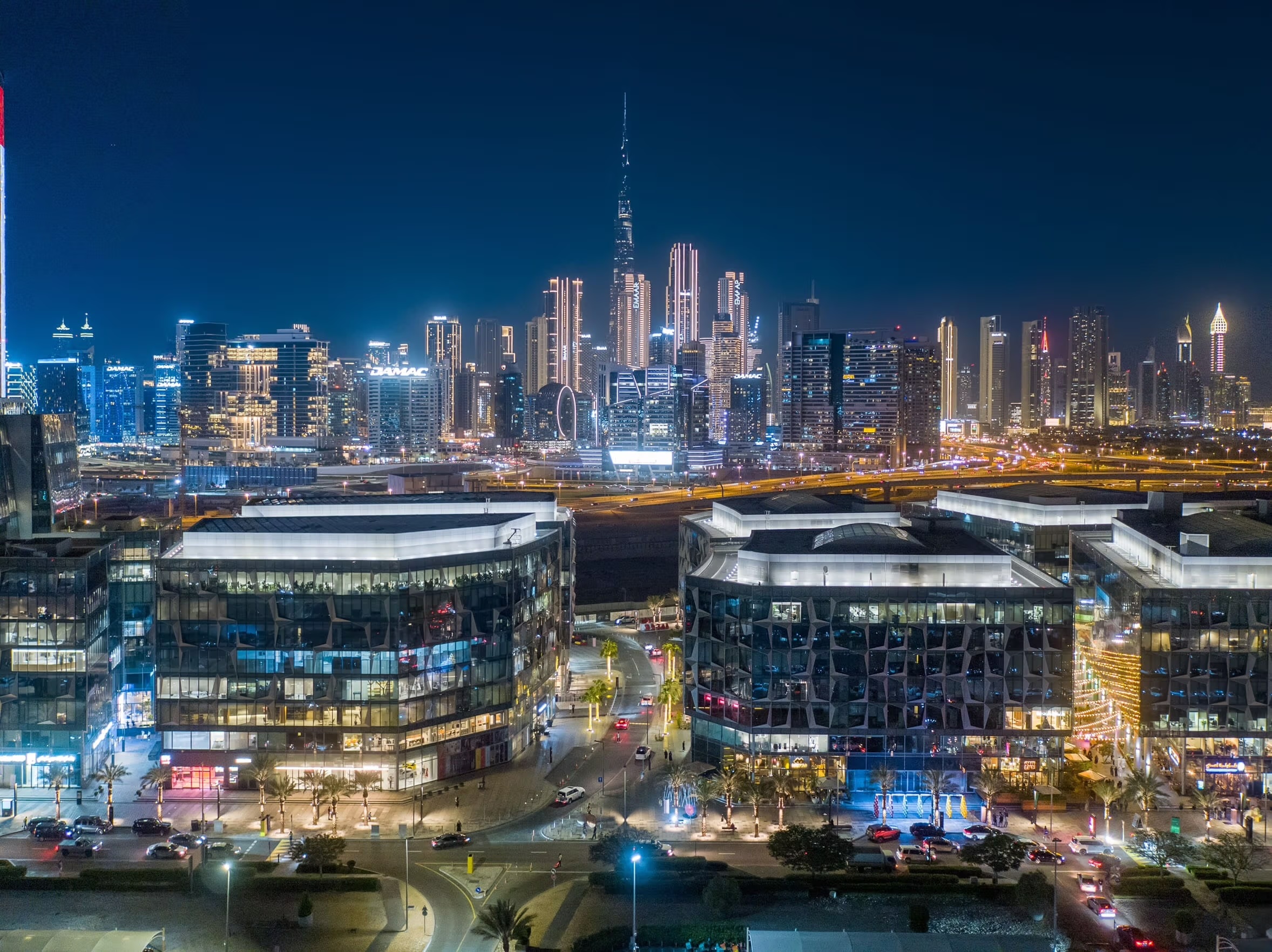
Dubai Design District (d3) Dubai’s Creative Hub by the Creek
Dubai Design District, usually just called d3, is one of those places in Dubai that feels like it was designed with a very specific person in mind. Someone who likes clean architecture, public art that changes often, good coffee, and a bit of creative energy in the air. It’s a purpose-built creative district of roughly 200 hectares, set beside the Creek and close to Business Bay, Downtown Dubai, and the city’s central corridors.
At its core, d3 is meant to be a home base for design, fashion, art, and culture, and it is literally built around that idea. It launched in 2013 under TECOM Group, and has grown into an ecosystem of global, regional, and homegrown brands, studios, startups, and events that pull the creative crowd into one place.
What’s interesting is that d3 doesn’t feel like a traditional “business park.” It can be calm in the morning, then suddenly lively on event nights. Some days it’s all meetings and showrooms, other days it’s exhibitions, pop-ups, and people wandering around with cameras. That mix is kind of the point.
If you want the investor-friendly summary, here it is. d3 is a central, identity-driven district. It can outperform because the positioning is strong, but it can also feel niche if you pick the wrong unit or underestimate event energy. In d3, unit selection matters more than usual.
Quick facts (the stuff people ask first)
| Item | What to know |
|---|---|
| What it is | A purpose-built creative district focused on design, fashion, art, and culture |
| Scale | Approximately 200 hectares |
| Who it is connected to | Part of TECOM Group’s ecosystem, launched in 2013 |
| Getting there | Nearest metro is Dubai Mall Metro Station, RTA Bus Route D03 connects in and out |
| Outdoor recreation | The Block waterfront park includes a skatepark, courts, climbing walls, and an urban beach element |
Location and connectivity, the practical side
d3 sits in a very “central Dubai” pocket, which matters more than people admit. You are close enough to Downtown and Business Bay to make commuting realistic, but you are not trapped inside the traffic swirl of them. And if you have ever tried to walk somewhere in Dubai thinking it is “just nearby,” you already know why last-mile options matter.
Officially, the nearest metro station is Dubai Mall Metro Station, and RTA Bus Route D03 is commonly called out as the bus connection into and out of d3. Taxis and ride-hailing are the default option for most people, and there is also an internal buggy service noted for moving around within the district.
Getting to d3, fast and simple
| Option | What to say on the page |
|---|---|
| Metro | Nearest station is Dubai Mall Metro Station |
| Bus | RTA Bus Route D03 takes you in and out of d3 |
| Taxi and ride-hailing | Readily available, easy pickup and drop-off |
| On-site movement | Buggy service can be requested from building receptions |
The vibe, design-led, but still livable
The feel of d3 is modern and curated, but not sterile. It’s built to encourage discovery, galleries, showrooms, concept retail, and events. That’s stated pretty clearly in how the district positions itself, design, art, and fashion living in the same place.
And then there’s The Block, which honestly makes d3 easier to explain. It’s not just offices and studios, it’s a waterfront recreation zone with a skatepark, basketball and volleyball courts, climbing walls, and even an urban beach element.
The Block, the simplest way to explain d3 to someone
Not fluff, this is a lifestyle proof point that changes how people use the district.
- Skatepark and open activity space
- Basketball and volleyball courts
- Climbing walls
- Urban beach element plus seating and hangout areas
Real estate in d3, what exists today, and what is changing
For a long time, d3 was mainly a work destination. Studios, showrooms, offices, pop-ups, events. You would come here for a meeting or a launch, then you would leave. That’s still true, but the shift is that residential is becoming a bigger part of the story, not an afterthought.
A clear example is Design Quarter at d3 by Meraas, positioned as a residential collection of 1 to 3 bedroom apartments designed for people who want to live inside the creative ecosystem. The developer language leans into creative spirit, views, and lifestyle amenities, which sounds like marketing, but it also signals who they are targeting. Founders, creatives, and execs who want something central but not overly corporate.
Investor framing that stays honest. d3 is not trying to be a generic rental zone, it’s more like a lifestyle micro-market. Sometimes micro-markets outperform because identity is strong. Sometimes they are niche because not everyone wants to live near event activity.
What drives rental demand in d3
- Proximity to the core, adjacent to Business Bay, close to Downtown corridors, commuting is easy to sell.
- Tenant profile, creatives, design and fashion professionals, media, plus executives who like curated districts.
- Event gravity, districts that host big cultural moments stay top of mind, which helps demand for short stays and corporate housing.
Events, the hidden reason d3 stays relevant
If you want one simple line that explains d3’s cultural weight, it’s this. Dubai Design Week is anchored in d3.
Then you have Dubai Fashion Week, plus recurring street-culture energy when event programming returns. This matters for real estate because places that stay talked about tend to hold pricing confidence better, even when the broader market gets noisy.
Who d3 is best for
Best fit buyers
- End users who want a modern, walkable-feeling district with art, cafes, and a bit of creative buzz.
- Investors targeting design, media, and executive tenants, not just “any tenant.”
- Buyers who like newer inventory and a strong district identity.
Think twice if
- You want a fully mature residential neighborhood right now, with decades of organic street life.
- You are very sensitive to periodic event traffic and weekend bursts.
d3 vs nearby areas, quick comparison for investors
| Factor | d3 | Business Bay | Downtown Dubai | Dubai Creek Harbour |
|---|---|---|---|---|
| Identity | Creative hub, design and fashion ecosystem | Commercial and mixed-use, broad appeal | Premium core, high tourism pull | Masterplanned waterfront lifestyle |
| Tenant pull | Niche but high intent, when the unit fits the story | Very broad | Very broad, often higher budgets | Strong family and waterfront appeal |
| Lifestyle | Curated, artsy, event-driven | Busy, work-centric | Iconic, central, lively | More relaxed, scenic |
| Best unit strategy | Prioritise liveability plus views, avoid awkward layouts | Prioritise access and practicality | Prioritise views, building quality | Prioritise views and community proximity |
Business and “free zone” context, without making it confusing
d3 is part of the TECOM Group ecosystem. On the regulatory side, Dubai Development Authority is the name you will see referenced around business services in the Free Zone, including registration and licensing for zones that include d3.
I mention this because some buyers care, especially founders or creatives thinking, “could I live close to my studio, and also set up properly.” You don’t need to over-explain it, you just need to signal that d3 is built for that kind of ecosystem.
Unit selection tips in d3, the small choices that change the outcome later
If you are buying in d3, I wouldn’t start with “which tower name sounds best.” I’d start with practical questions, because d3 behaves like a lifestyle micro-market, not a generic rental zone. The identity is real, and it shapes who wants to live here.
- Noise versus energy, event evenings can get busy, pick an orientation that avoids event-heavy edges if you want calm.
- Lifestyle access, if you will actually use The Block, being close is a real quality-of-life win.
- Daily movement, buggy service sounds small, but it changes how walkable the area feels in summer.
- Sell the commute story, Dubai Mall Metro Station plus Bus D03 is clean and repeatable.
- Target the right tenant profile, creatives, media, fashion, and modern-core professionals.
- Residential pipeline matters, new residential supply signals d3 leaning further into liveability, not only offices.
Investment notes, what drives demand, and what can trip you up
The upside is location and identity. The risk is that the identity can be a little too specific if you buy the wrong unit. The safer investor lane is usually: pick a layout that rents well even if the tenant does not care about design culture. Good proportions, sensible storage, a view that photographs well, and a commute story that fits in one sentence.
d3 vs DIFC vs City Walk, a quick investor comparison
| Factor | d3 | DIFC | City Walk |
|---|---|---|---|
| Core identity | Creative, design and fashion hub | Financial district with lifestyle, dining, galleries | Lifestyle destination with retail, dining, entertainment |
| Best tenant profile | Creative, media, modern-core professionals | Finance, legal, executive tenants, plus high-end lifestyle demand | Families and professionals who want a walkable retail lifestyle |
| Demand driver | Events and district energy, plus central access | Business ecosystem plus year-round lifestyle programming | City-within-a-city feel, strong leisure footfall |
| Watch-outs | Event nights, niche positioning if layout is weak | Higher entry pricing, more competition at the top end | Pricing can reflect lifestyle premium, unit selection matters |
Lifestyle
- Creative district DNA
- Waterfront and outdoor hangout culture
- The Block Park
- Visitor-friendly positioning
Property Types
- 1 to 3-bedroom apartments
- Penthouses and duplexes
- Offices
- Showrooms
- Retail
- F&B
Amenities
- The Block Park
- Event infrastructure by default
- Design Quarter at d3
Connectivity
- Central Dubai adjacency
- Strong road access
- Metro plus short hop
- Bus link into the district