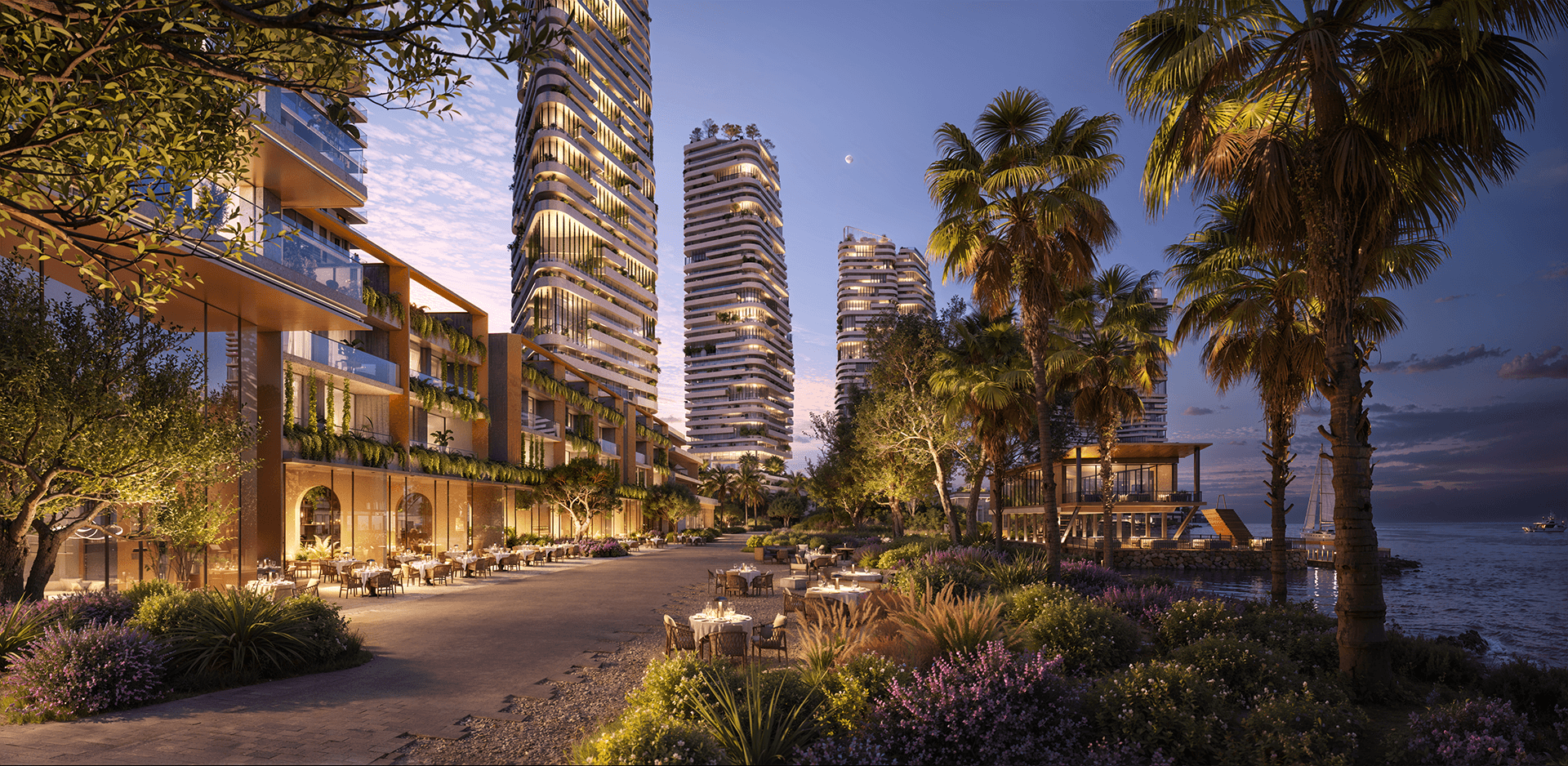
Dubai Maritime City (DMC) is a massive 249-hectare man-made peninsula development. Positioned between Port Rashid and Drydocks World, it is designed as a global maritime hub that integrates industrial, commercial, residential, and academic zones into a single community.
Dubai Maritime City is not just another waterfront address with nice views and a glossy brochure. It is also a working maritime ecosystem with ship lifts, repair yards, workshops, and real logistics happening behind the scenes. That mix can be a feature or a drawback depending on what you buy, where you buy, and what you expect your tenant to be like.
Want the live price sheet and today’s best availability in Dubai Maritime City? Message me on WhatsApp and I will send a shortlist fast.
Dubai Maritime City at a glance
| What it is | Why it matters to investors |
|---|---|
| 249-hectare peninsula between Port Rashid and Dubai Drydocks | Central coastal positioning, with a “working city” underpinning demand, not only lifestyle hype |
| Six specialised districts | Micro-location matters a lot here, two towers can feel like different worlds |
| Industrial precinct with heavy marine capacity | Real maritime utility, not decorative marinas, ship lifts up to 6,000 tonnes are part of the DNA |
| Commercial district promenade | 3.5 km completed waterfront promenade, useful for walkability and future retail gravity |
| Infrastructure investment | Major infrastructure works were announced and executed in phases, including a project valued around AED 140 million |
| Free zone positioning | DMC is listed as a free zone zone detail by the UAE Ministry of Economy & Tourism |
What DMC is really trying to be
A lot of Dubai waterfront communities are basically variations of the same theme, “residential towers plus a marina plus some cafes.” DMC is different, but not in a way that makes it automatically better.
It was conceived as a maritime cluster first, residential and hospitality came later as the district matured. So you have a genuine industrial backbone, plus the newer wave of seafront living and branded amenity stacks arriving around it. If you are a buyer, this is where you pause and ask, “Do I want pure resort calm, or do I want a more central, more active, more real environment?” There is no perfect answer. But pretending they are the same is how people buy the wrong unit type.
Specialized districts
The development is divided into six distinct districts, each serving a specific function. Most competitors list them similarly, and the zoning language is remarkably consistent across guides.
1) Industrial Precinct
This is the “it’s actually operational” part of Dubai Maritime City.
It is an active ship and yacht repair hub, with major lifting capacity and hard infrastructure designed for real marine operations. DMC and Dubai media sources have referenced the ship lifts (including up to 6,000 tonnes, plus an additional lift capacity alongside it).
Now, a practical investor note, and I say this cautiously. Being near a functioning industrial precinct can support demand from professionals working in and around the maritime ecosystem, but it can also change the vibe of the immediate street level depending on the exact frontage. In DMC, “water view” is not enough as a selection criteria. You also want to understand what sits between you and the water, and what sits behind you.
This is the part of the guide where people usually rush. They should not.
2) Maritime Centre
Think of this as the corporate and institutional spine, the district meant to hold offices, maritime services firms, and the management infrastructure that makes the larger ecosystem run.
The official DMC positioning leans hard into strategic access, connectivity, and being a global maritime hub. It is also physically connected by a causeway to the wider road network, which is more important than it sounds, because peninsulas can easily become “beautiful but annoying” if access is poorly planned. DMC emphasises the causeway and expressway access in its own overview.
For real estate buyers, the Maritime Centre tends to matter in a second-order way. It influences who will work here, which influences who might rent nearby, which influences what kind of retail survives, which influences how alive the promenade feels at different times of day. It is all connected, even if it is not obvious in a listing photo.
3) Harbour Residences
This is the premium waterfront residential cluster, the part most buyers actually picture when you say “Dubai Maritime City”.
The direction of travel is clear, more seafront towers, more branded interiors, more lifestyle amenities, and more emphasis on walkability. The DMC commercial district materials explicitly position the waterfront as mixed-use, with residential, retail, offices, hotels, and a completed promenade.
A quick nuance, though. Harbour Residences is not one homogeneous zone. Towers can face different exposures, sea, skyline, cruise terminal, working harbour, and the experience changes with it. Some people love the “port energy”, others want a quieter, resort-like horizon. If you are buying for end-use, the preference matters. If you are buying for investment, your tenant profile matters even more.
If you are buying from abroad, ask for our remote buying pack, it covers the SPA flow, escrow checks, and what to verify before you transfer funds. Prefer email? Send “DMC” plus your target unit (studio, 1 bed, 2 bed) to [email protected] and we will reply with options and realistic numbers.
Quick comparison, DMC vs nearby waterfront narratives
| Area | The buyer story | What can surprise people |
|---|---|---|
| Dubai Maritime City | Working maritime hub evolving into waterfront living | Micro-location, some pockets feel corporate, some feel industrial, some feel resort |
| Mina Rashid | Cruise terminal energy plus waterfront residences | Strong tourism seasonality around cruise flows |
| Dubai Harbour | Marina lifestyle with a luxury leisure emphasis | Pricing can be less forgiving, entry points move fast |
| Business Bay waterfront edges | Central convenience, business-first | Views vary drastically tower-to-tower, noise and traffic patterns matter |
Dubai Maritime City, specialized districts that actually behave like a city
One thing that makes Dubai Maritime City feel different, even on a first visit, is that it is not “just towers on water.” It’s planned as a working maritime ecosystem. That sounds like brochure language, I know, but when you look at the zoning, it becomes real: the peninsula is deliberately segmented into six districts so ship repair, offices, education, marina life, and residential towers can coexist without constantly tripping over each other.
In the first batch we covered the Industrial Precinct, Maritime Centre, and Harbour Residences. Now let’s finish the remaining three districts, because these are the parts investors often ignore, then later realise they were the demand drivers all along.
Academic Quarter, the “quiet demand” engine
Dubai Maritime City’s Academic Quarter (often referenced as a “campus” in guides) is meant to anchor maritime education, training, and research within the community. Some sources describe this campus as supporting maritime courses and being paired with supporting facilities like a business hotel and library, which tells you how the master plan originally thought about long-stay students, visiting faculty, and industry conferences.
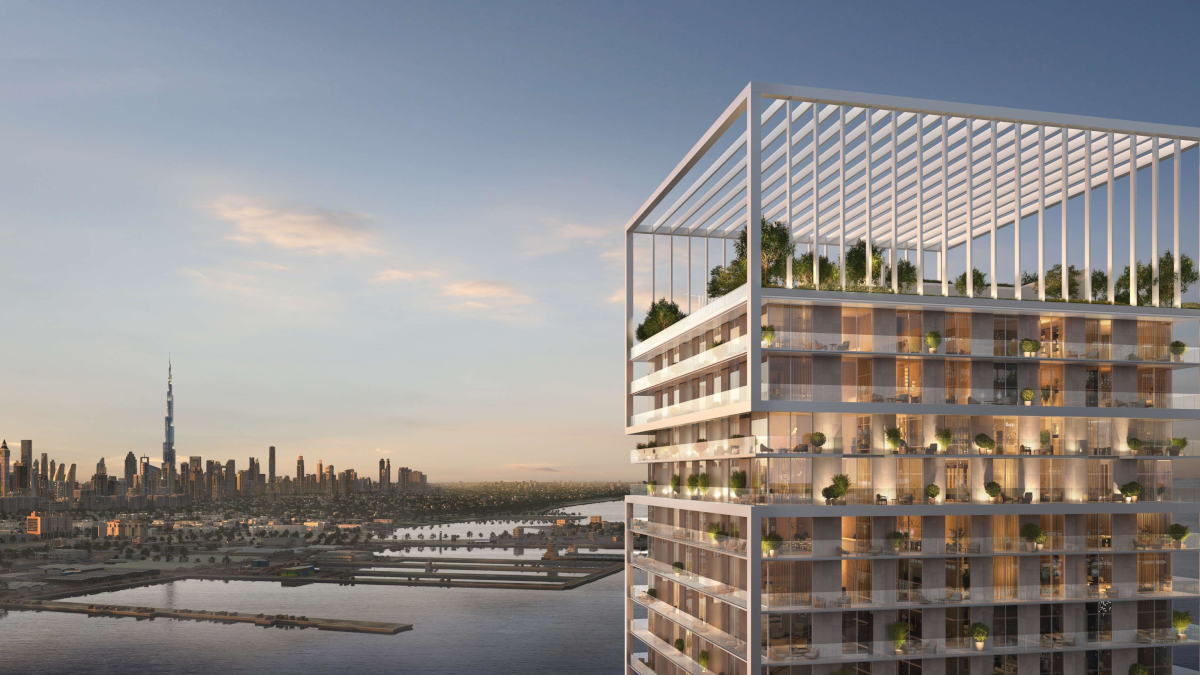
Now, do I think most buyers purchase in DMC because of the academic angle? Not consciously. But the presence of structured training and maritime organisations tends to create a stable base layer of rental demand. It’s not the flashy, “Instagram waterfront” kind of demand, it’s the quiet kind. The kind that renews leases, pays on time, and wants practical layouts.
Also, the Academic Quarter concept pairs well with the wider positioning of DMC as a multi-purpose hub under DP World, which is basically signaling: “This isn’t just lifestyle. This is a working cluster.”
Investor note, where it matters
If you are choosing between a unit that is pure “sea view lifestyle” and a unit that’s one notch more practical (slightly less wow, slightly more liveable), the Academic Quarter influence pushes the market toward liveable, repeatable rentals. Think functional 1BRs, good storage, good desk space, a kitchen you can actually cook in.
Marina District, not just parking boats
The Marina District is where DMC leans into movement: docking facilities, leisure, ferry and transit links in the broader coastal sense, plus the overall “waterfront social layer.” Officially, DMC positions itself as connected by a causeway to the wider road network, and as being designed for access to sea and city infrastructure, which is basically the marina logic in one sentence.
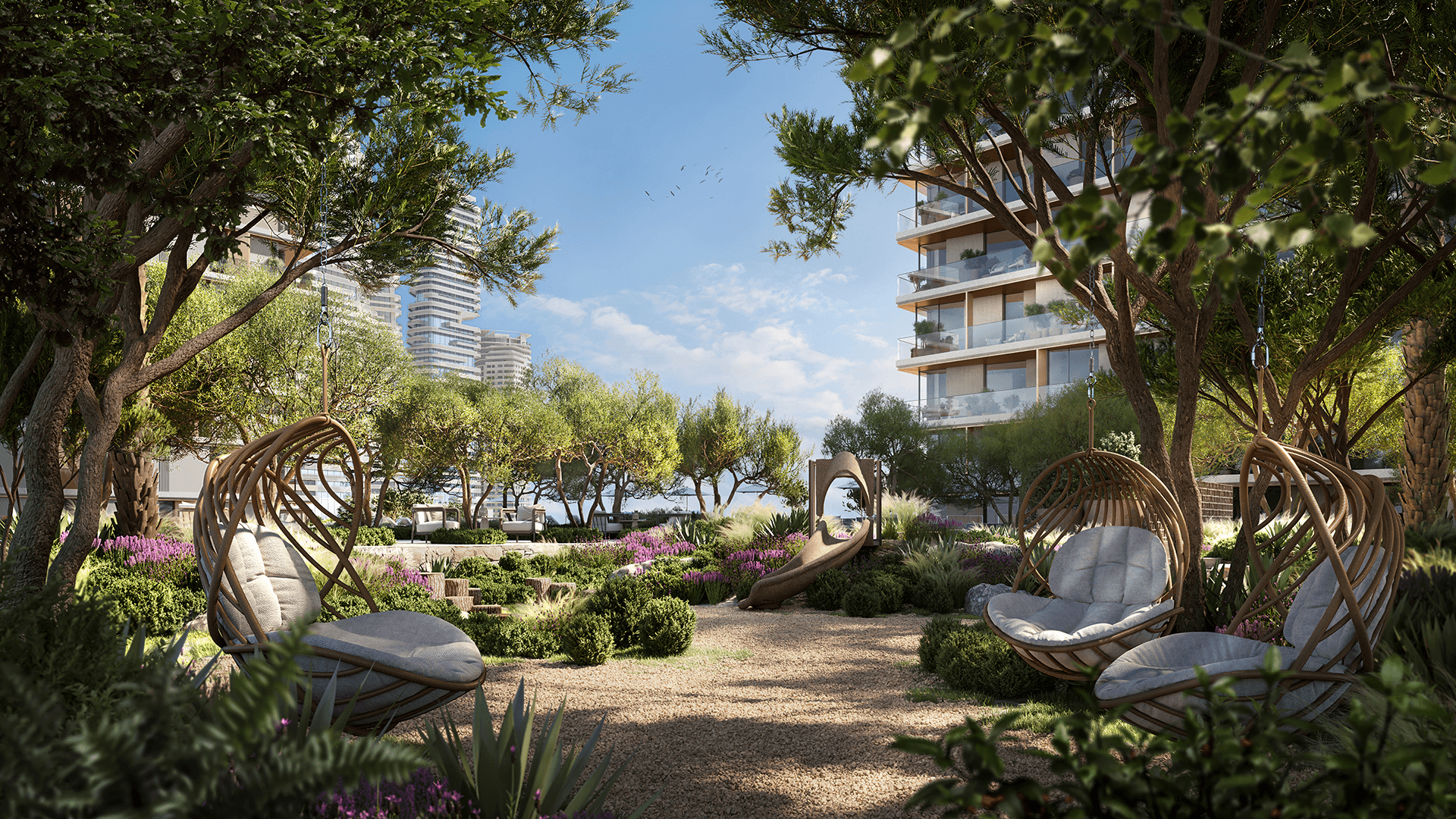
Here is the thing I think people miss: marina districts shape pricing psychology. Even if a resident never owns a yacht, the marina setting influences what they are willing to pay for the experience. That matters for both resale and rentals.
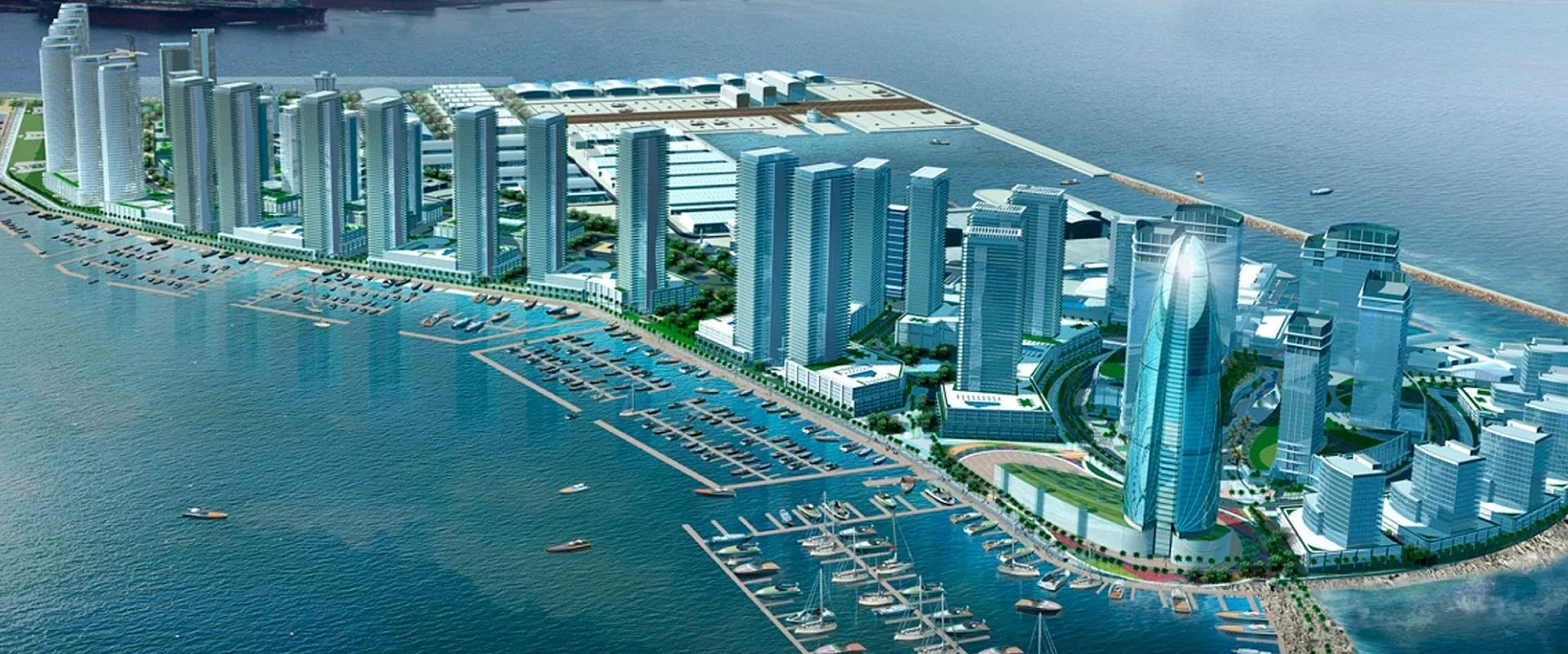
And DMC has already built a concrete, tangible piece of “marina lifestyle,” the 3.5 km waterfront promenade in the commercial district. That is a big deal, because it turns the area from “future promise” into “present reality.”
Small reality check
Marine transport in Dubai is real, but it is also route-dependent and seasonal. For daily commuting, most residents still behave like Dubai residents: car, taxi, ride-hailing. Marine options tend to be lifestyle add-ons, not a core commuting plan. You can lean on RTA marine services where they fit your routes, but I would not buy purely because you assume a ferry stop will solve your commute.
Harbour Offices, the commercial “magnet” district
Harbour Offices is the business-facing zone, think Grade-A office product and maritime-adjacent companies wanting a waterfront address that still reads as operational, not luxury. Area guides consistently frame DMC’s office segment as being designed for maritime, logistics, and trade businesses, and that positioning is important because it creates weekday demand: staff, visitors, suppliers, conferences, meetings, and the entire support economy that follows.
Why should an apartment investor care? Because office clusters stabilize the micro-economy. They keep cafes alive midweek. They justify services. They push demand for short and medium stays. And they help the district feel “inhabited” beyond weekends.
If you want a very direct example from your own site, 31 Above is literally positioned as a waterfront office play in DMC, which is a strong signal that commercial inventory is being actively developed, not just talked about.
Key developments and the late-2026 delivery wave
DMC is entering a delivery cycle that matters. Not because handover dates are perfect (they are not, anywhere), but because clustered deliveries change behaviour: more residents, more retail viability, more comparables, more mortgage activity, more end-user confidence.
Delivery snapshot table, focus on late 2026
| Project | Developer | Expected completion (publicly stated) | Why it matters |
|---|---|---|---|
| Anwa 2 | Omniyat | Q4 2026 | High-end waterfront positioning, strengthens the premium narrative |
| Mar Casa | Deyaar | Oct to Dec 2026 (sources vary) | Adds sizeable residential mass, supports amenity and retail demand |
| Nautica | Select Group | Q4 2026 (commonly stated in listings) | More mid-luxury supply, more comps, more leasing inventory |
Now, about Chelsea Residences by DAMAC in collaboration with Chelsea Football Club: different publications describe it
as a longer-dated project (late decade handover), so I would treat it as a separate timeline bucket, not part of the
2026 delivery wave.
Also, branded collaborations and big concept projects can be amazing for area visibility, but they are not always the
best thing to anchor your near-term leasing assumptions on. That’s just me being cautious.
Connectivity and infrastructure, what “15 minutes” actually means
DMC’s big advantage is that it sits between Port Rashid and Drydocks World, and it’s positioned as a strategic maritime hub rather than a detached island community.
A lot of guides quote “15 minutes to Downtown” and “20 minutes to the airport,” and those estimates are broadly consistent across mainstream area write-ups, but the real investor point is simpler:
-
If you work in Downtown Dubai, DMC is plausible as a home base.
-
If you travel often, Dubai International Airport is not a mission to reach.
- If you want a metro-led life, you will be using a feeder, typically a car or taxi to nearby stations, because there is no station inside DMC itself.
Public transport detail matters, but it’s easy to oversell. Some guides reference nearby stations such as ADCB and World Trade Centre being roughly 15 to 18 minutes away by car, and they also point out that bus connections are typically accessed via nearby hubs rather than within the peninsula.
Infrastructure upgrades, not hype
There was a publicly announced AED 140 million infrastructure project tied to DMC, covering road and utility networks,
and this was positioned as strengthening DMC’s role as a multi-purpose maritime hub.
This matters for investors because infrastructure delivery is what converts “master plan value” into “lived value.” It
is not glamorous, but it is what reduces friction for residents, businesses, and eventually valuations.
District selection matrix, a practical way to choose a unit
This is the part where I usually slow down and get a bit picky, because a lot of DMC buying mistakes are not about the project, they are about unit placement.
| What you want most | Best-fit district bias | What to watch |
|---|---|---|
| Calm waterfront living, promenade energy | Marina District, Harbour Residences | Wind exposure, view corridors, future plot releases |
| “Stable tenant” demand, less seasonal | Near Academic Quarter influence | Layout practicality, desk space, storage |
| Business travel rentals, weekday demand | Harbour Offices adjacency | Traffic peaks, parking, lobby efficiency |
| Max upside narrative, premium positioning | Maritime Centre and trophy towers | Entry price sensitivity, service charge expectations |
No, it’s not perfect. But it’s better than choosing purely on a brochure render.
The investor angle, comparisons, and the stuff buyers forget to model
Dubai Maritime City (DMC) feels like a waterfront neighbourhood when you see the renders, but the real story is that it is also a working maritime cluster. That mix is basically the entire investment thesis, it can create demand drivers you do not get in pure lifestyle districts, and it can also create trade-offs you have to be honest about.
Connectivity, what it actually looks like day to day
The “pin on the map” version is simple, DMC sits on a man-made peninsula between Port Rashid and Dubai Drydocks World, and the master plan was designed to connect into Dubai’s main road network via a causeway.
In practical commute terms, most guides put it around 15 minutes to Downtown and about 20 minutes to DXB, give or take traffic.
Public transit is the part people overpromise, and it is better to be precise:
-
There is no metro station on the peninsula itself, and the nearest common reference point is Al Ghubaiba (Green Line), which is typically a short drive away.
-
DMC’s own updates on the Commercial District mention planned community infrastructure like RTA bus stations and RTA marine stations, which is encouraging, but you should treat the exact routes and stops as “verify before you buy,” because those details change.
The “working city” factor, why it matters for real estate
DMC’s industrial side is not marketing fluff. The ship repair and marine services component is very real, and it has heavyweight infrastructure.
On DMC’s own facility pages, the industrial district includes ship repair plots and ship lifts capable of lifting up to 6,000 tonnes and 3,000 tonnes, plus dedicated wet and dry berthing, including 42 dry berths mentioned as part of operational facilities.
This matters because it creates a different demand profile:
-
Rental demand
can include professionals tied to marine services, contractors, suppliers, and businesses that want proximity.
-
Retail and F&B
demand can be more weekday-driven than “weekend beach vibe” driven, which can be good for occupancy consistency.
- Noise, traffic, and views can vary massively by exact building orientation and distance from the working yards, which is why unit selection in DMC is not optional, it is the whole game.
There is also a visible commitment to infrastructure, with DP World and DMC announcements around an AED 140 million road and utilities project aimed at strengthening DMC’s mixed-use evolution.
The underwriting checklist, what I would model before buying in DMC
This is where buyers get a little overconfident. They estimate rent, subtract a rough service charge guess, and call it ROI. Then reality shows up.
| Line item | What to estimate | Why it matters in DMC |
|---|---|---|
| Gross annual rent | Based on comparable listings and closed leases | DMC’s rent curve can move fast during handover cycles |
| Vacancy | 3% to 10% (depends on unit type and seasonality) | New supply delivery can create short-term competition |
| Service charges | Building-specific, confirm on DLD index | Waterfront towers with amenities can swing cashflow hard |
| Furnishing and fit-out | Zero for unfurnished, meaningful for holiday-style positioning | Some buildings “want” furnished inventory to hit top rents |
| Maintenance reserve | 0.5% to 1% of property value per year | Salt air plus heavy usage can raise wear and tear |
| Leasing costs | Agent fee, listing photos, minor refresh | Turnover cost is real, even in “high demand” zones |
Service charges, do not guess them
Dubai Land Department’s Service Charge Index exists for a reason, it lets you look up the approved service fees for jointly owned properties. If you are writing investor-grade content, you should explicitly tell readers to validate service charges there before committing.
A small detail, but it signals you know how Dubai actually works, not just how it looks in brochures.
DMC vs other waterfront options, pricing and yield context
Below are indicative market metrics from Property Finder’s transaction and market snapshots. Treat them as directional, not a promise, but they are still useful for positioning.
| Area | Typical positioning | Avg price per sq ft | Reported gross rental yield |
|---|---|---|---|
| Dubai Maritime City | Emerging waterfront, mixed-use maritime cluster | AED 2,977 | 5.4% |
| Dubai Marina | Mature lifestyle hub, proven rental liquidity | AED 2,503 | 6.2% |
| Mina Rashid | Premium cruise-side waterfront, newer delivery wave | AED 2,893 | Not consistently published on the same snapshot, model per building |
A slightly uncomfortable, but honest observation: Dubai Marina can show higher yields in some snapshots because it is mature, heavily rented, and has a huge long-term tenant base. DMC’s upside is often more about the “new waterfront + infrastructure + delivery cycle” narrative, plus unit quality, plus being early in the lifestyle build-out.
So the decision is not “which is better,” it is “which risk profile are you actually buying.”
Who DMC is perfect for, and who should probably choose elsewhere
DMC is usually a fit if:
- You want a waterfront address that is still early enough to have a “growth story.”
- You like newer towers and you care about views, layouts, and modern amenities.
- You are comfortable doing unit-level due diligence, not just buying a postcode.
You might prefer a different area if:
- You need metro-first commuting, every day.
- You want a fully built lifestyle strip today, not “this is clearly coming.”
- You do not want any proximity to working maritime operations.
That last one is not a criticism, it is just preference, and it avoids mismatched buyers.
The investor angle, comparisons, and the stuff buyers forget to model
Dubai Maritime City (DMC) feels like a waterfront neighbourhood when you see the renders, but the real story is that it is also a working maritime cluster. That mix is basically the entire investment thesis, it can create demand drivers you do not get in pure lifestyle districts, and it can also create trade-offs you have to be honest about.
Connectivity, what it actually looks like day to day
The “pin on the map” version is simple, DMC sits on a man-made peninsula between Port Rashid and Dubai Drydocks World, and the master plan was designed to connect into Dubai’s main road network via a causeway.
In practical commute terms, most guides put it around 15 minutes to Downtown and about 20 minutes to DXB, give or take traffic.
Public transit is the part people overpromise, and it is better to be precise:
- There is no metro station on the peninsula itself, and the nearest common reference point is Al Ghubaiba (Green Line), which is typically a short drive away.
- DMC’s own updates on the Commercial District mention planned community infrastructure like RTA bus stations and RTA marine stations, which is encouraging, but you should treat the exact routes and stops as “verify before you buy,” because those details change.
The “working city” factor, why it matters for real estate
DMC’s industrial side is not marketing fluff. The ship repair and marine services component is very real, and it has heavyweight infrastructure.
On DMC’s own facility pages, the industrial district includes ship repair plots and ship lifts capable of lifting up to 6,000 tonnes and 3,000 tonnes, plus dedicated wet and dry berthing, including 42 dry berths mentioned as part of operational facilities.
This matters because it creates a different demand profile:
-
Rental demand
can include professionals tied to marine services, contractors, suppliers, and businesses that want proximity.
-
Retail and F&B
demand can be more weekday-driven than “weekend beach vibe” driven, which can be good for occupancy consistency.
- Noise, traffic, and views can vary massively by exact building orientation and distance from the working yards, which is why unit selection in DMC is not optional, it is the whole game.
There is also a visible commitment to infrastructure, with DP World and DMC announcements around an AED 140 million road and utilities project aimed at strengthening DMC’s mixed-use evolution.
The underwriting checklist, what I would model before buying in DMC
This is where buyers get a little overconfident. They estimate rent, subtract a rough service charge guess, and call it ROI. Then reality shows up.
| Line item | What to estimate | Why it matters in DMC |
|---|---|---|
| Gross annual rent | Based on comparable listings and closed leases | DMC’s rent curve can move fast during handover cycles |
| Vacancy | 3% to 10% (depends on unit type and seasonality) | New supply delivery can create short-term competition |
| Service charges | Building-specific, confirm on DLD index | Waterfront towers with amenities can swing cashflow hard |
| Furnishing and fit-out | Zero for unfurnished, meaningful for holiday-style positioning | Some buildings “want” furnished inventory to hit top rents |
| Maintenance reserve | 0.5% to 1% of property value per year | Salt air plus heavy usage can raise wear and tear |
| Leasing costs | Agent fee, listing photos, minor refresh | Turnover cost is real, even in “high demand” zones |
Service charges, do not guess them
Dubai Land Department’s Service Charge Index exists for a reason, it lets you look up the approved service fees for jointly owned properties. If you are writing investor-grade content, you should explicitly tell readers to validate service charges there before committing.
A small detail, but it signals you know how Dubai actually works, not just how it looks in brochures.
DMC vs other waterfront options, pricing and yield context
Below are indicative market metrics from Property Finder’s transaction and market snapshots. Treat them as directional, not a promise, but they are still useful for positioning.
| Area | Typical positioning | Avg price per sq ft | Reported gross rental yield |
|---|---|---|---|
| Dubai Maritime City | Emerging waterfront, mixed-use maritime cluster | AED 2,977 | 5.4% |
| Dubai Marina | Mature lifestyle hub, proven rental liquidity | AED 2,503 | 6.2% |
| Mina Rashid | Premium cruise-side waterfront, newer delivery wave | AED 2,893 | Not consistently published on the same snapshot, model per building |
A slightly uncomfortable, but honest observation: Dubai Marina can show higher yields in some snapshots because it is mature, heavily rented, and has a huge long-term tenant base. DMC’s upside is often more about the “new waterfront + infrastructure + delivery cycle” narrative, plus unit quality, plus being early in the lifestyle build-out.
So the decision is not “which is better,” it is “which risk profile are you actually buying.”
The 2026 inflection point, and why it matters more than people admit
Dubai Maritime City (DMC) has always been a bit unusual, in a good way. It is not just “another waterfront”, it is a maritime cluster first, with residential layered on top. And that detail changes how the area matures, how demand shows up, and what the rental market tends to look like once buildings start handing over in volume.
If you are investing, 2026 is the year the story becomes real-life, not just brochures.
Several major projects are scheduled to complete in 2026, including Select Group’s Nautica Towers (completion scheduled for 2026), and Omniyat’s Anwa 2 (completion scheduled for Q4 2026).
At the same time, infrastructure has already been a focus. Dubai Maritime City announced a major AED 140 million infrastructure project, and reporting described utility networks (deep sewerage, storm water, fire, irrigation, potable water, telecom) plus roads, and an integration link with Mina Rashid.
That combination, handovers plus infrastructure, is usually where an area flips from “future potential” to “lived-in premium”. Not overnight, it is still Dubai and timelines move, but you start seeing:
- Real rental comps, not hypothetical yields
- Retail and F&B becoming practical, not just planned
- Short-term rental demand stabilising (fewer empty streets, more services, better guest experience)
- End users showing up, which reduces volatility during resale periods
And yes, you might still have crane views for a while. That is the trade.
A quick snapshot of what DMC is
DMC is an “all-in-one maritime community” spread over 249 hectares, positioned between Port Rashid and Drydocks World, and connected to the wider road network by a causeway.
If you want the simplest mental model, it is a peninsula where:
- Industry creates jobs and daily activity
- Waterfront creates lifestyle demand
- Free zone structure supports maritime businesses
- Residential supply is arriving in waves, with a heavier delivery cycle around 2026
The free zone angle, what it means for investors, and what it does not
People throw around “free zone” like it automatically means tax-free forever and zero friction. Reality is more nuanced, and honestly I prefer it that way. You get upside, but you still need to do the boring parts properly.
Here is what is safe to say at a high level:
-
UAE free zones are designed to attract business activity, and the Federal Tax Authority notes they offer benefits like relaxed foreign ownership restrictions, streamlined admin procedures, and modern infrastructure.
-
The Corporate Tax regime can allow a 0% Corporate Tax rate on certain Qualifying Income for companies that meet conditions (Qualifying Free Zone Persons), but it is conditional, and it is not a blanket promise.
So if you are buying residential in DMC, the “free zone” factor matters less as a direct tax play for you personally, and more as a demand engine:
- Maritime firms, services, and adjacent operations create ongoing tenant pools
- Business activity supports weekday footfall (helpful for retail, and for the area’s “alive” feeling)
- Over time, neighbourhood reputation strengthens when it is anchored by a real economic function, not just a view
If you are setting up a maritime business inside the zone, then you go deeper and confirm your exact licensing, activity, and Corporate Tax position with the authority and your tax adviser. The FTA guide is explicit that you should evaluate your specific circumstances.
Lifestyle, what it feels like on the ground, not just the headline
The “waterfront living” pitch lands better here when you connect it to nearby places people already go.
For example, Omniyat’s ANWA page points to Mina Rashid as a nearby cruise destination with dining and entertainment, described as a short stroll along the waterfront promenade.
That kind of adjacency matters because it reduces the biggest risk for new districts: feeling isolated.
What I typically tell investors is this, DMC is for people who want the sea as part of daily life, but still want fast access to central Dubai when they need it. DMC’s official positioning also emphasises connectivity, stating it is strategically located between Port Rashid and Drydocks, with access to expressways via a causeway.
Comparison table, DMC vs nearby waterfront narratives
This is intentionally practical, not promotional.
| Area | What it “is” in one line | Best fit for | Watch-outs |
|---|---|---|---|
| Dubai Maritime City | Maritime hub plus emerging residential peninsula | Early investors, sea-view end users, maritime-linked rental demand | Construction phases, pockets of industrial activity nearby |
| Mina Rashid | Cruise and waterfront destination vibe next door | Lifestyle buyers who want curated waterfront + city access | Pricing can move faster once fully activated |
| Dubai Harbour | Pure lifestyle marina focus, more “finished” feeling | End users, shorter-term hold investors | Entry prices tend to be higher |
| Business Bay | Central, rental-liquid, office-driven | Cash-flow investors who prioritise liquidity | Less “sea life”, more city density |
FAQs
Is Dubai Maritime City a good place to invest in 2026?
It can be, mostly because 2026 is a delivery-heavy period for multiple projects, which tends to create real rental comparables and stronger resale confidence. The key is to buy with a timeline that matches the handover reality, not the marketing timeline.
Where is Dubai Maritime City located?
DMC is positioned between Port Rashid and Drydocks World, on a peninsula designed as a maritime hub, and it is connected to the wider road network by a causeway.
What infrastructure upgrades have been announced for DMC?
Dubai Maritime City announced a major AED 140 million infrastructure project aimed at upgrading roads and facilities. Reporting described expanded utility networks and integration with Mina Rashid.
Which major projects are expected to complete in 2026?
Select Group states Nautica One and Nautica Two are scheduled for completion in 2026, and Property Finder lists Anwa 2 completion scheduled for Q4 2026.
Does Dubai Maritime City have a metro station?
There is no metro station inside DMC itself, so residents typically rely on road access, taxis, and nearby transit links. If metro proximity is a hard requirement, you treat that as a trade-off and price it in.
Is DMC purely residential?
No. DMC is positioned as a specialised maritime cluster that supports marine industry needs, with residential and commercial components layered into the broader district structure.
How does the “free zone” factor matter here?
The biggest impact is demand-side, a maritime business cluster supports employment and steady activity. From a tax perspective, free zones have structured Corporate Tax rules, including a potential 0% rate on certain Qualifying Income if conditions are met, but it is conditional and not automatic.
What are the biggest risks for buyers in DMC?
Construction-phase disruption, variability in service charges (tower-by-tower), and the usual off-plan realities around timelines and snagging. Your mitigation is simple, buy the right view corridor, confirm handover status, and plan a buffer in your cashflow model.
Is DMC better for long-term rental or short-term rental?
It depends on the building, the view, and how “activated” the surrounding retail becomes post-handover. In early phases, long-term rental is often easier to stabilise. As promenades and destinations fill in, short-term rental can start performing, especially for strong sea views.
What type of tenant typically rents in Dubai Maritime City?
A mix, professionals who want calm waterfront living with central access, maritime-adjacent staff, and lifestyle renters who value sea views. The mix usually improves after handovers complete because the neighbourhood becomes more convenient.
How do I reduce risk when buying off-plan in DMC?
Pick a developer with delivery history, understand your payment plan, confirm escrow and contract terms, and treat the “handover date” as a range, not a single day. If you want a structured checklist, use your off-plan process guide.
What is the smartest way to start, if I am not sure yet?
Start with your goal, yield now, capital growth later, or lifestyle plus flexible exit. Then shortlist 2 to 3 buildings, compare view, layout efficiency, and service charge risk, and only then negotiate. If you want, we can build a simple “DealScore” sheet for DMC towers.