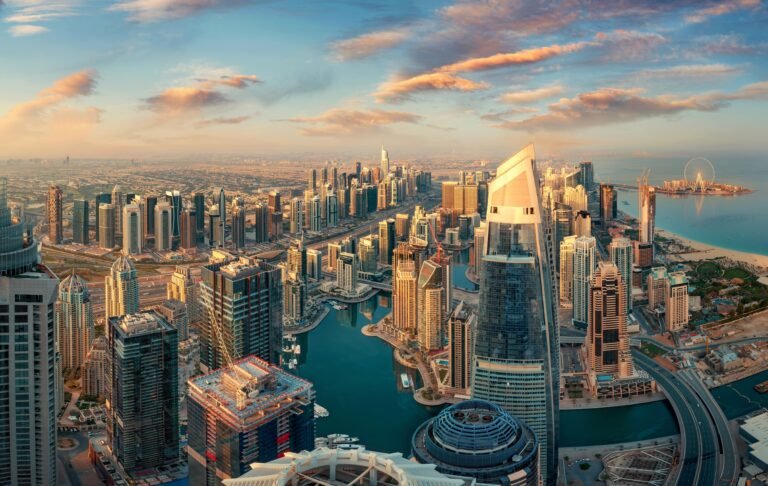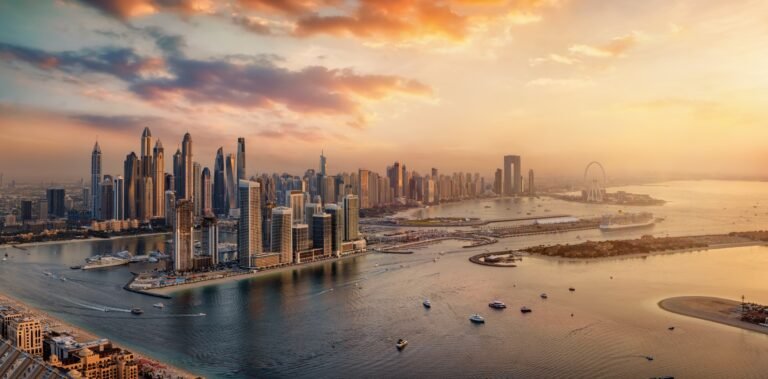

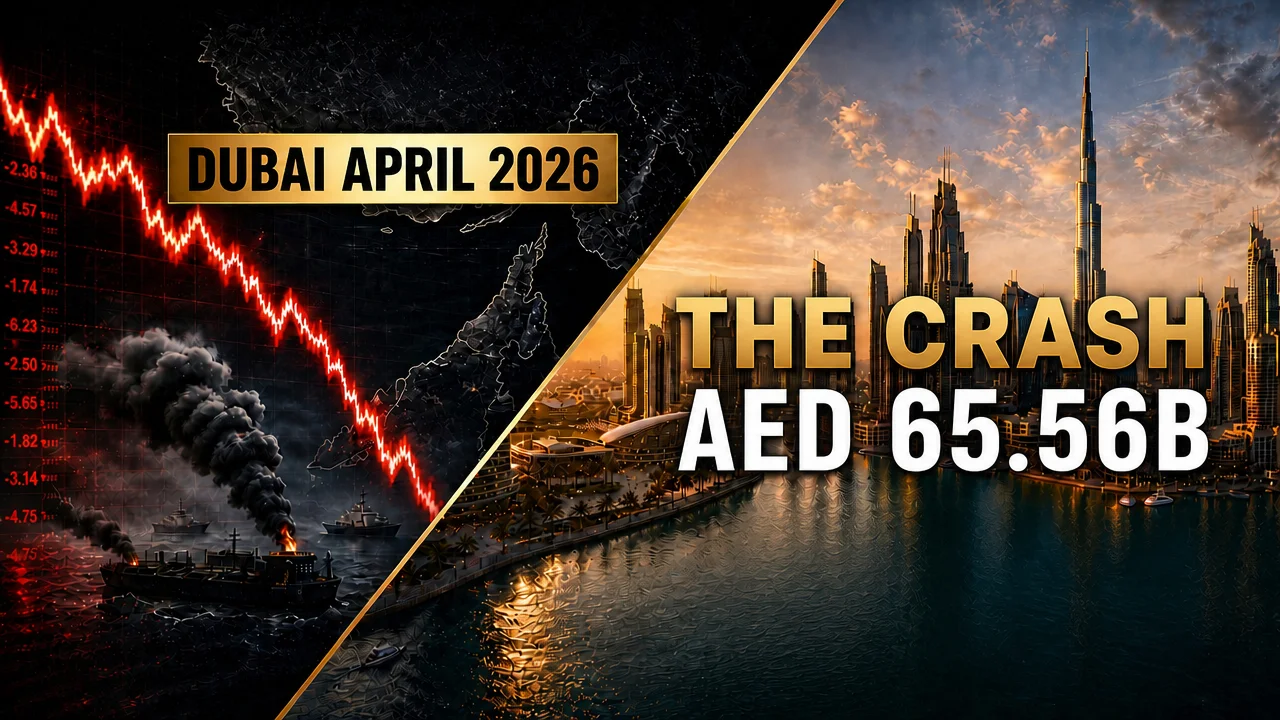
In April 2026, Dubai’s real estate market showed clear signs of recovery after the uncertainty created by the Iran conflict. Sales volume reached 13,977 transactions, up 3.5% month-on-month, while total sales value reached AED 48 billion, up 10.7% from March. The broader real estate transaction value reported publicly reached AED 68.56 billion, an increase of more than 20% compared with March, showing that capital did not leave Dubai. It paused, became more selective, then moved again.
The most important signal was not just the rebound in activity. It was the quality of the rebound. Off-plan sales remained dominant, resale activity improved month-on-month but stayed sharply lower year-on-year, and luxury transactions continued to print serious numbers. That tells us something important. The Dubai market did not collapse under geopolitical pressure. It reset. Buyers became more careful, sellers held firm, and the better assets continued to attract capital.
For investors, April 2026 looks like one of those periods where the market reveals its real structure. Weak listings get exposed. Overpriced resale stock becomes harder to move. Strong off-plan launches, waterfront communities, branded residences, and well-priced villa products continue to absorb demand. In my view, the bottom of this conflict-driven reset may already be behind us, especially for investors who are focused on the right communities, the right developers, and the right entry price.
For a deeper investor-led approach to Dubai property allocation, you can also review Totality Real Estate, especially if you are comparing off-plan, resale, and income-generating opportunities across Dubai.
Dubai Real Estate Market Overview April 2026
April 2026 was not a normal month for Dubai real estate.
On paper, the headline numbers look strong. Sales volume increased. Price per square foot moved higher. Off-plan value jumped. Luxury deals continued. But the real story sits underneath the numbers. This was a market operating in the shadow of the Iran conflict, with investors watching regional risk, oil price volatility, and global sentiment more carefully than usual.
And yet, the Dubai property market did not freeze.
That is perhaps the most important point.
Public reports show Dubai’s total real estate transactions reached AED 68.56 billion in April 2026, more than 20% higher than March, according to Dubai Land Department data cited by multiple outlets. Khaleej Times reported that the rebound came despite regional tensions, while Gulf News described the UAE property market as absorbing short-term disruptions without losing its underlying strength.
Your April sales report shows AED 48 billion in sales value, up 10.7% month-on-month, with 13,977 sales transactions, up 3.5% month-on-month. The difference between AED 48B and AED 68.56B is important. AED 48B reflects sales value from the market dataset you provided, while AED 68.56B appears to refer to broader total real estate transactions, which can include sales plus other transaction categories. For a serious market report, both numbers can be used, but they should not be mixed casually.
That distinction matters because investors are not just looking for hype anymore. They are looking for clarity.
And April gave us clarity.
The market slowed in some areas, especially resale volume compared with last year. But month-on-month, the market improved. Prices held. Off-plan accelerated. Luxury stayed active. Rentals were stable in apartments, slightly softer in villas, and stronger in commercial. In simple terms, the panic did not arrive.
Gulf Business also reported that Dubai property owners were largely holding firm despite the Iran war, with a Christie’s International Real Estate Dubai survey showing limited evidence of panic selling. Only 5.8% of respondents were actively selling, and none were willing to significantly reduce asking prices to close a deal. That supports what we see in the April transaction data. This was not a distressed market. It was a selective market.
April 2026 Dubai Property Market Snapshot
| Metric | April 2026 | MoM | YoY | What It Means |
|---|---|---|---|---|
| Sales Volume | 13,977 transactions | +3.5% | -22.1% | Activity recovered from March, but remains below last year’s elevated base |
| Price per Sqft | AED 1,840 | +5.6% | +16.1% | Pricing power remains strong despite lower annual transaction volume |
| Sales Value | AED 48B | +10.7% | -23.1% | Higher-value deals helped lift the market even with lower YoY volume |
| Off-Plan Sales Volume | 10,563 | +2.4% | -11.6% | Off-plan remains the engine of Dubai real estate |
| Off-Plan Sales Value | AED 35.8B | +14.6% | -14% | Capital is still moving into future supply and new launches |
| Resale Sales Volume | 3,414 | +7.1% | -43% | Secondary market rebounded MoM but remains much weaker YoY |
| Resale Sales Value | AED 12.2B | +7% | -41.2% | Buyers are selective, especially on ready stock |
Simple Visual, April 2026 Sales Value Split
| Off-Plan | AED 35.8B · 74.6% | |
| Resale | AED 12.2B · 25.4% |
This is a very important chart for investors. Nearly three quarters of Dubai’s April 2026 sales value came from off-plan. That is not a side trend anymore. It is the main market.
Some people will look at the year-on-year decline and immediately say, “Dubai is slowing.” I think that is too lazy. Yes, volume is down from last year. That is real. But April also shows that after the Iran conflict-related hesitation, buyers came back quickly where the product was attractive.
There is a difference between a market that is falling and a market that is repricing attention.
Dubai looks more like the second.
The Iran Conflict Effect: Not a Crash, A Buyer Reset
The Iran conflict affected the Dubai real estate market in three clear ways.
First, it created hesitation. Buyers became more cautious in March and early April. This is normal. When regional headlines turn serious, investors pause. They ask whether to wait, whether prices will soften, whether sellers will become nervous. Public reporting from March also showed Dubai’s market was still growing despite the regional conflict, with Q1 sales reaching AED 176.7 billion from 47,996 transactions, and off-plan accounting for roughly 70% of total sales volume.
Second, the conflict exposed weak resale pricing. Resale transactions in April were down 43% year-on-year, and resale value was down 41.2% year-on-year. That is not a small number. It tells us many buyers were not chasing secondary stock at any price. They wanted either a discount, a better location, a stronger rental story, or a cleaner future upside.
Third, the conflict pushed capital toward perceived safety inside the Dubai market. That sounds slightly contradictory, but it makes sense. When uncertainty rises, investors do not always stop investing. Sometimes they move into jurisdictions they trust more. Khaleej Times noted that foreign inflows, population growth, master-planned developments, regulatory stability, and residency-linked incentives continue to reinforce Dubai’s safe-retreat appeal during periods of uncertainty.
This is exactly why April is interesting.
The market did not simply bounce because everyone became optimistic again. It recovered because serious capital still sees Dubai as a long-term jurisdictional allocation. Zero personal income tax, lifestyle demand, Golden Visa pathways, strong infrastructure, and deep developer pipelines continue to matter.
For investors comparing locations, this is where communities like Dubai Islands become more relevant. Waterfront, master-planned, still developing, and supported by a broader luxury and tourism story. For current advisory and opportunity screening, see Dubai property investment opportunities with Totality Real Estate.
Overall Market Performance: Stronger Month, Weaker Year, Better Entry Window
The total market recorded:
| Indicator | April 2026 |
|---|---|
| Sales Volume | 13,977 |
| MoM Change | +3.5% |
| YoY Change | -22.1% |
| Price per Sqft | AED 1,840 |
| MoM Change | +5.6% |
| YoY Change | +16.1% |
| Sales Value | AED 48B |
| MoM Change | +10.7% |
| YoY Change | -23.1% |
This is not a clean boom number. It is more nuanced.
Volume is up compared with March, but down compared with April 2025. Sales value is up month-on-month, but down year-on-year. Price per square foot, however, is up strongly both month-on-month and year-on-year.
That combination usually means one of three things.
Either fewer but higher-quality assets are trading, or more premium stock is influencing the averages, or buyers are paying up for the best projects while ignoring weaker ones. In Dubai right now, it is probably all three.
The AED 1,840 average price per square foot is especially important. A 16.1% year-on-year increase means pricing has not rolled over. Even with lower volume compared with last year, price strength remains. That makes the “Dubai is crashing” argument difficult to defend with April’s numbers.
At the same time, investors should not ignore the year-on-year decline in sales volume. It matters. It suggests the market has moved past the easy liquidity phase, where almost everything sells quickly. The next phase will be more selective.
That is not bad. Actually, for disciplined investors, it may be better.
A market where everything goes up is good for developers and early speculators. A market where buyers become more selective is better for investors who can underwrite properly, negotiate, and identify mispriced opportunities.
In my opinion, April 2026 looks like a recovery month after a geopolitical reset. The market has likely bottomed in sentiment, not necessarily in every individual project or resale listing, but in overall direction. The buyers who waited during the first wave of conflict uncertainty are now seeing that Dubai did not break. And when a market does not break under pressure, confidence usually returns faster than people expect.
Off-Plan Market: Still the Main Engine of Dubai Real Estate
Off-plan activity remained the strongest part of the April market.
| Off-Plan Metric | April 2026 | MoM | YoY |
|---|---|---|---|
| Sales Volume | 10,563 | +2.4% | -11.6% |
| Price per Sqft | AED 1,920 | +8% | +17.2% |
| Sales Value | AED 35.8B | +14.6% | -14% |
The off-plan market accounted for roughly 75.6% of sales volume and 74.6% of sales value in your April dataset. That is dominance.
Khaleej Times also reported that off-plan apartment sales reached AED 19.7 billion across 8,812 transactions in April, the highest monthly value recorded so far in 2026. Dubai Islands led off-plan apartment sales with AED 2.6 billion across 691 transactions, while Al Khairan First and Airport City also ranked among the top areas.
That is very useful for SEO because it confirms a clear theme: April was an off-plan recovery month.
The price per square foot in off-plan reached AED 1,920, up 8% from March and 17.2% year-on-year. That is stronger than the overall market average. It means developers with the right product, right brand, right location, and right payment plan are still achieving price growth.
There is a reason for this.
Off-plan gives investors flexibility. Payment plans reduce immediate capital pressure. New communities offer future appreciation. Developers are still launching aggressively, but the best projects are being absorbed because buyers are thinking two to four years ahead, not just about today’s headlines.
This is where the Iran conflict may have actually created an opportunity. Buyers who waited for a deep crash did not get one. But the pause gave serious investors more room to negotiate, compare launches, and avoid emotional buying.
That is the window.
Not a fire sale. A reset.
For investors looking specifically at off-plan communities with long-term upside, areas like Dubai Islands, Dubai South, Dubai Creek Harbour, Rashid Yachts & Marina, Business Bay, and selected villa corridors deserve attention. The key is not just buying off-plan. The key is buying the right off-plan at the right entry price.
Resale Market: Weak Year-on-Year, But Showing Signs of Life Month-on-Month
The resale market is where the April 2026 report becomes more interesting, and honestly, a little more revealing.
At first glance, resale looks weak.
| Resale Metric | April 2026 | MoM | YoY |
|---|---|---|---|
| Sales Volume | 3,414 | +7.1% | -43% |
| Price per Sqft | AED 1,550 | -1.5% | +5% |
| Sales Value | AED 12.2B | +7% | -41.2% |
A 43% year-on-year drop in resale volume is not something to ignore. It shows a very clear cooling in secondary-market activity compared with April 2025. But the month-on-month increase of 7.1% in volume and 7% in value tells a different story. Buyers are coming back, just not blindly.
This is where the Iran conflict effect becomes visible.
The conflict did not destroy demand. It made buyers more selective. That is very different.
In March, many buyers likely paused. By April, some came back, but they came back with sharper questions. Is the seller realistic? Is the rental yield still strong? Is this unit better than a new off-plan launch nearby? Is the building ageing well? Are service charges too high? Can I get a better payment plan from a developer instead?
Those questions hurt weaker resale listings.
This is why resale price per square foot fell 1.5% month-on-month to AED 1,550, even though it remained 5% higher year-on-year. The market is not collapsing, but it is forcing sellers to prove value. I actually think this is healthy. Dubai needed a bit of discipline after several years of aggressive appreciation.
Public reporting also supports this more balanced view. Gulf News described the market as absorbing pressure without losing ground, with Dubai still led by off-plan activity and higher-value transactions. It also noted that the gap between volume growth and value growth reflects higher pricing and a larger share of premium assets in the market.
So, the resale conclusion is quite simple.
Ready property is not dead. Far from it. But in April 2026, resale buyers wanted either income, discount, location, or scarcity. Preferably all four.
Resale by Property Type: Apartments Hold Better Than Villas and Commercial
Your April resale property-type breakdown gives us a useful view of where the pressure actually sits.
| Property Type | Transactions | MoM | YoY | Sales Value |
|---|---|---|---|---|
| Apartments | 2,549 | +6.7% | -40.1% | AED 4.7B |
| Villas | 611 | +3.6% | -51.5% | AED 3.9B |
| Commercial | 111 | +5.7% | -57.8% | AED 285.2M |
| Plots | 142 | +35.2% | -34.6% | AED 3.3B |
The first thing that stands out is apartments. Resale apartments recorded 2,549 transactions, up 6.7% month-on-month, but still down 40.1% year-on-year. That means apartment demand is recovering from March, but it is still much quieter than last year.
This matters because apartments are usually the most liquid part of Dubai’s investment market. When apartment resale activity slows, it often means buyers are comparing ready units against fresh off-plan launches with longer payment plans. In April, off-plan was simply more attractive for many investors. That is especially true in waterfront and master-planned areas, where the future story is easier to sell.
Villas are a slightly different story.
Resale villa transactions reached 611, up only 3.6% month-on-month, but down 51.5% year-on-year. Yet the value was still AED 3.9 billion, almost as much as apartment resale value despite far fewer transactions. This tells us that villa pricing remains high, but buyer activity is thinner.
I think this is the part of the market where sellers need to be very careful. Villa owners have had a strong run in Dubai. Many are sitting on major gains. But buyers are no longer accepting every asking price just because the product is a villa. Location, plot size, community maturity, renovation quality, and school access matter more now.
Commercial resale was the weakest by volume, with 111 transactions, down 57.8% year-on-year. But the rental data, which we will cover shortly, shows commercial rents jumped month-on-month. That gap may create future opportunity. Sometimes transaction volume cools before pricing catches up, and sometimes strong leasing demand pulls investors back in later.
The surprise is plots.
Plots recorded only 142 sales, but volume rose 35.2% month-on-month, with AED 3.3 billion in value. That is significant. Land is a more sophisticated investor category. When plot activity rises after a period of uncertainty, it often suggests developers, family offices, or strategic investors are positioning for the next cycle.
And that is exactly how I read this.
Retail buyers may have hesitated because of the Iran conflict. Larger players seem to have used the reset to look for land and future development positions.
Primary Market Price Overview: Developers Still Have Pricing Power
The primary market tells us where confidence still sits. And in April 2026, developers clearly retained pricing power.
Primary Market, Median Price per Square Foot
| Type | Median Price per Sqft | vs. 2025 | vs. 2014 |
|---|---|---|---|
| Apartment | AED 1,905 | +11.9% | +46.3% |
| Plot | AED 840 | +86.6% | +110.7% |
| Villa | AED 1,855 | +21% | +135.4% |
This table is one of the strongest parts of the report.
Primary apartments at AED 1,905 per square foot are up 11.9% versus 2025 and 46.3% versus 2014. Villas are even stronger, with primary villa prices at AED 1,855 per square foot, up 21% versus 2025 and 135.4% versus 2014.
But the most dramatic figure is plots.
Primary plots reached AED 840 per square foot, up 86.6% versus 2025 and 110.7% versus 2014. That is a major signal. It suggests land values have moved sharply higher, most likely because developers and institutional buyers are still competing for future supply in growth corridors.
Primary Market Price Growth Visual
| Apartment | +11.9% | |
| Villa | +21% | |
| Plot | +86.6% |
The land figure should not be treated as a casual statistic. Land is the raw material of future Dubai supply. If land prices are rising sharply, the next generation of projects will likely need higher selling prices, smaller unit sizes, stronger branding, or more creative payment plans to remain attractive.
That is why investors should not only ask, “What is cheap today?”
They should ask, “What will look cheap when replacement cost rises?”
This is where early entry into strong off-plan communities can make sense, especially if the developer acquired land earlier, has scale advantages, or is launching in an area where infrastructure is still improving.
Dubai Islands is one example worth watching closely. Zawya reported that Dubai Islands led Dubai’s off-plan apartment sales for the fourth consecutive month in April, recording AED 2.6 billion from 691 transactions, with cumulative 2026 sales exceeding AED 7.9 billion from 2,335 deals by the end of April.
That is not random demand. That is a market forming around a future lifestyle and waterfront investment thesis.
Primary Median Prices: Villas Move Up Sharply
Now look at the median price, not just price per square foot.
| Type | Median Price | vs. 2025 | vs. 2014 |
|---|---|---|---|
| Apartment | AED 1.5M | +18.8% | +59.2% |
| Plot | AED 4.2M | -5.7% | +14.1% |
| Villa | AED 5M | +42.6% | +46.5% |
Primary apartments had a median price of AED 1.5 million, up 18.8% versus 2025. That tells us the entry ticket is rising. For investors, this is important because the affordable and mid-market off-plan segment is becoming more competitive. The days of easily finding prime Dubai apartments at deeply discounted entry points are mostly gone.
Primary villas had a median price of AED 5 million, up 42.6% versus 2025. That is a very aggressive move. It reflects both end-user demand and the continued shortage of well-located family homes. Dubai’s population growth, school demand, long-term residency trends, and family migration continue to support this segment.
Plots are different. The primary median plot price fell 5.7% versus 2025 to AED 4.2 million, even though plot price per square foot rose sharply. That could suggest smaller plots were transacting, or that the mix changed. This is exactly why price per square foot and median price should always be read together.
One number tells you price intensity.
The other tells you ticket size.
In April, the plot market seems to be saying: land is more expensive per square foot, but the type of land being sold may have shifted.
Resale Market Price Overview: Secondary Prices Are Holding, But Buyers Are Demanding Value
Resale Price per Square Foot
| Type | Resale Price per Sqft | vs. 2025 | vs. 2014 |
|---|---|---|---|
| Apartment | AED 1,573 | +4.6% | +25.2% |
| Plot | AED 684 | -1.4% | +17.3% |
| Villa | AED 1,546 | +5.1% | +106.3% |
The resale market is weaker in transaction volume, but prices are not collapsing.
Resale apartments reached AED 1,573 per square foot, up 4.6% versus 2025. Villas reached AED 1,546 per square foot, up 5.1% versus 2025. Plots were slightly negative, down 1.4% versus 2025, but still up 17.3% versus 2014.
This is what a reset looks like.
Not a crash. Not a boom. A reset.
The market is still higher than last year on price, but buyers have stopped chasing everything. That is why the resale volume is down sharply while price per square foot remains positive year-on-year. Sellers are holding prices, but fewer deals are clearing.
Gulf Business reported a similar sentiment after surveying Dubai property owners during the Iran war period, noting limited evidence of panic selling and that most owners were not willing to meaningfully reduce asking prices. That fits the April resale data very well. Sellers were not desperate. Buyers were cautious. The result was lower volume, but not a broad price collapse.
Resale Median Prices: The Secondary Market Is Splitting
| Type | Resale Median Price | vs. 2025 | vs. 2014 |
|---|---|---|---|
| Apartment | AED 1.3M | +1.2% | +6% |
| Plot | AED 13.5M | +117.6% | +127.7% |
| Villa | AED 3.9M | +12.8% | +17.8% |
The resale median price data shows a split market.
Apartments are stable, not explosive. The median resale apartment price was AED 1.3 million, up only 1.2% versus 2025. That suggests affordability pressure is real. Buyers are still active, but not aggressively pushing resale apartment ticket sizes higher.
Villas are stronger. The median resale villa price was AED 3.9 million, up 12.8% versus 2025. This fits the bigger Dubai story. Family homes remain structurally supported, but the number of villa transactions has fallen. Again, higher values, thinner liquidity.
Plots are the standout. The median resale plot price reached AED 13.5 million, up 117.6% versus 2025. That is a huge move, and it likely reflects a change in transaction mix toward larger or more valuable land parcels. It may also indicate strategic buying, where investors are positioning for development rather than short-term resale.
For investors, the secondary market message is clear.
Buy ready property where the income is real, the building is proven, and the price is negotiable. Do not buy weak resale stock just because it is available today. In this stage of the cycle, the wrong ready unit can underperform badly.
Rental Prices: Stable Apartments, Softer Villas, Stronger Commercial
| Rental Category | April 2026 Median Rent | vs. March 2026 |
|---|---|---|
| Apartment | AED 70K | 0% |
| Villa | AED 175K | -2.8% |
| Commercial | AED 81K | +25.6% |
The rental market is showing a different type of stability.
Apartment rents were flat at AED 70,000, which suggests the market has absorbed recent supply and tenant budgets are stabilising. Villa rents fell 2.8% month-on-month to AED 175,000, which may reflect some affordability resistance after a very strong villa rental cycle.
Commercial rents, however, rose 25.6% month-on-month to AED 81,000. That is a big move. It suggests business activity and demand for operational space remain healthy, even while commercial sales volume is still limited.
Gulf News reported that Dubai’s rental market remained steady in Q1 2026, with AED 32.2 billion in rental contracts signed between January and March, plus 118,385 new rental contracts and 135,607 renewals. It also noted that cancellations dropped by 25%, which supports the view that tenants are staying put and the rental market is becoming more stable.
For investors, this matters because rental stability provides a floor under property values.
Capital appreciation gets attention. Rental income protects the downside.
This is why I still like Dubai for investors who care about cash flow. Not every unit will perform, and I would be careful with overhyped launches, but the broader rental base is still strong. Apartments are not accelerating every month, but they are holding. Villas are softer month-on-month, but still expensive. Commercial is waking up.
This is not the behaviour of a broken market.
It is the behaviour of a market digesting a geopolitical shock, repricing weaker assets, and preparing for the next leg.
What This Means for Investors
The April 2026 data points to one conclusion.
Dubai has already gone through the first part of the Iran conflict reset.
The panic phase, or at least the hesitation phase, appears to have passed. The market is not equally strong everywhere, and I would not say every buyer should rush into anything. That would be too simple. But the data is now showing month-on-month recovery, price resilience, off-plan dominance, stable rentals, and continued luxury activity.
That creates a good entry window for serious investors.
Not because everything is cheap.
Because the market has become more selective.
And selective markets reward better underwriting.
The best opportunities now are likely to sit in three places:
| Opportunity Type | Why It Matters Now |
|---|---|
| Quality off-plan in growth corridors | Payment plans, future infrastructure, and lower upfront capital |
| Discounted resale with strong rental yield | Immediate income and possible price recovery after sentiment improves |
| Land or villa exposure in supply-constrained areas | Scarcity, family demand, and replacement-cost pressure |
For off-plan, I would focus on areas with infrastructure, waterfront positioning, master-plan depth, and genuine end-user or tourism demand. Dubai Islands, Dubai Creek Harbour, Dubai South, Rashid Yachts & Marina, Business Bay, Meydan, and selected luxury branded projects remain worth watching.
For resale, I would focus on cash-flowing units where the seller is realistic. This is especially relevant in established communities where rental demand is proven and service charges are manageable.
For investors who want help comparing off-plan versus resale opportunities in Dubai, the starting point should be proper underwriting. Not brochure yields. Real numbers. Entry price, service charges, rent comps, payment plan, exit liquidity, handover risk, and future supply. You can explore this approach through Totality Real Estate, where the focus is on investment selection rather than simply chasing launches.
Dubai’s Luxury Market in April 2026: Still Very Much Alive
The luxury segment is where Dubai continues to separate itself from many other global property markets.
Even during a month affected by regional tension and the Iran conflict, Dubai still recorded some extraordinary high-value sales. This is important because luxury buyers are often the first to pause when uncertainty rises. They do not need to buy immediately. They can wait. They can move capital into cash, gold, treasuries, Switzerland, Singapore, or simply do nothing.
But in April 2026, they still bought.
The most expensive apartment sale recorded in your April report was AED 171 million at Aman Residences Tower 2 in Jumeirah Second. Public market reporting also confirms that Aman Residences recorded April’s highest apartment transaction, while Baccarat Residence and Marsa Dubai also featured among the largest deals of the month.
Top 5 Most Expensive Apartment Sales in April 2026
| Rank | Price | Project / Location | Market Signal |
|---|---|---|---|
| 1 | AED 171M | Aman Residences Tower 2, Jumeirah Second | Ultra-prime branded waterfront demand remains strong |
| 2 | AED 122M | Baccarat Residence T1, Downtown Dubai | Downtown luxury still attracts trophy capital |
| 3 | AED 118M | Building C, Marsa Dubai | Waterfront branded and marina-linked stock stays liquid |
| 4 | AED 70M | Aman Residences Tower 1, Jumeirah Second | Aman brand depth, not a one-off sale |
| 5 | AED 65M | Orla Infinity by Omniyat, Palm Jumeirah | Palm Jumeirah remains a global trophy address |
Luxury Apartment Sales Visual
| Aman Residences Tower 2 | AED 171M | |
| Baccarat Residence T1 | AED 122M | |
| Building C, Marsa Dubai | AED 118M | |
| Aman Residences Tower 1 | AED 70M | |
| Orla Infinity by Omniyat | AED 65M |
There is a simple way to read this.
The very top of the market is not buying ordinary property. It is buying identity, architecture, privacy, brand, service, and scarcity.
Aman, Baccarat, Omniyat, Palm Jumeirah, Jumeirah Second, Marsa Dubai, Downtown Dubai, these are not just addresses. They are signals. For ultra-high-net-worth buyers, the property is often part residence, part wealth statement, part jurisdictional allocation.
And this is where the Iran conflict narrative becomes more nuanced.
Yes, regional tension created hesitation. Yes, some investors paused. But the very wealthy did not abandon Dubai. In some cases, they may have seen Dubai as one of the more reliable places in the region to hold lifestyle-linked, dollar-adjacent real estate. Khaleej Times reported that foreign inflows, population growth, master-planned developments, and safe-retreat positioning helped maintain confidence despite volatility.
That matters.
Because if Dubai’s luxury market can continue producing AED 100M-plus apartment sales during a geopolitical reset, the long-term investment story is not weak. It is simply becoming more selective.
Villa Luxury Sales: Scarcity Still Drives Big Numbers
The villa segment tells a slightly different story.
Villas did not show the same transaction strength year-on-year in the resale market, as we covered earlier. But the most expensive villa transactions show that scarcity is still powerful at the top end.
Top 5 Most Expensive Villa Sales in April 2026
| Rank | Price | Area / Project | Investor Thought |
|---|---|---|---|
| 1 | AED 76M | Eden Hills | Low-density luxury remains highly desirable |
| 2 | AED 75M | Al Barari | Mature greenery and privacy continue to command premiums |
| 3 | AED 75M | Emerald Hills at Dubai Hills | Golf-side family luxury remains deeply liquid |
| 4 | AED 65M | Sobha Estates | Branded villa communities are gaining weight |
| 5 | AED 61M | Signature Villas | Palm-style scarcity still holds value |
Luxury Villa Sales Visual
| Eden Hills | AED 76M | |
| Al Barari | AED 75M | |
| Emerald Hills | AED 75M | |
| Sobha Estates | AED 65M | |
| Signature Villas | AED 61M |
What stands out here is not only the price. It is the type of product.
These are not mass-market villas. They are scarce, private, low-density, and usually connected to a lifestyle story, golf, greenery, waterfront, branded living, or mature community status.
This supports a broader investment point. In Dubai, luxury villas have become less about square footage alone and more about controlled supply. When there are only so many prime plots, only so many golf-facing homes, and only so many fully mature green communities, pricing behaves differently.
The average villa buyer may pause. The best villa buyer still moves.
That is why I would not read the villa market as weak. I would read it as split. Average villas need to justify their asking prices. Exceptional villas still attract serious capital.
Best-Selling Primary Market Apartment Projects
The primary apartment market was the main driver of April 2026 activity. This is where developers, payment plans, community positioning, and future infrastructure all came together.
Top Primary Market Apartment Projects, April 2026
| Rank | Project | Sales Volume | Sales Value | Median Price |
|---|---|---|---|---|
| 1 | Creek Bay Tower B | 198 | AED 584M | AED 2.1M |
| 2 | DAMAC Lagoons, Valencia Tower A | 155 | AED 142.6M | AED 764K |
| 3 | DAMAC Lagoons, Valencia Tower B | 150 | AED 133M | AED 750K |
| 4 | Creek Haven Tower B | 144 | AED 385.6M | AED 2M |
| 5 | Meriva Sunset | 135 | AED 523.1M | AED 3.2M |
This table shows two very different buyer profiles.
On one side, you have Creek Bay Tower B and Creek Haven Tower B, both with median prices around AED 2 million. These buyers are likely looking for a more mature master-plan feel, better long-term livability, and stronger positioning for rental or resale. Dubai Creek Harbour remains one of the better examples of this type of balanced waterfront investment. It is not always the cheapest. It is not always the flashiest either. But it often gives investors a reasonable mix of brand, master-plan confidence, rental appeal, and future upside.
For a deeper investor comparison, the article can internally link here: Why Invest in Dubai Creek Harbour.
On the other side, DAMAC Lagoons, Valencia Towers A and B, show the continued strength of lower-ticket off-plan inventory. Median prices around AED 750K to AED 764K are very different from the Creek Harbour and Meriva Sunset numbers. This matters because entry-level investors still want access to Dubai real estate, especially when payment plans reduce upfront cash pressure.
Meriva Sunset is interesting because it shows that higher-ticket apartment inventory can still move in volume. 135 sales with AED 523.1M in value and a median price of AED 3.2M is not a low-budget investor story. That is more lifestyle, branded, or premium positioning.
The lesson is simple. Off-plan demand is not only one market. It is several markets moving at once.
|
1
|
Affordable access. |
|
2
|
Waterfront lifestyle. |
|
3
|
Premium branded living. |
|
4
|
Family-oriented master plans. |
|
5
|
Investor-led payment plans. |
Each segment behaves differently.
Best-Selling Primary Market Villa Projects
The primary villa market remained strong at the right price points and in the right locations.
Top Primary Market Villa Projects, April 2026
| Rank | Project | Sales Volume | Sales Value | Median Price |
|---|---|---|---|---|
| 1 | Saih Shuaib 1 | 254 | AED 2B | AED 6.6M |
| 2 | Dubai Investment Park First | 74 | AED 103.6M | AED 1.3M |
| 3 | DAMAC Islands 2, Bahamas 2 | 45 | AED 140.5M | AED 2.8M |
| 4 | Salva The Heights | 43 | AED 353.5M | AED 7.1M |
| 5 | Serro 2 The Heights | 43 | AED 343.8M | AED 8M |
Saih Shuaib 1 is the obvious headline here. 254 villa transactions and AED 2 billion in value is a very strong result. With a median price of AED 6.6 million, this is not entry-level villa demand. It points to serious appetite for larger-format property.
At the other end, Dubai Investment Park First recorded 74 sales with a median price of AED 1.3 million, showing that affordability still works when the product is positioned correctly.
DAMAC Islands 2, Bahamas 2, sits in the middle at AED 2.8 million median price, which is a price band that continues to attract investors who want villa or townhouse exposure without entering the AED 6M to AED 8M bracket.
The Heights projects, Salva and Serro 2, are both premium by price, with median prices above AED 7 million. The volumes are lower, but the values are high. This again shows that Dubai’s villa market is split between affordability-driven volume and premium scarcity-driven value.
And honestly, that split is probably going to continue.
The family migration story is still alive. Long-term residents want more space. Wealthy families want controlled communities. Investors want scarcity. But prices have moved up so much that buyers are now more demanding.
That is healthy. It keeps the market from becoming reckless.
Best-Selling Resale Apartment Projects
The resale apartment market was more cautious in April, but the top projects still attracted meaningful activity.
Top Resale Apartment Projects, April 2026
| Rank | Project | Sales Volume | Sales Value | Median Price |
|---|---|---|---|---|
| 1 | Citywalk Building 18A | 64 | AED 363.3M | AED 4.9M |
| 2 | The Polo Residence, A3 | 60 | AED 121.7M | AED 1.8M |
| 3 | Ciel | 44 | AED 38.6M | AED 750K |
| 4 | The Hamilton | 22 | AED 29.7M | AED 1.5M |
| 5 | Peninsula Three | 19 | AED 34.4M | AED 1.8M |
Citywalk Building 18A stands out immediately. 64 resale transactions and AED 363.3 million in sales value, with a median price of AED 4.9 million, is a strong performance for a resale apartment project.
That says something about buyer preference.
City Walk is mature, central, walkable, lifestyle-led, and close to Downtown and Jumeirah. In a cautious market, buyers tend to move toward places they understand. They want fewer unknowns. That is why good ready stock in proven locations can still perform, even when the wider resale market is down sharply year-on-year.
The Polo Residence also performed well, with 60 transactions and AED 121.7 million in sales value. The median price of AED 1.8 million places it in a more accessible investment bracket than City Walk. This is important because not every resale buyer in Dubai is chasing trophy assets. Many are looking for established communities, practical pricing, and rental demand that is easier to understand.
Ciel, with 44 transactions and a AED 750K median price, is also interesting. It sits in a very different category from City Walk and The Polo Residence. Ciel is a hotel-apartment and hospitality-led product in Dubai Marina, which attracts a certain type of investor looking for lower entry pricing, tourism exposure, and potential income from short-stay demand.
But Ciel also needs careful analysis. Hotel apartments can look attractive on paper, especially when the entry price is low compared with traditional residential units in prime areas. However, investors must look beyond the headline price. Operator performance, service charges, occupancy assumptions, furnishing standards, and management structure can all affect the real net return.
The Hamilton recorded 22 resale transactions with AED 29.7 million in value and a median price of AED 1.5 million. This shows continued liquidity in newer apartment stock where ticket sizes are still manageable. Peninsula Three also performed steadily, with 19 transactions, AED 34.4 million in sales value, and a median price of AED 1.8 million.
The wider message is clear. Resale apartment buyers were still active in April 2026, but they were not buying randomly. They moved toward properties with either proven location strength, reasonable entry prices, or a clear rental and lifestyle story.
In a market affected by the Iran conflict reset, this behaviour makes sense. Buyers became more cautious, but not absent. They wanted visibility. They wanted assets they could understand. They wanted locations where future liquidity felt more secure.
That is why the resale apartment market should not be viewed as weak across the board. It is more accurate to say it became selective. The best ready apartments in the right buildings continued to trade. The weaker stock, especially units priced too aggressively or located in oversupplied buildings, likely struggled to attract serious offers.
For investors, the lesson is simple. Resale apartments can still be excellent investments after April 2026, but only when the numbers are real. Gross yield is not enough. The investor needs to understand net income, service charges, tenant demand, building quality, exit liquidity, and whether the seller’s asking price reflects the current market, not last year’s optimism.
What April 2026 Really Tells Investors
April 2026 was not just another strong month for Dubai real estate. It was a stress test.
The market had to deal with regional uncertainty, headlines around the Iran conflict, oil price volatility, and investor hesitation. Yet Dubai still recorded a strong rebound in activity, with public reporting showing total real estate transactions reaching AED 68.56 billion, up more than 20% compared with March. Your dataset shows AED 48 billion in direct sales value, up 10.7% month-on-month, with 13,977 sales transactions, up 3.5% month-on-month. These are not weak numbers. They show a market that absorbed pressure, paused briefly, then continued moving.
This is why I would not describe April as a market peak. I would describe it as a recovery month after a reset.
The reset was not visible everywhere in the same way. Resale volume was clearly weaker year-on-year. Villas were thinner in transaction count. Some sellers probably had to accept that buyers were no longer chasing every listing. But off-plan remained strong, luxury still performed, rentals held, and strategic land activity improved month-on-month.
That is what makes April so important.
A weak market breaks under conflict pressure. A speculative market panics. A mature market becomes more selective.
Why the Reset May Have Already Bottomed
The phrase “bottomed out” needs to be used carefully. No one can guarantee that every property segment has reached its lowest point. Some overvalued resale listings may still need to correct. Some off-plan projects may struggle if they are poorly located, overpriced, or delivered into heavy future supply.
But from a market sentiment perspective, April suggests the worst part of the conflict-driven hesitation may already be behind us.
There are four reasons for this.
|
1
|
Month-on-month recovery was broad enough to matterTotal sales volume rose 3.5% month-on-month. Sales value rose 10.7% month-on-month. Off-plan sales value rose 14.6% month-on-month. Resale value rose 7% month-on-month. That is not one isolated metric improving. It is several parts of the market moving in the same direction. |
|
2
|
Prices did not collapseThe total market price per square foot reached AED 1,840, up 5.6% month-on-month and 16.1% year-on-year. Off-plan price per square foot reached AED 1,920, up 17.2% year-on-year. When prices rise while volume is still below last year, it usually means buyers are selective but still willing to pay for quality. |
|
3
|
Off-plan demand remained dominantOff-plan accounted for roughly 75% of April sales value in your dataset. Public reports also showed April 2026 was the strongest month of the year for off-plan residential apartment sales, with AED 19.7 billion in off-plan apartment sales alone. That means buyers are still comfortable taking future delivery risk when the project, location, payment plan, and developer make sense. |
|
4
|
Dubai’s safe-retreat thesis heldRegional tension did not stop Dubai’s property market from attracting capital. In fact, multiple reports framed April as a rebound month despite headwinds, with Dubai and Abu Dhabi both showing resilience across property activity. That is the deeper point. Investors are not only buying apartments or villas. They are buying access to Dubai’s tax environment, residency options, infrastructure, lifestyle, liquidity, and long-term positioning as a global wealth hub. |
Best Investment Opportunities After the April 2026 Reset
The best opportunities now are not “anything in Dubai.” That phase is gone.
The better question is:
Where does April’s data show capital still moving, while giving investors enough upside after the conflict reset?
1. Off-plan apartments in waterfront growth areas
This is probably the clearest opportunity category.
Dubai Islands led off-plan apartment sales in April, with public reporting showing AED 2.6 billion across 691 transactions. It also led for the fourth consecutive month, which makes it one of the strongest area-level signals in the current market.
Dubai Islands is attractive because it still has an early-cycle feel. The master plan is large. The beachfront story is real. Hospitality, lifestyle, marina, and waterfront demand can support both end-users and investors over time. But it is not a risk-free market. The area still needs infrastructure delivery, community maturity, and careful developer selection.
For investors, this is the type of opportunity that needs underwriting, not excitement.
| · Dubai Islands Investment Deep Dive |
| · Dubai Islands Master Plan Guide |
| · Waterfront Apartments in Dubai |
2. Dubai Creek Harbour for balanced waterfront exposure
Dubai Creek Harbour remains one of the more balanced investment locations in Dubai.
It is not as early as Dubai Islands, and perhaps that makes the upside slightly less dramatic. But it gives investors a cleaner master-plan story, stronger livability, a major developer track record, and real tenant demand. In April’s project rankings, Creek Bay Tower B and Creek Haven Tower B were among the top-selling primary apartment projects, showing that demand for Creek Harbour remains active.
This is a good area for investors who want long-term appreciation but do not want to take the full early-stage infrastructure risk of a newer coastal district.
3. Discounted resale units with real rental income
This is where April gets interesting for investors who are patient and disciplined.
Resale volume was down heavily year-on-year, but up month-on-month. That means some buyers are returning, but they are not rushing. Sellers who need liquidity may become more realistic. This can create opportunities in ready units, especially where the building is proven, rental demand is visible, and service charges are manageable.
The best resale opportunities are likely to come from:
| Resale Opportunity | Why It Works |
|---|---|
| Underpriced apartments in proven rental buildings | Immediate income and easier tenant demand |
| Ready units in mature lifestyle areas | Lower execution risk than off-plan |
| Villas in family communities where sellers are realistic | Scarcity and long-term end-user demand |
| Hotel apartments with strong operator data | Potential hands-off income, but only with proper numbers |
The danger is buying a resale unit only because it looks cheaper than off-plan. Cheap is not enough. The unit needs liquidity, rentability, clean title, realistic service charges, and a clear exit market.
4. Villa and townhouse communities with genuine end-user demand
Villas remain expensive, and resale villa volume was weak year-on-year. Still, the April luxury villa numbers show that the top end of the market is alive. Eden Hills, Al Barari, Emerald Hills, Sobha Estates, and Signature Villas all recorded major transactions.
For investors, the best villa opportunities are not necessarily the most expensive ones. They are the communities where family demand is deep and supply is controlled.
This includes selected opportunities in:
| Area Type | Investor Logic |
|---|---|
| Mature family villa communities | Strong tenant base and end-user resale demand |
| Golf or greenery-led communities | Lifestyle scarcity |
| Affordable townhouse corridors | Larger buyer pool and lower entry ticket |
| Branded villa communities | Premium positioning, but price discipline is critical |
The villa market is not weak. It is picky.
5. Commercial property, but selectively
Commercial resale volume was down year-on-year, but rental prices in your report rose sharply month-on-month. That is worth watching.
Commercial rent reached AED 81K, up 25.6% versus March 2026. Meanwhile, commercial resale volume was only 111 transactions, down 57.8% year-on-year. This gap may create opportunities if leasing demand continues to improve while sale pricing remains relatively negotiable.
Still, commercial property is not for every investor. Vacancy risk, tenant fit-out requirements, licensing, location quality, and building management matter a lot. A poorly chosen office or retail unit can sit empty longer than expected.
Off-Plan vs Resale: What Should Investors Choose Now?
There is no universal answer, but April’s data gives us a useful framework.
| Investor Goal | Better Fit | Reason |
|---|---|---|
| Capital appreciation | Off-plan | Stronger momentum, payment plans, future community growth |
| Immediate rental income | Resale | Ready asset, existing rental data, faster cash flow |
| Lower upfront cash | Off-plan | Developer payment plans reduce initial capital burden |
| Lower execution risk | Resale | No construction or handover risk |
| Negotiation opportunity | Resale | Softer year-on-year activity creates room for price discussion |
| Long-term lifestyle upside | Off-plan in master-planned areas | Future infrastructure and area maturity can lift values |
| Wealth preservation | Prime resale or ultra-luxury branded property | Scarcity and global buyer appeal |
My opinion is this:
For most investors entering Dubai after April 2026, the best strategy is not off-plan only or resale only. It is a blended approach.
Buy off-plan where the future upside is strong and the entry price is fair.
Buy resale only where the income is proven and the seller is realistic.
Avoid average assets in average buildings at premium prices.
That sounds obvious, but many investors still do the opposite. They chase the loudest launch, the biggest brochure yield, or the cheapest resale listing. April’s market is not rewarding that anymore. It is rewarding clean underwriting.
Neighborhood Ranking for Investors After April 2026
| Rank | Neighborhood / Area | Best For | Investor View |
|---|---|---|---|
| 1 | Dubai Islands | Waterfront off-plan growth | High-potential, still early, needs careful selection |
| 2 | Dubai Creek Harbour | Balanced waterfront investment | Stronger maturity, good long-term rental and resale story |
| 3 | Dubai South / Airport City corridors | Infrastructure-led growth | Long-term play linked to airport expansion and affordability |
| 4 | Business Bay | Liquidity and branded apartments | Strong central location, but project selection matters |
| 5 | Downtown Dubai | Trophy and high-liquidity assets | Expensive, but global buyer recognition remains strong |
| 6 | Palm Jumeirah / Jumeirah Second | Ultra-luxury preservation | Scarcity-led, best for large capital allocation |
| 7 | Jumeirah Village Triangle | Family villa demand | Mature, practical, supported by end-user buyers |
| 8 | DAMAC Lagoons / DAMAC Islands | Accessible villa and townhouse exposure | Works at the right price, watch future supply |
| 9 | Rashid Yachts & Marina | Waterfront lifestyle | Strong future appeal, still needs project-by-project review |
| 10 | Meydan | Central growth and villa appeal | Strong long-term thesis, but entry price must be controlled |
This ranking is not about hype. It is about matching investor goals with the right market segment.
A buyer looking for a five-year waterfront appreciation play will not have the same answer as a buyer seeking immediate rental income. A family office looking for AED 50M-plus wealth preservation will not buy the same product as a first-time investor entering with AED 500K to AED 1M.
That is why Dubai is still attractive. It has depth.
But depth also means investors need guidance.
Key Risks to Watch in the Next 6 to 12 Months
A positive outlook does not mean ignoring risk.
The April 2026 report is encouraging, but there are several risks investors should watch carefully.
|
1
|
Oversupply in weaker off-plan locationsDubai’s off-plan market is very active. That is good for choice, but it also means not every launch will perform. Investors should avoid buying in areas where supply is growing faster than tenant demand. |
|
2
|
Overpriced resale listingsMany sellers still want yesterday’s price. Some will get it. Many will not. Resale buyers should compare recent transaction prices, not asking prices. |
|
3
|
Service charges and net yield compressionGross yield can look attractive, but net yield is what matters. High service charges, furnishing costs, vacancy, maintenance, and management fees can reduce returns quickly. |
|
4
|
Geopolitical volatilityThe Iran conflict did not break the market, but regional risk still matters. Investors should build safety margins into their decisions instead of assuming uninterrupted growth. |
|
5
|
Payment plan illusionA soft payment plan does not automatically make a project good. Sometimes it hides an inflated price. Investors should compare the true price per square foot, payment schedule, handover date, developer track record, and resale comps. |
Final Outlook: Dubai Is Recovering, But Selectivity Is the New Rule
April 2026 shows a Dubai market that is recovering after the Iran conflict reset.
The easy conclusion would be to say the market is booming again. I would be careful with that. The numbers are strong, yes. But they are not strong in a simple way. Year-on-year volume is lower. Resale is softer. Buyers are more careful. Some sellers are probably still too optimistic.
But that is exactly why the opportunity exists.
A market that has already reset, but has not yet fully repriced every asset, can be attractive for disciplined investors. The broad panic has not arrived. The crash narrative does not fit the data. Yet buyers still have more room to choose carefully than they did during the most aggressive parts of the cycle.
That is the window.
In April 2026, Dubai real estate looked resilient, selective, and still deeply investable. Off-plan remains the main growth engine. Resale is becoming a negotiation market. Luxury continues to attract serious capital. Rentals provide income support. Land and waterfront districts show where long-term capital is positioning.
The next move should not be emotional.
It should be precise.
For investors looking at Dubai now, the strongest approach is to focus on three things: buy below replacement value where possible, target locations with real demand drivers, and avoid projects that rely only on marketing rather than fundamentals.
Dubai has not finished its growth cycle.
It has simply entered a more intelligent one.
For investment-led sourcing, off-plan comparisons, resale underwriting, and access to selected opportunities, investors can begin with Totality Real Estate.