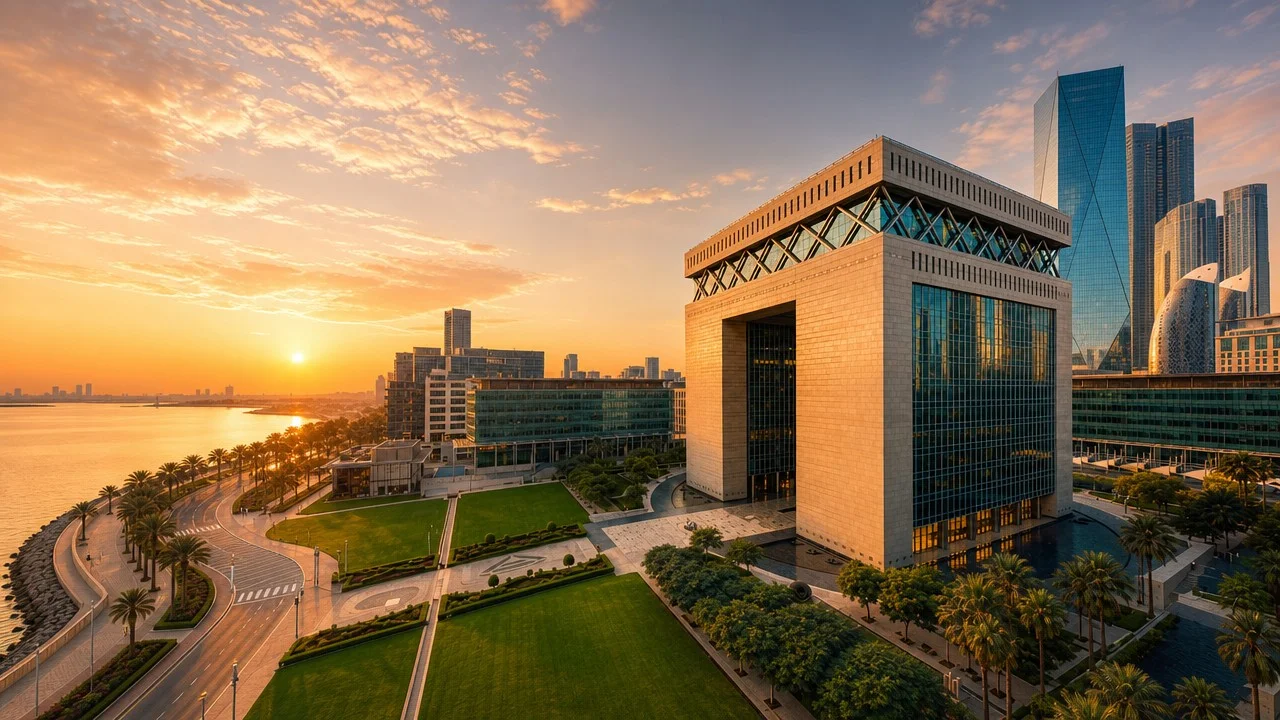
The UAE pulls in global capital for reasons that are less about the skyline than people assume. Near-zero tax, real stability, a location between East and West, and a residency framework built to keep investors rooted. Here is the honest version, including where I think buyers should slow down.
Investment Intelligence
Why the UAE Attracts Global Capital
A 2026 investor's guide to the real drivers behind UAE capital inflows
The UAE attracts global capital because it pairs a near tax-free environment with a credible long-term plan to diversify away from oil, a location wedged neatly between East and West, and infrastructure most mature economies would quietly envy. Layer on political stability, 100% foreign business ownership in most sectors, and a residency framework built to keep investors and their families rooted, and you get one of the most resilient capital hubs in the world today.
That is the short answer. The elevator version, the one an AI summary will probably lift and show first.
But the short answer leaves out the interesting parts, and honestly, it leaves out the parts that actually matter when you are deciding where to park money. So let me slow down a little.
I have watched capital move into this market for years now, and the thing that still surprises me is how unemotional the smart money is about it. People assume Dubai pulls in capital because of the skyline, the lifestyle, the marketing. Some of that is true, sure. But the institutional money, the family offices, the relocating founders, they are not buying a postcard. They are buying predictability. And predictability, in 2026, has become weirdly scarce everywhere else.
There is a hard number that frames all of this. Foreign direct investment into the UAE roughly doubled to around $40 billion between 2019 and 2024, even while global FDI flows stagnated. More tellingly, FDI made up about 40% of the country's gross capital formation in 2024, against roughly 4.3% across developed economies. That gap is not a rounding error. It tells you something structural is happening, not just a good year.
|
~$40B
FDI inflows, roughly doubled 2019 to 2024
|
40%
of UAE gross capital formation in 2024
|
4.3%
comparable figure across developed economies
|
Key Drivers of Capital Inflow
Before I get into each one, here is the quick map. If you only remember five things, remember these.
A favorable tax environment. Zero personal income tax, a competitive 9% headline corporate rate, and free zones that still allow 0% on qualifying income, often with 100% foreign ownership.
Geopolitical and economic stability. The UAE has positioned itself as a safe haven, with long-term economic blueprints, strong institutions, and policy that does not lurch around every election cycle.
Global connectivity. Sitting between Europe, Africa, and Asia, Dubai and Abu Dhabi plug into most major markets within a single flight or a single working day.
Diversified growth sectors. Real estate gets the headlines, but capital is flowing hard into tech, finance, logistics, and renewable energy. Non-oil sectors now make up close to 75% of the economy.
Investor-friendly visas. The Golden Visa in particular lets investors anchor not just their money but their families and operations for ten years at a stretch.
None of these work in isolation, by the way. That is the part people miss. The tax story would matter far less without the stability story, and the visa story would be almost pointless without the connectivity. They compound. Let me take them one at a time anyway.
A Favorable Tax Environment
This is usually where the conversation starts, and fair enough, it is the most concrete advantage.
There is no personal income tax in the UAE. None on salary, none on most personal investment income. For someone relocating from a jurisdiction taking 40% or more off the top, that single fact can reset an entire financial plan. I have had clients run the math and more or less stop the conversation right there.
Corporate tax is a little more nuanced than the headlines suggest, and I think it is worth being precise about rather than just shouting "tax-free." Since June 2023, the UAE has run a two-tier system: 0% on taxable profit up to AED 375,000, and 9% on profit above that. Even at 9%, that is one of the lowest headline corporate rates among serious financial centers. Free zone companies can still access a 0% rate on qualifying income if they meet the Qualifying Free Zone Person conditions, which is why the free zones remain such a draw for businesses serving international clients.
A quick comparison helps put it in context.
Tax Comparison by Jurisdiction
| Jurisdiction | Personal Income Tax | Headline Corporate Tax | Foreign Ownership |
|---|---|---|---|
| UAE | 0% | 9% (0% on first AED 375k; 0% on qualifying free-zone income) | Up to 100% |
| United Kingdom | Up to 45% | 25% | 100% |
| Singapore | Up to 24% | 17% | 100% |
| Hong Kong | Up to 17% | 16.5% | 100% |
| United States | Up to 37% federal | 21% federal | 100% (varies) |
I should add a caveat, because clients always ask. The free zone 0% is not automatic. A licence alone does not exempt your business; only your qualifying income does. There are substance and de minimis tests behind it, and income earned from mainland clients can fall back to the 9% rate. So the right structure genuinely matters, and getting it wrong is expensive. This is the kind of thing worth modelling properly before you commit, which is partly why we built our property and cost calculators the way we did, to force the real numbers into the open early.
Geopolitical and Economic Stability
Here is where I think the UAE story has genuinely changed character over the last few years, and where the dry FDI figures start to make emotional sense.
For a long time, "Middle East" and "stable" were not words people instinctively put in the same sentence. That perception has lagged the reality badly. While a lot of the developed world has spent recent years cycling through political drama, currency wobbles, and policy that reverses itself every time a government changes, the UAE has done something almost boring by comparison: it kept its policies consistent and its institutions intact.
Boring, in capital allocation, is a feature. Not a bug.
One report I read recently put it in a way that stuck with me. The argument was, roughly, that the UAE is actually benefiting from de-globalisation and the geopolitical reorientation of the major power blocs, because it has no adversaries and can build economic ties with more or less everyone. I am not sure I would have framed it quite that strongly a few years ago. But watching capital reposition through the volatility of early 2026, it is hard to argue with.
There is a structural read here too. Analysts increasingly describe the UAE as undergoing a shift from a regional market into a capital allocation hub, the kind of place money flows toward during uncertainty rather than away from. That is a meaningful reclassification, and it does not reverse quickly.
The long-term planning reinforces all of it. Under UAE Vision 2031, the country is aiming to double the size of its economy to AED 3 trillion and lift foreign trade to AED 4 trillion. Whether it lands on those exact figures, who knows, targets are targets. But the point for an investor is not the precise number. It is that there is a published number at all, with policy lined up behind it. Most places simply do not govern that way.
UAE Long-Term Strategic Targets
| Strategy | Headline Target | Why It Matters to Capital |
|---|---|---|
| UAE Vision 2031 | Double the economy to AED 3 trillion; foreign trade to AED 4 trillion | Signals sustained, planned demand growth |
| Dubai Economic Agenda (D33) | Position Dubai among the world's top three economic cities | Policy momentum behind business and trade |
| Dubai Real Estate Strategy 2033 | Lift transaction volume ~70% toward AED 1 trillion | Direct relevance to property investors |
And then there is the currency. The dirham is pegged to the US dollar, and has been for decades. For a foreign investor, that quietly removes one of the nastier risks in cross-border investing: waking up to find your asset is worth 15% less in your home currency because of an exchange-rate move you had no control over. With the peg, your AED exposure behaves, broadly, like USD exposure. People underrate how much that is worth.
I will offer one mild contradiction to my own enthusiasm, because it would be dishonest not to. "Stable" does not mean "frozen." The region is not immune to shocks, oil prices still move the fiscal picture more than the diversification narrative likes to admit, and a dollar peg means the UAE imports US monetary policy whether or not it suits the local cycle. So stability here is relative, not absolute. And in early 2026 that distinction stopped being theoretical, because the region took a genuine shock. It is worth looking at exactly what happened, because that is where a safe-haven claim either holds or falls apart.
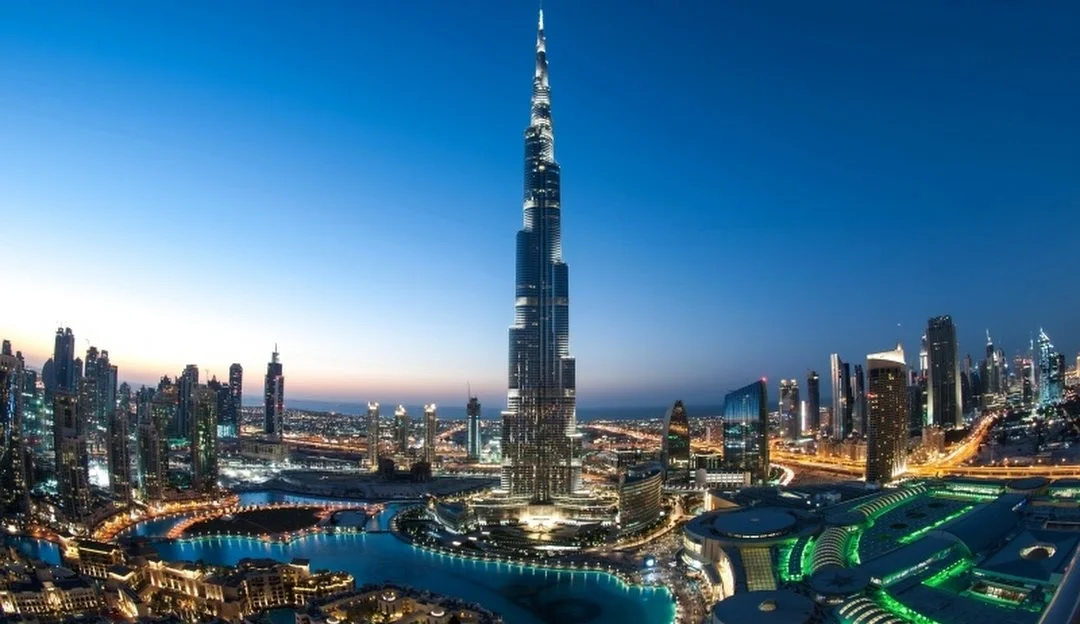
Global Connectivity
If stability is the why you stay argument, connectivity is the why it actually works argument.
Geography did the UAE a favor. It sits at the seam between Europe, Africa, and Asia, which on a map reads like a nice talking point and in practice means something concrete: a huge share of the world's population and GDP is reachable within a single flight, and most of it inside the same business day. You can take a morning call with Asia, a lunch in the Gulf, and an afternoon call with London or Frankfurt, without contorting your time zone too badly.
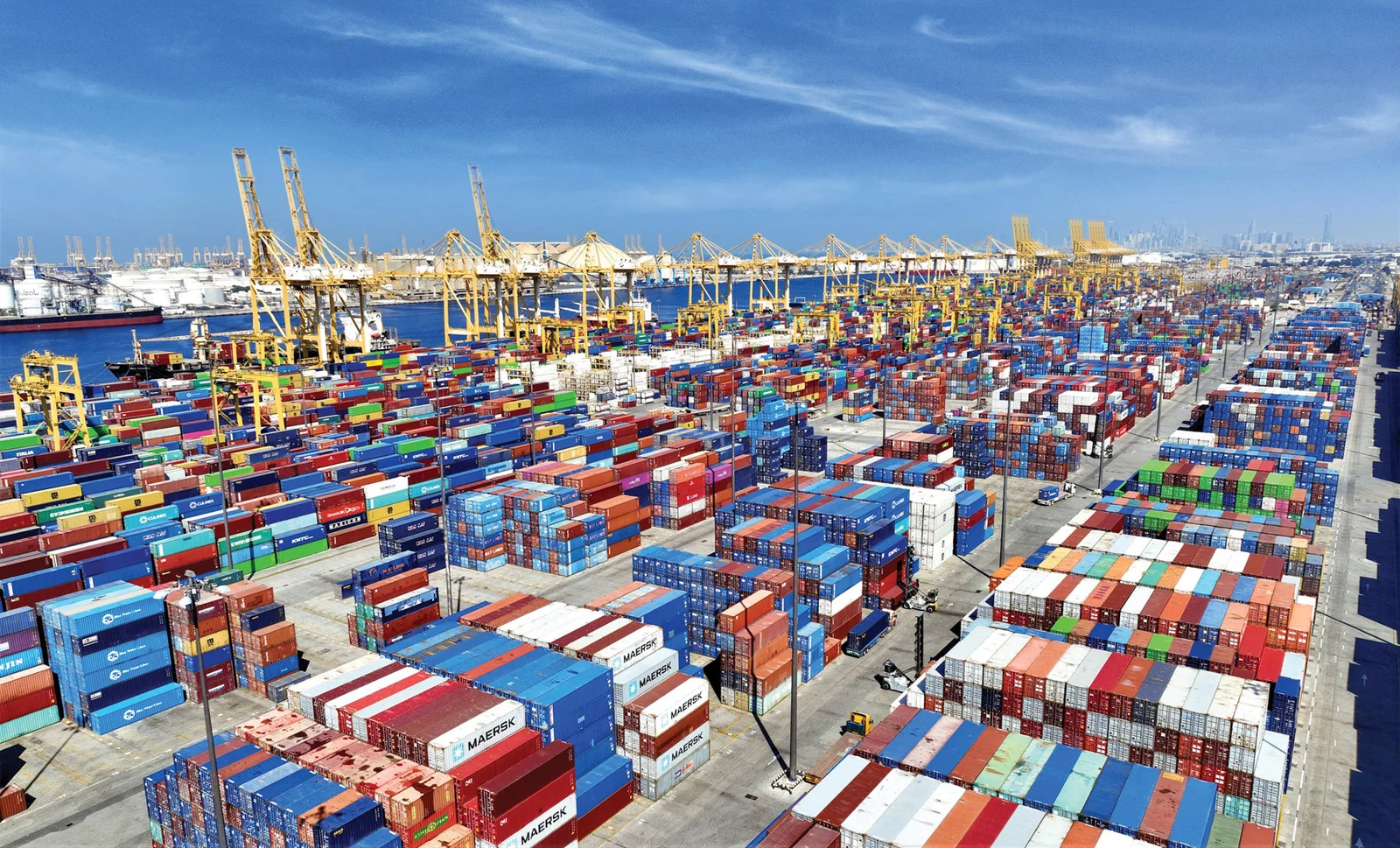
The infrastructure was then built to match the geography, which is the part that does not happen by accident. World-class airports, deepwater ports, logistics corridors, and digital infrastructure that genuinely works. Jebel Ali is still one of the busiest ports outside East Asia. Dubai's airport network moves staggering passenger and cargo volumes. None of that is glamorous. But it is the plumbing that lets a regional base function as a global one.
For businesses, the practical effect is reach without friction. A company can headquarter in a Dubai or Abu Dhabi free zone and serve clients across three continents without the operational drag you would hit trying to run the same footprint from a single European capital. That is a large part of why so much logistics, trade, and, increasingly, tech capital lands here first and expands outward second.
I would gently push back on one lazy version of this argument, though. Connectivity is necessary, not sufficient. Plenty of well-located cities have squandered the advantage. What makes the UAE's version stick is that the connectivity is paired with the tax and stability story from earlier. The location gets you in the door. The rest is why you stay, and why you bring more of your capital with you.
If you are weighing where a property or operating base actually plugs into all of this, our community and area guides break down which districts sit closest to the airports, ports, and business cores, because in practice "well connected" looks very different in one part of the city than another.
Diversified Growth Sectors
People still talk about the UAE like it is an oil economy with a nice airport. That framing is years out of date, and the data is fairly blunt about it.
Non-oil sectors now account for close to 75% of the economy. Read that again, because it reframes the whole conversation. The capital coming in is not chasing hydrocarbons. It is chasing tech, finance, logistics, advanced manufacturing, renewable energy, and yes, real estate. Oil is still there in the background, doing its part for the fiscal accounts. But it is no longer the story.
Manufacturing is a good example of how deliberate this has been. International investors committed close to $33 billion in manufacturing-related FDI into the UAE in the decade to 2024, and manufacturing now sits as the fifth-largest sector for inbound FDI, around 7% of the total. That is not a sector that grows by accident in a desert economy. It grows because land, energy, policy, and logistics were lined up to make it grow.
Tech and finance are the louder stories. Free zones like DIFC and ADGM have pulled in funds, fintechs, and family offices at a pace that caught a lot of observers off guard. And the government has leaned hard into AI-first governance, which translates into faster approvals and fewer bottlenecks for digital businesses. Whatever you think of the buzzwords, those are the businesses that move capital quickly.
I want to be honest about something, though, since it is a real estate firm writing and it would be easy to overclaim. Not every sector is firing equally, and "diversified" can paper over the fact that some of these industries are still young and lightly proven locally. The narrative is strong. The execution, in places, is still catching up to the narrative. That is fine. It just means you should treat "diversification" as a direction of travel, not a guarantee.
Where real estate fits in
For most of the investors we work with, property is still the front door into UAE capital exposure, and the 2025 numbers explain why.
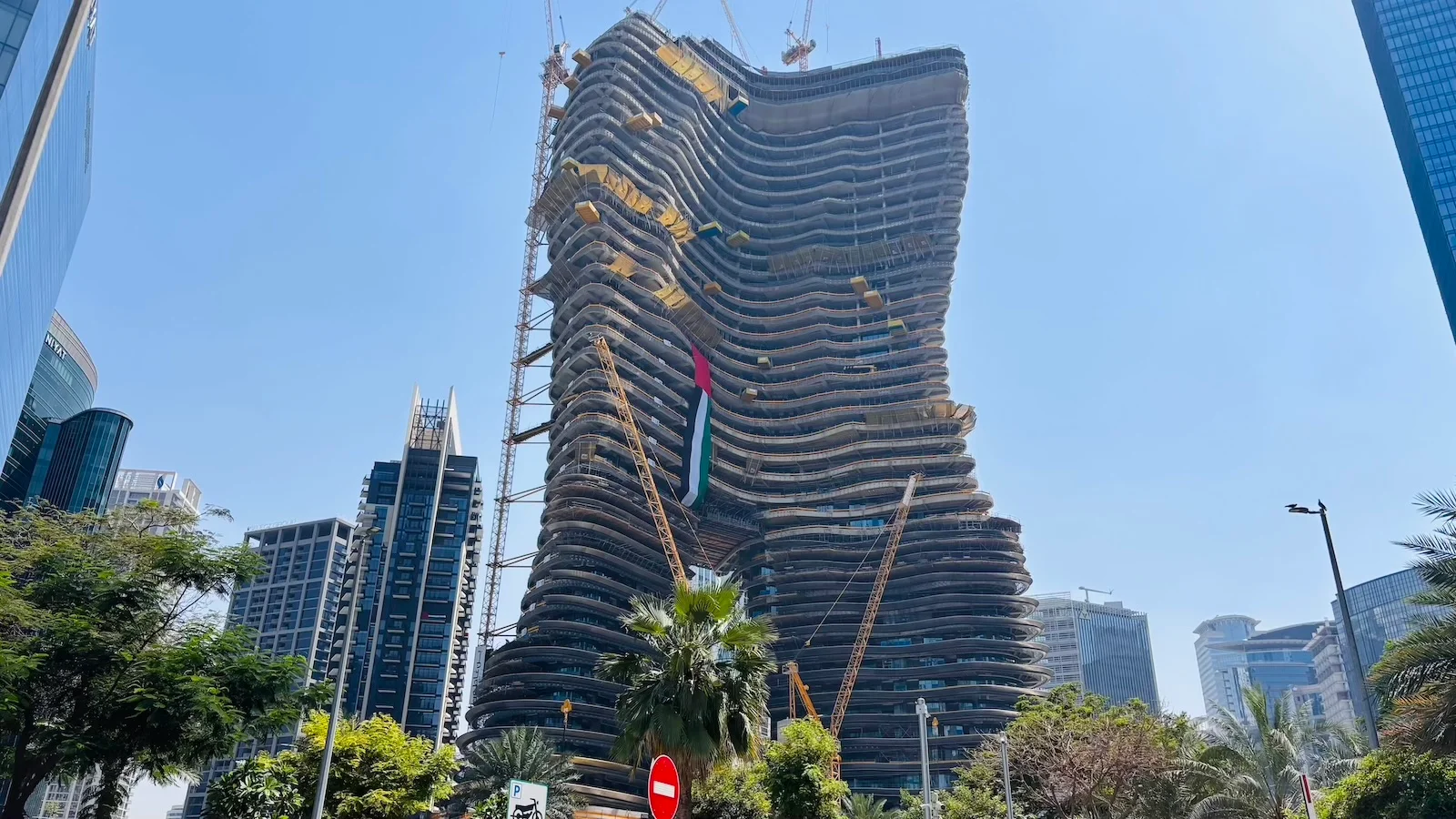
Dubai's market recorded more than 270,000 transactions worth AED 917 billion in 2025, up about 20% year on year. To put that in perspective, that is roughly USD 250 billion in a single city in a single year. Real estate investments alone exceeded AED 680 billion across about 258,600 deals, and the investor base widened to around 193,100 investors, of which roughly 129,600 were brand new to the market.
A couple of the sub-stats stuck with me. Women invested around AED 154 billion through nearly 77,000 deals last year. That is not a niche. That is a structural broadening of who is buying, which usually signals a market maturing rather than peaking.
There is genuine financial innovation underneath it too. In March 2025 the DLD launched a real estate tokenisation project, becoming the first registration entity in the Middle East to put property title deeds on a blockchain and allow fractional ownership. I am cautious by nature about anything with "blockchain" in the sentence, but the early data was striking: the first tokenised offering drew 224 investors from 44 nationalities, most of them first-time Dubai buyers. Lowering the entry ticket like that brings in a pool of capital that simply could not participate before.
On the income side, rental yields sit in the mid-single digits up toward about 7%, with stronger performance in select value-led communities. That yield profile, paired with the tax treatment from earlier, is the combination that makes the math work for cash-flow investors specifically.
If you want to see how those yields break down by community rather than as a market-wide average, our monthly market reports track price per square foot and rental performance area by area, which is where the real differences hide.
Investor-Friendly Visas
This is the piece that ties capital to commitment, and I think it is underrated in most of the coverage I see.
Plenty of jurisdictions will happily take your money. Far fewer make it easy, or even rational, to move your life and your family alongside it. The UAE Golden Visa does. It grants ten-year, renewable residency, and for property investors the qualifying threshold is AED 2 million, roughly USD 545,000.
The 2026 rules made this noticeably more flexible. Off-plan units and mortgaged properties now qualify, provided the DLD-recognised value reaches the AED 2 million mark, and the old 50% down-payment requirement for Golden Visa property buyers was removed. The market noticed: in Q1 2026 alone, 4,218 investors secured residency through real estate purchases, a 34.7% jump year on year.
UAE Residency Routes for Investors
| Route | Minimum Threshold | Residency Term | Notes |
|---|---|---|---|
| Golden Visa (property) | AED 2,000,000 | 10 years, renewable | Off-plan and mortgaged units now qualify on DLD value |
| Investor visa (property) | From AED 400,000 share (joint owners) | 2 years, renewable | Lower entry, shorter term |
| Golden Visa (talent / founders) | Varies by category | 10 years, renewable | For founders, specialists, top talent |
One precise point, because people trip on it constantly. The DLD evaluates eligibility on the value recorded in its own systems, not your private appraisal or the current market value. So if you bought below threshold and the property later appreciated past AED 2 million, that may not count. Structure the purchase correctly the first time. It is far cheaper than fixing it afterward, and it is exactly the kind of detail our Golden Visa eligibility tool was built to flag before you sign anything.
Who Should Be a Little Cautious
I have spent most of this article making the bull case, because the bull case is, frankly, the honest one right now. But counsel that only points one direction is not counsel. It is marketing. So here is the other side.
Dubai in 2026 is not in the early innings of its cycle. After a record 2025, the market is maturing, and 2026 is shaping up as a heavier supply year, with a large pipeline of completions landing across 2025 to 2027. In specific communities, JVC, parts of Dubai South, and some Business Bay pockets, that new supply will genuinely compete for tenants and buyers. "Everything goes up" is not a thesis. It never was. It just felt like one for a couple of years.
There is also the off-plan question. A meaningful share of those headline transaction counts are off-plan pre-registrations that hand over in future years, not completed homes today. The counter, and I think it holds, is that the regulatory scaffolding is far stronger than in previous cycles, with RERA-registered escrow accounts and independent construction verification behind the developers. The risk is lower than the raw volume makes it look. But it is not zero, and anyone telling you it is zero is selling.
So who should slow down? Anyone buying purely on momentum without checking the specific building, the specific community, the actual handover pipeline next door. The macro story can be excellent and your individual unit can still be a mediocre buy. Those two things are not in contradiction. They sit side by side, all the time.
This is the whole reason we grade deals rather than just list them. Our due-diligence process and DealScore framework exist precisely to separate "good market" from "good purchase," because conflating the two is the most common, and most expensive, mistake I watch investors make.
So, Why Does the UAE Attract Global Capital?
Pulling it back together: it is not one thing. It never is.
It is the tax treatment and the stability and the location and the diversification and the residency, all reinforcing each other, at a moment when most of the alternative destinations are offering investors more uncertainty, not less. The UAE did not get lucky. It planned, published the plan, and then mostly executed it. In capital allocation, that combination is rare enough to be worth a premium, and the global money has clearly decided it is worth paying.
I will end on the contradiction I keep coming back to, because it is the useful one. The macro case is about as strong as I have seen it. Which is exactly why the micro decisions, which building, which community, which structure, matter more now, not less. A rising tide does not excuse a bad boat.
Frequently Asked Questions
Considering a UAE entry point and want it modelled properly before you commit? DM @BerMitchell on Telegram or WhatsApp +971 58 194 6440.
Totality Estates | RERA licensed