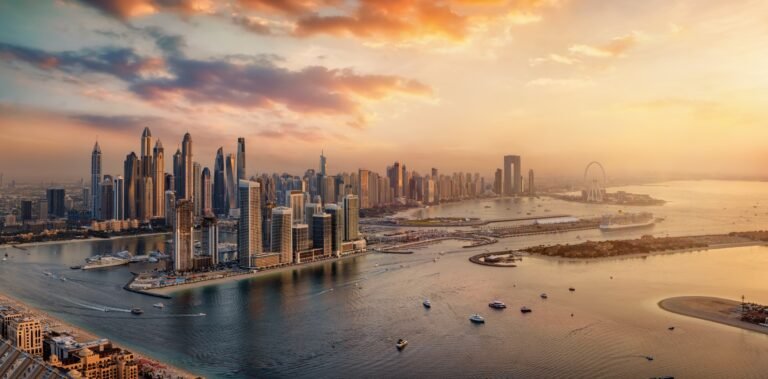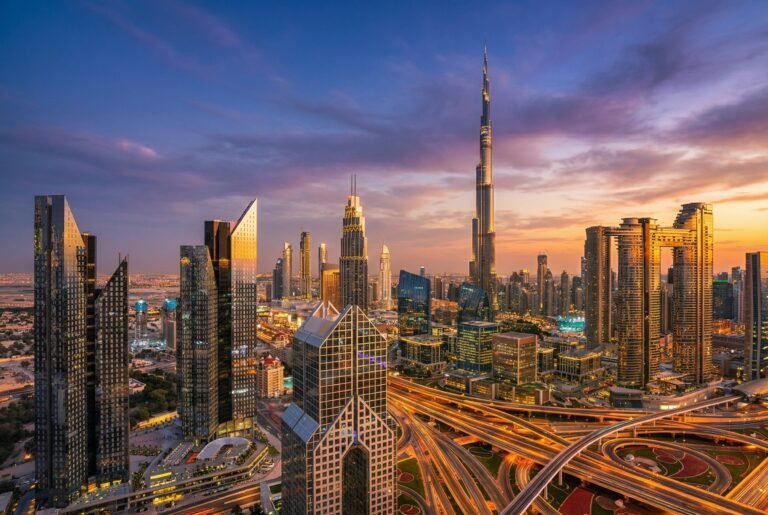

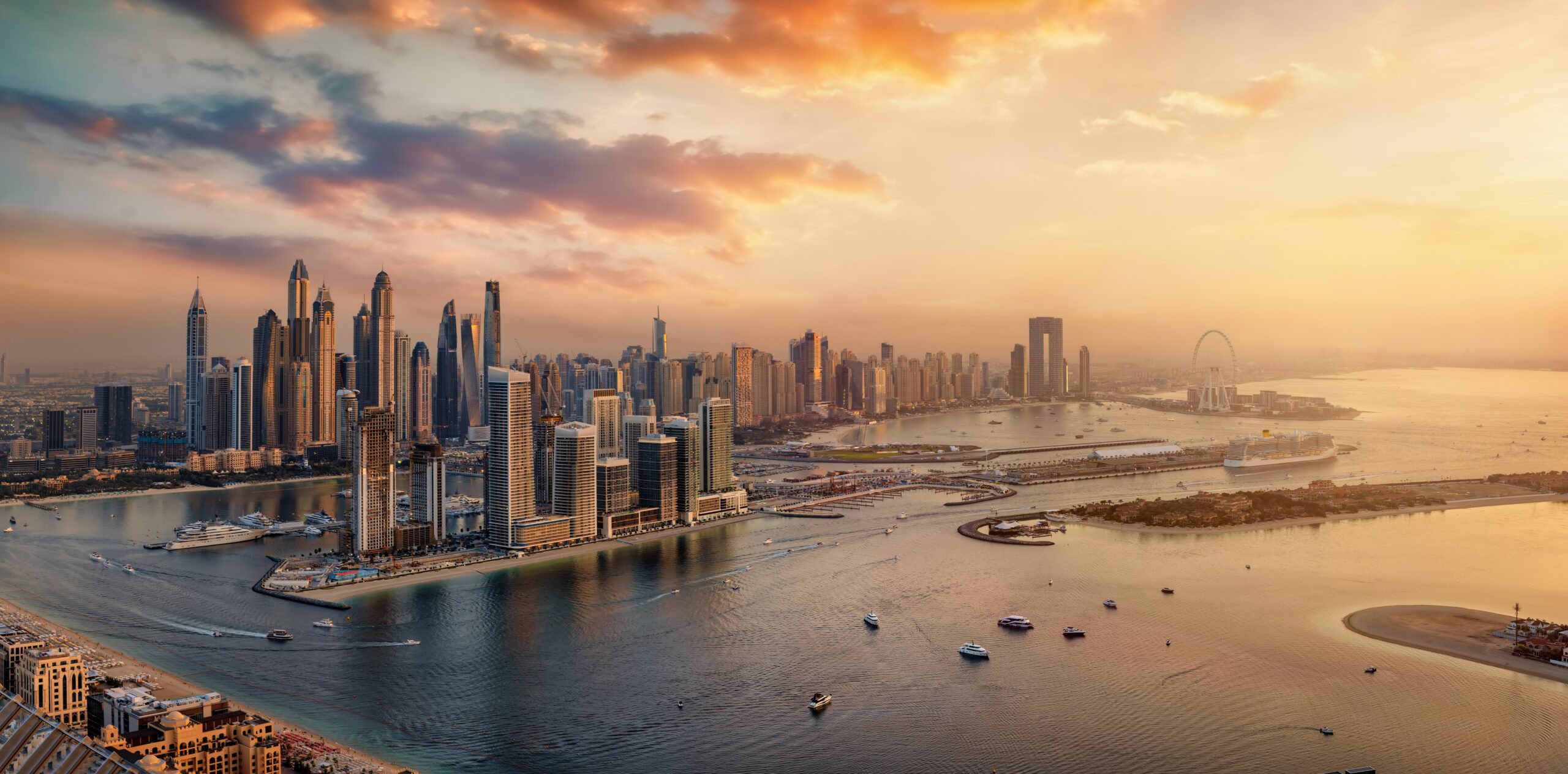
Forget the skyline shots and the headline price swings for a minute. The question that matters if you are putting capital into Dubai property with a three-year horizon is simpler and less dramatic: what actually moves this market, and what happens to your returns if the next few years go well, go great, or go sideways. Here is how I read the drivers, and three scenarios worth pricing before you commit.
The forces that actually set the direction
Four things do most of the work here, and they pull in the same direction more often than not.
Population. The emirate is targeting growth north of 4 percent a year, which would take it past 4.5 million residents by 2026, up from roughly 3.6 million today. Immigration, long-term visas and the fact that people can now base themselves here and work anywhere keep feeding that number. More residents means more tenants, and tenant demand is the floor under everything else.
Supply. There are close to 400 new residential towers and villa communities in the pipeline through 2026. Most of that is mid-sized or mass-market stock. Prime off-plan in the waterfront and branded segments is set to grow more slowly, with developers releasing in measured phases rather than dumping inventory. That split matters. The oversupply risk sits in the mid-market, not at the top. The September 2026 Dubai property transaction data shows that split clearly.
Regulation. The Real Estate Regulatory Agency keeps tightening escrow rules, developer solvency checks and payment-plan transparency. Unglamorous work, but it lowers the odds that a developer takes your deposit and stalls. That is real risk coming out of the system.
Infrastructure. Metro extensions, airport expansion, the conversion of the Expo site into mixed-use residential, and the second phase of Dubai Creek Harbour are redrawing where people can realistically live and work. Access is what turns a cheap outer area into a place tenants will actually pay for.
Those four are why the three scenarios below diverge. The gap between them comes down to supply-demand balance and how much global capital keeps flowing in.
Base case: steady, and forgiving
The base case is Dubai carrying on more or less as it is. Rental yields hold near 6 to 7 percent in prime segments and 8 to 9 percent in mid-income communities. Secondary-market turnover sits around 45 percent of all transactions. Sales volume grows about 5 percent a year, taking total traded value from AED 430 billion in 2024 to roughly AED 500 billion in 2026. Capital values rise 4 to 6 percent a year in established zones like Business Bay, Dubai Marina and Jumeirah Beach Residence, and in newer nodes such as Dubai Creek Harbour and Dubai South. Developers hit their milestones. Liquidity stays high.
For an investor, this is the version where the numbers behave. Income assets cover their costs and give you some upside on top. Off-plan holders can find a buyer before handover if they want out. New infrastructure slowly lifts the communities further from the core. Nothing spectacular, nothing frightening.
Optimistic case: capital piles in, luxury tightens
The upside version has global money accelerating into Dubai as investors treat it as a safe place to grow capital while other markets wobble. Demand climbs from Europe, North America and Asia. Sales volume reaches AED 550 billion by 2026, and luxury deals above AED 15 million grow 25 percent year on year. Yields in top-tier communities push to 7 to 9 percent as occupancy clears 92 percent. Capital values follow, 8 to 10 percent a year in prime zones and 6 to 8 percent in the mid-market.
The squeeze lands in ultra-luxury. Branded residences, golf-course estates and island villas sell out on launch, and off-plan assignment volumes run past 40 percent. Infrastructure gets pulled forward too: the metro reaching Dubai Hills, Expo land turning into Harbour Gateway, both pulling early money toward those areas. Easing tensions in the region open the door to more Saudi and Qatari buyers.
In this world you get fast capital growth stacked on top of strong yield. Resale windows are shorter, so buyers who can move quickly capture launch pricing or multi-unit discounts. The catch is that everyone else sees it too, so the edge goes to whoever acts first.
Risk case: a shock, or too much stock at once
Now the version nobody prints on the brochure. A global slowdown thins out international capital. Big off-plan projects run late. Regulators tighten mortgage limits or the tax picture shifts. Yields drift down toward 5 percent in the mid-market and 4 percent in luxury. Sales volume flattens at AED 470 to 480 billion, and capital appreciation stalls at 2 percent, or flat in the sectors carrying too much supply.
Occupancy in new communities slips below 88 percent. Developers stretch payment plans and trim their marketing forecasts. Assignment volumes fall as buyers turn cautious. Delays or rezoning push the Expo and Creek Harbour value bump back a year. Exit windows narrow and pricing power moves to the buyer.
If you are holding mid-market units here, rental coverage gets tight and resale values sit still for a cycle. Ultra-luxury takes small discounts off asking. Long-term holders still collect yield. It is the short-term flippers who get caught. The damage is contained, but it is real, and it is worth underwriting before you buy, not after.
Where this leaves an investor
A few things hold across all three. Dubai’s regulatory reforms, its faster infrastructure delivery and its pull on global capital keep the market liquid and reasonably transparent whichever way the cycle turns. The variable is the balance between supply, demand and capital flows.
If you are buying for long-term income, the base case is both realistic and hard to get badly wrong. If you can move fast and hold premium assets, the optimistic case rewards you most. The people who get hurt are the ones buying at peak prices right as supply crests, if the risk case shows up.
So build in some optionality. Buying near a coming metro line or inside a master-plan hot zone gives you a second way to win. Units that clear the Golden Visa threshold hold up across all three scenarios. Scarcity does real work, so branded residences and genuine waterfront tend to outperform when things tighten. And keep yourself flexible: structures that let you assign before handover, or simply being a cash buyer who can act, are worth more than they look on paper.
The honest read to 2026
Dubai stopped being a pure speculation play a while ago. It runs on policy that is now fairly clear, a demand base that has diversified, and physical infrastructure that keeps people and money moving. The path forward is not certain, but it is legible. Base case, yields hold and appreciation is moderate. Optimistic case, luxury tightens and values climb quickly. Risk case, a shock or a delay hands leverage to buyers for a while.
If you want to work out which of these actually applies to your budget and the areas you are looking at, book a 20-minute strategy call, or register for the next Dubai investing webinar with Totality Estates, where we go through live data, the emerging communities, visa thresholds and timing.