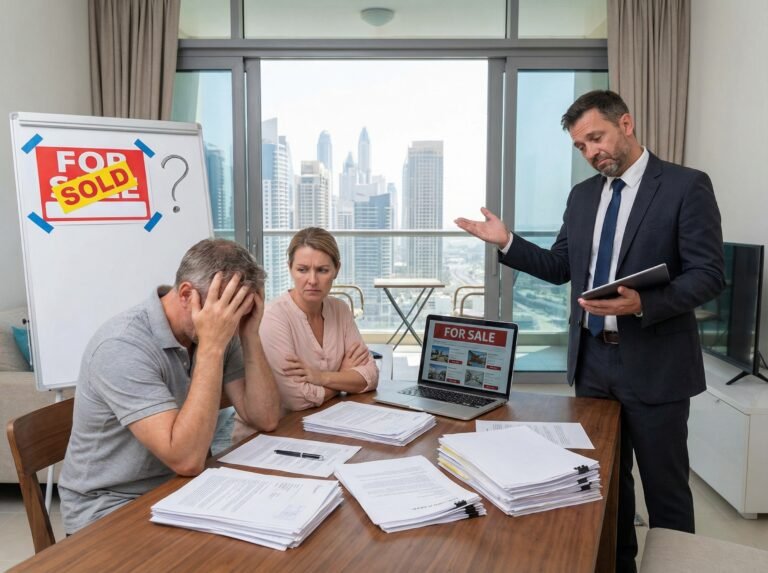


Most of the money buyers lose on a Dubai property is not lost at the negotiating table. It is lost at the viewing, in the things nobody looked at closely: the hairline crack that was actually a settlement crack, the damp patch behind the wardrobe, the road that is silent at 11am and gridlocked at 6pm. A viewing is your one cheap chance to find those before they become your problem. Here is what to actually look at.
Check the structure first
The structure is where the expensive surprises hide. A structural problem costs real money to fix and drags down both the safety and the value of the property, so this is the part of the viewing to slow down on.
The signs worth spotting yourself
Start with the walls, ceilings and floors, and look for cracks. Small hairline cracks are normal in older buildings. Larger ones, particularly anything wider than 3mm, can point to something more serious. Pay attention around doorways, windows and corners, because those are the spots that move first.
Then check for damp and mould, especially in the wet areas: bathrooms, kitchens, anywhere below ground. Damp patches, peeling paint or a musty smell all suggest water getting in or poor ventilation. Left alone, that turns into long-term damage.
Finally, walk the floors. A floor that slopes or feels uneven can signal a foundation issue, and those repairs are rarely small. None of this needs a specialist to notice. It just needs you to look properly instead of admiring the kitchen.
Why a professional inspector earns their fee
You can catch a lot on your own, but a professional inspector is what turns a hunch into a report. A qualified inspector goes through the structure, the electrics, the plumbing, the roofing and the rest, and hands you a written account of the condition and anything that concerns them.
They find the things you cannot see: a plumbing leak inside a wall, an electrical fault, a structural weakness that only reads to a trained eye. And the report is leverage. If it turns up problems, you have grounds to negotiate the repairs or the price rather than discovering the issue after you own it.
The red flags that mean real repair bills
Foundation cracks, particularly larger ones or any sign of the building settling, are a serious warning. Water stains on ceilings or walls usually mean past leaks, which may have left damage or mould behind them.
Check the age and condition of the HVAC, plumbing and electrical systems too. Anything outdated or badly maintained is a repair or replacement bill waiting to land on you. Note it now, price it in later.
Weigh up location and access
Location drives value and it drives how much you enjoy living there, so the area deserves as much of your attention as the property itself.
What sits within reach
Proximity to the things you use matters. If you have children or expect to, being near good schools is not optional, so research the local schools and how far they are. Access to hospitals and healthcare carries the same weight, especially for families or older residents, so make sure decent options are a reasonable distance away.
Then there is transport. Easy access to a metro station or bus routes lifts both the value of the property and the quality of your daily life, and in a city like Dubai that counts for a lot.
What the neighbourhood is about to become
Find out what is planned nearby: new shopping centres, parks, infrastructure. These can lift the value of your property, and they can also bring more traffic and noise, so it cuts both ways.
Reading the area’s urban development plans tells you the long-term vision for the neighbourhood. Areas earmarked for significant development often see stronger appreciation, which makes them worth the look.
Check the zoning too. It tells you whether the character of the area is likely to hold or shift. If a residential area gets rezoned for commercial use, that changes the environment and the values around it.
Visit at different times of day
Go back during peak hours to read the traffic. Congestion and access look very different at rush hour, which matters if you commute or run a school run.
Noise is the other one. Spend time there across the day and into the night. Nearby construction, a busy road or a lively nightlife scene can undo the calm you thought you were buying.
And use those visits to read the community. Is it lively and safe in the day? What does it feel like at night? That is how you find out whether the location actually fits your life, rather than how it fits a listing photo.
Assess the interior and exterior
The interior and exterior shape both how liveable the property is and what it will resell for. During the viewing, look hard at the quality of the finishes, the state of the fixtures and how usable the outdoor space really is.
Layout, light and finishes
On layout, follow the flow of the space. Does it work, does it give you the room, privacy and comfort you need? An awkward or inefficient layout makes daily life harder and drags on resale.
Natural light is worth checking properly. Watch how much sun the property gets through the day, especially in the living room and bedrooms. Poorly lit spaces feel cramped and sell slower.
Then the finishes: flooring, countertops, cabinetry, tiling. Good finishes look better and they cut the odds of a costly repair or replacement soon after you move in. Cheap ones do the opposite.
Fixtures, fittings and appliances
Make sure the fixtures and fittings work, the door handles, light switches, plumbing fixtures. Faulty or dated ones often signal neglect and can mean replacement costs.
If appliances come with the sale, check their age, condition and whether they actually run. Replacing a fridge, an oven or an AC unit is not cheap, so confirm they work before you count them as a win rather than after.
Outdoor space
Look at the size, orientation and condition of any balconies or gardens. A well-kept garden or a decent-sized balcony adds real value and real enjoyment.
Check the parking. Is there enough for your needs, is it secure, is it easy to get to? In the denser parts of Dubai, parking can decide the whole thing.
And if the property sits in a larger development, look at the shared amenities: pools, gyms, playgrounds. How good are they, how accessible? They feed straight into your quality of life, so weigh them in.
Do the work at the viewing, not after
A thorough viewing is what stands between you and an expensive surprise. Check the structure, weigh the location and access, and go through the interior and exterior properly. Inspect in detail, factor in what is coming to the area, and confirm the property is in the condition you think it is. That diligence is cheap now and priceless later.
For more on the Dubai market, these guides are worth a read: