
If you are setting up a company in Dubai, the free zone you pick shapes your costs, your visa quota, and how easily you reach your customers, so it is worth getting right the first time. Dubai has more than 30 of them, each with 100 percent foreign ownership, full profit repatriation, and exemptions from import and export duties and from personal and corporate tax. The differences are in industry focus, location, and infrastructure. Here are the five I point entrepreneurs to most often and who each one actually suits.
How free zones work
A free zone is a special economic area with its own authority, its own rules, and its own licensing process. That is what lets it offer full foreign ownership and the tax and duty exemptions. Because each zone writes its own regulations and is built around particular activities, the right choice usually comes down to the nature of your business, how close you need to be to your market, and the infrastructure you depend on.
1. Dubai Multi Commodities Centre (DMCC)
DMCC has been ranked the world’s number one free zone by the Financial Times’ FDi Magazine, year after year. It suits commodities trading, financial services, and technology businesses. Sitting in the middle of the city, it connects to global markets through Jebel Ali Port and Al Maktoum International Airport, and with more than 21,000 companies already inside it, the networking and business support around you is deep. It also lets you operate across several sectors at once, which helps if you plan to diversify.
As Ahmed Bin Sulayem, Executive Chairman and CEO of DMCC, puts it: “DMCC is the heartbeat of trade in Dubai. It’s where businesses come to grow and innovate. Our focus on providing top-tier infrastructure and services makes DMCC the perfect destination for entrepreneurs looking to succeed in a competitive global market.”
2. Dubai Internet City (DIC)
DIC is the largest ICT hub in the MENA region and home to Google, Facebook, and Microsoft, which tells you who you will be sitting alongside. For a tech startup that wants proximity to the big players and potential partners, this is the obvious base. The infrastructure is built for tech companies: data centers, co-working space, and accelerators, and the zone has strong government backing, so policy tends to move with the sector rather than against it.

Ammar Malik, Managing Director of Dubai Internet City, describes it this way: “Dubai Internet City is not just a place to do business; it’s where ideas come to life. We are committed to fostering innovation and helping tech entrepreneurs thrive in the digital age.”
3. Dubai Silicon Oasis (DSO)
Dubai Silicon Oasis is both a free zone and an integrated technology park, with residential, commercial, and industrial space in one place, so people can live and work on the same site. That mix, plus lower costs than the other tech-focused zones, is its main draw. It is built around technology, software development, R&D, and electronics manufacturing.
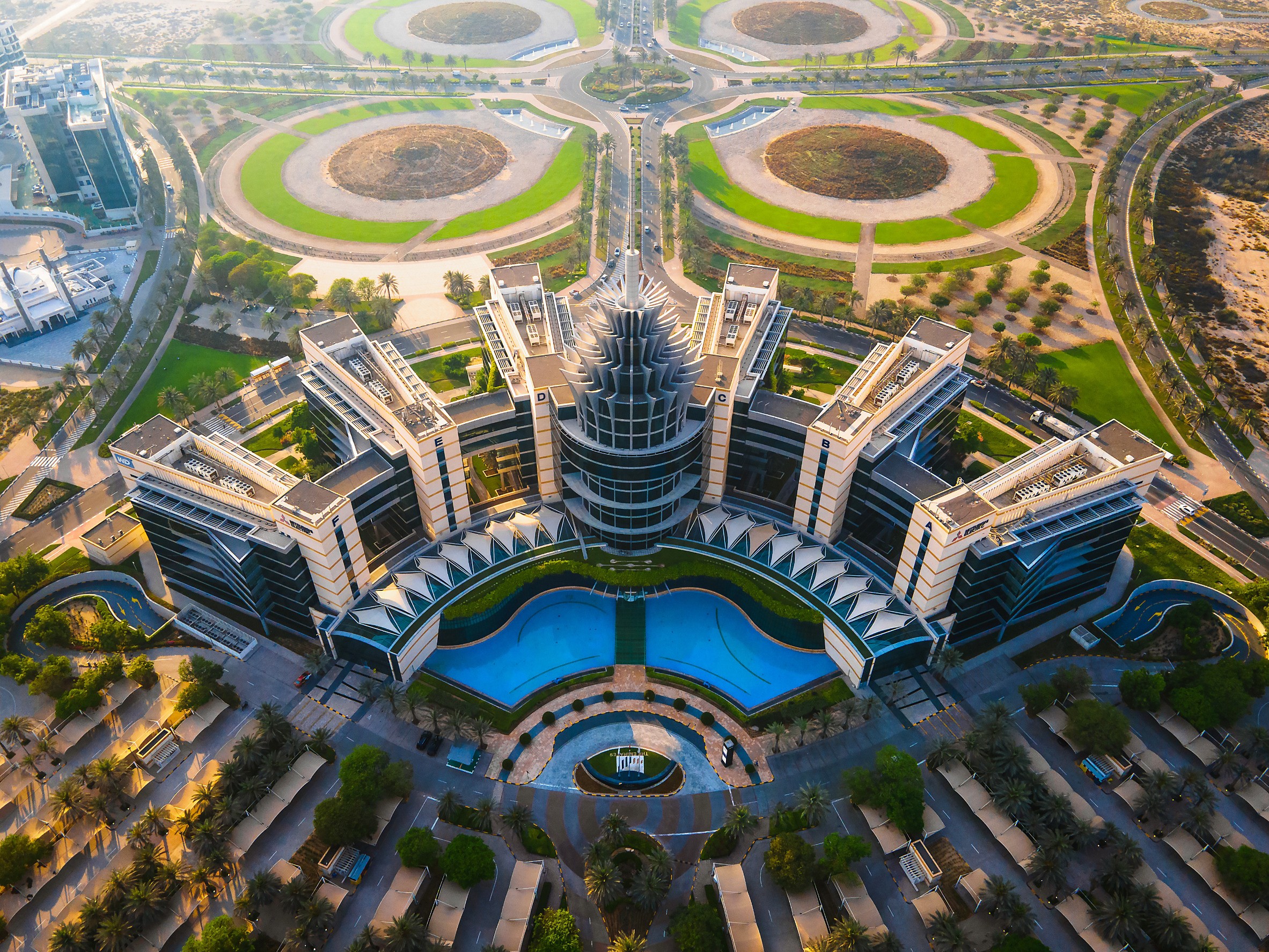
It also houses the Dubai Technology Entrepreneur Campus (Dtec), the largest tech startup hub in the MENA region, which matters if you want early-stage company around you. Dr. Mohammed Al Zarooni, Vice Chairman and CEO of DSO, sums up the intent: “Dubai Silicon Oasis is the epicenter of Dubai’s technology ecosystem. Our mission is to support the growth of tech startups by providing a nurturing environment where innovation can flourish.”
4. Dubai Airport Freezone (DAFZA)
Sitting right next to Dubai International Airport, DAFZA is built for anything that lives or dies on logistics: import-export, freight, aviation-related trade. The location means goods move quickly, and the zone pairs that with high-grade office space, warehousing, and the usual customs and tax exemptions. Its core industries are logistics, aviation, import-export, electronics, and pharmaceuticals.

Amna Lootah, Assistant Director General of DAFZA, frames it plainly: “DAFZA’s strategic location and modern facilities make it the perfect gateway for businesses looking to expand globally. We are committed to providing an environment where companies can thrive.”
5. Jebel Ali Free Zone (JAFZA)
JAFZA is one of Dubai’s oldest and largest free zones, home to more than 7,500 companies including some of the world’s biggest corporations. Its edge is Jebel Ali Port next door, the largest man-made harbor in the world, which makes it the natural home for logistics and heavy trade.

It serves manufacturing, logistics, trade, automotive, and consumer goods, and provides the full run of support services: licensing, visa processing, and legal help. Sultan Ahmed Bin Sulayem, Group Chairman and CEO of DP World, which operates JAFZA, puts it this way: “JAFZA’s strategic location and business-friendly environment have made it a cornerstone of Dubai’s economic success. We continue to attract businesses worldwide, providing them with the tools they need to succeed.”
Picking the right one
The short version: DMCC for trading and financial services with room to diversify, DIC if you want to sit inside the tech cluster, DSO for a lower-cost tech base where staff can live on site, DAFZA when speed to the airport is everything, and JAFZA when you are moving volume through the port. Match the zone to how your business actually operates, and the tax exemptions, full ownership, and infrastructure do the rest.