
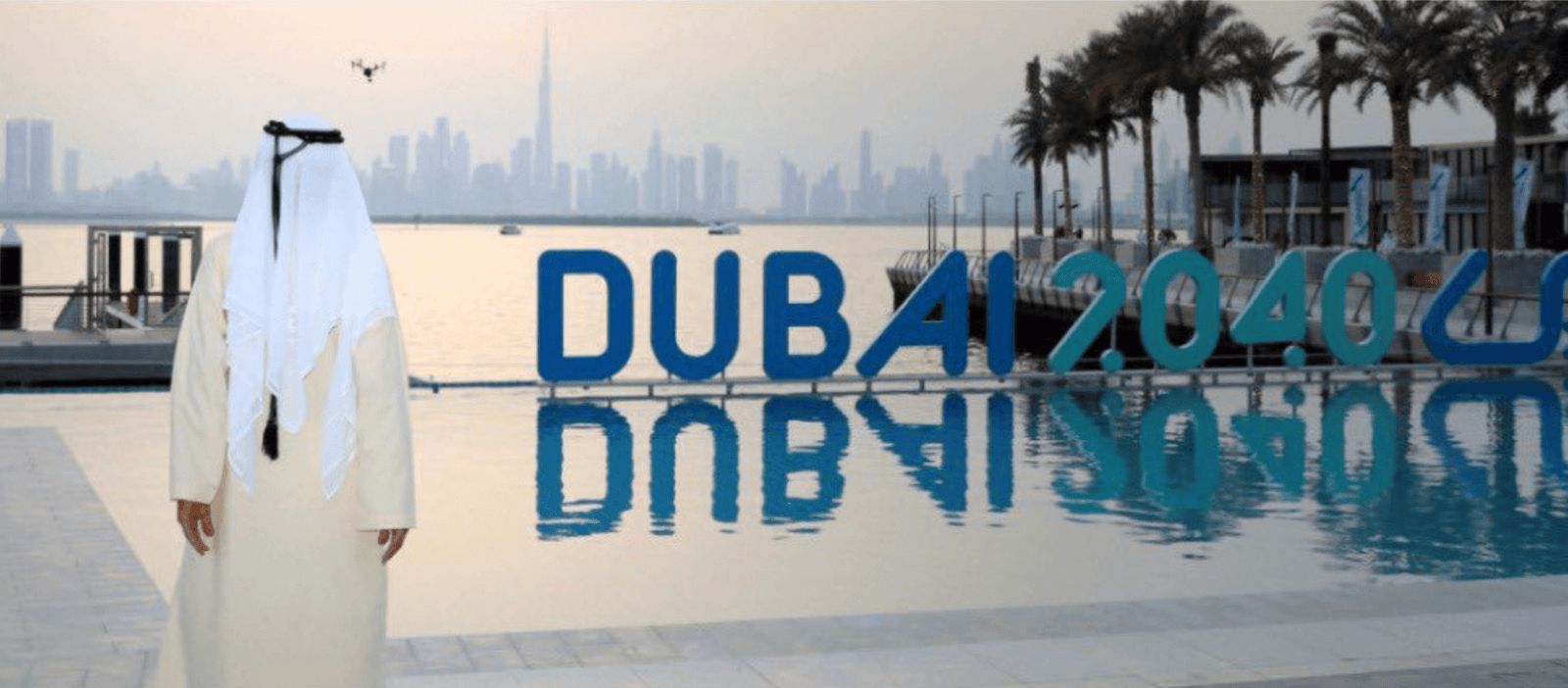
The Dubai 2040 Urban Master Plan is the clearest signal yet of where property values are heading, and it rewards investors who read it properly. It points demand toward mixed-use, sustainable, community-led development, backed by heavy spending on infrastructure, green space, and a population that keeps growing. The plan expects demand across both luxury and affordable housing, with the strongest pull in hubs like Downtown Dubai, Business Bay, Dubai South, and the new waterfronts. The best returns should follow the well-connected, sustainable, mixed-use projects, because that is exactly what the plan is built to favour.
What follows is a working read of how the plan is likely to shape the market: demand, values, specific areas, sustainability, connectivity, confidence, and affordable housing. Some of it is forecast rather than fact, and I’ll flag that where it matters. The aim is to give you something concrete to act on rather than a glossy vision.

Key Impacts on the Real Estate Market
Increased demand and value
Start with the headline number. The plan anticipates a population of roughly 5.8 million residents by 2040, and that alone drives demand for homes. Both residential and commercial assets stand to gain from capital appreciation, and potentially higher rental yields with it.
In practice, buying now in a growth corridor that lines up with the plan positions you for real future upside. But not every property rises equally. Oversupply in the wrong neighbourhood, or the wrong product such as oversized units in remote spots, can flatten your return. The safer path is to stick to areas the plan actually commits infrastructure and community investment to.
Growth in specific areas
These are the zones that stand out, part official plan and part my own read of how the market behaves.
Downtown Dubai and Business Bay
These stay the high-profile economic hubs, and both should keep drawing investment into modern residential and commercial towers. The plan pushes mixed-use density in strategic centres, which suits Business Bay in particular because it works for both business and living. The plan effectively reshapes the city’s geography around these pivotal centres. For an investor after liquidity, prestige, and global appeal, units in or near these hubs are the obvious hold.
Dubai South and Expo City

These are earmarked for smart, sustainable, integrated communities, with the plan aiming squarely at self-sustaining neighbourhoods that mix uses. Treat them as mid-term plays on a 5 to 10 year horizon that may need patience, but they offer scale and lower entry costs than the prime city-centre spots.
Waterfront developments
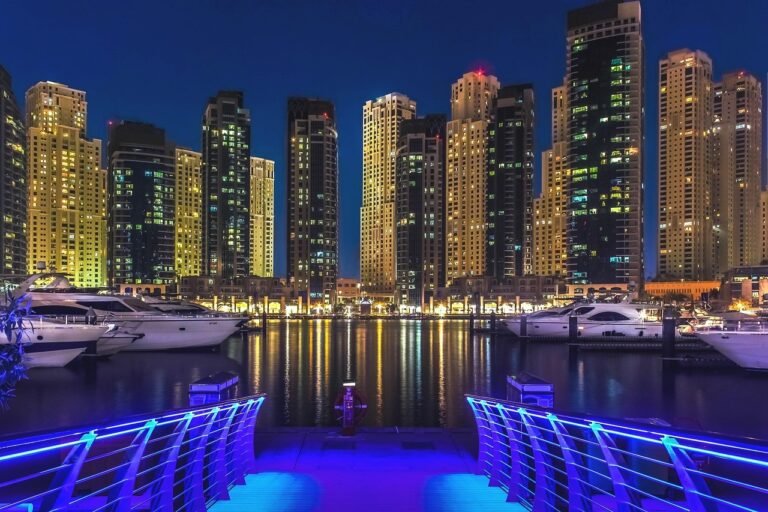
Lifestyle and leisure remain a strong draw, and the plan backs the expansion of green and beachfront space, referencing an increase in public beach space of up to 400%. Dubai Marina, Jumeirah Beach Residence (JBR), and new coastal areas should gain further in desirability.

Luxury swings harder than the mainstream market, so expect more volatility here, but these areas hold their appeal for overseas buyers and high-net-worth individuals.
Emphasis on sustainability
Sustainability is one of the strongest drivers in the plan, and it doesn’t always make it into investment pitches. It should. The 2040 plan is explicit about its green credentials, and that increasingly shows up in value.
Green spaces
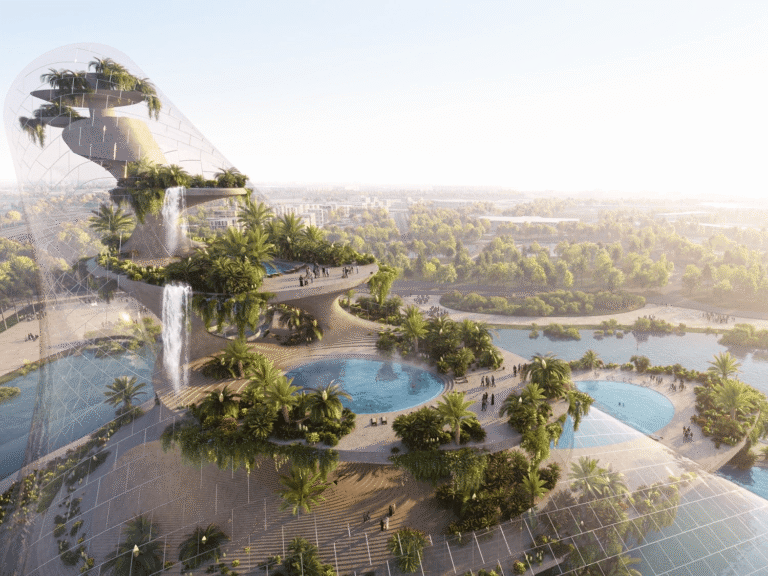
A large share of the plan goes to green and recreational areas, with some sources putting up to 60% of the area toward nature reserves and rural development. My view is that homes next to parks, beaches, or green corridors will command a premium over time, because residents and renters keep caring more about quality of life, walkability, and open space.
Eco-friendly buildings
The plan pushes smart and green building principles: renewable energy, efficient construction, lower carbon footprints.

Projects that genuinely deliver on sustainable design, smart-home readiness, and proximity to green corridors are becoming real differentiators, especially for the more discerning overseas investor.
Rise of integrated communities
The plan puts serious weight on self-contained neighbourhoods where people can live, work, and play without long commutes. The 20-minute city idea is creeping in. Areas like Jumeirah Village Circle (JVC), Al Furjan, and others should benefit, and they tend to attract families and long-stay residents rather than short-term speculators.
Improved connectivity
Transport and access matter enormously. New metro lines, road upgrades, walkable zones, all of it is spelled out in the plan.

Properties in connected zones, near metro, tram, or expressways, are easier to rent, easier to resell, and lower risk. Mapping where a property sits against the future transport network is one of the more reliable ways to judge it.
Investor confidence
This one is worth pausing on. A master plan gives developers and investors a regulatory and strategic backdrop, a signal that the city is building to a design rather than at random. The 2040 plan delivers exactly that: clarity and long-term vision. It lets you treat an opportunity as backed by a government strategy rather than pure speculation, provided you keep the disclaimers honest. Vision doesn’t guarantee outcomes. Market cycles, oversupply, and global headwinds still bite, and I’ll come back to those.
Affordable housing
The plan also serves the middle of the market, not just the premium end. There’s allocation for affordable housing and national housing initiatives, so supply in that segment will rise. For an investor, well-located affordable stock means real rental yield potential, but also more competition, so selection matters. Holding options across the spectrum, luxury and mid-income, is the sensible way to spread your base.
Quick Comparison of Impact Areas
| Impact Area | What the 2040 Plan Does | What It Means for Investors |
|---|---|---|
| Demand & Value | Population growth to ~5.8m; expansion of built area. | Higher upside in well-matched developments; pick location wisely. |
| Specific Zones | Focus on hubs like Downtown and Business Bay; new zones like Dubai South. | Premium areas and emerging zones both matter (emerging carries higher risk and return). |
| Sustainability & Lifestyle | 60% green area, smart and eco buildings, integrated communities. | Properties near green and open spaces and efficient homes likely command a premium. |
| Connectivity | Expanded public transport, access improvements. | Connected properties are easier to rent and resell. |
| Investor Confidence / Regulation | Long-term plan gives regulatory clarity. | Less speculative, more strategic investment. |
| Affordable Housing | Inclusion of housing for broader demographic. | Opportunity in the mid-income segment, but competition will rise. |
Practical Considerations and Caveats
- Timing matters. Many of the plan’s benefits land over years, 5 to 10 and beyond, not overnight.
- Oversupply risk. Too many units delivered too fast in one sub-zone can pressure price and yield, exactly as in previous Dubai cycles.
- Location still rules. A beautiful plan zone far from transport or amenities can underperform a plainer but very well-connected area.
- Macro factors persist for overseas investors: currency risk, global demand, economic cycles, visa and immigration rules. The plan softens some risk, not all of it.
- Balance enthusiasm with realism. The vision is genuine, but the metrics, rental yields, capital growth, timeline, developer track record, are what should drive the decision.
Area-by-Area Growth Forecasts under the Dubai 2040 Master Plan
Look closely and the plan isn’t only about expansion. It’s about redistribution, rebalancing population density and economic activity across five main urban centres. Each centre has a slightly different role, and that’s what makes this vision feel more realistic than earlier plans did.
1. Downtown Dubai & Business Bay: Core Financial Heart
No surprise that these two are tagged as the primary urban centre. They stay the city’s business and tourism anchors, with the Burj Khalifa, Dubai Mall, the Opera District, and the Canal all reinforcing global prestige.
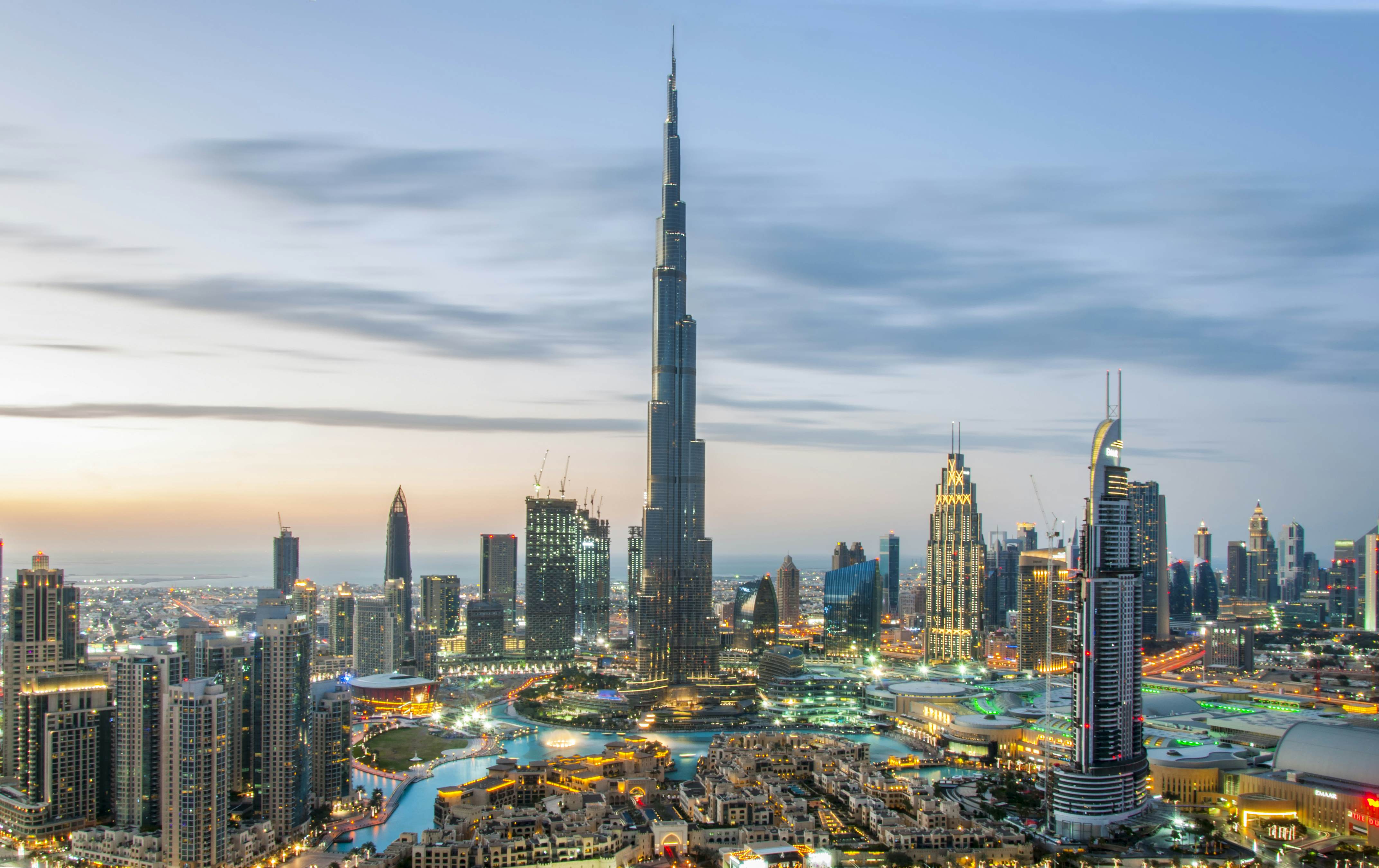
Projections from Khaleej Times and Arabian Business have this corridor continuing to pull in multinational headquarters and international investors, with the key shift toward mixed-use vertical living. Developers like Emaar, Select Group, and Omniyat are already aligning to it, blending branded residences, boutique offices, and lifestyle amenities.
For investors, that translates to:
- Capital growth stability, typically 4 to 6% per year.
- Rental yield resilience around 5 to 7%.
- Liquidity, since the exit window here is faster than almost anywhere else in the emirate.
Projects such as Peninsula by Select Group or The Opus by Omniyat are textbook examples of developments that match both the mixed-use and design-driven criteria of the 2040 plan.

2. Dubai South & Expo City Dubai: Smart Sustainable Hub
If one district embodies the future-proof side of the plan, it’s this. Dubai South isn’t just near the airport. It’s the geographic link between the new Al Maktoum International Airport expansion and the Etihad Rail network, both crucial 2040 infrastructure anchors.

The master plan forecasts roughly a million residents in the south corridor alone. Expo City Dubai is already a working prototype, with carbon-neutral offices, autonomous-vehicle roads, and smart energy grids. It can feel almost too perfect walking through it now, but in ten years it may be the most balanced live-work community in the region.
Investment snapshot:
| Metric | 2024 to 25 Average | 2040 Projection (Est.) | Comment |
|---|---|---|---|
| 1-BR Off-Plan Price (AED psf) | 900 to 1,200 | 1,800 to 2,200 | Strong appreciation as airport and Expo mature |
| Gross Rental Yield | 7 to 9% | 6 to 8% | Slight compression as values rise but income steady |
| Main Buyer Profile | Mid-income expats / corporate renters | Hybrid residents / tech professionals | Shift to knowledge-economy occupants |
That’s healthy, given the affordability against central zones.
3. Dubai Creek Harbour & Ras Al Khor Extension
Emaar’s flagship waterfront district ties directly into the waterfront regeneration goal in the plan. The projected population for Creek Harbour alone exceeds 200,000 residents, supported by expanded transport, education, and leisure amenities. Here the sustainability pillar turns tangible, with most new towers LEED Gold-rated or equivalent.

The Dubai Creek Tower, its revived design under review, is set to serve as a second skyline anchor after the Burj Khalifa.
From an investor’s angle:
- Luxury appeal, stable price per sq ft of AED 2,200 to 3,000.
- Mid-term capital growth of 10 to 15% once transport links fully open.
- Community stability, with high owner-occupancy expected, similar to Downtown’s early phase.
Creek Harbour could quietly become the green Downtown, slower-paced and more scenic, but with the same appreciation logic.
4. Jumeirah Village Circle (JVC), Arjan & Al Furjan: Community-Centric Mid-Income Belt
The plan’s repeated use of self-contained really fits these communities. They already have schools, malls, and clinics, and they’re maturing into 20-minute cities where everything is a short commute away.
The 2040 framework adds new public parks and secondary metro connectivity, which could easily add 15 to 20% to average values by 2030. Agents in JVC are reporting occupancy above 95%, and average yields hold at 7 to 9%.

These are the quiet winners. They don’t make the glossy magazines, but for long-term portfolio income they’re hard to beat.
5. Coastal & Island Developments: The Lifestyle Expansion
The most headline-grabbing of the lot. The plan increases beach frontage by 400%, stretching attention to Dubai Islands (Nakheel) and further north to RAK, Al Marjan Island. For investors after exclusivity, branded residences like Lamborghini Residences, Six Senses Dubai Islands, and Wynn Resort-linked villas merge lifestyle with yield. Service-charge ratios run slightly higher, but luxury yields of 5 to 6% still beat London or Singapore benchmarks.

This coastal story lines up neatly with the high-net-worth end of the market.
Sustainability Economics: Turning Vision into Returns
Sustainability can sound like soft marketing, but in Dubai it’s starting to show a direct financial correlation.
- Lower operational costs. Developers using solar, grey-water recycling, and smart climate systems cut community fees by 10 to 20%, and tenants notice, which means higher occupancy.
- Higher asset value. RERA’s forthcoming Green Rating System, expected in 2026, will create premiums of up to 8% for top-rated projects.
- Government incentives. DEWA’s Shams Dubai and the Green Building Regulations grant subsidies or lower tariffs, which help villa communities and schools.
- Tenant preference shift. Surveys by Bayut & Dubizzle Insights 2025 show 63% of renters would pay slightly more for sustainable buildings.
Eco-buildings aren’t a niche any more. They’re an investment filter.
Investor Strategy Blueprint to 2040
Step 1: Anchor on infrastructure maps
Always overlay metro extensions, Etihad Rail stations, and new highway corridors. Areas within a 2 km radius of these nodes have historically outperformed others by 15 to 25%.
Step 2: Balance luxury and livability
Not every buyer wants the Burj view. Offer contrasting options:
- Luxury anchor: Downtown, Dubai Islands.
- Yield anchor: JVC, Dubai South.
Blend both for a diversified position.
Step 3: Timeline investing
2024 to 2028 is the accumulation phase, buying early off-plan. 2029 to 2035 is the stabilisation phase, as rental yields mature. 2035 to 2040 is the exit phase, when capital appreciation is realised. That’s roughly the rhythm I’d map out for an investor working to a 10 to 15 year horizon.
Step 4: Leverage Golden Visa synergy
Any property purchase of AED 2 million or more qualifies for 10-year residency. That lets you frame the 2040 vision as long-term living plus long-term gain, which is a genuine advantage, not a slogan.
2025 vs 2040 Forecast Snapshot
| Location | Avg Price 2025 (AED psf) | Est. Price 2040 (AED psf) | CAGR % | Typical Yield % (2025) | Key Drivers per 2040 Plan |
|---|---|---|---|---|---|
| Downtown Dubai | 3,000 | 4,800 | 3.2% | 4 to 5 | Economic core, mixed-use density |
| Business Bay | 2,200 | 3,700 | 3.5% | 6 to 7 | Commercial and residential integration |
| Dubai South | 1,000 | 2,200 | 5.5% | 8 to 9 | Airport and Expo connectivity |
| JVC / Arjan | 1,100 | 1,900 | 4.1% | 7 to 8 | Integrated community model |
| Dubai Islands | 2,800 | 5,000 | 3.8% | 5 to 6 | Lifestyle and waterfront expansion |
| Creek Harbour | 2,400 | 4,000 | 3.3% | 5 to 6 | Sustainable waterfront hub |
(Data derived from collated broker and developer projections, cross-checked against DLD trendlines.)
A Worked Scenario
Take a Canadian engineer relocating to Dubai with AED 3 million to deploy. A balanced allocation could look like this:
| Asset | Location | Type | Entry Price (AED) | Est. Annual Yield | Exit Horizon |
|---|---|---|---|---|---|
| Peninsula One Bed | Business Bay | Luxury Off-Plan | 2.1 M | 5% | 2030 |
| South Bay Townhouse | Dubai South | Mid Off-Plan | 1.5 M | 7.5% | 2035 |
| Studio, JVC | Ready | Rental Yield | 700 K | 8% | 2028 |
That combination delivers both liquidity and yield, and it mirrors the 2040 urban hierarchy closely. It feels concrete rather than futuristic, and that’s what investors actually trust.
Macro-Economic Ripple Effects of the Dubai 2040 Plan
Every urban plan reflects a deeper economic intention. The 2040 plan isn’t just roads and skylines. It’s an economic framework wrapped in an urban map.
1. Population and workforce expansion
The population target of 5.8 million by 2040 means roughly 120,000 new residents a year, an enormous driver for housing and jobs. Every new resident rents or buys, commutes, and spends. A bigger workforce reinforces Dubai’s global labour market, especially in finance, logistics, real estate services, and technology, and that ecosystem sustains long-term occupancy and, indirectly, rental yields.
2. GDP growth and diversification
Real estate currently contributes around 7 to 8% of Dubai’s GDP. By 2040 experts expect that beyond 12%, as the city leans further into mixed-use, innovation, and tourism.
Real Estate = Infrastructure + Population + Confidence
That formula keeps liquidity flowing. Property in Dubai rarely stagnates for long, because each economic cycle comes matched with infrastructure expansion.
3. Tourism and hospitality synergy
The plan emphasises top-tier leisure zones and adds more than 134% new hotel keys by 2040. Areas like Dubai Islands, Meydan, and Al Marjan Island (RAK) will absorb that tourism growth, driving demand for short-term rentals. Short-term rental yields in branded zones, Marina, Creek Harbour, Business Bay, are expected around 9 to 12%, well above European capitals.
Affordable Housing and Social Balance
Luxury towers grab the headlines, but the plan gives real weight to affordability, and that’s what keeps the growth socially sustainable.
Affordable housing targets
- Over 1,500 hectares earmarked for affordable or mixed-income communities.
- Thousands of Emirati national housing units with sustainable layouts.
- Private-sector incentives for mid-income developments under AED 1.2 million.
This ensures developers keep building for teachers, engineers, and nurses, the core working population.
Investment implication
Affordable doesn’t mean low return. Mid-income apartments at AED 800 K to 1.3 M in JVC, Dubai South, or Dubailand Residence Complex yield 7 to 9%, often beating luxury stock. Because demand is need-based, volatility is lower. There’s a behavioural factor too: many young expatriates see affordable housing as their first foot in the market, and once they buy in, they tend to stay in Dubai. That stability protects both occupancy and resale value.
Risks and Mitigation Strategies
Every bold plan has fine print, and it pays to name where caution is healthy.
1. Oversupply risk
Some districts may face inventory surges after 2030 as multiple off-plan projects complete at once. Mitigation: prioritise developers with proven delivery timelines, such as Emaar, Ellington, DAMAC, and Select Group.
2. Interest rate and global cycle risk
Dubai isn’t sealed off from global cycles, and higher US rates can soften demand for a spell. Mitigation: use 50% LTV mortgages, keep a liquidity buffer, and favour cashflow-positive rentals.
3. Infrastructure lag
Some newly designated zones may see infrastructure delays. Mitigation: buy closer to established corridors where transport completion is confirmed, such as the metro extensions toward Expo City.
4. Regulatory adjustments
RERA and visa policies can evolve. Mitigation: stay aligned with DLD updates, which is a discipline worth holding to on every purchase.
Dubai’s Global Position by 2040
If it unfolds close to plan, Dubai becomes the most globally connected, tax-free megacity bridging Europe, Asia, and Africa. The story isn’t just growth, it’s design-led livability:
- 60% green and recreational land.
- Integrated education, health, and mobility.
- Stable legal and ownership environment.
That isn’t an artist’s mood board. It’s the framework developers are already building into their financial models. And when livability meets tax efficiency, capital follows.
What It Means for Investors
If I had to put the 2040 plan in one line, it turns Dubai from a collection of zones into a single, interlinked living system. For investors that means clarity, predictability, and room to grow. The next fifteen years won’t be a straight line, few markets ever are, but the direction is unmistakable: upward, structured, and diversified. Frame your decisions around the macro pillars, connectivity, sustainability, affordability, and mixed-use design, and whether it’s an off-plan unit in Business Bay, a townhouse in Dubai South, or a seafront residence near Wynn Resort Al Marjan, every move lines up with a plan that runs to 2040 and beyond.
Frequently Asked Questions
Q1. What is the main goal of the Dubai 2040 Urban Master Plan?
To make Dubai the world’s most livable city by 2040 through sustainable growth, a diversified economy, better mobility, and balanced housing.
Q2. Which areas will benefit most from the plan?
Downtown Dubai, Business Bay, Dubai South, Dubai Creek Harbour, JVC, and the new Dubai Islands are the top beneficiaries.
Q3. How does the plan impact property prices and yields?
It encourages appreciation across strategic hubs, roughly 3 to 5% CAGR in core areas and 5 to 7% in emerging zones through 2040.
Q4. Is it a good time to buy Dubai property now?
Yes. Early investment positions buyers before infrastructure completion and the population inflow peak around 2030 to 2035.
Q5. What does the plan mean for foreign investors?
It reinforces long-term regulatory stability and adds visa advantages for property owners, since AED 2 million buys 10-year residency.