
Most of the money and attention in the UAE still flows to Dubai and Abu Dhabi. Ras Al Khaimah is where the quieter story is playing out. Al Marjan Island, a man-made development off the RAK coast, has gone from ambitious blueprint to something you can walk around, and it is doing it on the back of heavy government backing, real developer interest, and a clear plan to pull in high-end tourism. People like to compare it to Monaco. I would not go that far yet, but the intent behind the design is unmistakable.
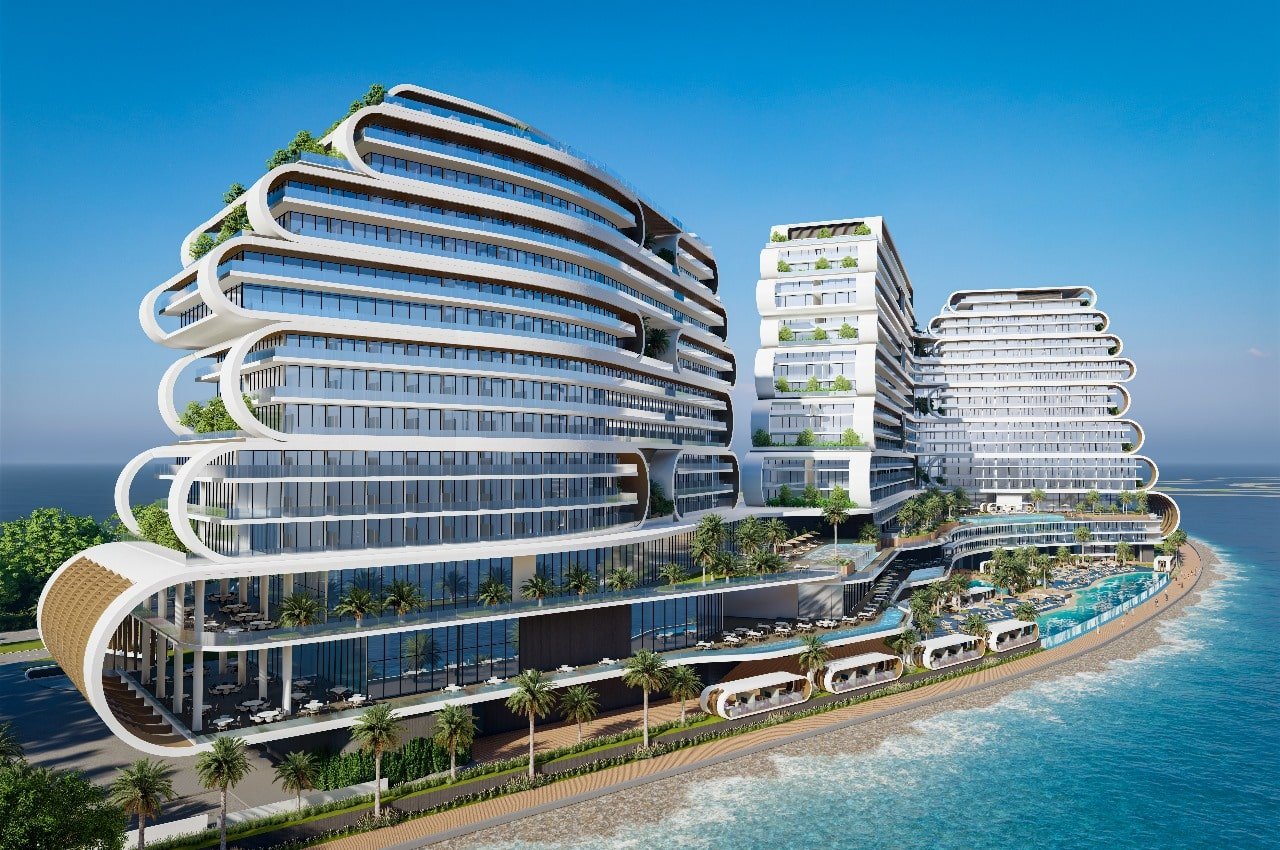
The island’s pull is clearest at the luxury end, where the Janu branded residences have landed.
Al Marjan is not the only island story in the UAE: Hudayriyat’s real-estate market in Abu Dhabi is following a similar arc.
Why Ras Al Khaimah is worth a second look
RAK has spent years in Dubai’s shadow, and that is changing. As the UAE’s northernmost emirate it has something the busier parts of the country do not: beaches, desert, and mountains in one place. It is now spending seriously on infrastructure and positioning itself as a home for affordable luxury rather than trying to out-Dubai Dubai. Al Marjan is the clearest expression of that strategy.
The government has been hands-on here, courting international investors and building a high-end destination without the congestion or the price tag of Dubai. The decision that changed the trajectory was RAK winning the UAE’s first integrated resort with gaming, which has pulled a wave of attention and capital toward the island.

What Al Marjan actually is
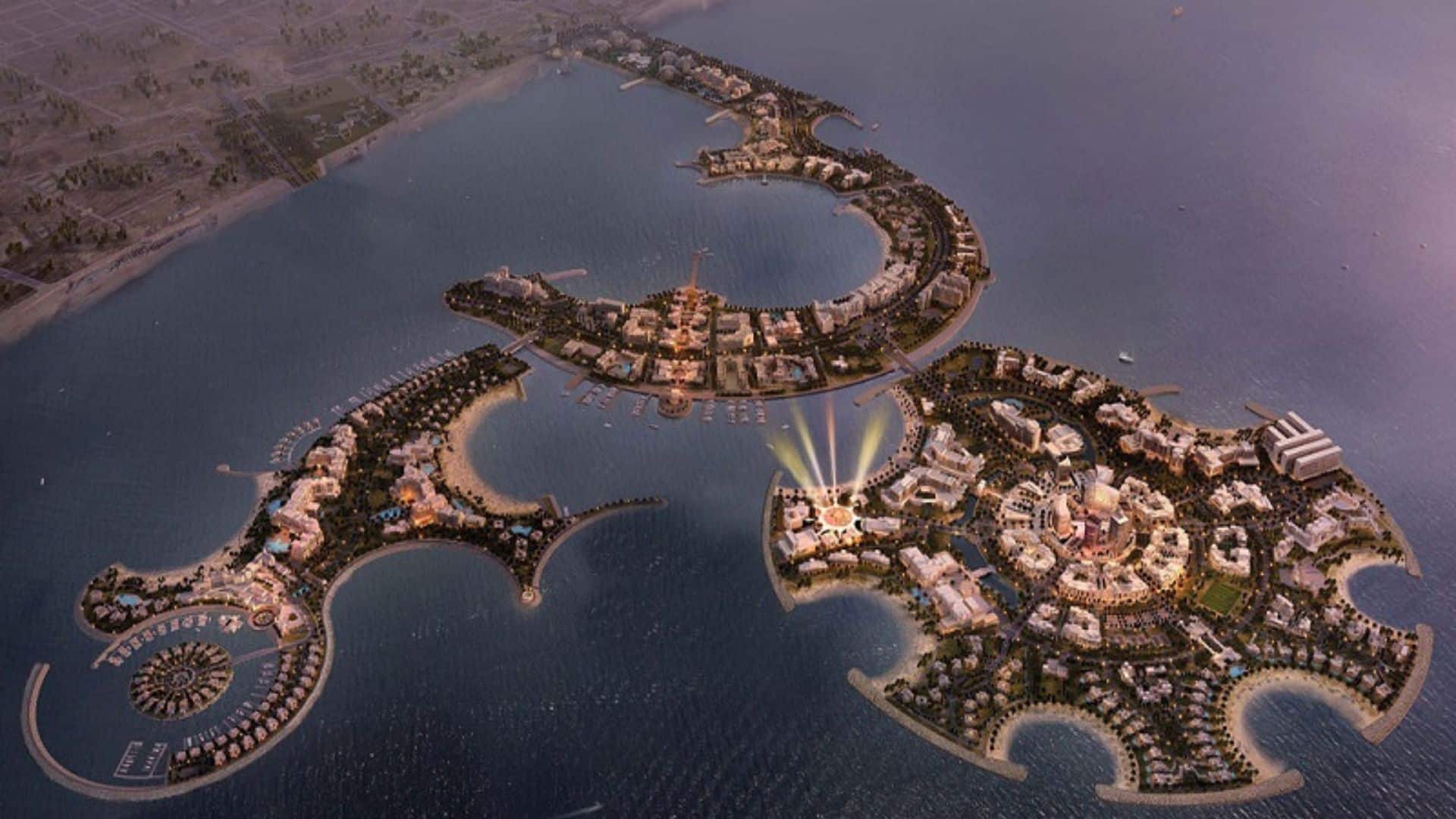
Al Marjan Island is an artificial archipelago that reaches 4.5 kilometres into the Arabian Gulf and covers roughly 2.7 million square metres. It is built as four parts: Breeze Island, Treasure Island, Dream Island, and View Island, each with its own theme and property mix, from hospitality and commercial zones to beachfront villas and residential blocks.
It sits about 45 minutes from Dubai International Airport and closer still to RAK International Airport, which is being expanded to handle rising tourist traffic. That access is a real part of the case: it is an easy gateway to a resort lifestyle for both regional and international buyers.
The planning is the point
What sets Al Marjan apart is how deliberately it has been laid out. Instead of scattered projects thrown up piecemeal, the island has clear zoning across residential, commercial, and hospitality, and it holds together visually and environmentally. What is already in the ground includes wide roads, public spaces, marinas, cycling tracks, and retail zones.
Hospitality names including Hilton, Rixos, and DoubleTree have already signed on or completed properties, with more under construction. The government and private developers are funding the unglamorous foundations too: sewage, roads, power, and connectivity. That is what turns a collection of buildings into somewhere people can live, and it is what gives the real estate underneath it a floor.
Tourism is the engine
Tourism is the core of the Al Marjan story. Ras Al Khaimah is aiming for 3 million visitors a year by 2030, and much of that growth is expected to cluster around Al Marjan as the emirate’s central tourism hub. Hotels, beach clubs, entertainment venues, and water sports are being built to offer a calmer, more family-friendly alternative to Dubai rather than a direct copy of it.
The headline announcement was the Wynn Integrated Resort, the first in the region to offer gaming legally.

At more than $3.9 billion, the Wynn project is set to shift the UAE’s tourism map. Sitting on Dream Island, it will have over 1,000 hotel rooms, a large entertainment venue, convention facilities, and a dedicated gaming area. For RAK it is a statement of intent: the emirate wants Al Marjan on the global map as a premier destination, and it is spending accordingly.
The property case for the long hold
The residential and commercial market on the island is already picking up speed. Early buyers got heavily discounted prices; demand is now rising quickly on the back of media attention, visible construction, and the prospect of hospitality-led appreciation.
What is on offer ranges from waterfront villas and mid-rise apartments to branded residences attached to hotels, so there is something across most budgets and risk appetites. Several off-plan projects have already sold out their opening phases, which tells you demand is real before completion, not just projected. There are also mixed-use plots for buyers who want to develop within the master plan.
The clearest advantage is cost per square foot, which is meaningfully lower than comparable projects in Dubai or Abu Dhabi. On top of that, the government offers strong legal protection for buyers, with clear title issuance and long-term ownership rights for foreign investors.
The risks are real
For all the momentum, go in with clear eyes. Like any large development, this one does not always move on schedule, and some parts have already slipped. If you are buying off-plan, expect longer holding periods and returns that take a few years to show up. Patience is part of the deal, not an optional extra.
There is also the question of saturation. Al Marjan largely has the RAK market to itself for now, but Abu Dhabi and Sharjah are ramping up their own coastal and hospitality plays, which raises a fair question about how Al Marjan keeps its edge over the long run.
And keep an eye on regulation. RAK is business-friendly and the political will behind the island is strong, but shifts in federal law or an unexpected policy call can move investor sentiment. So far everything points to a supportive, stable environment, but it is worth watching.
Timing and how different buyers should approach it
Timing matters here. Al Marjan is in the transition from early development to scaled operation, which is usually the window that pairs low entry prices with the most upside. As the hospitality and gaming projects near completion, land and property values are expected to rise noticeably.
Institutional investors and family offices might look at partnering with developers or taking land plots for mid-sized projects. Retail buyers can consider branded residences, serviced apartments, or hotel investment programmes with income-sharing models. If capital gains are the goal, off-plan residential units tend to offer the best leverage.
Whatever the route, tie yourself to reputable developers and do the diligence on permits, delivery timelines, and contract terms. Sticking to government-backed or internationally recognised names is the simplest way to cut execution and reputational risk.
Useful resources
- Al Marjan Island, Ras Al Khaimah: Buyer & Investor Guide
- Al Marjan Island – Ras Al Khaimah (RAK)
- Al Marjan Island: The UAE’s Next Frontier for International Real Estate Investment
- Why Property Buyers Are Turning Their Attention to Al Marjan Island
- Comparative Investment Outlook: Al Marjan Island vs. Dubai Islands
- Al Marjan Island: The Next Investment Frontier in the UAE
- Al Marjan Island: Your Gateway to Luxury Waterfront Living and Profitable Investments
Where this leaves you
Al Marjan is one of the more convincing early-stage plays in the UAE right now. It has the backing of a determined emirate, globally recognised partners, natural setting, clear title, and a tourism trajectory pointing up. The catch is the one that always applies to early-phase developments: you have to be willing to hold through the messy middle, do proper diligence, and treat it as a medium- to long-term position. For buyers prepared to look past Dubai and Abu Dhabi, that trade-off is worth a serious conversation.