
RAK Central is not just another off-plan address. It is being built as the commercial centre of Ras Al Khaimah, the place where offices, homes, hotels, and public life are meant to sit on top of each other on purpose, rather than scattered across the emirate the way older communities are. Most people searching the name are not really asking where it is. They want to know whether this becomes RAK’s next serious business district, whether it rides Al Marjan Island’s tourism wave, and whether buying in early still stacks up.
What RAK Central actually is
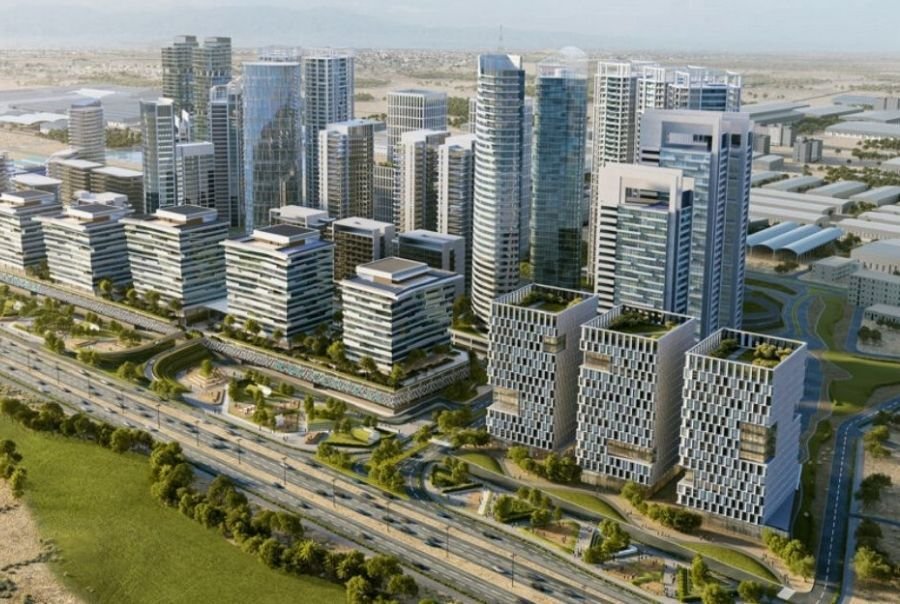
RAK Central is Marjan’s flagship urban district in Ras Al Khaimah. The positioning is clear enough: a master-planned destination pulling business, culture, hospitality, retail, education, and residential living into one connected environment, with strong road links and a walkable layout. The master plan runs to 288,000 square metres, roughly 3.1 million square feet of land, while later project updates reference 8.37 million square feet of gross floor area across the wider district.
That gap between land area and gross floor area matters, and a lot of write-ups blur the two. They are not the same number. One is the footprint, the other is the total built space stacked on it. Keep them separate when you read anyone’s figures.
Marjan’s materials show RAK Central is meant to include:
- Grade A office clusters
- mixed-use commercial zones
- residential neighbourhoods
- hotels and hospitality
- retail and dining
- civic and cultural areas
- a university campus
- landscaped public spaces and mobility corridors
So the proposition is bigger than buying a flat in a rising area. It is buying into an emerging urban core built to carry both business activity and daily life.
The location, and why it counts
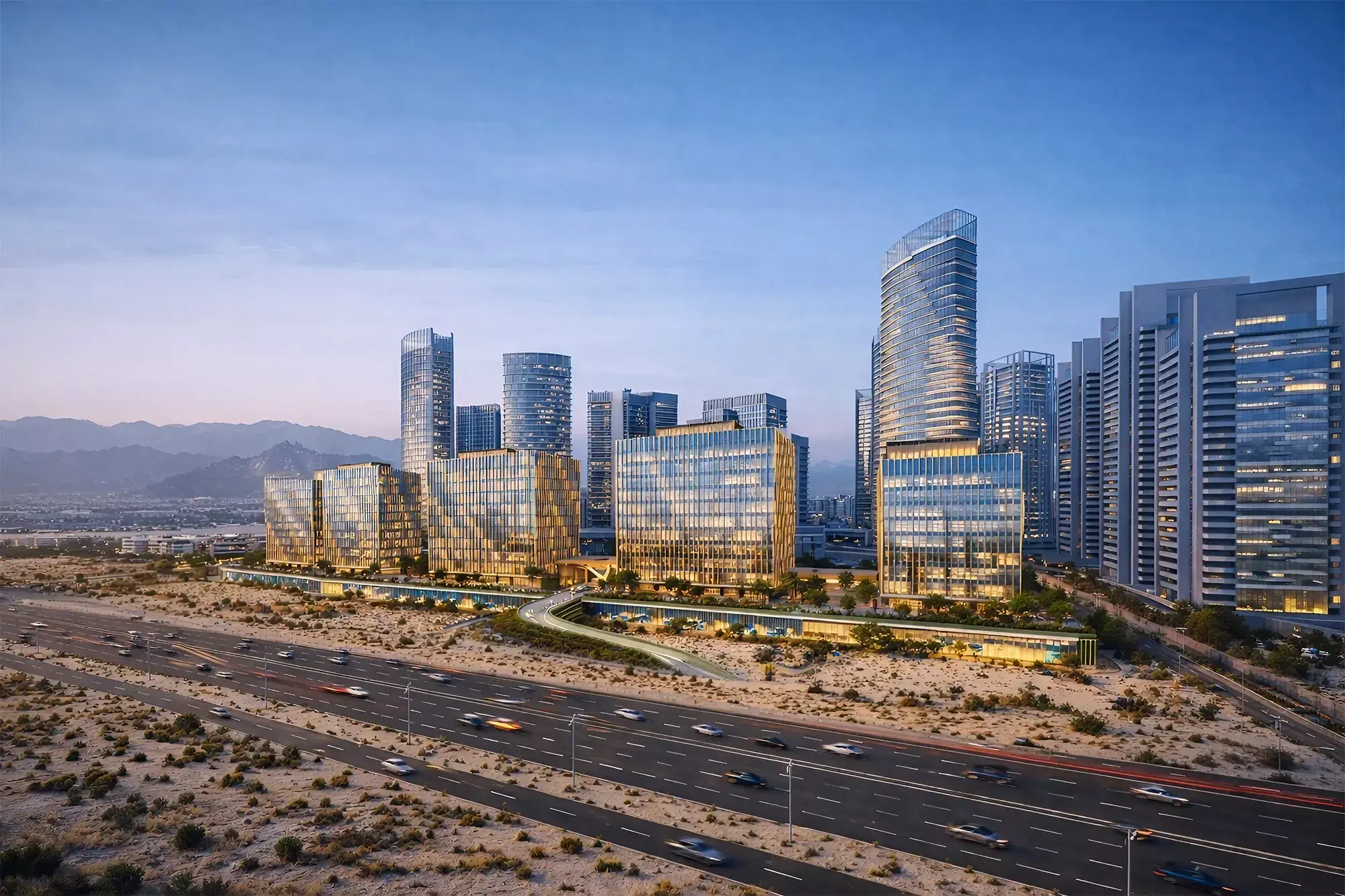
Location is one of the strongest parts of the story. The district sits directly off the E11 motorway, officially along Sheikh Mohammed bin Salem Al Qasimi Street, with access toward Al Hamra, Al Marjan Island, Ras Al Khaimah International Airport, Dubai, and the neighbouring communities. Project material also points to views toward Al Hamra Golf Club and the Arabian Gulf.
That does three things at once. It gives the district real commuter logic, because if you are asking companies to take Grade A office space, road access matters more than any brochure line. It puts RAK Central close enough to the emirate’s leisure corridor to catch tourism spillover, but not so close that it becomes just a beach play. And it bridges residential demand and business demand, which is usually where mixed-use districts pull ahead of single-purpose projects over time. That is the theory. In RAK the theory is starting to hold up, because the growth around it is no longer hypothetical.
Location snapshot
| Feature | Detail |
|---|---|
| Main road access | Sheikh Mohammed bin Salem Al Qasimi Street / E11 |
| Nearby lifestyle hubs | Al Hamra, Al Marjan Island |
| Views highlighted by project sources | Arabian Gulf, Al Hamra Golf Club |
| Positioning | New business and lifestyle hub in Ras Al Khaimah |
| Connectivity theme | Easy access to airport, Dubai, and neighboring communities |
The project numbers
| Metric | Current widely cited figure |
|---|---|
| Land area | 3.1 million sq. ft. |
| Gross floor area | 8.37 million sq. ft. |
| Rentable office space | 3 million sq. ft. |
| Residential apartments | 4,000+ |
| Hotels | Initially cited as 3+, later updates mention 4 |
| Hotel capacity | 1,000+ keys |
| Sustainability target | LEED Gold certified office buildings |
| Road access | Directly off E11 |
I split “initially cited” from “later updates” on the hotels because the reporting shifted. Early launch coverage mentioned three hotels, while Marjan’s September 2025 infrastructure release referred to four hotels with more than 1,000 keys.
What is actually confirmed
A handful of facts are solid enough to treat as fixed:
- Marjan is the master developer.
- Infrastructure works were announced as completed in September 2025.
- The project includes major office, residential, hospitality, retail, and public-realm components.
- The HQ office complex includes five LEED Gold-certified office buildings developed with RAKEZ, intended to house RAKEZ, Marjan, RAK Hospitality Holding, Al Hamra, and Ras Al Khaimah Tourism Development Authority.
That last point does a lot of work. When anchor institutional users are written into the plan, the district starts to feel less speculative. Not risk-free, but less dependent on pure marketing momentum.
Why it matters for RAK’s growth
Ras Al Khaimah has been on a different cycle to Dubai. Smaller, less saturated, and more sensitive to a few catalytic projects. That cuts both ways: it is a weakness when nothing is happening and an opportunity when the catalysts are real. Recent reporting points to rising prices, stronger transaction activity, and steady investor attention around tourism and infrastructure. Khaleej Times reported residential prices up about 14 to 15 percent year on year, while Reuters reported the emirate is targeting more than 3.5 million tourists a year by 2030, up from 1.3 million in 2024.
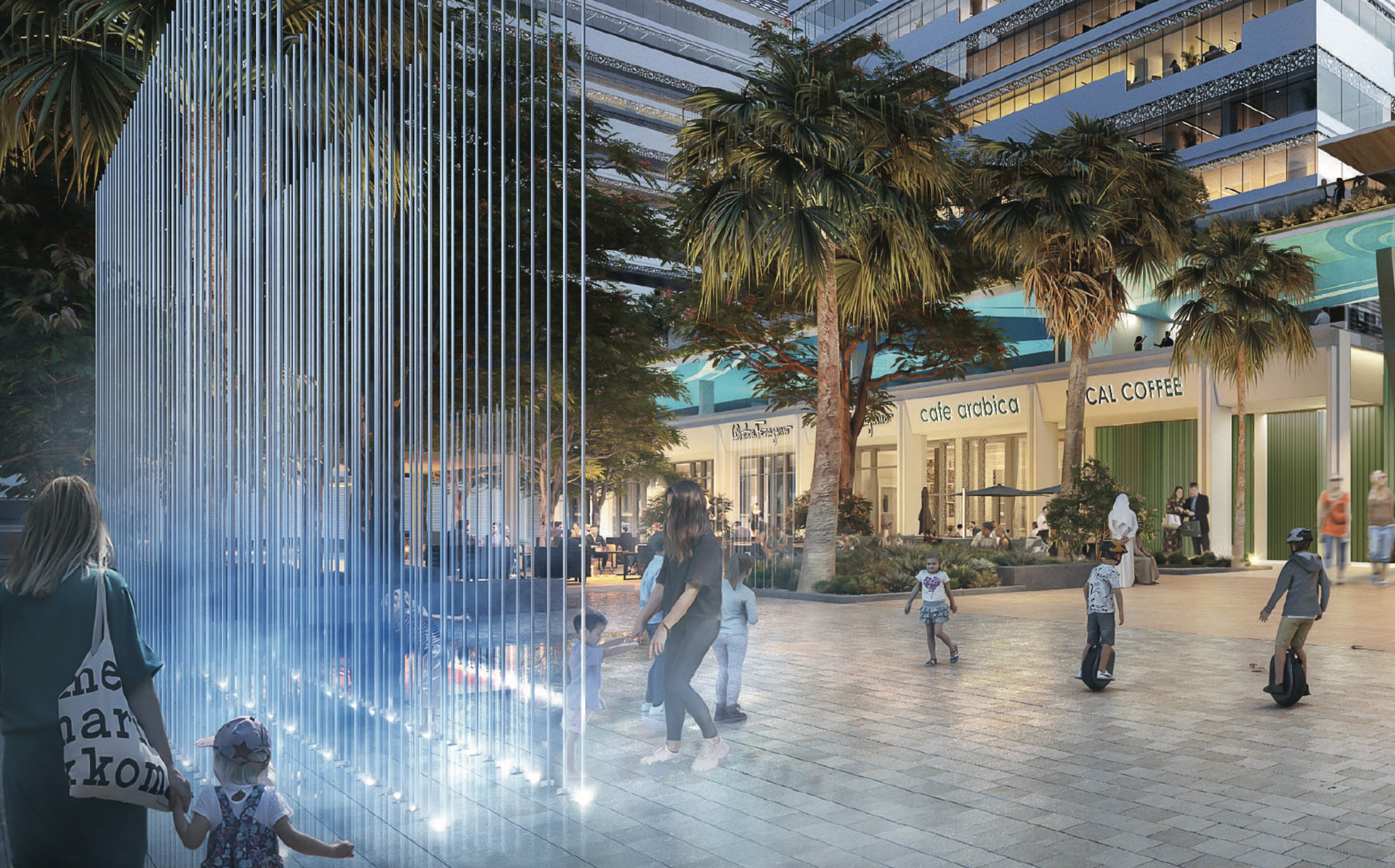
RAK Central fits that story because it gives the emirate the one thing it was missing: a defined urban business core. Coastal resorts and branded residences pull attention, but a city also needs somewhere for companies, institutions, and the services around them to cluster. Marjan’s language around business, commerce, innovation, residential neighbourhoods, and culture is built to answer exactly that gap. Reports also mention TikTok setting up offices within RAK Central, a district being pitched as a regional financial and tech hub in the mould of Dubai’s DIFC.
Is it a good place to invest
This is the real question behind most of the searches. Not what it is or where it is, but whether it has the makings of one of the emirate’s more important property stories over the next few years.
Potentially yes, and for a specific reason. RAK Central is not sold only as a residential address. It is being built as a full urban district where office space, retail, hospitality, and homes feed each other. Marjan calls it a connected work-live-learn-play district, and RAKEZ is positioning the HQ complex as a first-of-its-kind Grade A commercial hub for RAK. That combination gives the area stronger long-term logic than a project riding a single demand driver.
Here is where I would slow down. Buying into a business-led district is not the same as buying beachfront leisure. With waterfront, the demand is easy to picture because the lifestyle is obvious. With a business district, the value depends on execution, tenant uptake, infrastructure delivery, and whether the place actually becomes a daily-use node rather than a plan on paper. RAK Central looks materially stronger today than at launch, infrastructure works are done, plots have sold out, and leasing has moved into a more institutional phase through JLL. Treat that as progress, not a guarantee.
Why the case is gaining credibility
A few reasons it reads as more serious now.
First, institutional backing. Marjan is the master developer, RAKEZ is tied into the HQ complex, and JLL has been appointed exclusive leasing advisor for RAK Central HQ. That points to a district being aimed at multinational occupiers, not just retail buyers.
Second, the plots have reportedly sold out since the January 2024 announcement. That does not mean every end product outperforms, but it shows real confidence at the land level.
Third, the wider RAK story is pulling in the same direction, the 3.5 million tourist target by 2030 against 1.3 million in 2024, lifted further by destination projects like Wynn Al Marjan Island. That backdrop supports building a proper business and lifestyle core rather than leaning on resorts alone.
Who it suits
Some of this is interpretation, but three buyer profiles fit better than others.
Early investors who want exposure to RAK’s urban growth. If you believe the emirate needs a stronger commercial centre, RAK Central offers that exposure earlier than most mature communities, backed by Marjan’s positioning and the HQ rollout.
Buyers who prefer mixed-use to pure resort. If you want proximity to leisure demand without buying directly into a beachfront product, RAK Central sits in that middle ground, close to Al Hamra and Al Marjan Island but with a stronger everyday business and city-living angle.
Commercially minded buyers and long-hold landlords. Because the district is planned around offices, retail, hospitality, and residential together, it leans toward people who think in district maturity and tenant ecosystems rather than launch-day hype.
RAK Central vs Al Marjan Island vs Al Hamra
Worth doing, because buyers blur these three. They sit in the same broader southern RAK corridor, but they are not the same product.
| Area | Core identity | Best for | What stands out |
|---|---|---|---|
| RAK Central | Masterplanned urban business and lifestyle district | Buyers who want exposure to a future commercial hub | Grade A offices, residential neighbourhoods, retail, dining, public spaces, cultural and civic uses |
| Al Marjan Island | Tourism and waterfront residential destination | Buyers focused on beachfront lifestyle, resorts, and hospitality-led demand | Four-island master plan, luxury hotels, waterfront homes, leisure and resort positioning |
| Al Hamra | Established lifestyle and investment community | Buyers who prefer a more mature, operational community | Golf club, yacht club, hospitality assets, branded residences, long-established mixed lifestyle offering |
In plain English: Al Marjan Island is the leisure play, Al Hamra is the established lifestyle play, and RAK Central is the emerging business-district play. A simplification, but a fair one. It is also why you should not compare them on launch price alone. They serve different demand pools.
Which is better to invest in
No universal answer.
Want the strongest tourism narrative and willing to pay for beachfront scarcity? Al Marjan Island is more compelling. Its identity is already tied to hotels, resorts, and waterfront living.
Want an established community with golf, marina, hospitality, and an existing residential base? Al Hamra has the maturity edge. It is easier to explain to end-users because people can see and use it today.
Want earlier-stage exposure to what could become RAK’s most important commercial district? RAK Central is the more interesting strategic bet, and also the one where execution risk weighs heaviest, because the district’s performance still has to be delivered.
The pieces taking shape inside it
Part of why RAK Central is getting attention now is that it has moved past concept. Individual components are showing form.
RAK Central HQ office complex
The HQ complex is the anchor on credibility. RAKEZ and Marjan appointed JLL as exclusive leasing advisor in June 2025, describing it as RAK’s largest business hub, anchored by five LEED Gold-certified towers. The same release puts construction completion in Q4 2026, with a full commercial launch in Q1 2027.
That timing distinction matters, because older articles just repeated Q4 2026 as if it were the whole picture. Late 2026 looks tied to construction completion for the HQ phase, while commercial activation rolls into early 2027. Read it that way.
One RAK Central by Pantheon
Pantheon Development is one of the earliest private developers to commit visibly. Construction Business News Middle East reported that Pantheon took six plots within RAK Central and broke ground on One RAK Central, a mixed-use development with a built-up area of about 522,000 square feet.
Early private developer participation helps show whether a district is pulling in real capital rather than just press. Not proof of future returns, but one of the signs you want to see.
Radisson Blu Hotel and Residences
Hospitality is attaching to the district more directly now. In February 2026, BNW Developments and Radisson Hotel Group announced the first Radisson Blu Hotel and Radisson Blu Residences in RAK Central. HospitalityNet puts the residences at 222 branded units, while industry coverage puts the hotel at 361 rooms.
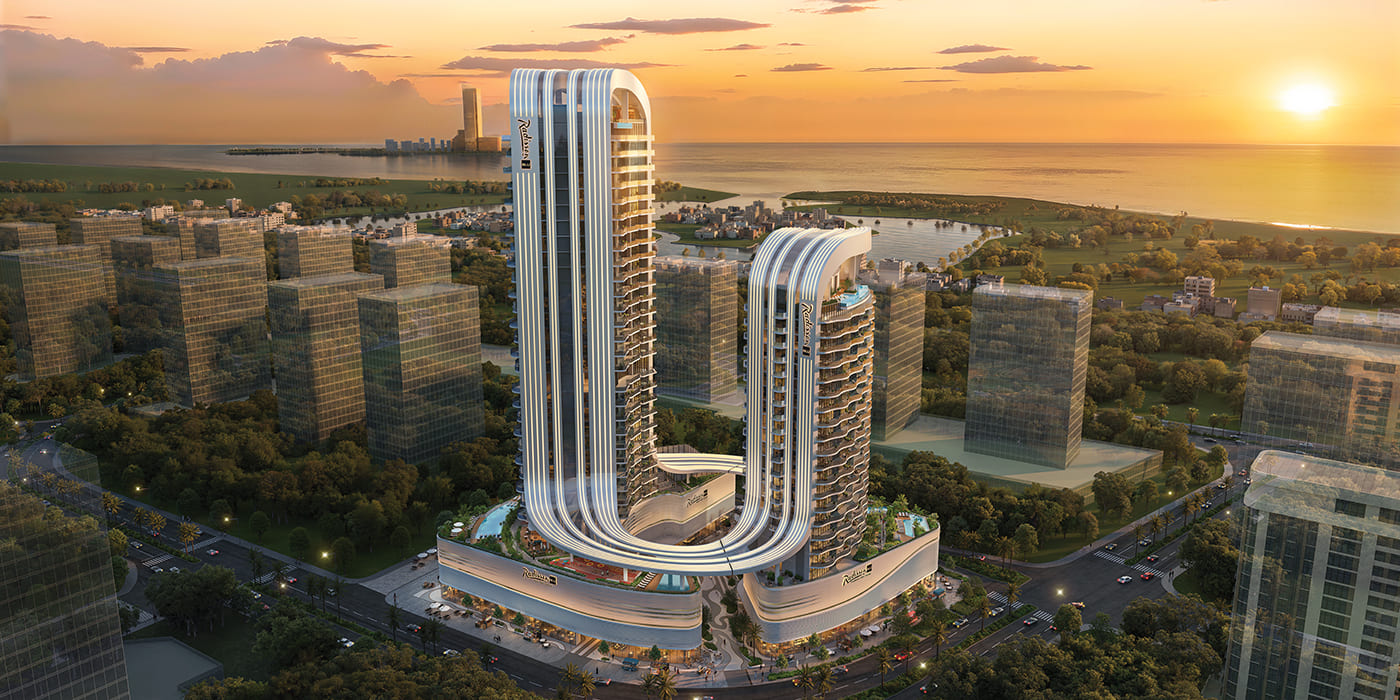
It pushes RAK Central further into genuine mixed-use territory. Saying a district will include hotels is one thing. Named hospitality brands getting attached to actual projects is another.
What to check before you buy
Less exciting, but this is where the real decision-making should sit.
| What to verify | Why it matters |
|---|---|
| Exact sub-project developer | RAK Central is a master district, but your money goes into a specific building or plot, not the whole masterplan |
| Construction timeline | Some dates refer to infrastructure, some to HQ completion, some to commercial launch, and some to individual towers |
| Unit economics | Do not assume district momentum makes every apartment a good buy |
| Service charges and building specs | These vary by project and hit your real net returns |
| Intended tenant profile | A product aimed at short-stay hospitality demand is different from one aimed at professionals or families |
| Exit liquidity | Early-phase markets can be strong, but resale depth is not always consistent across every launch |
The biggest mistake buyers make with places like this is confusing masterplan quality with individual unit quality. A strong district can still hold overpriced stock, weak layouts, or buildings that trail better-located peers in the same area. RAK Central may become very important. That does not hand the same confidence to every launch inside it.
The second mistake is timeline laziness. People hear “Q4 2026” and assume the whole place is alive by then. Infrastructure, office activation, hotel openings, and residential handovers can run on slightly different tracks. Verify the timeline for the exact asset you are buying, then set it against the district-level timeline rather than assuming they match.
Worth watching?
Yes, and more than that. It is one of the clearest examples of Ras Al Khaimah trying to shift from a mostly leisure-led growth story into something more balanced and urban. Marjan’s masterplan positions RAK Central as a mixed-use district with residential neighbourhoods, Grade A offices, retail and dining, green space, a university campus, civic buildings, and a cultural quarter. That is a far broader proposition than a single residential launch.
Still, judge it two ways at once: as a district, and as an asset-by-asset market. The district story is strong. The individual deal still needs underwriting. A well-priced unit in the right sub-project is not the same as an average unit in a weaker building that happens to sit inside the same masterplan. That distinction will matter more here than in beachfront launches where lifestyle demand carries a lot of the load.
In short
RAK Central is a 3.1 million sq. ft. mixed-use district in Ras Al Khaimah, developed by Marjan as the emirate’s new business and lifestyle hub. It sits on Sheikh Mohammed bin Salem Al Qasimi Street near Al Hamra and Al Marjan Island, combining Grade A offices, more than 4,000 apartments, hotels, retail, green space, and civic infrastructure in one connected destination. Infrastructure works were announced complete in September 2025, while the flagship HQ office complex is marketed for construction completion in Q4 2026 and broader commercial launch in Q1 2027.
FAQs
What is RAK Central in Ras Al Khaimah?
A mixed-use masterplanned district by Marjan, built to combine offices, homes, hotels, retail, public spaces, and civic uses in one urban hub. Marjan describes it as a new live-work-play destination and a future commercial heart for the emirate.
Where is RAK Central located?
Along Sheikh Mohammed bin Salem Al Qasimi Street, the E11 corridor, near Al Hamra and within reach of Al Marjan Island. Project material also highlights views toward the Arabian Gulf and Al Hamra Golf Club.
Who is the developer?
Marjan is the master developer, presenting the district as one of its flagship mixed-use destinations in RAK.
How big is RAK Central?
The masterplan spans 288,000 square metres, about 3.1 million square feet of land. Updates also reference about 8.37 million square feet of gross floor area across the wider development.
What does it include?
Current material describes around 3 million square feet of rentable office space, more than 4,000 apartments, four hotels with more than 1,000 keys, retail and entertainment, parks, and major public-realm infrastructure.
Is it good for property investment?
It could be, especially for buyers who want exposure to RAK’s emerging business-district story rather than only resort-led beachfront demand. The case is stronger now, infrastructure is complete, the HQ complex is progressing, and named projects like One RAK Central and the Radisson Blu hotel and residences have been announced.
When will it be completed?
There is no single completion date for the whole district. Marjan announced infrastructure completion in September 2025, while RAKEZ put the flagship HQ office complex at construction completion in Q4 2026 with a broader commercial launch in Q1 2027. Individual residential and hospitality projects may complete later on their own timelines.
What is the difference between RAK Central and Al Marjan Island?
RAK Central is RAK’s urban business and lifestyle hub. Al Marjan Island is identified with waterfront living, resorts, hotels, and leisure-led demand. They are close geographically but serve different investment narratives.
Last word
If you are looking at RAK Central, do not judge it in isolation. Weigh the district story, the exact sub-project, the delivery timeline, the likely tenant, and how it compares to Al Marjan Island and Al Hamra. That is where the better decisions get made, and usually where the better returns start.