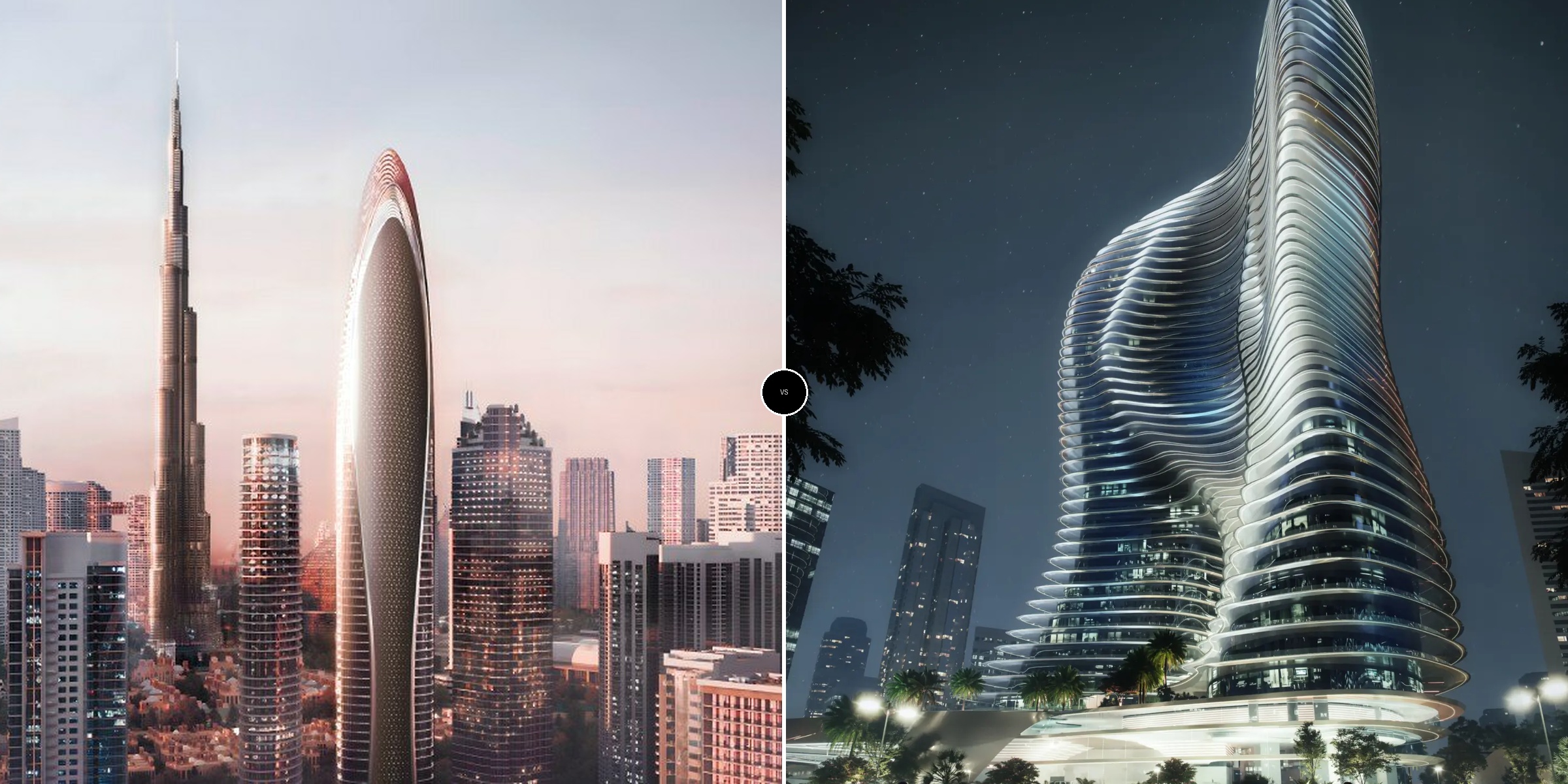
Bugatti Residences and Mercedes-Benz Places represent two of the most talked-about branded luxury concepts in Dubai, both tied to Binghatti, yet they appeal to slightly different buyer instincts. Bugatti Residences in Business Bay leans into hyper-luxury, rarity, sculptural drama, and a kind of automotive fantasy translated into real estate. Mercedes-Benz Places, by contrast, is more restrained in its message. It focuses on design clarity, intelligent living, sustainability cues, and a polished version of luxury that feels less like spectacle and more like a refined system.
That distinction matters more than many comparison articles admit. A lot of pages online lump these developments together under the broad label of "elite branded real estate," which is fair on the surface, but not especially helpful for buyers. Because once you get past the logos and headline pricing, the real questions are more practical. What kind of lifestyle is each project actually selling? Which address has stronger scarcity? Which one feels more like a trophy asset, and which one may have the wider resale audience later? I think that is where the comparison becomes genuinely useful.
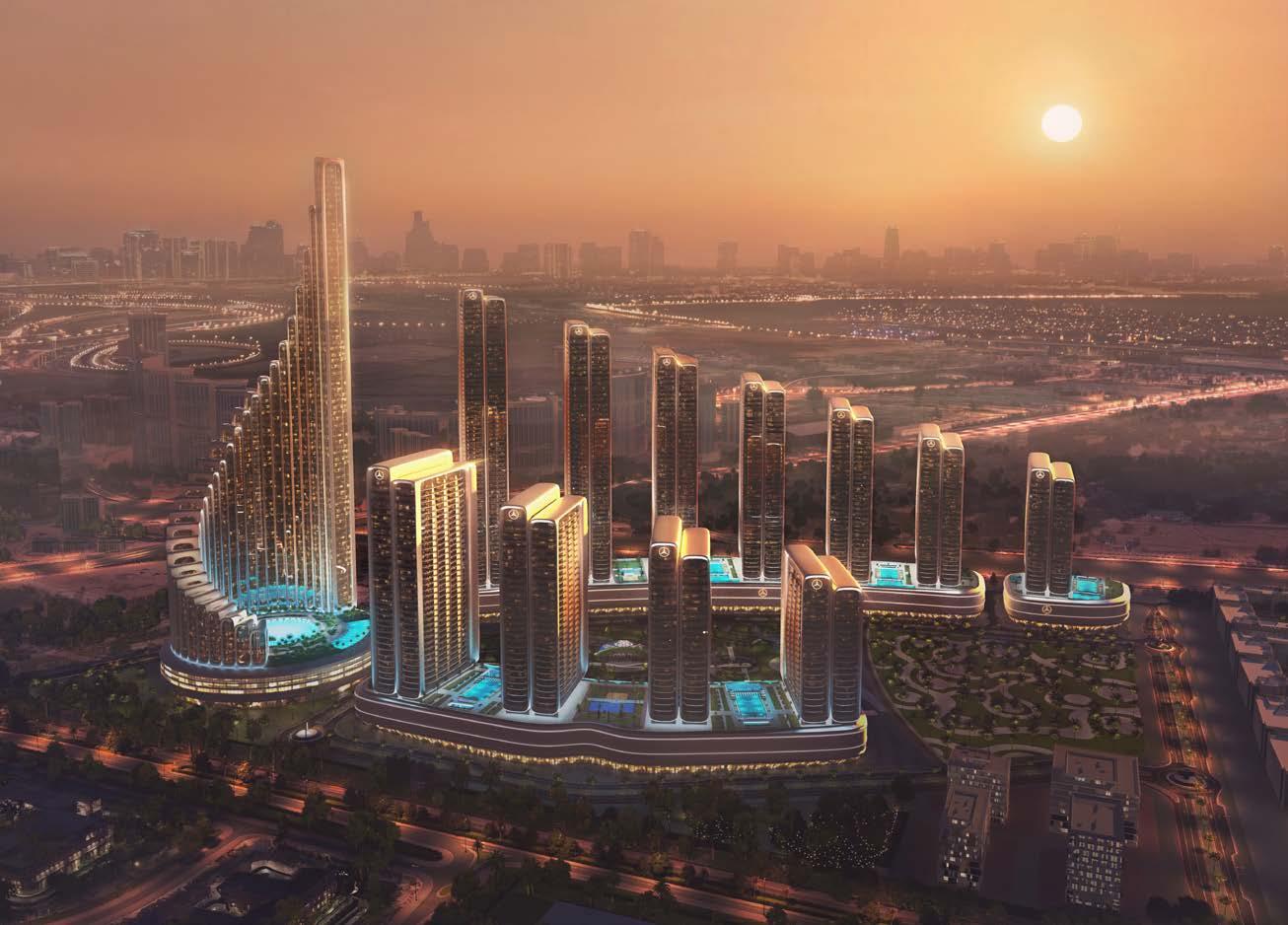
There is also a second layer here. Mercedes-Benz Places is no longer just one story. The Downtown Dubai tower is one project, while the newly launched Mercedes-Benz Places | Binghatti City in Meydan is a separate, much larger branded city-scale concept. Official Binghatti material describes the Meydan project as the world's first Mercedes-Benz branded city, with 12 towers, a signature iconic tower, and a central park concept, while the Downtown project remains the flagship tower expression of Mercedes-Benz branded residential living.
Bugatti Residences vs Mercedes-Benz Places, At a Glance
| Category | Bugatti Residences by Binghatti | Mercedes-Benz Places by Binghatti, Downtown | Mercedes-Benz Places | Binghatti City, Meydan |
|---|---|---|---|
| Core identity | Ultra-exclusive trophy asset | Design-led branded luxury tower | Branded master-planned urban district |
| Main location | Business Bay | Downtown Dubai | Meydan |
| Design language | Fluid, dramatic, Riviera-inspired, hypercar energy | Aerodynamic, sleek, "Sensual Purity," intelligent systems | Mercedes-Benz DNA applied at city scale |
| Buyer profile | Trophy buyer, rarity collector, ultra-HNW | Luxury end-user or investor wanting brand, design, centrality | Long-term lifestyle and urban masterplan investor |
| Product feel | More theatrical and scarce | More balanced and systemized | Broader, community-based branded experience |
| Notable differentiator | Sky Mansion concept, highly exclusive layouts, hyper-luxury positioning | Burj-facing tower identity, intelligent and sustainable design cues | 12 towers, central park, world's first Mercedes-Benz branded city |
This table captures the broad positioning, but the deeper difference is philosophical. Bugatti is selling an emotional spike. Mercedes-Benz is selling continuity, harmony, and controlled luxury. One is closer to a collector's piece, the other to a branded ecosystem. That may sound abstract, but in ultra-luxury property, abstraction often becomes pricing power.
Brand Philosophy, Bugatti Drama vs Mercedes-Benz Sensual Purity
If you start with brand philosophy, the comparison becomes easier.
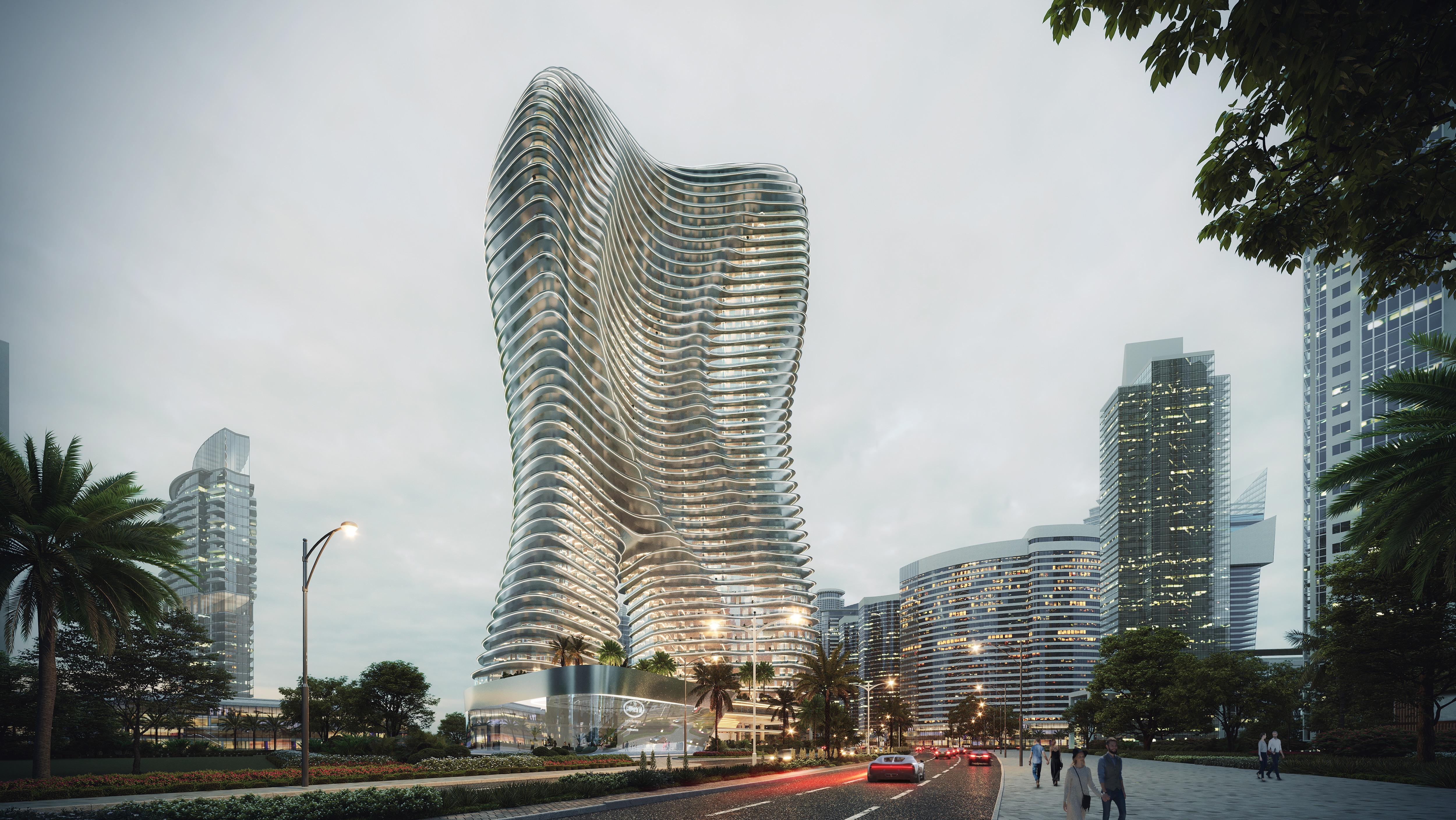
Bugatti Residences is intentionally dramatic. The official project language leans into fluidity, opulence, sculptural movement, and the spirit of the French Riviera. Even the way the project is described, "l'art de vivre," "inventive vivacity," "hyper form," it all points in the same direction. This is not understated luxury. It is expressive, rarefied, almost cinematic. The architecture is meant to feel like a statement before it ever functions as a residence. That, in itself, is part of the value proposition.
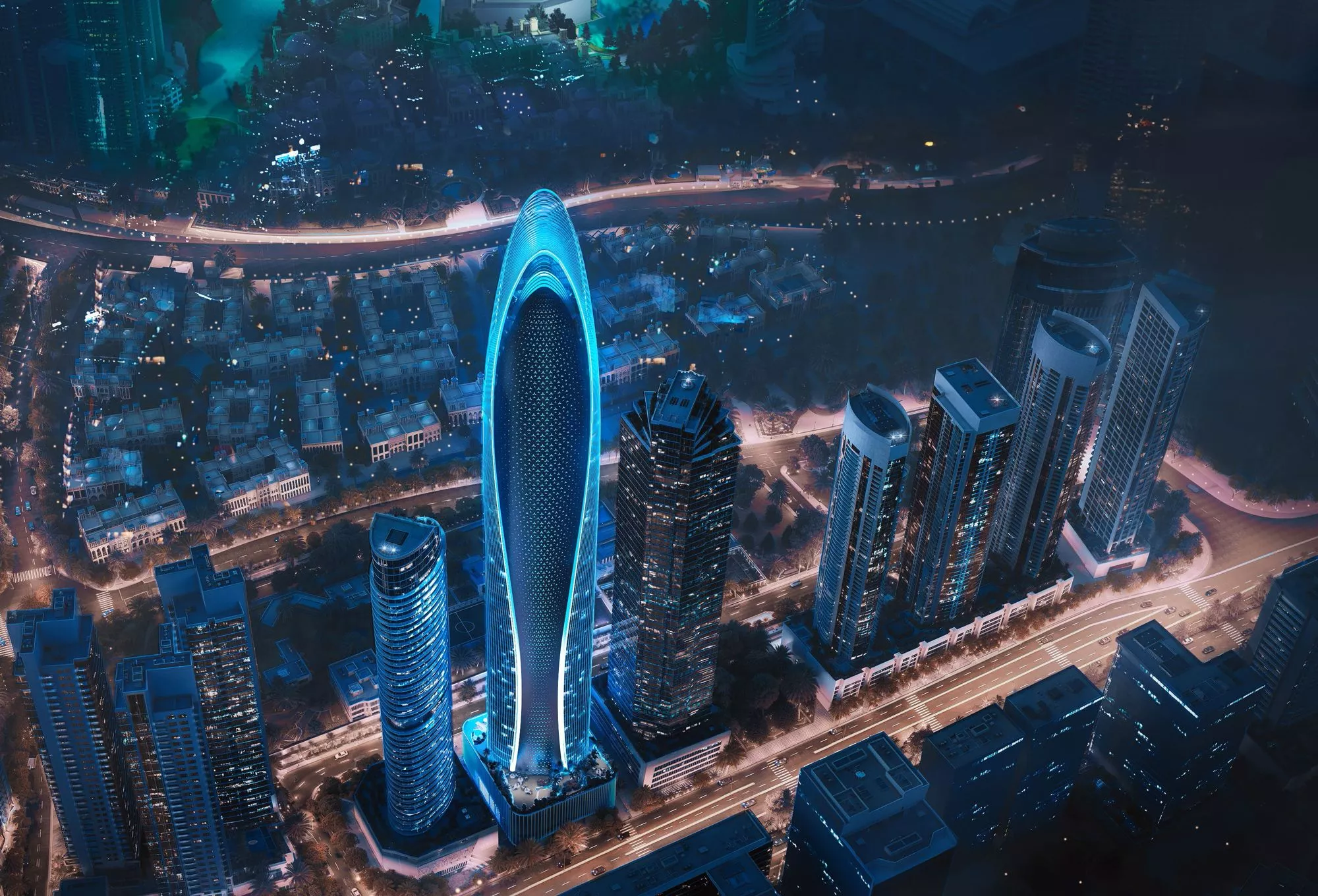
Mercedes-Benz Places in Downtown takes a different route. The official language focuses on a sleek aerodynamic silhouette, emotional design, intelligent systems, and sustainable solutions. The project repeatedly points back to Mercedes-Benz design DNA rather than sheer excess. Then the dedicated Mercedes-Benz project site sharpens that further with the phrase "Discover Living in Sensual Purity," which is really the key idea here. Not minimalism exactly, and not cold modernism either. More like refined, emotionally resonant precision.
I think this is the first major dividing line for buyers.
If someone wants the residential equivalent of a hypercar parked in the sky, Bugatti is the cleaner fit. If someone wants a luxury tower that still feels iconic but less performative, Mercedes-Benz Places is probably the more natural choice. Neither is objectively better. But they are not emotionally interchangeable, and too many comparison pages write as though they are.
The Meydan Mercedes-Benz branded city pushes that philosophy even further. It is not just about an apartment tower carrying a global marque. It is about extending Mercedes-Benz values into public space, mobility, walkability, parks, retail boulevards, and urban form. Kotook's breakdown, while secondary to the official material, is useful here because it frames the city-scale concept around clean lines, balanced proportions, premium materials, smart mobility, pedestrian-first planning, and future-ready infrastructure. That fits the Mercedes-Benz brand logic much more than a one-off flamboyant monument would.
Location Strategy, Business Bay vs Downtown vs Meydan
Location is where the conversation gets more investment-oriented.
Bugatti Residences sits in Business Bay, which gives it immediate proximity to Downtown, DIFC, and Dubai Canal. Official Binghatti material explicitly highlights access to Downtown Dubai, DIFC, and the canal, and the Bugatti site frames Business Bay as the cosmopolitan heart of Dubai, originally imagined as the "Manhattan of Dubai." That positioning matters because it supports the project's identity as a central, high-visibility, status-heavy urban asset. It is not quiet luxury. It is luxury in the middle of movement, money, and skyline theatre.
Mercedes-Benz Places, the tower, is anchored in Downtown Dubai, and that changes the pitch. The official site emphasizes unobstructed views of the world's tallest tower, which is obviously Burj Khalifa, and that gives the project a more classic prestige-address narrative. Downtown is globally legible in a way few Dubai districts are. For international buyers, that often helps. You say Business Bay and sophisticated investors understand it. You say Downtown Dubai and almost everyone in global luxury property understands it immediately.
Then there is Meydan. Mercedes-Benz Places | Binghatti City is positioned very differently. Binghatti describes it as a strategically located Meydan development, about 10 minutes from Dubai Mall and Business Bay, 8 minutes from Dubai Design District, and 15 minutes from DXB. So this is less about owning a single landmark tower in a fully mature district, and more about entering a large branded district that could evolve into its own ecosystem over time. That is a different risk-return profile, perhaps slightly less instant than Downtown, but potentially broader in long-term urban upside if execution matches ambition.
One more thing matters here. Branded residences continue to command meaningful premiums over non-branded stock, and Dubai remains one of the world's leading branded residence markets according to Savills. That does not mean every branded project performs equally well, of course not. But it does mean location plus brand plus scarcity can create a powerful premium stack, especially in districts with clear international recognition.
Amenities and Signature Features, Which Project Actually Feels More Exceptional?
At the amenity level, Bugatti Residences and Mercedes-Benz Places begin to separate quite sharply.
Bugatti Residences is built around exclusivity and spectacle. The official Bugatti announcement highlights a Riviera-inspired beach, private pools, jacuzzi spa, fitness club, chef's table, private valet, private members club, and two garage-to-penthouse car lifts, alongside bespoke chauffeur and concierge services. That is a very specific kind of luxury package. It is not just about comfort. It is about giving residents a feeling that ordinary premium towers are simply not in the same category. Even the private car-lift element does a lot of branding work here, because it ties the property directly back to the automotive mythology behind Bugatti.
Mercedes-Benz Places in Downtown takes a more controlled approach. Official and brand-linked project material emphasizes spa, high-spec private interiors, aerodynamic architecture, smart home technology, intelligent mobility themes, and premium penthouse typologies such as the Vision One-Eleven and Silver Arrow penthouses. Several market sources also point to private pools in the Downtown residences, concierge support, valet, and a sky-level amenity profile, although the official branding focus is clearly less about overstatement and more about integrated design intelligence.
That difference is important for buyers.
Bugatti feels like a residence designed to impress before it reassures. Mercedes-Benz feels like a residence designed to reassure before it impresses. In reality, both do both, but in a different order. And that order matters because luxury buyers usually lean one way or the other. Some want the home to function like a collectible object. Others want it to function like a highly polished system.
The Meydan Mercedes-Benz Places | Binghatti City concept shifts the amenity story again. Instead of focusing mostly on one vertical tower's private offerings, the official positioning centers on a 12-tower branded community with a signature iconic tower and a central park featuring 12 experiences. So the amenities here are broader, more district-scale, and more lifestyle-network oriented. That can appeal to investors who prefer a branded ecosystem over a single ultra-rare object.
Amenities Comparison Table
| Feature | Bugatti Residences, Business Bay | Mercedes-Benz Places, Downtown | Mercedes-Benz Places | Binghatti City, Meydan |
|---|---|---|---|
| Private pools | Yes, strongly tied to project identity | Reported across project materials and listings | Community-led offering, not positioned the same way as the tower |
| Signature wellness | Jacuzzi spa, fitness club | Spa and premium wellness environment | Broader lifestyle and leisure offering across the district |
| Concierge / valet | Yes, bespoke services highlighted | Yes, concierge and premium arrival experience emphasized | More community and masterplan-focused than purely tower service-led |
| Automotive signature | Car lifts for penthouse residents, direct brand-theatre link | Intelligent mobility and Mercedes design philosophy | Mobility and urban integration at masterplan scale |
| Social exclusivity | Private members club, chef's table, VIP tone | Luxury tower identity, more refined and less theatrical | Wider branded community experience |
| Overall feel | Hyper-exclusive, dramatic, collector-grade | Sophisticated, design-led, smarter everyday luxury | Branded city living with longer-range ecosystem appeal |
So, if someone asks which project has the more memorable amenities package, I would still lean toward Bugatti. It is harder to ignore. But if the question is which project has the more coherent day-to-day luxury logic, Mercedes-Benz Places probably makes the stronger case.
Design Aesthetics, Fluid Hypercar Drama vs Structured Harmony
Design is where this comparison becomes almost philosophical.
Bugatti Residences uses fluid lines, subtle curves, and Riviera references to create an architecture that feels emotional and sculptural. The official Bugatti material repeatedly stresses movement, opulence, and form inspired by the coast of southern France. It is luxury as visual velocity. Even when the building is standing still, it wants to feel like motion. That is a very Bugatti idea, actually.
Mercedes-Benz Places in Downtown is more aerodynamic than fluid. Official descriptions emphasize a sleek silhouette, precision, efficiency, and the Mercedes-Benz idea of "Sensual Purity." That phrase matters because it captures the brand's larger design language, the idea that beauty should emerge from clarity and proportion rather than just ornament or exuberance. I think that gives Mercedes-Benz Places a broader long-term design appeal, especially for buyers who are wary of anything that could feel too trend-driven later.
There is also something else going on here. Bugatti's design language is inherently more niche, which can be a strength. Niche often supports rarity. Rarity often supports prestige pricing. But Mercedes-Benz has the advantage of being more universally legible. It can feel luxurious to a wider range of buyers, from end-users to investors to internationally mobile families. That broader visual accessibility can become relevant at resale.
The Meydan Mercedes-Benz branded city takes the Mercedes approach into urban planning itself. Official material frames it as a branded district with 12 towers and a central park, while secondary project coverage consistently describes it in terms of green spaces, pedestrian-oriented planning, retail, and a connected branded urban experience. So this is no longer just an architecture discussion. It becomes an environment discussion.
Design Comparison Table
| Design Layer | Bugatti Residences | Mercedes-Benz Places, Downtown | Mercedes-Benz Places | Binghatti City |
|---|---|---|---|
| Visual tone | Dramatic, expressive, fluid | Sleek, precise, elegant | Cohesive, urban, branded at district scale |
| Inspiration source | Hypercar spirit and Riviera luxury | Mercedes-Benz "Sensual Purity" | Mercedes-Benz design logic extended into a community |
| Emotional effect | Wow factor, statement value | Calm prestige, modern refinement | Structured branded lifestyle |
| Likely buyer reaction | "This is unlike anything else" | "This feels polished and timeless" | "This could grow into a major branded address" |
That might sound subjective, and it is, a little. Luxury buying is subjective. But those subjective impressions often feed directly into pricing, demand, and resale narrative later.
Exclusivity, Unit Mix, and Who Each Project Really Targets
From a scarcity standpoint, Bugatti Residences remains the more obvious rarity asset.
Bugatti's official launch materials state that the project includes 171 Riviera Mansions and 11 Sky Mansion Penthouses, with each residence described as unique and supported by bespoke layouts. That creates a strong collector narrative. The language is deliberate. This is not framed as luxury inventory. It is framed as limited-edition real estate.
Mercedes-Benz Places in Downtown is still very exclusive, but it feels slightly more structured and scalable. Official Mercedes material confirms the tower at 65 storeys, while market project summaries describe a collection of around 150 ultra-luxury suites and penthouses, including 2- and 3-bedroom suites plus a more limited selection of signature penthouses and duplexes. That is still rare by normal standards, of course, but the project story is less about one-of-one drama and more about a complete branded residential proposition.
The Meydan branded city changes the buyer pool again. Official Binghatti positioning confirms a 12-tower community with a 20/50/30 payment structure, which naturally broadens the addressable market beyond the ultra-elite buyer segment that Bugatti seems designed to attract. In other words, Mercedes-Benz Places | Binghatti City may become the more accessible way to enter the Mercedes-branded residential universe, while the Downtown tower remains the more flagship expression.
Buyer Fit Snapshot
| Buyer Type | Best Fit |
|---|---|
| Trophy-asset collector | Bugatti Residences |
| Ultra-HNW buyer seeking dramatic rarity | Bugatti Residences |
| Luxury end-user who values brand plus livability | Mercedes-Benz Places, Downtown |
| Investor seeking globally legible central address | Mercedes-Benz Places, Downtown |
| Buyer wanting lower entry into a branded ecosystem | Mercedes-Benz Places | Binghatti City |
| Long-term community and urban district investor | Mercedes-Benz Places | Binghatti City |
This is probably the most practical way to think about it.
Bugatti is for the buyer who wants to own something almost nobody else can replicate. Mercedes-Benz Downtown is for the buyer who wants brand, skyline, quality, and stronger everyday usability. Meydan is for the buyer who believes in the broader branded district story and is comfortable underwriting execution over time.
Investment Potential, Which One Looks Better on Paper?
This is where nuance matters most, because "better investment" depends on what the investor is actually optimizing for.
In the branded residence sector generally, Savills reports average global brand premiums around 30%, with established city averages also around 30%, and it identifies Dubai among the top global branded residence cities. That is the macro backdrop. It supports the idea that both Bugatti and Mercedes-Benz Places sit inside a strong category. But category strength does not eliminate project-level differences.
Bugatti, in my view, is the stronger rarity trade. It benefits from scarcity, stronger headline power, and a clearer trophy-asset narrative. That can support outsized valuation perception in the luxury segment, especially when buyer psychology is driven by uniqueness rather than just comparable pricing. The risk, though, is that the buyer pool is narrower. A narrower buyer pool can be excellent when markets are strong and global wealth is active. It can also mean longer resale windows if liquidity tightens.
Mercedes-Benz Places in Downtown looks stronger as a broader luxury investment story. Downtown is immediately recognizable, the design language is more universally appealing, and the branded proposition feels easier to explain to a wide international audience. That tends to help with liquidity, especially for investors who care about exit clarity, not just prestige. The 65-storey tower identity and Burj-facing narrative only reinforce that.
Meydan's Mercedes-Benz Places | Binghatti City is the more urban-growth thesis. Officially, it offers the 12-tower concept, central park, and a 20/50/30 payment plan. So this is less about buying the rarest jewel and more about positioning into a branded urban district before it matures. That can work very well, but it should be underwritten differently. Community-scale branded projects can produce attractive upside, though they typically rely more on long-term execution and absorption than a pure trophy asset does.
Investor Scorecard
| Investment Lens | Bugatti Residences | Mercedes-Benz Places, Downtown | Mercedes-Benz Places | Binghatti City |
|---|---|---|---|
| Scarcity value | Excellent | Very strong | Moderate to strong |
| Global recognizability | Strong | Excellent | Strong |
| Trophy appeal | Excellent | Very strong | Moderate |
| Livability / broad buyer appeal | Strong | Excellent | Strong |
| Resale audience breadth | Narrower but premium | Wider premium audience | Potentially widest over time |
| Long-term masterplan upside | Limited, tower-specific | Moderate | Strongest |
| Collector psychology | Highest | Moderate to high | Lower |
| Exit clarity for mainstream luxury buyer | Moderate | Strong | Developing |
My honest conclusion, at this point in the article, is fairly simple. Bugatti Residences is the more extreme luxury asset. Mercedes-Benz Places is the more balanced premium proposition. And if we include the Meydan branded city in the comparison, then Mercedes-Benz also becomes the more flexible brand family from an investment standpoint.
Price Positioning and Premium Logic, Where the Real Gap Starts to Show
Once you move from brand language into actual pricing, the distinction becomes much clearer.
On Binghatti's current property listings, Bugatti Residences is positioned at a significantly higher entry point. The published starting prices show approximately AED 36.6 million for a 3-bedroom residence, AED 58 million for a 4-bedroom residence, and AED 155 million for a penthouse. By comparison, Mercedes-Benz Places in Downtown Dubai is listed from roughly AED 11.3 million for a 2-bedroom residence, AED 20 million for a 3-bedroom unit, and AED 35.8 million for a 4-bedroom home. That alone tells you these projects are not competing on the same pricing plane, even if they sit in the same branded luxury category.
So what is driving that gap?
Part of it is clearly unit scale and layout rarity. Bugatti's homes are generally much larger and more theatrical in specification. But part of it is also the type of premium being sold. Bugatti is not just selling branded real estate. It is selling scarcity, status, and a very deliberate sense of "one-of-one" ownership. Official Bugatti materials stress that the project comprises 171 Riviera Mansions and 11 Sky Mansion Penthouses, each with bespoke layouts, private pools, and signature features such as garage-to-penthouse car lifts. That kind of specification supports a different pricing psychology entirely.
Mercedes-Benz Places, by contrast, looks more like a premium branded skyscraper investment than a pure rarity collectible. It still sits at the top end of the market, of course, but its pricing feels more connected to a blend of address, design, brand equity, and broader buyer usability. The Downtown project is officially presented as a tower in the heart of Downtown Dubai, rising to 341 metres, with Burj-facing views and a design language tied to Mercedes-Benz "Sensual Purity." That gives it very strong premium credentials, but the premium logic is more balanced and perhaps more scalable than Bugatti's.
There is also a wider market backdrop supporting both projects. Savills' recent branded residences research notes that branded homes in established city markets show average premiums of around 30%, while Dubai has become one of the world's most active branded residence markets. That does not mean every branded project is automatically worth its premium, not at all, but it does explain why the category remains attractive to global capital.
Pricing Snapshot Table
| Project | Indicative Official Starting Prices | Premium Logic |
|---|---|---|
| Bugatti Residences, Business Bay | 3BR from AED 36.6M, 4BR from AED 58M, penthouse from AED 155M | Rarity, scale, hyper-luxury, collector psychology |
| Mercedes-Benz Places, Downtown | 2BR from AED 11.3M, 3BR from AED 20M, 4BR from AED 35.8M | Brand prestige, central location, design clarity, broader luxury appeal |
| Mercedes-Benz Places | Binghatti City, Meydan | Broader masterplan positioning, pricing varies by release | Ecosystem value, phased access, long-term district upside |
The simplest way to say it is this. Bugatti commands a scarcity premium. Mercedes-Benz commands a sophistication premium. They are both premium, just not for exactly the same reason.
Risks and Drawbacks, Because No Branded Project Is Perfect
This is the section many developers and many blogs avoid. But it is probably the section serious buyers read most carefully.
Risks of Buying Bugatti Residences
The biggest strength of Bugatti, rarity, is also one of its main risks. Because the buyer universe is narrower. Not everyone can buy at that level, and not everyone wants such a dramatic product even if they can. That can support extraordinary pricing in strong market conditions, but it can also make resale more selective. A project built around hyper-exclusivity typically depends on a smaller pool of buyers who are motivated by prestige rather than purely by investment metrics. The asset may remain highly desirable, but liquidity can be more episodic.
There is also the question of design specificity. Bugatti's aesthetic is powerful, but it is quite distinct. That can be an advantage today. It may also mean the project appeals most strongly to buyers who actively want that kind of visual drama, rather than buyers seeking something more universally timeless. I do not see that as a flaw exactly, but it is a factor.
H3: Risks of Buying Mercedes-Benz Places in Downtown
Mercedes-Benz Places has a broader appeal, which helps. But broader appeal can also mean slightly less "mythic" scarcity than Bugatti. It is easier to explain to a mainstream luxury buyer, which is positive, yet the emotional urgency may be lower for collectors who want something truly singular.
There is also a subtle brand translation question. Mercedes-Benz is an immensely strong global brand, no doubt. But in real estate, the success of a branded residence depends on how well the brand's philosophy is embodied in the building, not just on the logo. The official positioning is strong, with the project tied to design, technology, sustainability, and skyline presence, but buyers should still evaluate how fully that promise is reflected in actual layouts, services, and finish quality over time.
H3: Risks of Buying Mercedes-Benz Places | Binghatti City in Meydan
The Meydan Mercedes-Benz branded city introduces the most execution-related complexity of the three. Binghatti officially positions it as the world's first Mercedes-Benz branded city, with 12 towers, a signature iconic tower, and a central park with 12 experiences, plus a 20/50/30 payment structure. That is ambitious, and ambition can be very attractive. It can also increase dependence on phasing, delivery quality, community activation, and market absorption. In other words, the Meydan story may offer strong upside, but it is more of a masterplan thesis than a finished-address thesis.
Risk Comparison Table
| Risk Factor | Bugatti Residences | Mercedes-Benz Places, Downtown | Mercedes-Benz Places | Binghatti City |
|---|---|---|---|
| Buyer pool depth | Narrowest | Broader | Potentially broadest over time |
| Resale liquidity | Premium but selective | Stronger mainstream luxury appeal | Depends on execution and district maturity |
| Design risk | Most stylised | More universally acceptable | Depends on full masterplan delivery |
| Execution risk | Lower masterplan complexity | Moderate | Highest, due to scale and phasing |
| Trophy upside | Highest | Strong | Lower than Bugatti, broader than tower-only plays |
| Long-term ecosystem upside | Limited | Moderate | Highest |
A lot of this comes down to investor temperament. Some buyers are comfortable with narrow but powerful positioning. Others prefer broader appeal and clearer liquidity. Neither instinct is wrong.
Final Verdict, Which One Is Better for Which Buyer?
I would not frame this as a winner-takes-all comparison, because that is not really how luxury property works. The better project depends on what kind of buyer is asking the question.
- a true trophy asset
- maximum scarcity and visual drama
- a project with stronger collector psychology
- highly distinctive architecture and hyper-luxury symbolism
- a residence that feels more like an elite statement than a conventional home
Bugatti is the better fit for the buyer who wants to own something difficult to replicate and difficult to compare. It is, in many ways, the more emotional purchase.
- a globally legible branded address
- premium design with broader long-term appeal
- a stronger balance between prestige and livability
- a branded skyscraper with clearer resale narrative
- a more refined, less theatrical luxury experience
This is probably the most balanced option in the comparison. It still feels special, but it may suit a wider pool of end-users and investors later.
- exposure to a branded masterplan rather than a single tower
- a longer-term urban growth thesis
- lifestyle ecosystem upside
- a potentially more accessible entry into Mercedes-Benz branded real estate
- a community-scale concept with future district identity potential
For buyers who think in terms of city-building and phased value creation, the Meydan project may be the most interesting, though probably also the one that deserves the most disciplined underwriting.
Bottom Line
Bugatti Residences is the rarer, louder, more collector-grade asset. Mercedes-Benz Places in Downtown is the more balanced luxury investment. Mercedes-Benz Places | Binghatti City in Meydan is the broader long-term branded community play. The right answer depends on whether you are buying for spectacle, for liquidity, or for future urban upside.