


That sounds simple, but I think the real answer is more nuanced.
Because yes, $50,000 is enough to enter the Dubai property market. But it is not enough to make careless decisions. At this budget level, you do not have much room for mistakes, inflated service charges, weak locations, poor layouts, or buying into a building where future supply quietly eats your rental yield.
This is where most small-cap investors get it slightly wrong. They ask, “Can I buy something?” The better question is, “Can I buy something that has a real chance of performing?”
Dubai is no longer a small speculative market. It is a maturing global real estate market with institutional capital, regulated platforms, international buyers, growing population demand, and a huge pipeline of new supply. In Q1 2026, Dubai Land Department reported AED 252 billion in real estate transactions, up 31% year on year in value, with 60,303 real estate transactions recorded during the quarter. That is not a sleepy market. It is liquid, active, and competitive.
|
Total Transaction Value
AED 252B
Up 31% year on year
|
Transactions Recorded
60,303
In Q1 2026 alone
|
For a $50,000 investor, that matters.
It means you have options. It also means you need discipline.
Can You Really Invest in Dubai Property With Only $50,000?
Yes, you can invest in Dubai property with $50,000, but the route you choose depends on your risk tolerance, income, residency status, and whether you want passive income or direct ownership.
Broadly, there are four realistic ways to approach it:
| Investment Method | Approx. Entry Level | Best For | Main Risk |
|---|---|---|---|
| Fractional ownership through GetStake.com or prypco.com | From AED 500 on selected platforms | Passive investors, diversification, beginners | Liquidity and platform risk |
| Off-plan property deposit | Usually 10% to 20% initial payment | Investors seeking capital growth and payment flexibility | Construction delay, oversupply, handover risk |
| Mortgage on ready property | Down payment plus 7% to 10% buying costs | UAE residents with income and mortgage eligibility | Higher cash requirement than expected |
| REITs such as ENBD REIT | Cost of listed shares | Liquidity, lower management burden | Market price volatility, limited control |
The cleanest route for many new investors is fractional ownership. Not because it is perfect, it is not, but because it lets you learn the Dubai market without putting your entire capital into one unit, one building, and one tenant.
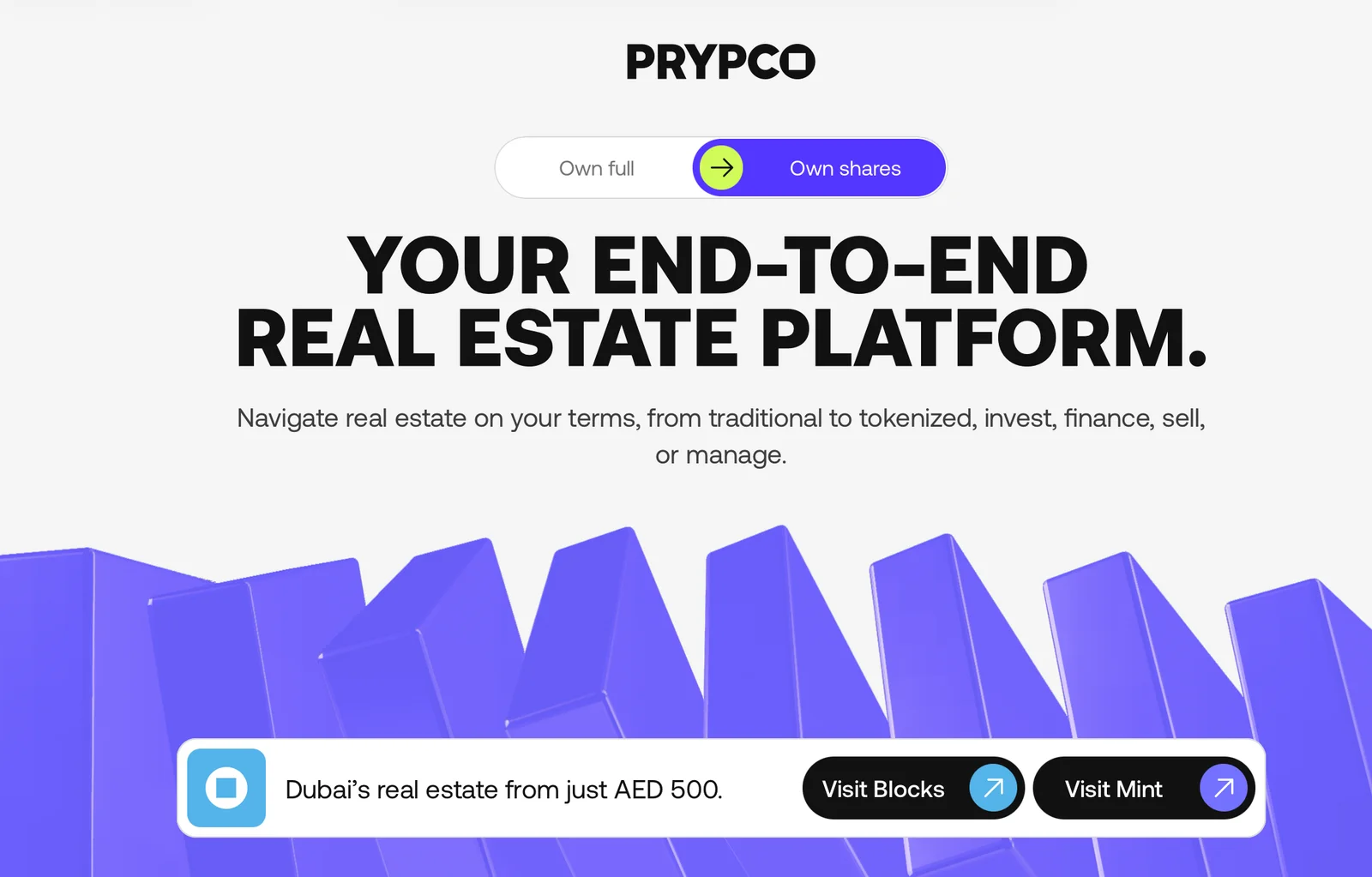
Platforms like GetStake.com and Prypco.com are useful here because they allow smaller investors to access income-generating rental properties without buying the entire asset. PRYPCO Blocks describes itself as a real estate crowdfunding platform for fractional ownership in Dubai rental properties starting from AED 500, while Stake states that investors can purchase fractions of Dubai income-generating properties from AED 500.
But let me be careful here. Fractional ownership is not the same as owning an apartment directly in your personal name. It is more accessible, easier to diversify, and usually more passive. But it also means you rely on the platform structure, the specific legal setup, the property manager, the exit mechanism, and the actual rental performance of the asset.
So, it is not “risk-free real estate.” It is still real estate.
Primary Ways to Invest $50,000 in Dubai Property
1. Real Estate Crowdfunding and Fractional Ownership
Fractional property investment is probably the most practical option for someone who has $50,000 but does not want to deal with mortgage approval, tenant management, agent calls, maintenance quotes, DEWA deposits, Ejari registration, and the general reality of owning a rental unit.
In simple terms, you buy a share in a property rather than the full apartment.
For example, instead of using AED 183,000 as a deposit on one small off-plan unit, you could spread the same amount across several income-producing apartments through fractional platforms. That could mean exposure to different buildings, different tenant profiles, and different areas. A studio in JVC. A one-bedroom in Dubai Marina. Perhaps another unit in Business Bay or Downtown-adjacent locations. The exact properties depend on what is available on the platform at the time, of course.
This is where GetStake.com and prypco.com should both be mentioned clearly.
Stake states that Stake Properties Limited is regulated by the Dubai Financial Services Authority as an Operator of a Property Investment Crowdfunding Platform, and it also notes that investments carry risk and are not guaranteed.
PRYPCO Blocks states that it is regulated by the DFSA, gives its licence number, and says investors can access Dubai rental property ownership from AED 500. It also mentions KYC requirements, which is important because serious investment platforms should not simply take money without onboarding checks.
For a new Dubai investor, this structure can make sense when the goal is learning, diversification, and rental exposure.
The main benefit is accessibility. You do not need AED 1 million. You do not need to qualify for a mortgage. You do not need to transfer full title. You can start small, observe performance, and gradually build conviction.
The drawback is that you do not control the asset the same way a direct owner does. You cannot decide to renovate the unit. You cannot personally negotiate with a tenant. You cannot suddenly decide to switch it into short-term rental. And if you want to exit, liquidity depends on the platform’s process and buyer demand. That part matters. A lot.
Fractional Ownership, Good Fit or Bad Fit?
| Investor Type | Suitable? | Why |
|---|---|---|
| Beginner investor | Yes | Low entry point and easier learning curve |
| Investor wanting monthly rental income | Possibly | Depends on occupancy, expenses, and platform distribution |
| Investor wanting full control | No | You do not control the property directly |
| Investor with $50,000 who wants diversification | Yes | Capital can be spread across several assets |
| Investor needing instant liquidity | Not ideal | Exit depends on platform structure and demand |
I would treat fractional ownership as a smart starting point, not the final destination.
It gives you exposure. It gives you data. It gives you a feel for Dubai yields, buildings, service charges, demand, tenant behavior, and net income after costs. Then, once you understand the market better, you may decide to move into direct ownership.
That is usually a better sequence than rushing into a cheap unit just because the deposit looks affordable.
2. Off-Plan Properties With a $50,000 Deposit
The second route is using your $50,000 as the initial payment toward an off-plan property.
This is where Dubai becomes interesting.
Many developers offer payment plans where the buyer pays 10% to 20% upfront, then continues with staged payments during construction. In practical terms, AED 183,000 could be enough to reserve a studio or small one-bedroom unit in more affordable communities, depending on the project, developer, and payment plan.
Typical lower-entry areas include:
| Area | Why Investors Consider It | Typical Investor Logic |
|---|---|---|
| JVC | High rental demand, broad tenant base, relatively affordable entry | Yield-focused studio or one-bedroom strategy |
| Arjan | Growing community, access to key roads, active off-plan supply | Capital growth plus rental demand |
| Liwan | Lower entry pricing than many central areas | Budget-conscious off-plan buyers |
| Dubai South | Long-term infrastructure and airport-linked growth story | Longer hold, future growth thesis |
| Dubai Silicon Oasis | Established tenant demand, education and tech ecosystem | Stable rental market for smaller units |
This is not financial advice, and I would not say every project in these areas is attractive. Some are very good. Some are average. A few are probably overpriced once you compare payment plan, service charges, layout efficiency, and expected rent.
That is the part investors often miss.
They look at the headline price, not the real underwriting.
A studio at AED 650,000 with a weak layout, high service charges, and a handover in a supply-heavy cluster may be worse than a AED 780,000 unit in a better-connected building with cleaner rental demand. Price alone does not make a deal.
If your goal is capital appreciation, off-plan can work. But with a $50,000 budget, you must be careful about the payment schedule. The first deposit is only the beginning. If the project has a 60/40 payment plan, or 50/50, or 1% monthly structure, you need to know exactly how each installment will be funded.
A common mistake is thinking, “I have the down payment, so I can buy.”
No. You need the down payment, the DLD-related payments, the next installments, and a realistic cash-flow buffer.
Dubai Land Department’s fee schedules confirm the 4% sale value fee and mortgage-related charges such as 0.25% of the mortgage value where applicable. Buyer cost guides in the market commonly place total upfront buying costs around 7% to 10% once DLD fees, trustee fees, agency commissions, mortgage charges, and admin costs are included.
Note that when buying off-plan directly from a developer, the buyer does not pay any broker commission — the developer covers the agent’s fee. The 2% + VAT agency commission referenced in market cost guides applies to resale transactions only.
For that reason, if you have exactly $50,000 and no additional capital coming in, I would be cautious about direct off-plan ownership. But if you have $50,000 now and steady income to support the payment plan, then it can become a realistic route.
This is where a proper investment shortlist matters. You can review market-specific opportunities like Dubai Islands properties, especially if your strategy is more long-term and lifestyle-led, although Dubai Islands will generally sit at a higher entry point than JVC, Arjan, or Liwan.
3. Mortgage on a Ready Property With $50,000
A mortgage is the route that sounds the most traditional, and in some cases, it can work well. But for a $50,000 investor, it is also the option where the numbers often feel tighter once you include all the actual buying costs.
Let’s use the simple example most people search for.
You want to buy a ready apartment for around AED 1 million. Your $50,000 is roughly AED 183,000. In theory, that gets close to a 20% deposit. In practice, it may not be enough, because Dubai property buyers must also account for transfer fees, trustee fees, agency commission, mortgage registration, valuation, insurance, and bank charges.
Dubai Land Department lists the sale registration fee as 2% paid by the seller and 2% paid by the buyer, although in market practice the buyer often pays the full 4% unless negotiated differently. DLD also lists additional fixed charges such as title deed issuance, map fees, knowledge fees, innovation fees, and trustee service partner fees. For mortgage registration, DLD lists a mortgage fee of 0.25% of the mortgage value.
That means a buyer should not look only at the down payment.
They should look at the full cash required to close.
Example: Buying a Ready Apartment for AED 1 Million
| Cost Item | Estimated Amount |
|---|---|
| Property price | AED 1,000,000 |
| 20% down payment | AED 200,000 |
| DLD transfer fee, commonly budgeted at 4% | AED 40,000 |
| Agency commission, commonly 2% + VAT | Resale only — AED 21,000 |
| Trustee and admin fees | AED 4,000 to AED 5,000+ |
| Mortgage registration, 0.25% of loan value | Approx. AED 2,000 |
| Valuation, bank, and insurance costs | Varies by bank |
| Approximate cash needed | AED 270,000 to AED 300,000+ |
The 2% + VAT agency commission applies only when buying a resale property from an existing owner. When purchasing directly from a developer, the buyer does not pay any broker fee — the developer covers the agent. This can reduce the cash-to-close requirement by AED 21,000 or more on a deal of this size.
This is why I would be very careful with the claim that $50,000 is enough to buy a AED 1 million ready property with a mortgage.
It might be enough for part of the deposit, but not usually enough for the full acquisition cost. Unless the buyer has access to additional cash, developer incentives, a negotiated commission structure, or a lower-priced property, the budget can quickly become stretched.
There is also the mortgage eligibility question. Emirates NBD, for example, advertises home loans for expatriates with financing up to 80% of the property value and a minimum salary requirement of AED 15,000, subject to terms and approval. That does not mean every buyer gets 80%. Banks still check income, employer profile, debt burden, credit history, residency status, age, property type, and valuation.
So, for a $50,000 investor, the mortgage route is possible, but usually only if:
| Requirement | Why It Matters |
|---|---|
| You have additional cash beyond $50,000 | Closing costs may exceed the initial budget |
| You are mortgage eligible | Banks will assess income and debt obligations |
| The property valuation supports the price | Banks lend against valuation, not emotion |
| The net rental yield covers a sensible portion of the mortgage | Cash flow matters after service charges |
| You are buying in a liquid area | Exit options matter if plans change |
A ready property mortgage works best for someone with stable UAE income, a longer holding period, and a clear plan for renting the unit. It is less suitable for someone who only has $50,000 total and no extra buffer.
This is where proper deal sourcing becomes important. A buyer should not simply search portals and pick the cheapest apartment. They should compare net yield, tenant demand, service charges, building quality, unit layout, view, access, parking, developer reputation, and future supply nearby.
4. REITs: The Most Passive Way to Invest in UAE Real Estate
REITs, or Real Estate Investment Trusts, are another route for investors who want property exposure without buying a unit directly.
A REIT owns income-generating real estate. Investors buy shares or units in the REIT and receive exposure to the underlying portfolio. This can include offices, residential assets, retail, logistics, or mixed-use real estate, depending on the REIT.
In the UAE, one example is ENBD REIT, which describes itself as a Sharia-compliant real estate investment trust focused primarily on income-generating real estate in the UAE. Its ordinary shares are traded on Nasdaq Dubai under the ticker ENBD REIT.
For a $50,000 investor, REITs can be useful because they are liquid compared with direct property. You are not locked into one apartment. You are not dealing with tenants. You are not paying DLD transfer fees on an individual unit. You can also scale in gradually.
But REITs are not the same as direct property ownership.
The price of the REIT can move up and down like a listed security. Your returns depend on the portfolio, management strategy, occupancy, financing costs, asset valuations, dividend policy, and market sentiment. You also do not get the emotional satisfaction, or control, of owning a physical Dubai apartment.
Still, for some investors, that is exactly the point.
REITs vs Direct Property Ownership
| Factor | REITs | Direct Property |
|---|---|---|
| Entry cost | Lower | Higher |
| Liquidity | Usually easier | Slower, depends on buyer demand |
| Control | Low | High |
| Tenant management | Handled by REIT | Owner or property manager |
| Diversification | Built into portfolio | Requires more capital |
| Fees | Market and fund-related | DLD, agency, service charges, maintenance |
| Best for | Passive exposure | Control, leverage, long-term ownership |
I would not position REITs as a replacement for buying Dubai property. They are a different tool. For someone who wants simple exposure to UAE real estate, they can make sense. For someone who wants leverage, control, residency-linked planning, or a specific area thesis, direct property may still be more attractive.
Best Areas to Consider With a $50,000 Property Strategy
The right area depends heavily on which route you choose.
A $50,000 investor using fractional ownership can access properties across multiple areas, depending on what GetStake.com or prypco.com has available at the time. That is one of the major advantages of the fractional route. You are not limited to the one unit you can afford. You can build a small basket of exposure.
A $50,000 investor buying off-plan needs to be more careful. The budget naturally pushes the search toward affordable studios and one-bedroom units, often in communities where entry prices are still manageable.
A mortgage buyer has a different problem. They may be able to finance a ready property, but total cash required can exceed the $50,000 budget after fees.
Here is a practical way to think about the areas.
| Area | Best Investment Route | Why It May Work |
|---|---|---|
| JVC | Off-plan, ready property, fractional | Large tenant base, affordable entry, strong rental activity |
| Arjan | Off-plan | Growing community, still relatively accessible |
| Liwan | Off-plan | Lower ticket size, budget-friendly entry |
| Dubai Silicon Oasis | Ready property, rental yield strategy | Established community and practical tenant demand |
| Dubai South | Off-plan, long-term hold | Infrastructure-led growth story |
| Dubai Islands | Longer-term capital growth, lifestyle investment | Higher-end coastal master plan, better for larger budgets |
Dubai Islands deserves a separate mention because it is not necessarily the easiest $50,000 entry market. It is more of a long-term coastal growth play than a small-ticket yield market. But for investors planning to grow beyond the first $50,000, it can be worth studying early.
The appeal is simple. Dubai Islands sits within Dubai’s broader waterfront expansion story, with a mix of hospitality, residential, leisure, and beachfront positioning. That gives it a very different investment profile from JVC or Liwan.
For small-cap investors, though, I would separate “where I want to own one day” from “where my first investment makes the most financial sense.”
That distinction matters.
A beautiful area is not always the best starting point. Sometimes the boring unit with strong rental demand is the smarter first move.
Fractional Ownership vs Off-Plan vs Mortgage vs REITs
Here is the clean comparison.
| Option | Control | Income | Growth | Liquidity | Complexity |
|---|---|---|---|---|---|
| Fractional ownership | Low | Medium | Medium | Medium, platform dependent | Low |
| Off-plan property | Medium | Low before handover | Medium to high | Medium, depends on resale market | Medium |
| Ready property with mortgage | High | Medium to high | Medium | Medium | High |
| REITs | Very low | Medium | Medium | Higher | Low |
If I were advising a first-time investor with $50,000 and no strong Dubai experience, I would not rush them into buying the cheapest direct unit available.
I would usually suggest one of two paths.
The first path is conservative: start with fractional ownership through platforms such as GetStake.com and prypco.com, track performance, learn how Dubai rental assets behave, and keep part of the capital liquid.
The second path is more ambitious: use the $50,000 as the beginning of a direct property plan, but only if the buyer has additional income to support the instalments, fees, and holding costs.
The wrong move is to treat the $50,000 as if it solves the whole problem.
It does not.
It gives you a seat at the table. The strategy is what determines whether that seat becomes valuable.
Sample $50,000 Allocation Strategies
Strategy A: Conservative Passive Investor
| Allocation | Amount |
|---|---|
| Fractional property investments across 3 to 5 assets | AED 120,000 |
| REIT exposure | AED 30,000 |
| Cash reserve | AED 33,000 |
| Total | AED 183,000 |
This works for someone who wants exposure without debt. It is simple, diversified, and not too demanding.
Strategy B: Off-Plan Growth Investor
| Allocation | Amount |
|---|---|
| Initial booking and down payment | AED 100,000 to AED 150,000 |
| DLD or registration-related costs | Varies by project |
| Cash reserve for next installment | AED 30,000 to AED 80,000 |
| Total | AED 183,000 |
This works only if the investor has future cash flow. The danger is entering a payment plan without knowing how the next 12 to 24 months will be funded.
Strategy C: Learning First, Buying Later
| Allocation | Amount |
|---|---|
| Fractional ownership through Stake or PRYPCO Blocks | AED 50,000 to AED 80,000 |
| REIT or listed real estate exposure | AED 20,000 to AED 40,000 |
| Savings toward direct property deposit | AED 60,000 to AED 100,000 |
| Total | AED 183,000 |
This is probably the most balanced path for many new investors. It is not flashy, but it gives you market exposure while building toward a stronger direct purchase later.
How to Choose Between GetStake.com and prypco.com
For a $50,000 investor, both GetStake.com and Prypco.com deserve attention, but they should not be treated as identical just because both give access to fractional property investment.
The basic idea is similar: smaller investors can access Dubai rental properties without buying an entire apartment. But before putting capital into either platform, I would compare the actual listed properties, expected net returns, exit process, fees, legal structure, reporting quality, and how each platform handles investor protection.
Stake states that Stake Properties Limited is regulated by the Dubai Financial Services Authority as an operator of a property investment crowdfunding platform, and the DFSA public register also lists Stake Properties Limited as authorized for operating a crowdfunding platform, with restrictions limiting it to property investment crowdfunding activity.
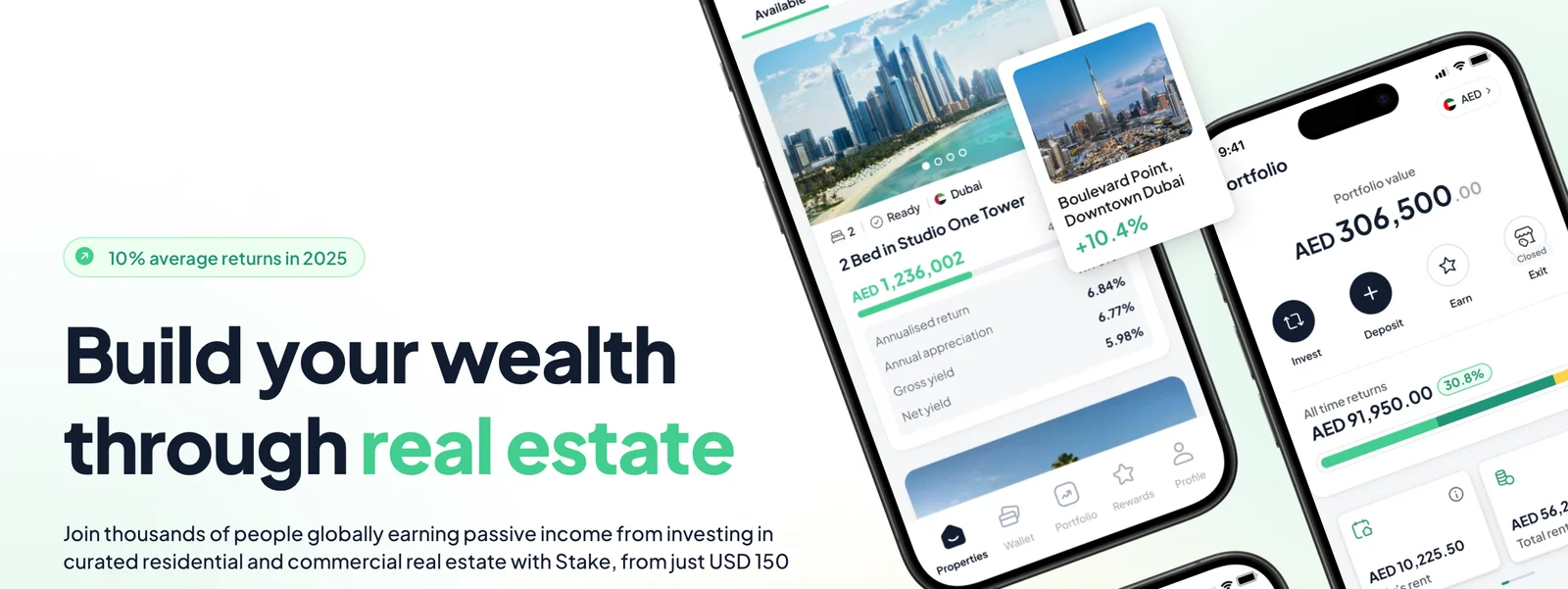
PRYPCO Blocks states that it enables fractional ownership in Dubai rental properties from AED 500 and that PRYPCO Blocks is regulated by the DFSA with reference number F007958. Its terms also state that PRYPCO Blocks is authorized and regulated by the DFSA as an operator of a property crowdfunding platform.
That regulatory point is important.
Not because regulation removes risk. It does not. But it does create a framework. And at this level of investment, especially when everything feels easy through an app, investors should be extra careful not to confuse convenience with safety.
Stake vs PRYPCO Blocks, Practical Comparison
| Factor | GetStake.com | prypco.com, PRYPCO Blocks |
|---|---|---|
| Investment model | Fractional property investment | Fractional property investment |
| Starting point | Stake promotes access to real estate investment from AED 500 | PRYPCO Blocks states entry from AED 500 |
| Regulatory position | Stake Properties Limited states it is DFSA regulated as an operator of a property investment crowdfunding platform | PRYPCO Blocks states it is DFSA regulated with reference F007958 |
| Best for | Investors who want app-based property exposure and portfolio diversification | Investors who want fractional Dubai rental exposure through PRYPCO’s wider real estate ecosystem |
| Key due diligence | Property selection, fees, exit liquidity, net rental yield, platform terms | Property selection, fees, SPV structure, exit liquidity, platform terms |
The smart approach is not necessarily choosing one and ignoring the other. A serious investor can review both platforms, compare live opportunities, and decide based on asset quality rather than brand alone.
I would look at the property first.
Is it in a liquid area? Is the rent realistic? Are the service charges reasonable? Is the valuation fair? Is the building already proven with tenants, or is it relying on optimistic assumptions? What is the exit process? How are returns calculated after all costs?
These questions matter more than the platform’s marketing headline.
Risk Management for a $50,000 Dubai Property Investor
With a small starting budget, risk management is everything.
A $5 million investor can survive one average purchase. A $50,000 investor has less margin for error. That does not mean the smaller investor should avoid Dubai property. Not at all. It just means the first move should be structured carefully.
Here is how I would think about it.
1. Do Not Put All the Money Into the Deposit
This is probably the biggest mistake.
A buyer sees an off-plan project with a 10% down payment and thinks, “Great, I can enter.”
But the deposit is only one line item. There may be DLD fees, admin fees, Oqood or registration charges, trustee fees, future instalments, potential service charges after handover, furnishing costs, and a gap before the unit generates rent.
Dubai Land Department’s property sale registration service explains that sale registration applies to full or partial sale transactions, and DLD fee schedules include registration-related charges. DLD also lists mortgage registration charges at 0.25% of the mortgage value for mortgaged property registration services.
So keep a reserve. Even if it feels boring.
Boring is sometimes what keeps investors alive.
2. Focus on Net Yield, Not Gross Yield
A property advertised at 8% gross yield may look attractive. But gross yield does not pay your bills.
You need to subtract service charges, maintenance, property management, vacancy periods, platform fees if fractional, mortgage cost if financed, furnishing cost if short-term rental, and any renewal or leasing fees.
The number that matters is net yield.
A lower gross yield in a better building may beat a higher gross yield in a weak building with constant maintenance and vacancy.
3. Avoid Buying Only Because the Entry Price Is Low
Cheap property is not always good property.
Sometimes it is cheap because the location is weak. Sometimes the layout is inefficient. Sometimes the service charges are too high. Sometimes there is too much future supply in the same micro-market. And sometimes, frankly, the building just does not attract good tenants.
A $50,000 investor should not chase the lowest price.
They should chase the cleanest risk-adjusted return.
4. Understand Liquidity Before Investing
Direct property is not instantly liquid.
Off-plan resale depends on developer rules, payment thresholds, market sentiment, and buyer demand. Ready property resale depends on pricing, location, tenant status, mortgage status, and market liquidity. Fractional property exit depends on the platform’s secondary market or exit process. REITs are generally more liquid than direct property, but their market price can move.
ENBD REIT, for example, describes itself as a Sharia-compliant REIT focused primarily on income-generating real estate in the UAE, with ordinary shares traded on Nasdaq Dubai. That gives investors a listed route into UAE real estate, but it also means price movement can be affected by market conditions, not only property fundamentals.
Liquidity is not just “can I sell?”
It is, “Can I sell at a fair price, when I need to?”
That is a different question.
Due Diligence Checklist Before Investing $50,000
Before investing, I would go through this checklist.
| Due Diligence Point | Why It Matters |
|---|---|
| Regulation | Confirms whether the platform or investment provider operates under a recognised framework |
| Property valuation | Prevents overpaying for a unit or fractional share |
| Net rental yield | Shows the real income after expenses |
| Service charges | Can quietly destroy returns if too high |
| Building quality | Affects rent, tenant demand, resale value, and maintenance |
| Exit process | Determines how easy or difficult it is to sell |
| Payment plan | Critical for off-plan buyers with limited cash |
| Developer track record | Reduces completion and delivery risk |
| Tenant demand | Protects rental income and vacancy assumptions |
| Area supply pipeline | Helps avoid buying into oversupplied micro-markets |
A good Dubai property investment is rarely just about the apartment.
It is the building, the floor, the view, the layout, the service charge, the surrounding supply, the handover date, the developer, the rentability, and the exit market. All of it together.
This is why I always prefer underwriting over guessing.
If you are moving from fractional investing into direct ownership, it is worth working with an advisory-led brokerage that can compare off-plan, ready, mortgage, and yield strategies side by side.
The Best Strategy for Most $50,000 Investors
For most investors with exactly $50,000, I would not force a direct property purchase too early.
That may sound strange coming from a Dubai real estate perspective, but it is the more honest answer.
If the investor has no extra income, no mortgage eligibility, and no appetite for staged payments, fractional ownership or REIT exposure may be the cleaner entry point. It allows participation without pretending the budget is bigger than it is.
If the investor has $50,000 now plus stable monthly income, then off-plan can become interesting. The right project with a sensible payment plan can provide exposure to capital appreciation, especially in locations where the long-term story is supported by infrastructure, population growth, tourism, and rental demand.
If the investor has $50,000 plus extra cash for fees and mortgage approval, then a ready property can work. But the numbers need to be checked carefully.
Here is the simplest decision framework.
| Investor Profile | Best Route |
|---|---|
| $50,000 only, no extra cash flow | Fractional ownership or REITs |
| $50,000 plus steady income | Off-plan property with staged payment plan |
| $50,000 plus mortgage approval and extra cash for fees | Ready property with mortgage |
| Wants total passivity | Fractional ownership or REITs |
| Wants control and long-term ownership | Off-plan or ready property |
| Wants to learn before buying | Start fractional, then move into direct ownership |
Personally, I think a staged approach is the smartest.
Start with education. Use fractional platforms if you want real exposure at a smaller level. Study yields. Watch how areas perform. Understand how Dubai rental demand behaves. Then, when your capital base is stronger, move into direct ownership with more confidence.
That is not the most exciting answer. But it is probably the most sustainable one.
Where Dubai Islands Fits Into a $50,000 Strategy
Dubai Islands is not the cheapest entry point in Dubai, so it may not be the first move for every $50,000 investor.
But it should still be on the radar.
Why? Because not every investment strategy is only about today’s rental yield. Some investors are building toward future waterfront ownership, lifestyle-led capital growth, and long-term scarcity. Dubai Islands sits in that category more than it sits in the budget-yield category.
For a small-cap investor, the practical approach might be this:
Use fractional ownership or REITs to get immediate market exposure.
Build more capital.
Study Dubai Islands early.
Then move into a stronger direct ownership position once the budget allows.
That sequence makes more sense than stretching into a coastal project too early and then struggling with payment commitments.
Common Mistakes Small Investors Make in Dubai Property
Mistake 1: Buying the Cheapest Unit Available
The cheapest unit is not always the best investment. Sometimes it is cheap for a reason.
Mistake 2: Ignoring Service Charges
Service charges can significantly reduce net yield. Always check the building-level cost, not just the rent.
Mistake 3: Believing Every Payment Plan is Investor-Friendly
A payment plan can look easy at the start and become stressful later. Always map every installment before signing.
Mistake 4: Assuming Fractional Ownership Has No Risk
Fractional ownership reduces the entry barrier, but it does not remove property risk, platform risk, valuation risk, or liquidity risk. Stake itself warns that investments carry risk and are not guaranteed, while PRYPCO’s risk wording also states that property investment carries risk and anticipated returns may not be received.
Mistake 5: Looking Only at Gross ROI
Gross ROI is easy to market. Net ROI is what matters.
Final Recommendation
If you have $50,000 USD, or around AED 183,000, you have three realistic Dubai property paths.
You can start passively through fractional ownership platforms such as GetStake.com and prypco.com. You can use the capital as a deposit toward an off-plan property if you have future cash flow to support the payment plan. Or you can consider REITs if you want listed, more liquid exposure to UAE real estate.
A ready property mortgage is possible in some cases, but I would not treat $50,000 as enough unless you have additional cash for buying costs and qualify for finance.
The best strategy is not the one that sounds the most impressive.
It is the one you can actually sustain.
For most first-time investors, I would start with a blended approach: some fractional exposure, some retained cash, and a clear plan to move into direct property ownership once the capital base is stronger. Then, when the timing and budget are right, compare direct opportunities in areas such as JVC, Arjan, Dubai South, Dubai Silicon Oasis, and longer-term lifestyle markets such as Dubai Islands.
Dubai gives small investors more access than it used to.
But access is not the same as strategy.
That is where the real money is made.