
Dubai gets talked about for its skyline and its five-star lifestyle. What gets less attention is how quickly it has turned green building from a marketing line into a rule you have to design around. For a buyer, that shift matters, because an energy-efficient home now costs less to run and holds its value better than the block next door that ignored all of it.
Why the city is pushing so hard on sustainability
The direction is set from the top. The Dubai Clean Energy Strategy 2050 and the UAE Net Zero by 2050 initiative aim to have three-quarters of Dubai’s energy coming from renewables by the middle of the century. That reshapes real estate whether developers like it or not. According to DEWA, the city’s renewable capacity reached 2,027 MW by the end of 2023, largely off the back of the Mohammed bin Rashid Al Maktoum Solar Park.
Then there are the rules that reach every new project. The Dubai Municipality Green Building Regulations require energy-efficient systems, water-saving fixtures, and sustainable materials in all new developments. That is the real engine here. Green stock is not a niche a few developers chose, it is increasingly the baseline.
What actually makes a property “green”
Underneath the label, an eco-friendly building in Dubai is doing a few practical things: efficient systems, solar generation where it makes sense, and materials chosen to cut the carbon footprint. The Sustainable City in Dubailand is the obvious example, running on solar, with car-free zones and waste recycling built in, and hitting net-zero energy use.
Smart tech does a lot of the quiet work: automated lighting, climate control, and water management that trims waste without the resident having to think about it. The Emirates Green Building Council puts the potential energy saving from these systems as high as 40 percent. That is not a rounding error, it is a real line on your annual bill.
Where the money side lands
The financial case is simpler than people expect: lower running costs and stronger resale value. An efficient building uses less electricity and water, and DEWA puts the household saving on annual utility bills at up to 20 percent. Over a holding period that compounds into real money.
The environmental math is just as blunt. Real estate accounts for roughly 40 percent of Dubai’s emissions, so how buildings are designed and run is central to the city’s climate targets. Retrofitting older stock with efficient systems can cut energy use by up to 50 percent, which tells you how much low-hanging fruit is sitting in the existing building stock.
There is also the investor angle. A 2022 report found that 57 percent of global investors now weigh environmental, social, and governance factors when deciding where to put capital. Green credentials are no longer a soft preference. They move where money goes.
The incentives worth knowing about
The government has put real support behind this, for developers and owners alike. The Shams Dubai program lets property owners install rooftop solar and generate their own power, leaning less on the grid. By 2023, more than 2,000 buildings had signed up.
On the older-stock side, the Dubai Land Department launched a Building Retrofit Program with a target of upgrading 30,000 buildings by 2030 and cutting energy and water use by 30 percent. And financing has caught up too: Dubai banks now offer loans tied to eco-friendly projects, with the Emirates Green Building Council working alongside local lenders on green mortgage products. The practical effect is that going green is no longer a cash-only decision.
Buyers have already changed their minds
Demand has moved, driven partly by conscience and partly by the bill. A 2022 Property Finder survey found 68 percent of buyers and renters now prioritise energy efficiency and green features when choosing a home. You can see it in pricing too, with green-certified buildings trading at a 10 to 15 percent premium over comparable conventional ones.
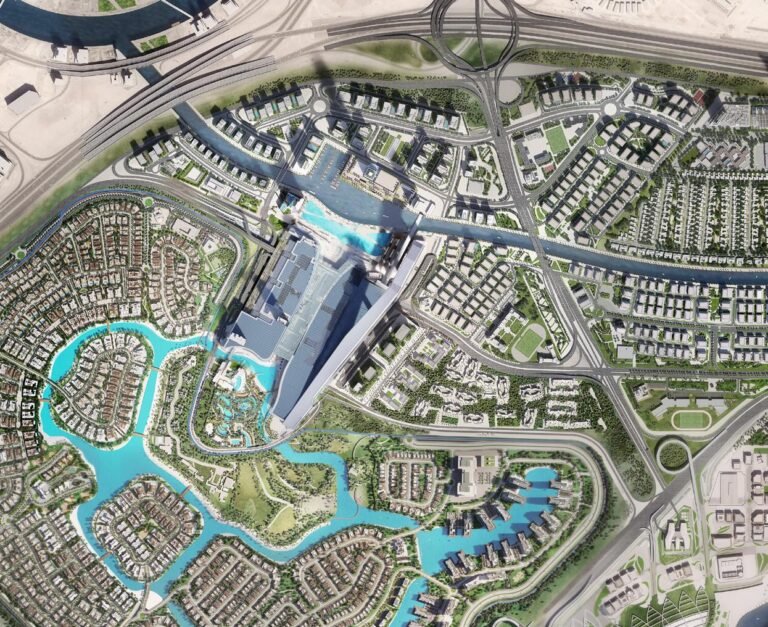
Developers noticed. Emaar, Nakheel, and DAMAC have all pushed sustainable projects to meet that demand. Emaar’s Expo Golf Villas, for instance, pair energy-efficient design with a location right next to Expo City Dubai, which is built around green tech and sustainable practice.
The honest caveats, and where this goes next
Dubai has covered a lot of ground, but the road is not clear. The upfront cost of green tech is still real, and awareness across parts of the market lags behind the policy. Government programs and education are chipping away at both, and the barrier is falling, but it has not vanished.
Looking forward, AI and connected devices will do more of the heavy lifting in managing energy and resources across buildings, and Dubai’s hosting of COP28 was a fairly clear signal about where the city wants to sit on the global stage. For a buyer, the takeaway is practical rather than idealistic: the efficient home costs less to hold and is easier to sell later.
If you want to go deeper on the risks and the openings in Dubai’s eco-friendly property market, join one of our webinars.