
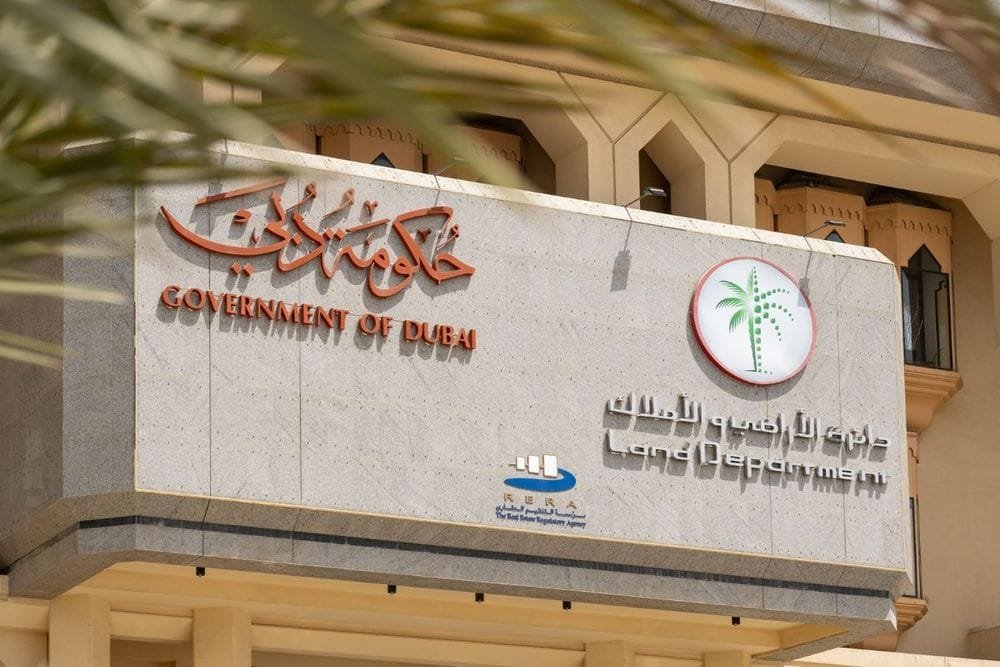
Dubai real estate has two referees on the pitch. One sets the rules, the other blows the whistle. The Dubai Land Department (DLD) is the authority that sets the framework: registration, title deeds, policies, valuations, land services. RERA, the Real Estate Regulatory Agency, is DLD’s specialised arm, founded in 2007, focused on market conduct: developers, brokers, leasing, service charges, escrow, and disputes. Put simply, DLD is ownership and infrastructure, RERA is regulation and behaviour. Separate, but not separate. Parent and specialist. I explain it to clients like this: DLD records what exists, RERA polices how it is done.
I will walk through the roles in plain language, with examples I see in day-to-day transactions, and I will flag where buyers, sellers, landlords, tenants, and investors should pay attention. Not every rule affects everyone equally.
At a glance: DLD vs RERA
| Area | DLD (parent authority) | RERA (regulatory arm of DLD) | Who it affects most |
|---|---|---|---|
| Core purpose | Owns the framework: property registration, title deeds, land services, policy. | Enforces professional conduct: licensing, escrow, leases, service charges, disputes. | Everyone, but especially owners and transfer parties. |
| Registration | Title issuance, transfer of ownership, Oqood/off-plan registrations. | Ensures the professionals involved are licensed and compliant (broker procedures). | Buyers, sellers, developers. |
| Policies and rules | Issues laws, circulars, fees, and valuation standards. | Issues practice standards, forms (like Form A), and regulates compliance. | Market participants generally. |
| Off-plan | Registers projects and ownership changes; records Oqood. | Supervises escrow accounts; approves and monitors developer compliance. | Developers, off-plan buyers. |
| Leasing | Policy backdrop only. | Regulates lease templates, Ejari processes, and dispute mechanisms. | Landlords, tenants, property managers. |
| Service charges | Policy backdrop only. | Approves and monitors owners’ association budgets and service charges. | Apartment/villa owners in managed communities. |
| Dispute resolution | Overarching governance around tribunals. | Practical venues like rental disputes committees. | Anyone in a dispute. |
| Transparency | Publishes transaction stats, price indices, smart services. | Enforces disclosures, licensing, advertising standards, brokerage ethics. | Buyers, sellers, renters, brokers. |
Think of DLD as the record-keeper and architect of the system. RERA makes sure everyone in it behaves, and has the correct badge.
Why this distinction matters, and where deals go sideways
A small mix-up gets expensive. A seller might be right that DLD will transfer the title once documents are in order. But if the broker on the listing was not properly licensed, a RERA issue, or the mandatory Form A was not executed correctly, you face delays, disputes, or a deal that stalls just before the finish line. I have seen it more than once.
Off-plan is similar. A buyer focuses on unit size, view, and price, fair enough, then forgets the escrow structure that protects their payments. That is a RERA safeguard. Meanwhile the Oqood registration under DLD confirms the buyer’s off-plan rights are properly recorded. You want both clean, escrow through RERA and registration through DLD.
What the Dubai Land Department actually does

1. Property registration and title deeds
- Transfers of ownership for ready properties: sale, inheritance, gifting where permitted, corporate transfers.
- Title deed issuance, the official document proving ownership, digital or printed.
- Off-plan registration, recording buyer interests during construction and updating at handover.
- Oqood, the interim registry entry before final title.
If you are buying ready property, DLD is the desk you eventually face at transfer. If you are buying off-plan, DLD is where your Oqood is recorded and later converted to a title deed at completion.
2. Setting policies and fees
- DLD publishes the policies, circulars, and fee schedules that define how transfers and registrations work.
- It sets the valuation standards used to assess property values for specific purposes, related to but not the same as a bank valuation.
- It maintains official price indices and transaction data, which supports market transparency.
If you are exploring Dubai for the first time, start with the market’s rules and incentives. See our guide: Why Dubai.
3. Valuation and transaction infrastructure
- Valuation services for official processes.
- Transaction infrastructure, offices, digital portals, appointment systems, that make title transfers efficient.
- Smart services that integrate with other government platforms, cutting paperwork and time.
The digitalisation helps, but I have had mornings where a client’s file needed one missing letter. Triple-checking requirements saves you hours.
4. Land-related services
- Land surveying, parceling, zoning interfaces, and plot records.
- Change of land use, merges and splits under specific policies.
- Coordination with master developers and municipalities for planning integrity.
A dream villa is also a line on a map. Compliance at the land level prevents ugly surprises later.
RERA: where conduct meets protection
1. Licensing and regulating professionals
- Brokers and agents must be trained, licensed, and affiliated with registered brokerages.
- Developers must meet specific criteria and ongoing obligations.
- Property managers and owners’ association managers are subject to rules and audits.
A licensed brokerage using mandatory RERA forms like Form A with the seller is your first filter against misinformation and hidden conditions. It is not just paperwork, it is accountability.
2. Guidelines for transactions
- Standardised forms and procedures for listing, buying, selling, and tenancy.
- Advertising standards, so listings are accurate, approvals are in place, and there is no bait-and-switch.
- Disclosure obligations on material facts, fees, and terms.
The forms are not thrilling bedtime reading. But they compress a lot of risk into a structure that is simpler to navigate. Use them.
3. Escrow oversight for off-plan
- RERA approves and supervises escrow accounts that hold buyer payments until construction milestones are met.
- Release of funds is linked to verified progress, which reduces default or misuse risk.
- Developers submit project and financial documentation before sales begin and throughout construction.
Two simple questions cut through it. Which RERA escrow account holds my payments, and what triggers the release? If the answers are vague, hit pause.
How DLD and RERA work together

- DLD sets the overarching structure and records your ownership, or your off-plan interest.
- RERA makes sure the people and processes around your transaction are licensed, transparent, and fair.
- In a typical sale, if you used a licensed brokerage with the correct RERA forms, your transfer at DLD should be straightforward.
A seller lists via RERA Form A with a licensed brokerage. A buyer, represented by a licensed agent, negotiates terms. Funds and documents follow RERA protocols. On transfer day, DLD executes the registration, issues the title, and you walk out an owner. It looks simple because RERA already did the pre-work in the background.
Process map: ready vs off-plan
| Step | Ready property | Off-plan property |
|---|---|---|
| Initial listing | RERA: broker licensed, Form A executed with seller, compliant advertising. | RERA: developer approved, project registered, escrow in place, marketing cleared. |
| Offer and MOU | RERA: standard forms (Form F / MOU) and disclosure practices. | RERA: SPA issued, disclosures on specs, timeline, payment plan. |
| Payment flow | DLD fees calculated, manager’s cheque or transfer at closing. | RERA escrow receives installments, releases tied to construction milestones. |
| Registration | DLD transfer, title deed issued. | DLD Oqood registration now, title deed at handover. |
| Post-completion | Complete at transfer. | RERA verifies project completion and handover compliance, then DLD issues title. |
RERA secures conduct and escrow. DLD secures registry and title.
Examples you will recognise
| Scenario | What you want | DLD’s role | RERA’s role |
|---|---|---|---|
| You are selling your apartment. | A clean sale with no last-minute surprises. | Transfer, title issuance, fee processing. | Listing via Form A, licensed brokerage, compliant marketing, proper offer/MOU. |
| You are buying off-plan. | Payment safety and timely delivery. | Oqood registration, title at completion. | Escrow oversight, developer approvals, milestone-linked fund releases. |
| Your tenant stops paying. | A predictable process and outcome. | Policy backdrop. | Rental dispute channels, Ejari framework, standardised procedures. |
| Service charges jump unexpectedly. | Transparency and fair budgeting. | Governance framework. | OA oversight, budget approval, audits, challengeable line items. |
| A broker gave you conflicting info. | The truth, in writing. | Not applicable. | Licensing, mandatory forms, advertising and disclosure standards. |
RERA deep-dive: escrow, off-plan, leasing, disputes, service charges
Start where the money sits, escrow. It is the quiet hero of off-plan.
Off-plan and escrow (what RERA actually checks)
Before a developer sells a single unit, RERA requires:
- A project escrow account with an approved bank.
- Land ownership or rights evidence, or a long lease, linked to that project.
- Technical documentation, designs and timelines, plus financial planning.
- Ongoing construction progress reporting tied to verified milestones.
During construction, buyer payments flow into escrow and are released to the developer when independent progress checks are met. That is the part many first-time buyers overlook. Your installment is not just handed over, it is released against progress. So confirm the escrow account name and number and the escrow bank, confirm who certifies progress and when funds release, verify you will receive Oqood registration after your SPA is executed and payments begin, and keep receipts consistent with the SPA, payment plan, and escrow details. If any answer feels vague, pause. Good developers are crystal clear here.

Leasing and Ejari
Ejari is the official registry of your tenancy agreement. Simple in theory: a registered lease means recognised rights. In practice, use standardised lease terms aligned with RERA guidance, register each tenancy and every renewal, work within the rent increase rules tied to market index bands, and use the dispute channels for non-payment, maintenance, and access.
Landlord reality check: if it is not in Ejari, it is not truly on the record. Keep your addenda aligned with RERA expectations on notice periods, maintenance, and deposit handling. If a clause looks too clever, it probably will not survive a dispute. Tenant tip: if your landlord avoids Ejari to save time, that is a red flag. The extra hour now is insurance later.
Dispute resolution
- Rental disputes follow RERA-anchored processes through specialised committees and tribunals.
- Sales disputes usually turn on contract performance, misrepresentation, or payment failures, structures that live within the DLD/RERA framework but may escalate to competent authorities depending on the issue.
- Service charge disputes lean on RERA’s oversight of owners’ association budgets and audits.
Calm preparation wins these: organised documents, Ejari compliance, signed RERA forms, escrow receipts. It is not drama, it is paperwork.
Service charges and owners’ associations
- Budgets for shared facilities like lobbies, pools, and security require RERA approval.
- Collections must match approved heads, not discretionary extras.
- Owners’ associations or their managers are regulated. AGMs, audited accounts, and reserve studies exist for a reason.
If your charges look high, request the line-item budget and the past audit. Sometimes it is higher utility costs or new capex, sometimes it is scope creep you can challenge.
Role-by-role checklists
Buyers (ready)
- Verify the broker license with the brokerage.
- Insist on RERA standard forms. Read Form F, do not skim it.
- Confirm DLD fees and timeline, and align cheques or wire logistics in advance.
- Cross-check title details, names, plot or unit, area, before transfer day.
- If your purchase is part of a residency plan, see Golden Visa in Dubai, and for area context, the Business Bay area guide.
Buyers (off-plan)
- Request escrow account details in writing.
- Understand the milestones and handover triggers.
- Confirm Oqood registration timing and the document pack.
- Keep every receipt and bank transfer proof neatly labeled.
- Considering coastal projects? Read Al Marjan Island and our Dubai Islands data-led guide.
Sellers
- Sign Form A correctly, keeping commission, duration, and price clear.
- Approve only accurate advertising, photos, size, view.
- Prepare NOCs and settlement letters early if relevant.
- Bring the original title, or digital access, and ID documents to transfer.
Landlords
- Register Ejari on every tenancy and keep addenda consistent.
- Use clear maintenance clauses and move-in checklists.
- Respect notice periods and rent index rules.
- Archive communications. You will thank yourself if a dispute arises.
Tenants
- Do not skip Ejari. It protects you.
- Document handover condition with photos and written notes.
- Understand deposit terms and exit obligations, ideally 60 to 90 days ahead.
- Pay via traceable channels and keep receipts.
Developers
- Maintain escrow discipline and communicate milestones clearly.
- Keep marketing compliant and aligned with specs.
- Report progress proactively to avoid rumours and escalations.
- Hand over with a snagging-first mindset. It builds reputation.
Compliance pitfalls
- The unlicensed friend agent. Nice person, wrong paperwork. RERA will not accept it and deals wobble.
- Creative lease clauses that contradict standard practice, often unenforceable.
- Verbal promises about views, sizes, or handover dates. If it matters, put it in writing.
- Escrow ambiguity in off-plan. If you cannot name the escrow bank, you do not really know where your money is.
- Service charge confusion. Challenge respectfully with data, approved budgets and audits, not emotion.
Forms and artifacts you will encounter
| Document / artifact | Purpose | Keeper |
|---|---|---|
| Title Deed | Proof of ownership (ready property) | DLD issues |
| Oqood | Interim off-plan registration | DLD records |
| Form A | Seller and broker listing authority | RERA standard |
| Form F (MOU / contract of sale) | Buyer and seller contractual framework (ready) | RERA standard |
| SPA (off-plan) | Buyer and developer sale agreement | RERA oversight, registered, escrow-linked |
| Ejari Certificate | Registered tenancy record | RERA ecosystem |
| Service Charge Budget | Community OPEX / capex plan | RERA approves and monitors |
Practical walkthroughs
A ready sale in Business Bay
- Week 1: seller signs Form A, listing goes live with verified details.
- Week 2: buyer offer via Form F, deposit terms set.
- Week 3: bank settlement if mortgaged, developer NOC, DLD fee prep.
- Transfer day: DLD transfer, new title, and usually a few smiles.
- Area context if you want it: the Business Bay guide.
Off-plan on a waterfront project
- Reservation: escrow details shared, SPA signed.
- Payments: linked to construction milestones, receipts filed neatly.
- Registration: Oqood confirms your stake.
- Handover: snag list, final payments, title issued by DLD.
- For coastal dynamics, read our Dubai Islands overview.
Where the mechanics get specific
Fees and receipts. Transfers incur DLD fees, a percentage of price plus admin elements. Receipts are official. Keep your digital and hard copies lined up with the MOU and the bank remittance or manager’s cheque trail.
Valuation vs market price. Official valuation standards support governance. Market price is supply, demand, and negotiation. If your bank valuation seems conservative, that is not DLD’s job to fix, it is your financing strategy to adapt.
Digital services. Digitisation means fewer in-person trips, not zero. Signatures, POAs, corporate documents, and verifications can still require choreography. Expect better speed, not magic. I still plan for one surprise document every other deal, which keeps me calm when it appears.
Who to contact first
| Situation | First contact | Why | Second step |
|---|---|---|---|
| Listing looks suspicious | Brokerage office (RERA-licensed) | Confirm the agent’s status and Form A | If misrepresentation persists, RERA complaint |
| Title detail mismatch | DLD transfer desk or appointed trustee | Title is a DLD record | Loop in broker or developer to correct inputs |
| Off-plan payment confusion | Escrow trustee (bank) | The payment trail lives here | Developer customer care, escalate via RERA if needed |
| Sudden service-charge spike | OA manager (RERA-regulated) | Budget and audit access | RERA OA oversight for review |
| Tenant will not register Ejari | Landlord or agent | It must be registered first | RERA rental dispute route if unresolved |
Off-plan vs ready: protections and risks
| Dimension | Ready property | Off-plan property |
|---|---|---|
| Where your money goes | Settlement at transfer, bank and NOC processes | RERA escrow with milestone releases |
| Your registry anchor | DLD title deed right after transfer | DLD Oqood then title deed at completion |
| Main regulator touchpoints | RERA forms and brokerage conduct, DLD transfer | RERA escrow and developer compliance, DLD Oqood and title |
| Typical pitfalls | Informal agents, missing forms, last-minute docs | Vague milestones, weak comms, unclear escrow |
| What to document obsessively | MOU (Form F), fee schedule, cheques and transfers | SPA, escrow receipts, milestone certificates |
Still thinking about risk?
You should be, it is part of being a good investor. But separate market risk, prices and yields, from process risk, paperwork and compliance. RERA absorbs a lot of the latter. DLD makes the ownership real. If your team respects both, execution becomes almost boring. And in real estate, boring is profitable.
FAQs: DLD and RERA
This is practical guidance, not legal advice. Policies evolve, so verify against current DLD/RERA publications before you commit funds or sign.
1) What is the simplest difference between DLD and RERA?
DLD records and governs ownership: registration, title deeds, Oqood, land services. RERA regulates conduct: licensing brokers and developers, escrow oversight, leasing and Ejari, service charges, dispute routes. Two parts of one system, parent body and regulatory arm.
2) How do I check if a broker is licensed?
Ask for the agent’s RERA ID and the brokerage trade name. A licensed professional will not hesitate. If the listing has no signed RERA Form A with the seller, pause.
3) What is Oqood and why does it matter?
Oqood is the interim off-plan registration under DLD. It recognises your contractual interest before the final title deed at handover. Think of it as your placeholder in the registry.
4) What does a project escrow actually protect?
Under RERA, buyer payments for off-plan go into a project escrow account and are released to the developer only against certified construction milestones. Not absolute risk elimination, but disciplined, traceable funding.
5) Do I need Ejari for every tenancy?
Yes. Ejari, a RERA system, registers the lease. If it is not registered, your position in a dispute may be weaker and renewals can get messy.
6) My service charges jumped, what next?
Ask for the RERA-approved budget and the audit. Challenge with documents, not emotion. RERA regulates owners’ association managers and requires transparent budgeting.
7) Who handles rent disputes?
RERA-anchored mechanisms, specialised committees and tribunals. Document everything: Ejari, notices, receipts, photos.
8) Off-plan delays, who do I talk to first?
Start with the developer’s official channel, then the escrow trustee for documentation, and escalate under RERA protocols if needed. Keep your SPA, receipts, milestone notices, and correspondence in one clean folder.
9) Which forms should I know by name?
Form A (seller and broker listing authority), Form F / MOU (buyer and seller agreement for ready property), SPA (off-plan contract). If those sound unfamiliar to your counterparty, red flag.
10) Title deed timing after transfer or handover?
Under DLD, titles are digitalised and issuance is generally efficient once prerequisites are met. Timelines depend on file completeness and any bank or developer NOCs. Plan for a buffer, celebrate when it is faster.
The cheat sheet
- DLD = registry, titles, Oqood, land, policy backbone.
- RERA = licensing, escrow, leasing and Ejari, service charges, market conduct, disputes.
- Ready property: RERA forms, then DLD transfer, then title.
- Off-plan: RERA escrow and SPA, then DLD Oqood, then handover, then DLD title.
- Leases: RERA standard plus Ejari, otherwise expect friction later.
- Service charges: RERA approves budgets, so ask for the paper trail.
- Your rule: if it is important, get it in writing, whether a form, an addendum, or a receipt.
More reading
- Market fundamentals: Why Dubai
- Residency pathway: Golden Visa in Dubai
- Prime city living: Downtown Dubai Area Guide
- Data-led coastal thesis: Dubai Islands Guide
- Business hub living: Business Bay Area Guide
If you remember one thing, remember the pairing: DLD makes ownership real, RERA makes behaviour fair. I have seen gorgeous deals ruined by a missing form, and very average deals glide to the finish because the basics were respected. If anything in your file feels informal, licenses, forms, escrow details, slow down for a day. It is cheaper than fixing it later.