
Ask me why so much foreign money keeps landing in Dubai property and I give the same answer I have given for years: it is one of the few markets where the yield, the tax position and the growth story all point the same way at once. Most cities give you one of those. Dubai has been handing investors all three.
Here is what actually drives that, sector by sector, without the brochure gloss.
Location does real work here
Sitting at the meeting point of Europe, Asia and Africa is not just a line for a pitch deck. It means a tenant pool and a buyer pool that renew constantly. Two airports carry that traffic, Dubai International Airport and Al Maktoum International (DWC), connecting the city to more than 240 destinations. For a landlord, that reach is the difference between a flat you can always let and one you cannot.
Growth that held when other markets did not
The number I keep coming back to is this: the city’s economy grew 3.8% in 2023 according to the Dubai Statistics Center, through a stretch that hurt plenty of Western markets badly. GDP was expected to pass USD 108 billion in 2024. That resilience is not luck. It comes from getting off oil dependency early: non-oil trade and services now account for over 90% of the emirate’s GDP, led by tourism, finance and technology.
The yields are the headline, and they are real
Residential rental yields in Dubai can reach 7.5%, per Property Finder. Put that next to New York at around 3% or London at 3.5% and you see why capital moves. The engine underneath it is the resident base: roughly 90% of Dubai’s population are expatriates, many in well-paid roles, and most of them rent rather than buy. That keeps demand for both long and short lets steady, particularly near the business districts and the tourist strips.
The tax position is the quiet advantage
Dubai has no property tax. The tax-free treatment extends to capital gains, inheritance and income. For an investor used to handing a chunk of every rent cheque and every sale to the taxman, that changes the whole return calculation.
On top of that sits the residency piece. The 10-year Golden Visa gives qualifying property investors long-term residency, which matters far more to buyers than most agents let on. If you want the detail, read Dubai Investor Visa Blueprint: How to Secure Dubai Residency through Property Ownership.
Infrastructure that keeps adding value
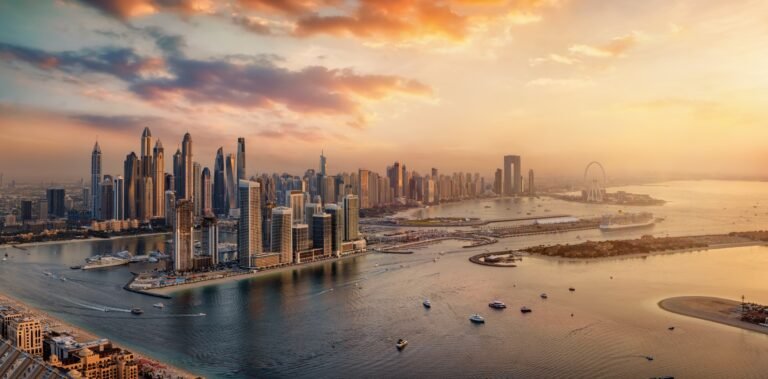
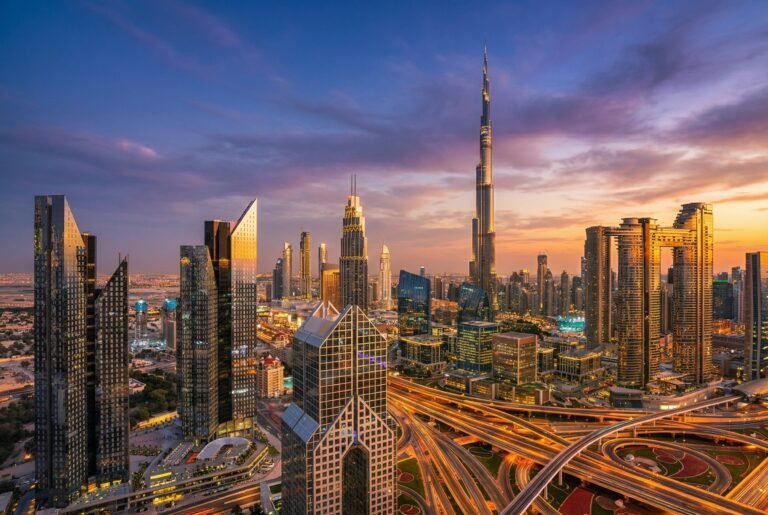
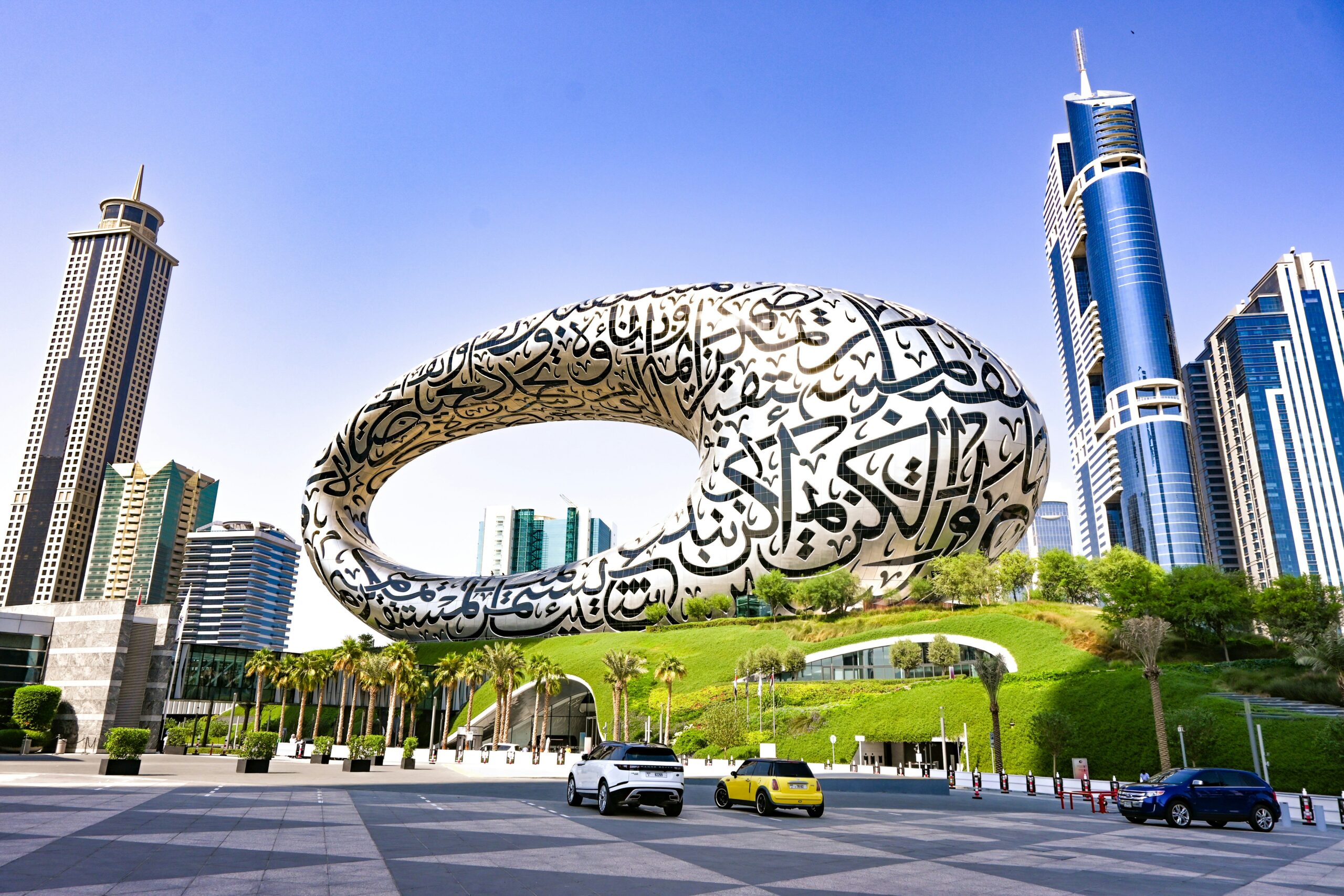
The landmarks get the attention, the Burj Khalifa and Palm Jumeirah among them, but what moves property values is the connective tissue: the Dubai Metro and the highway network that make it simple to get between work, home and leisure. Mega-projects like the Dubai Canal, Dubai Opera and the former Expo 2020 site (now District 2020) are done and adding value. Others are still going up, Dubai Creek Tower and Mohammed bin Rashid City among them, and each one lifts the areas around it.
Tourism keeps the beds full
Dubai welcomed roughly 14.8 million international visitors in 2023, per the Department of Economy and Tourism. That feeds demand for short and long-term accommodation directly. The city also keeps itself on the calendar with events like Expo 2020, the Dubai World Cup and the Formula 1 Grand Prix, which pull in attention and, behind it, investment across hospitality, commercial and residential.
The population keeps climbing
Dubai’s population is estimated to pass 3.6 million by 2025. It grows mainly because people keep moving in, drawn by the low taxes, the business environment and a standard of living backed by strong healthcare and schooling. More residents means sustained demand for homes to rent and to own. That is the demand floor under the whole market.
Sustainability is becoming a resale factor
The newer developments are built to the Dubai Green Building Regulations and Specifications, with energy-efficient designs, solar and the rest. Whole communities like Dubai Sustainable City are being planned around it. I mention this not for the feel-good angle but because it increasingly affects resale: as buyers worldwide get pickier about running costs and green credentials, the efficient stock will hold value better than the rest.
Where to go from here
If you want the property to run without you in it, read How to Choose a Reliable Dubai Property Manager: An Overseas Owner’s Guide, or contact a Dubai real estate specialist and we will talk through your specific case.
The short version is that Dubai stacks strong growth, a prime location, high yields, a tax-free regime and serious infrastructure in one place, and few markets do. That combination is what keeps both individual buyers and large developers coming back.
Want to go deeper? Join our webinar. There are plenty of dates to pick from.