
The “150% by 2030” headline gets thrown around a lot with Dubai Islands, and it might even happen. But that is the wrong question to lead with. The useful question is narrower: what has to go right for a number like that to land, and what could push it out by two or three years. Dubai Islands is early in its maturity curve, still priced below the established waterfronts, and it sits inside a city that has been setting transaction records and pulling in tourism at scale. The thesis is easy to say out loud. It is harder to price correctly.
My working base case is less dramatic than the brochures. High early yields tend to compress as prices rise. I expect gross yields to drift toward the mid 6% range once the area is properly occupied and priced like a finished waterfront district rather than an entry-stage one.
The takeaways most people want first
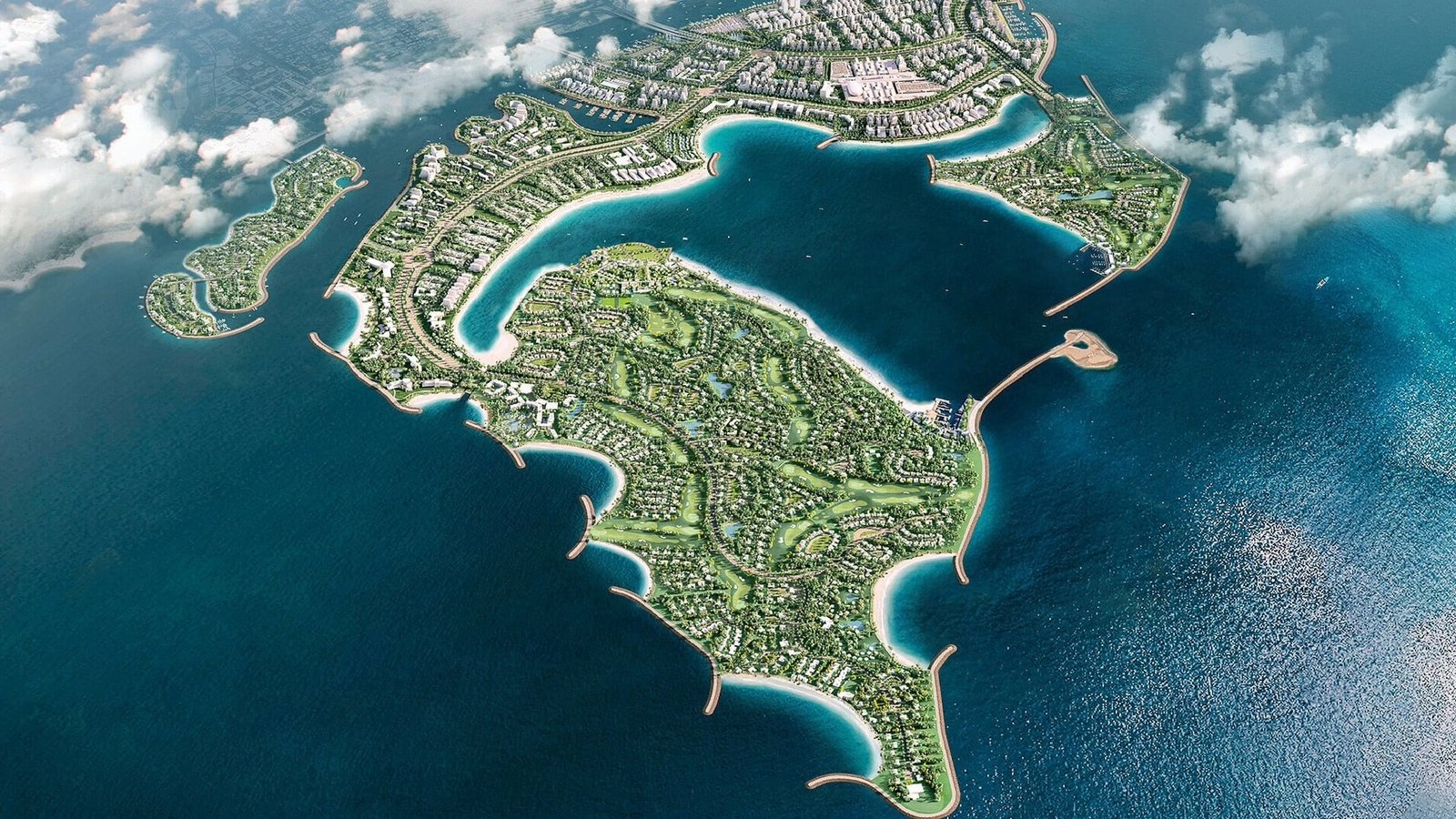
- Scale and positioning: 5 islands, around 17 sq km, over 60 km of waterfront, over 20 km of beaches, and a long runway of hospitality development planned.
- Demand tailwinds: tourism growth and citywide liquidity matter here more than people admit, because the early phases are investor-led.
- Pricing logic: the discount to mature waterfront is the core story, and right now that discount is still visible in the numbers.
- Risk reality check: supply waves can cool prices even if the long-term story holds, and the major rating agencies have been explicit about a possible correction window in late 2025 into 2026.
What Dubai Islands actually is, and what it is not
Dubai Islands is not just new beach apartments near Deira. The official materials frame it as a coastal district built to support Dubai’s broader growth plan, including wellness, mobility, and tourism capacity. The headline figures are worth repeating because they set the scale:
- Over 60 km of waterfront and over 20 km of beaches, officially stated, plus parks and open spaces.
- A target of 80+ resorts and hotels over time, repeated consistently across project communications.
- A destination-within-a-destination approach, meaning the islands are meant to generate their own footfall rather than sit as sleeping inventory.
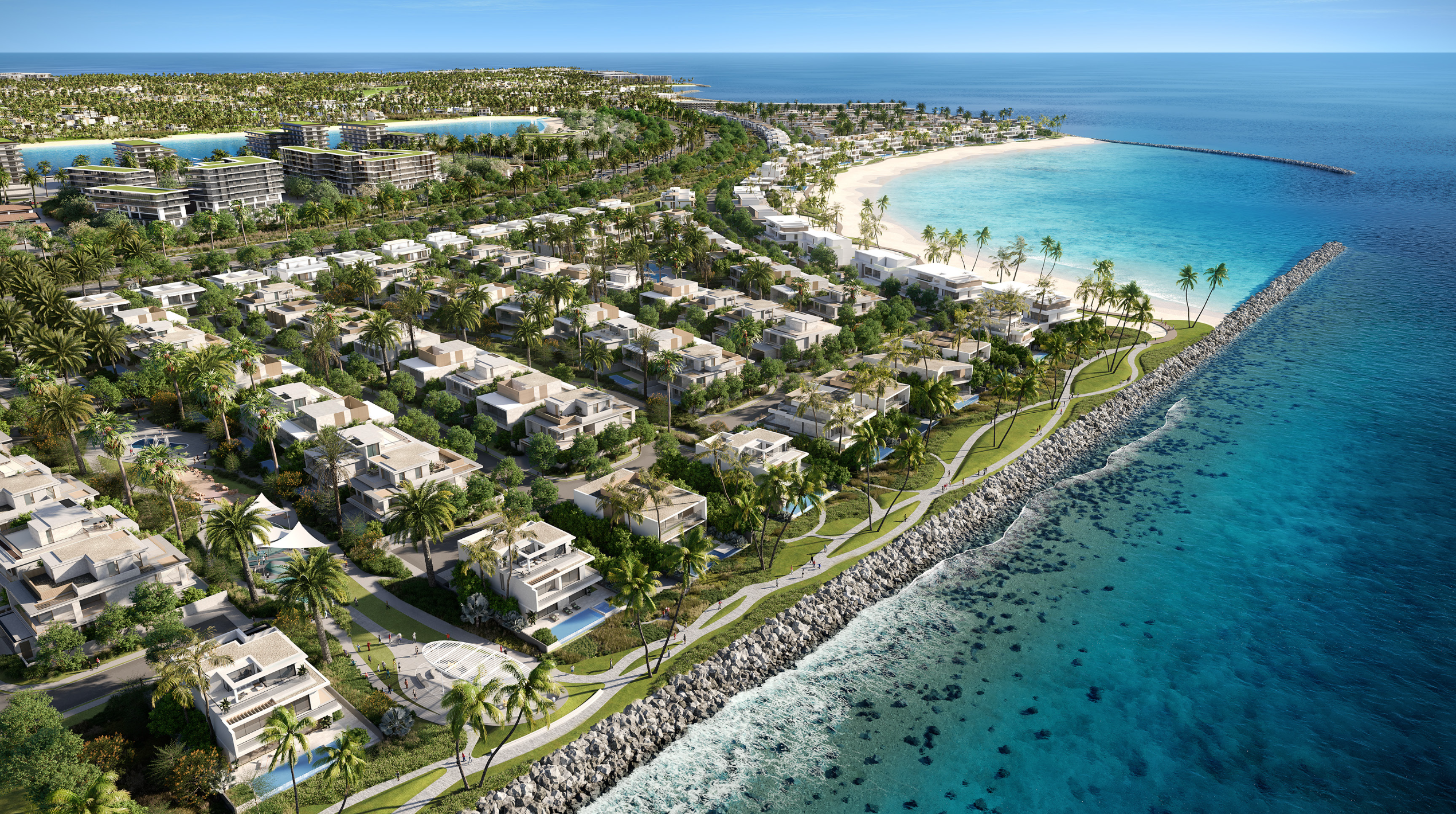
Plenty of Dubai masterplans read beautifully on paper. The differentiator is never the render quality. It is whether the hospitality and public realm show up early enough to create real footfall, and not just investor chatter.
The hospitality anchors already operating
Over the last few years Dubai Islands has had genuine hospitality activity, not just construction hoardings:
- Hotel Riu Dubai is widely reported at 787 rooms.
- Centara Mirage Beach Resort Dubai opened with 607 rooms and suites.
- Park Regis by Prince Dubai Islands sits at the smaller end, commonly listed at 159 rooms.
None of this completes the story. What it does is remove one specific early-phase risk: the dead-zone problem, where an area is technically launched but functionally empty when you arrive.
Why the discount narrative exists
Pricing is where Dubai Islands gets interesting. Several market write-ups, including Driven Properties, put off-plan apartment pricing around AED 2,162 per sq ft in 2024, rising to AED 2,317 per sq ft by Q1 2025, roughly a 7 percent lift in that window.
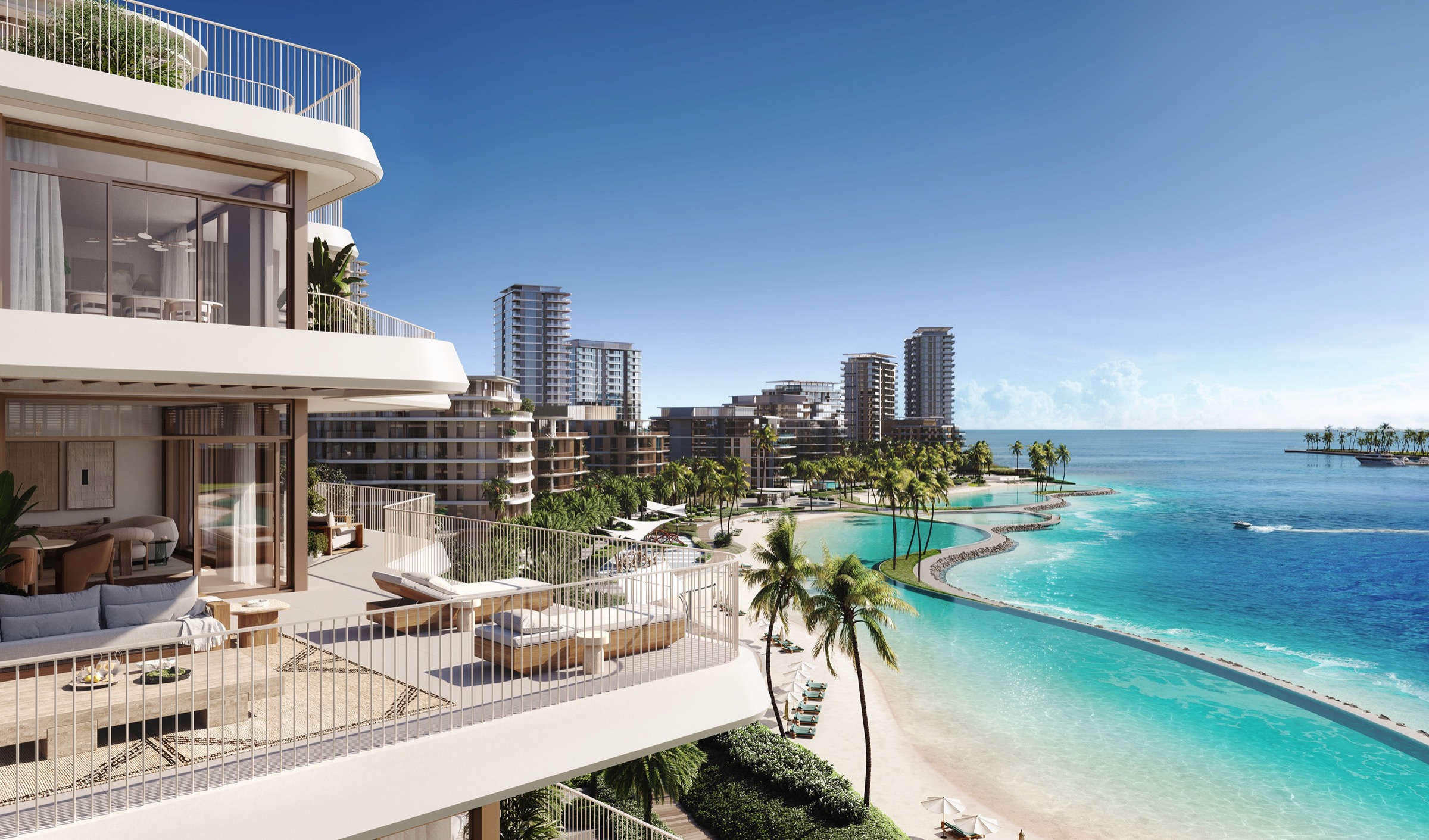
What the island-wide average hides is the pricing split already forming inside the community. While the average still sits in the low AED 2,000s per sq ft, premium beachfront launches are trading in the mid AED 3,000s and above. A 1-bedroom in Ellington Properties’ Ellington Cove is listed at AED 2.9M for about 801 sq ft, which implies roughly AED 3,600+ per sq ft. A 1-bedroom in Hado by Beyond Developments is listed at AED 3.567M for about 903 sq ft, implying roughly AED 3,900+ per sq ft.
That premium layer tells you where the market is already willing to pay up: for true beachfront positioning and flagship branding, even before the wider Dubai Islands ecosystem matures. The discount is easiest to see when you benchmark the island against finished waterfront pricing.
Dubai Islands against established waterfronts
| Waterfront area (benchmark) | Approx off-plan / average price per sq ft cited in market reports | What that usually signals |
|---|---|---|
| Dubai Islands | ~AED 2,162 (2024 baseline) | Early-stage pricing, upside tied to delivery and activation |
| Palm Jumeirah | ~AED 4,980 | Mature prestige waterfront, priced for scarcity |
| Jumeirah Bay Island | ~AED 11,688 | Ultra-prime scarcity pricing |
| Dubai Harbour | ~AED 4,189 | Prime, largely activated waterfront living |
| Bluewaters Island | ~AED 3,781 | Mature destination island economics |
That spread is the whole game. If Dubai Islands delivers a finished waterfront experience and the perception gap closes, the pricing gap can compress. Not all the way, but meaningfully.
Citywide liquidity backs the case. Dubai’s official real estate reporting put 2024 total transaction value at AED 760.99 billion, an all-time high, so the market depth is not theoretical. On the tourism side, Dubai recorded 18.72 million international visitors in 2024, which feeds short-stay economics and branded residence demand directly.
I am not going to pretend it is a one-way trade. Supply delivery cycles can force a real pause, and Fitch Ratings has explicitly flagged the possibility of a correction driven by a large wave of unit deliveries in the 2025 to 2026 window. That does not kill the 2030 case. It changes timing and entry strategy, which is where the rest of this comes in.
What has to happen before prices re-rate
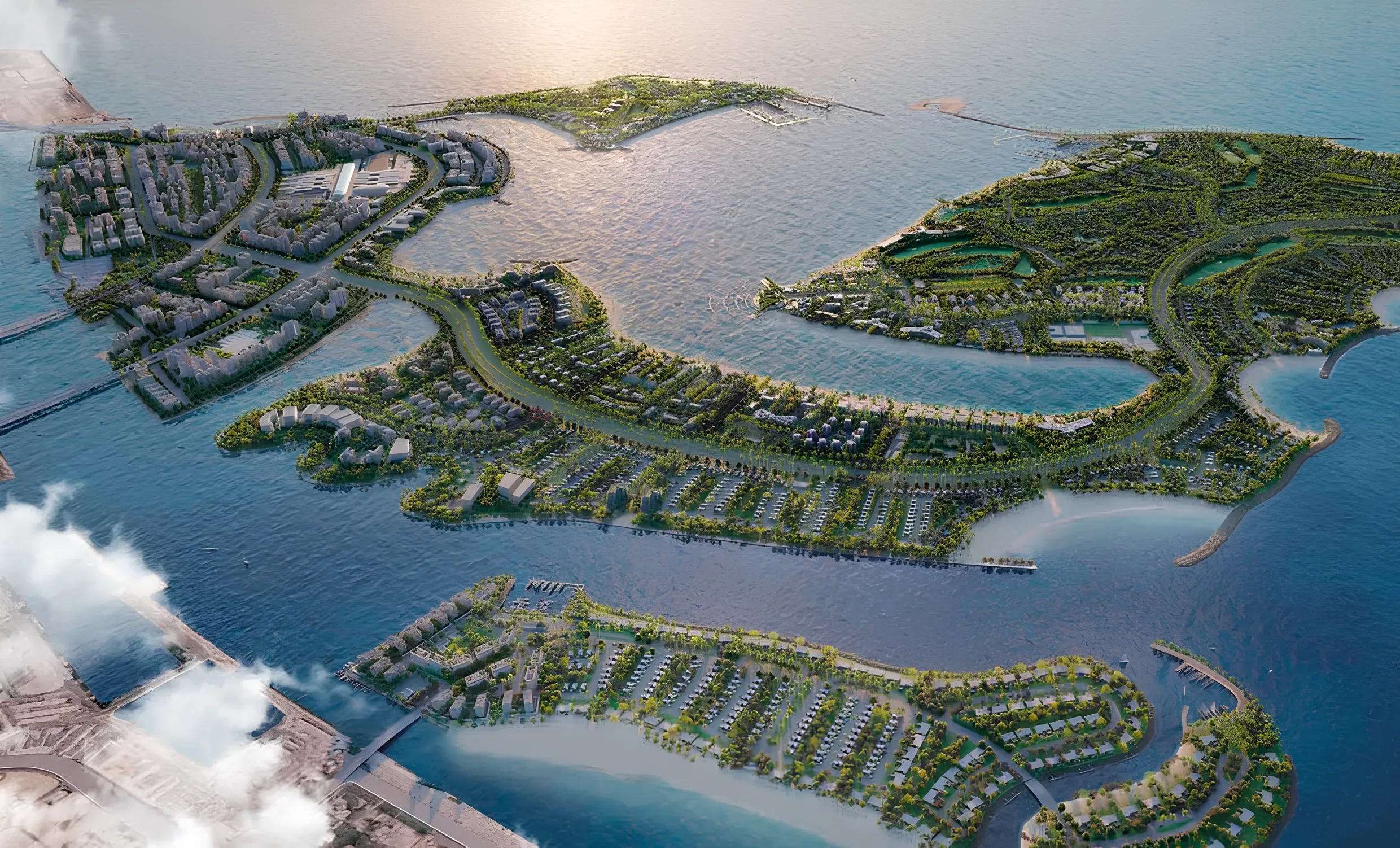
Dubai Islands will not be priced like a mature waterfront until it behaves like one. Obvious, and yet people skip it. Nakheel is delivering the district off the coast of Deira, spanning about 17 sq km across five isles (Central, Marina, Shore, Golf, and Elite), aligned to Dubai’s wider 2040 planning direction, with official language highlighting 60+ km of waterfront and 20+ km of beaches including a Blue Flag certified beach. That is the project telling you it is building scarcity, not just units.
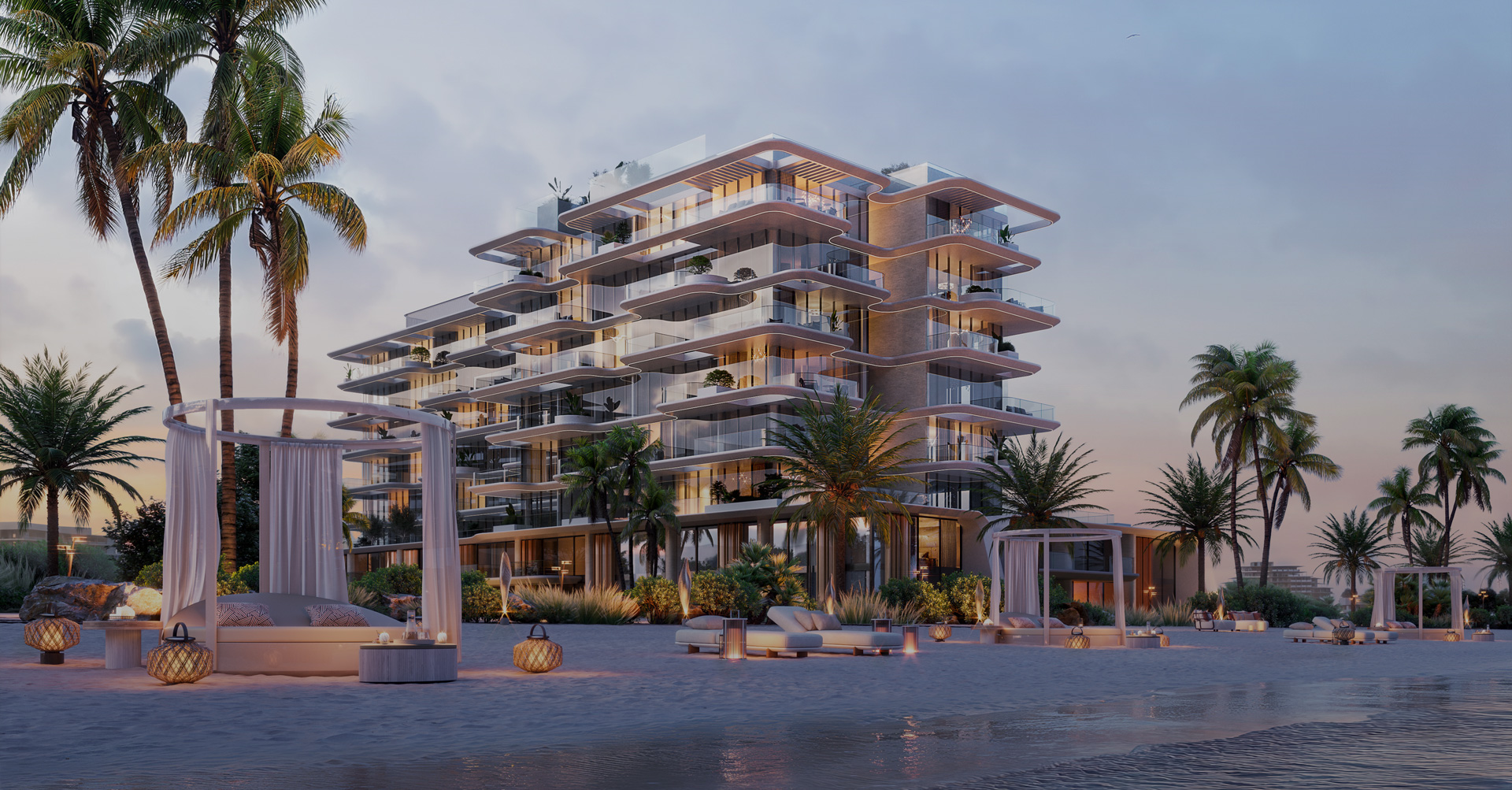
The activation checklist worth watching
- Public realm delivery: promenades, beach access, parks, walkability.
- Hospitality density: more keys online, more brands, more reasons for people to actually visit.
- Retail and daily-life infrastructure: supermarkets, clinics, gyms, schools nearby, transport patterns.
- Liquidity: resales that clear at strong levels, not just brochure pricing.
Delivery creates value. Activation creates pricing power. Those are two different milestones, and buyers who conflate them tend to be early on price and disappointed on timing.
Connectivity is the quiet driver
The Roads and Transport Authority has awarded a major bridge contract connecting Dubai Islands to Bur Dubai, widely reported around AED 786 million, with a 1,425 metre bridge, four lanes each direction, plus cycling and pedestrian paths. Infrastructure like this shows up in pricing later, not immediately. But when an area becomes easier to reach, it usually becomes easier to rent, easier to resell, and easier for end users to justify.
The 2030 pricing question, three scenarios instead of one headline
A lot of competitor articles imply a straight line to AED 7,000 per sq ft by 2030. It can happen. I would rather frame it as a probability-weighted range, because Dubai is cyclical and supply waves are real. For the “today” anchor, third-party trackers commonly place off-plan pricing in the low-to-mid AED 2,000s per sq ft, varying by bedroom and building.
Scenario model, price per sq ft by 2030 (illustrative)
| Scenario | 2030 avg price per sq ft | What must go right | What breaks it |
|---|---|---|---|
| Bear case | 3,800 to 4,800 | Delivery continues, but absorption is slow, and the discount to prime stays wide | Prolonged oversupply, weak end-user uptake, macro shock |
| Base case | 5,200 to 6,500 | Hospitality and lifestyle activate, resale liquidity improves, discount compresses vs prime waterfronts | Pipeline hits faster than demand, sentiment cools |
| Bull case | 6,800 to 7,500+ | Strong tourism growth, premium brands, excellent execution, scarcity narrative sticks | Execution delays, competing coastal supply wins the spotlight |
Of the three, the base case is the one I would underwrite against. It assumes activation happens but not perfectly, which is how these districts usually play out.
The uncomfortable part, correction risk in 2025 to 2026
Fitch Ratings has flagged a moderate correction risk in Dubai residential pricing in 2H 2025 through 2026, tied to a heavy delivery pipeline. Reuters covered this and cited a projected 210,000 units delivered in 2025 to 2026, with the potential decline framed as no more than 15%. That does not mean Dubai Islands fails. It means timing matters, and anyone buying an early-stage area needs a plan for volatility, not just a spreadsheet full of upside.
Rental yields to 2030, what “stabilizing around 6.5%” really means
Yields compress when prices rise faster than rents. That is normal. The real question is whether rent growth keeps pace during the district’s activation period. Here is the math on a 1,000 sq ft apartment, gross rent, costs not included.
| Buy price (AED psf) | Purchase price | Annual rent | Gross yield |
|---|---|---|---|
| 2,400 | 2,400,000 | 180,000 | 7.5% |
| 3,600 | 3,600,000 | 216,000 | 6.0% |
| 5,000 | 5,000,000 | 300,000 | 6.0% |
| 6,500 | 6,500,000 | 422,500 | 6.5% |
Early buyers who buy well can see higher entry yields. By 2030 the market may price the area more like a mature waterfront, which tends to pull yields toward a stable mid range. That is the “6.5% stabilizing” idea, and it holds up in a market like Dubai where rental demand stays strong. Just remember net yield is a different figure once you subtract management fees, vacancy, furnishing, service charges, and any holiday-home operator cut.
Dubai Islands against prime Dubai waterfront
| Area | Investor profile fit | Typical reason people pay more |
|---|---|---|
| Palm Jumeirah | Lower risk, mature market | Proven prestige, tight supply, established lifestyle |
| Dubai Harbour | Prime waterfront, newer stock | Marina energy, newer towers, high-end product |
| Bluewaters Island | Lifestyle-led, destination driven | Tourism pull, strong brand visibility |
| Jumeirah Bay Island | Ultra-prime, ultra-scarce | Scarcity and status pricing |
| Dubai Islands | Higher upside, needs patience | Early-stage pricing, longer runway, activation story |
The investor strategy, by profile
Generic advice does not help anyone make a decision, so here is where I get specific. Dubai Islands fits three profiles, and they should be shopping for different units.
Profile A, yield-first, wants cashflow early
- Prefers smaller layouts (studio, 1-bed, compact 2-bed) in buildings with strong short-stay appeal.
- Cares about operating ease, furnishing, and management.
- Willing to accept price swings while the area is still maturing.
This profile benefits most if tourism stays strong and the public realm (beach access, promenades, retail) comes online fast enough to support nightly rates.
Profile B, appreciation-first, wants the 2030 compression trade
- Targets view corridors, corner units, larger balconies, premium stacks.
- Less emotional about early rent, more focused on future mature-waterfront pricing.
- Can hold through a mid-cycle correction.
The logic is simple. If Dubai Islands trades at a meaningful discount today versus established waterfronts, and that discount narrows by 2030, you get appreciation even if rental yields normalize.
Profile C, conservative, wants proof, not promises
- Buys later phases or closer to handover.
- Accepts a higher entry price in exchange for lower delivery risk.
- Focuses on end-user demand, not just investor demand.
This profile gets more relevant if we see a broader soft patch in 2025 to 2026, which brings us to risk.
Risks worth respecting, not just listing
Fitch has said Dubai residential prices may face a moderate correction in 2H 2025 through 2026 after peaking, and Reuters reported the framing around a large supply wave and a potential decline up to about 15%. That is not “don’t buy.” It is “buy with a plan.”
| Risk | What it looks like in real life | How to mitigate |
|---|---|---|
| Supply wave pressure | More listings, longer resale time, incentives return | Buy best stacks, avoid me-too layouts, choose buildings with differentiated views |
| Delivery and phasing risk | Handover shifts, community feels unfinished | Prefer developers with clear construction progress, keep a longer runway |
| Short-stay regulation or operator risk | Holiday-home income underperforms | Underwrite using both long-term and short-term rent scenarios |
| Rate or macro shifts | Buyer sentiment cools, financing tightens | Keep LTV conservative, maintain a liquidity buffer |
| Overpaying on launch | You are priced for perfection on day one | Compare against nearby launches, negotiate payment terms, do not chase hype |
Dubai Islands against Al Marjan Island
This comparison comes up constantly because it is a genuine decision fork: buy Dubai’s next coastal district, or buy the resort catalyst trade in Ras Al Khaimah. The clean way to frame it is by catalyst.
- Dubai Islands is a coastal district maturity trade. It relies on infrastructure, activation, and the long-run re-rate into mature waterfront pricing.
- Al Marjan Island is a destination catalyst trade, heavily tied to the planned Wynn Al Marjan Island opening, scheduled for Spring 2027. Reuters has reported Ras Al Khaimah targeting tourism growth to 2030, with the Wynn resort a key driver in that story.
| Factor | Dubai Islands | Al Marjan Island |
|---|---|---|
| Main upside driver | Dubai waterfront re-rate by 2030 | Resort-driven tourism catalyst by 2027, then spillover |
| Timing | Gradual, compounding | More event-driven around opening and follow-on development |
| Demand base | Dubai, broader economic depth | Ras Al Khaimah, smaller base but growing |
| Volatility | Tied to Dubai supply cycles | Tied to resort narrative, tourism adoption |
| Investor sweet spot | Buy well, hold, let maturity do the work | Buy before catalyst, manage exit timing |
One detail that keeps Dubai-based investors interested in the RAK play: Wynn’s own site positions the resort as under 50 minutes from Dubai International Airport, close enough to work as a weekend tourism bet.
FAQs
Are Dubai Islands and Deira Islands the same thing?
Yes. Dubai Islands is the current branding for what many people previously called Deira Islands. Same coastal archipelago concept, now positioned as a mixed-use waterfront destination.
What are the five islands in Dubai Islands?
Official project descriptions refer to five isles: Central, Marina, Shore, Golf, and Elite, each meant to carry a distinct character.
What is the biggest driver of price growth to 2030?
Connectivity plus activation. Infrastructure that reduces travel friction, combined with hospitality, retail, and public realm delivery, is what moves a district from concept to premium pricing.
Is a correction in 2025 to 2026 a deal-breaker?
Not necessarily. A correction is a timing risk, but for long-horizon buyers it can be a better entry window, as long as the masterplan delivery stays on track.
Will rental yields stay high through 2030?
Usually yields compress as prices rise, unless rents rise at the same pace. Most investors expect yields to normalize as Dubai Islands matures and gets priced more like established waterfront communities.
Is Dubai Islands better for short-term or long-term rentals?
Early on, short-term rentals often look attractive because tourism is a major tailwind and Dubai’s visitor volumes support the demand. Over time, long-term rental stability improves as schools, retail, and everyday infrastructure mature.
What should investors look for when choosing a unit?
View corridors, direct access to the beach or promenade, layout efficiency rather than raw size, and a payment plan you can hold through market cycles.
How does Dubai Islands compare to Palm Jumeirah?
Palm Jumeirah is a mature prestige waterfront. Dubai Islands is earlier-stage and still in its re-rating runway. The risk is higher, but so is the potential upside.
How does it compare to Dubai Harbour and Bluewaters?
Dubai Harbour and Bluewaters Island are more established in perception. Dubai Islands is still earning that reputation, which is why its pricing is discussed as a discount-to-maturity story.
What is the single biggest mistake buyers make with Dubai Islands?
Overpaying early without checking comparable launches, and without a hold strategy that assumes at least one volatility window before 2030.
If you want a shortlist of Dubai Islands units matched to your exact strategy, yield-first, appreciation-first, or conservative, tell me your budget and unit type and I will map a simple 2030 scenario range against it. Message me directly and I will build it like a portfolio, not a brochure.