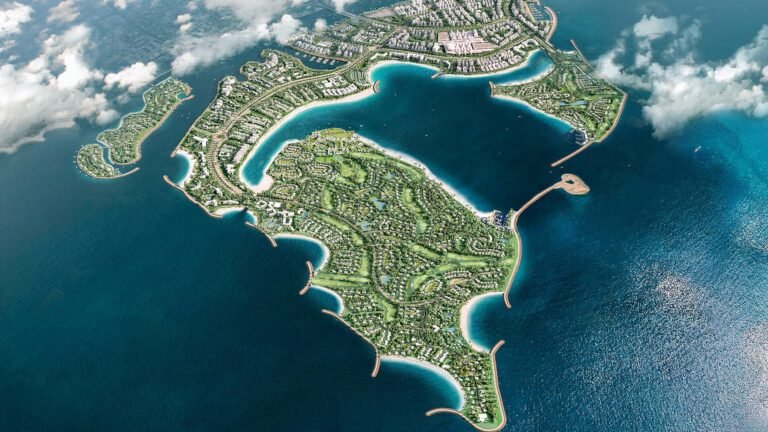

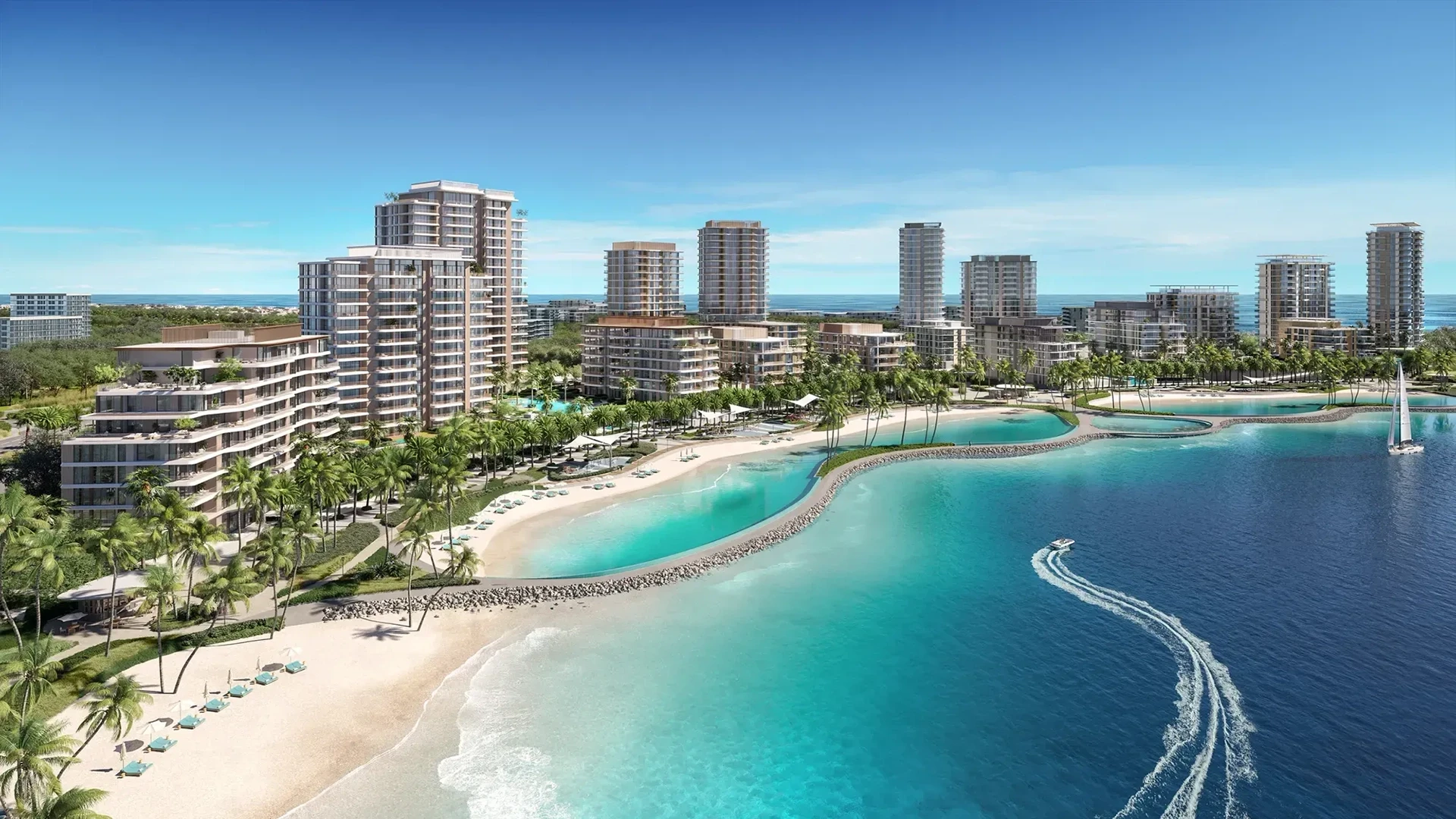
The thing worth knowing about Dubai Islands is that you are buying in before the market has finished pricing it. This is the old Palm Deira, revived and rebranded by Nakheel, the same developer behind Palm Jumeirah. What used to be a stalled reclamation project is now a five-island waterfront city being built out for both residents and investors, and the entry price still reflects the early stage more than the finished vision.
From Palm Deira to a master plan
The relaunch is more than a new name. Nakheel repositioned the whole development to sit inside the Dubai 2040 Urban Master Plan, which leans on sustainable growth, wellness and integrated communities rather than pure density.
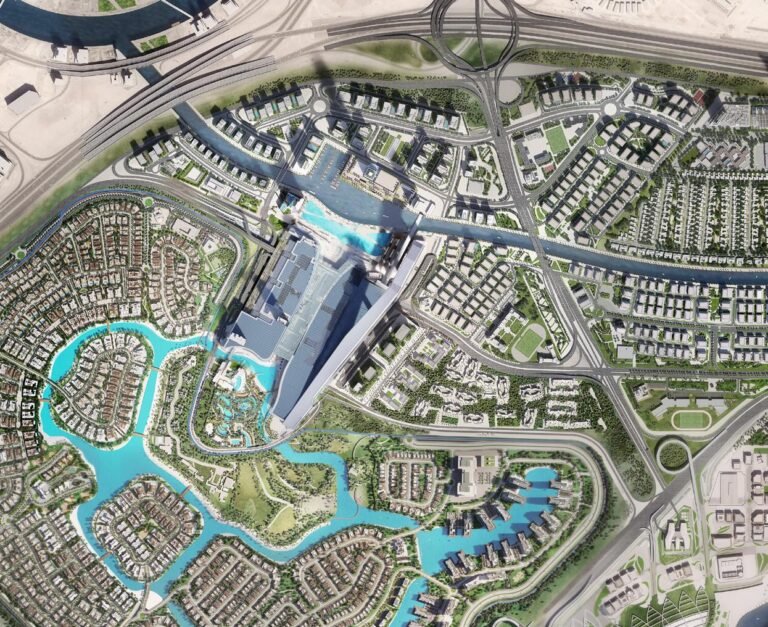
It is five islands, Central, Marina, Shore, Golf and Elite, spread across 17 square kilometers with more than 60 kilometers of coastal frontage, plus public beaches, golf, marinas and a run of residential zones. And it is not stranded out at sea. It sits just off Deira, linked to the mainland by the Infinity Bridge, a short drive from Dubai International Airport, Downtown and the main business districts. That combination of feeling separate while staying central is the part buyers usually underestimate.
Why the numbers make sense right now
The waterfront is still underpriced
Set it next to Palm Jumeirah or Bluewaters and Dubai Islands is early. That shows up directly in the entry price, and it is the clearest part of the case.
| Market | Average price |
|---|---|
| Dubai Islands (current) | AED 2,500 to 2,800 per sq ft |
| Palm Jumeirah (comparable) | AED 4,500 to 5,000 per sq ft |
That gap is the whole argument for going in now rather than in five years. As the islands mature, the expectation is that pricing closes some of the distance.
Enough product types to suit different buyers
The mix is genuinely broad:
- Beachfront apartments, 1 to 3 bedrooms
- Penthouses and duplexes
- Townhouses and garden villas
- Ultra-luxury signature villas
Whether you want a rental unit or a place to actually live in, there is something at most points of the budget.
Rental demand holds up
Dubai’s short-let market keeps running hot on tourism and the steady inflow of remote workers, and beachfront addresses are exactly what that crowd searches for.
- Expected rental yields on Dubai Islands: 6 to 8 percent for well-positioned apartments and villas
- Strong seasonal demand, particularly near the resort zones and marinas
Payment plans that keep your capital light
Most off-plan here comes with investor-friendly terms, typically spread over 3 to 5 years with a small upfront commitment, often 10 to 20 percent. That lets you hold a high-potential asset without tying up the full amount early.
The part that isn’t on the spreadsheet
For plenty of buyers the return is only half the reason. Dubai Islands is being built as a place to spend time in, not just park money. Planned amenities include:
- Private beaches and marinas
- Retail and dining promenades
- Five-star resorts and boutique hotels
- Parks, jogging tracks and cycle lanes
- Art galleries and cultural centers
- Golf courses with sea-facing fairways
That mix is what tends to make Dubai Islands real estate stick as an address for expats, retirees and people who move around for work.
Ownership, visas and tax
Dubai keeps the paperwork simple for foreign buyers:
- 100 percent freehold ownership for foreigners on Dubai Islands
- No annual property tax
- No capital gains tax
- Low transaction costs, at 4 percent DLD registration
Spend AED 2 million or more and you qualify for the 10-year renewable Golden Visa, which covers you and your family. For international capital, that residency angle does a lot of the persuading.
Two developments worth watching
Bay Grove Residences by Nakheel
- 1 to 3 bedroom apartments and 4 bedroom penthouses
- Private beach access and resort amenities
- Completion expected early 2027
Bay Villas
- Beachfront and lagoon villas
- Modern Arabian architecture with smart-home integration
- Aimed at high-net-worth lifestyle buyers
Who is actually buying
The interest is coming from a few clear directions:
- European buyers after a second home in a tax-friendly location
- Russian investors moving capital into a stable market
- Indian entrepreneurs and NRIs looking for both lifestyle and returns
- Tech professionals and remote workers who want sun, safety and connectivity
What to weigh before you commit
No investment is free of edges, and this one has three worth naming:
- Construction timelines. The master plan is moving, but some pieces, schools and full-scale retail among them, are still being built.
- Service charges. Waterfront living carries premium maintenance fees, and they eat into yield if you don’t budget for them.
- Short-term price moves. Any emerging area can swing in the near term.
Strong demand, a developer with a track record, and government-backed planning take the edge off those risks, but they don’t erase them. Price them in.
The timing window
What makes Dubai Islands interesting is that the timing, the location and the vision line up at once, inside a tax-free, freehold market that already knows how to attract foreign capital. The people who go in while the infrastructure is still completing are the ones most likely to see the widest gap between entry price and finished value. That window does not stay open forever.
At Totality Real Estate, we work specifically in off-plan and waterfront property. If you want to look at a villa, an apartment or a Golden Visa-qualifying unit on Dubai Islands, we can walk you through what is actually worth buying and what to skip.