
Al Marjan Island, Ras Al Khaimah: a buyer and investor guide
The short version
- What it is: a four-island, man-made archipelago (Breeze, Treasure, Dream, View) with beaches, resorts, and waterfront homes.
- Where: Ras Al Khaimah (RAK), roughly 60 to 70 minutes from DXB by road depending on traffic and where you start.
- Why people are watching: a wave of resorts and branded residences, and above all Wynn Al Marjan Island, targeted to open in early 2027, is pulling tourism and investor money north.
- The feel: clean promenades, long beaches, family-friendly, quiet in parts. You will still see cranes. That contrast is honestly part of what you are buying into.
Al Marjan reads like a brochure that turned out to be true. Four coral-shaped islands arc about 4.5 km into the Gulf, there is a long sea walk, family-friendly resorts, and light that flatters even a phone photo. The practical bits matter more to me than the postcard, though. You drive up from Dubai in under an hour, you park without a fight, and the hotels and apartments are not trying too hard. It is comfortable, and you can feel it is still being built out.

That unfinished quality is the investment case. Wynn Al Marjan Island, targeted for early 2027, is the headline everyone latches onto, and fairly so. But it is not one building. It is the signal that hospitality and entertainment will anchor this district for a decade or more. If you have been circling a beach-led buy that is not as saturated, or as expensive, as Dubai’s marquee shorelines, Al Marjan deserves a clear-eyed, numbers-first look.
What the island actually is
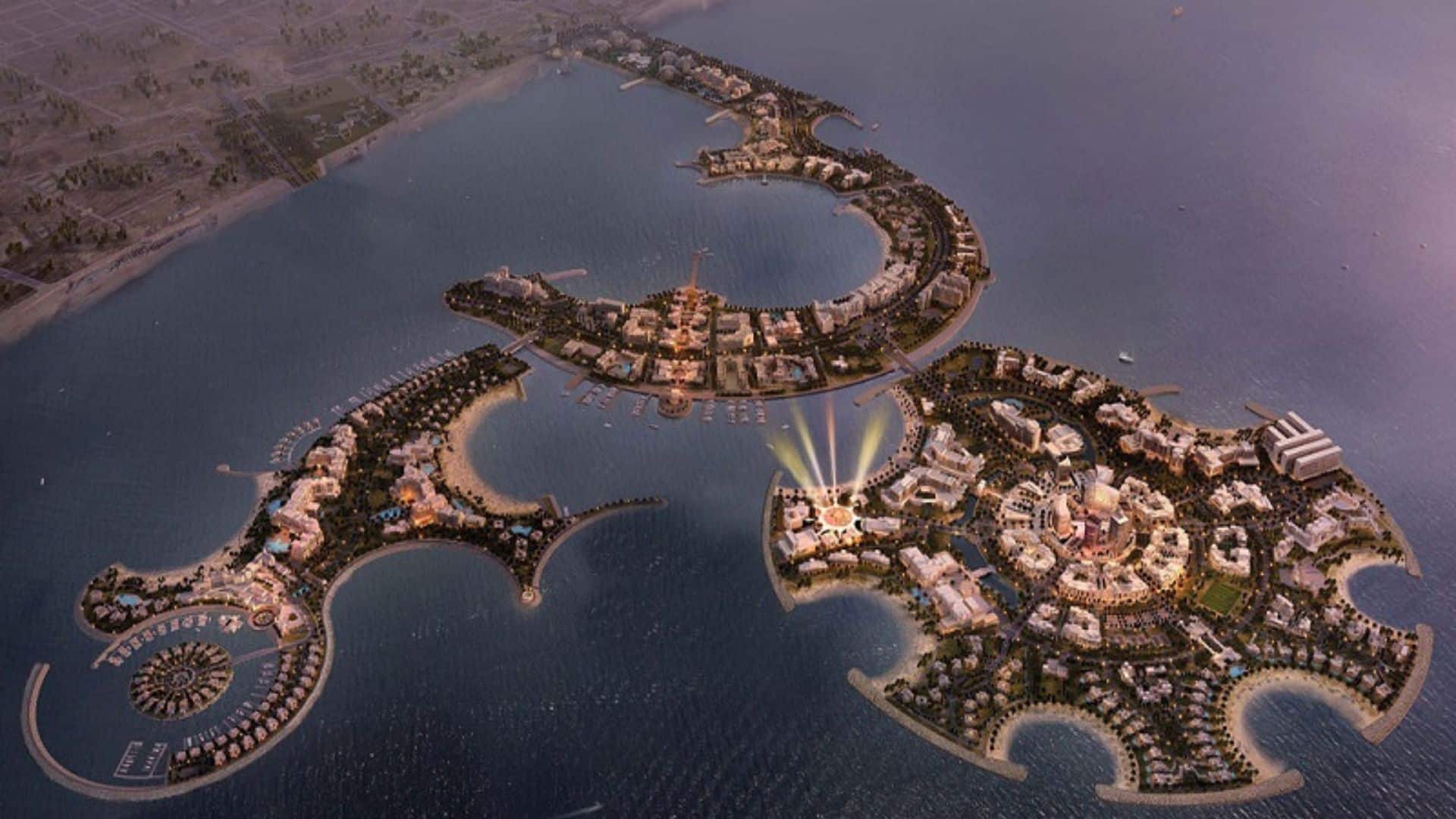
The archipelago
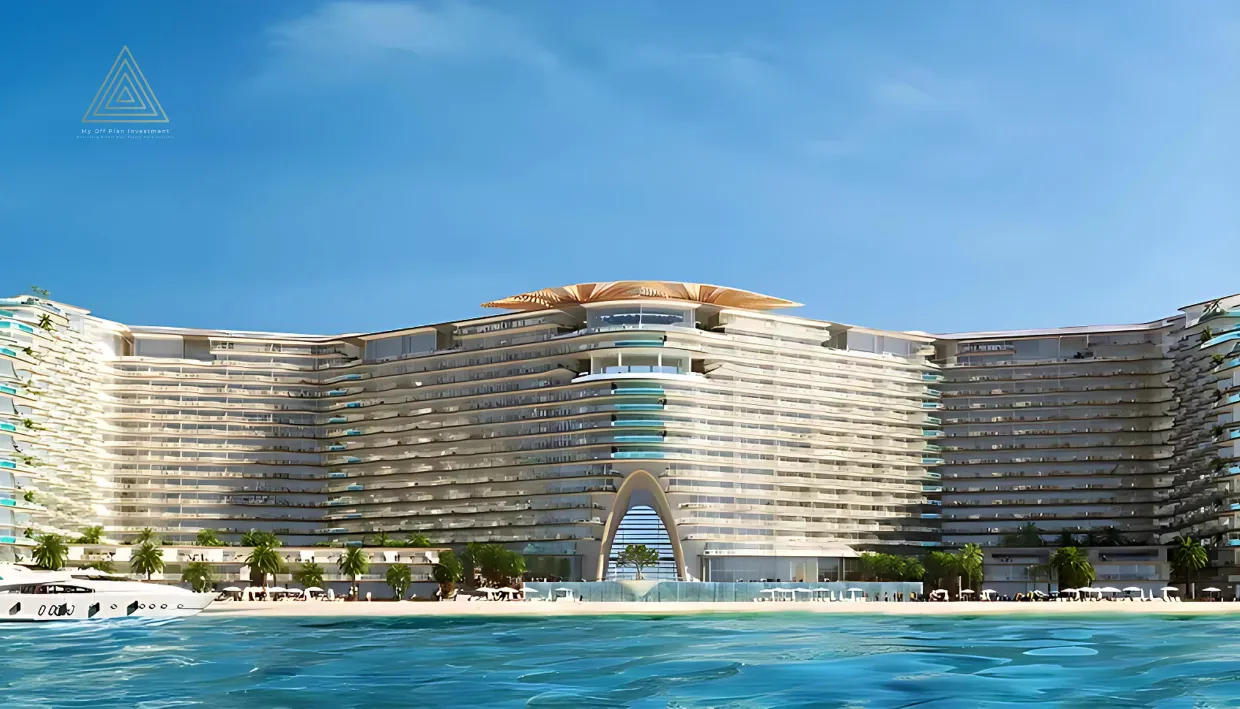
Four islands, Breeze, Treasure, Dream and View, curving roughly 4.5 km into the sea. The tourism board counts 23 km of waterfront and 7.8 km of beaches across a footprint of about 2.7 million sq m. Promenades are neat, bikes are everywhere, and you can still find an empty stretch at sunrise on a busy weekend.
The homes
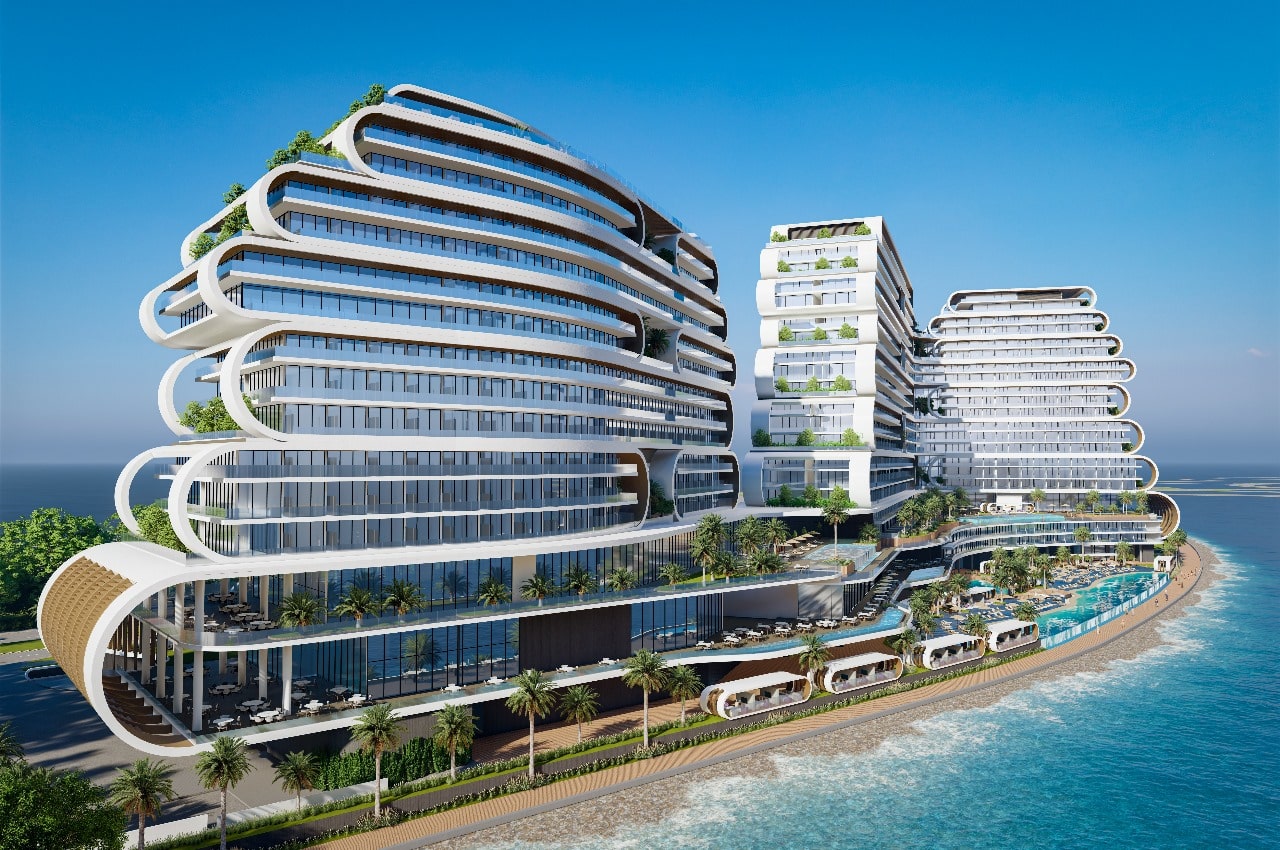
Beachfront apartments, hotel-residences, and a growing slate of branded residences. Interiors lean modern coastal, soft palettes, glass, sea views, and most buildings pile on amenities: gyms, lagoon pools, kids’ clubs. It is luxury with a family read, and that family demand is what supports long-term end-user value, not just holiday hype.
The weekend
This is a resort district first. Long beach walks, calm water, parasailing, paddleboarding, jet-skiing, plus the family stuff like splash pads and kids’ clubs. Dining runs from hotel restaurants to casual cafes. If you want a busy evening you can find one. If you want pool, book, nap, repeat, there is room for that too.
Visit Ras Al Khaimah
Al Marjan Island Real Estate Price and Yield Analysis Q1 to Q2 2025
What is changing the storyline

- Wynn Al Marjan Island, opening targeted early 2027. An integrated resort, under construction, billed as Wynn’s first oceanfront resort, positioned under 50 minutes from DXB. For a market this size that timeline is a big deal. Hospitality-led gravity tends to pull more operators, more flights, and more buyers.
- Branded hotels in the pipeline. RAK’s tourism channels name W Hotel, JW Marriott, Nobu, and Fairmont/Elie Saab. For an investor that usually means stronger seasonal occupancy and a deeper food and drink scene, both of which help short-term rental pricing.

Infrastructure across the northern corridor, notably E611, keeps getting worked on, with the aim of trimming travel times into RAK. Treat that as a slow tailwind for shuttle services, staff commutes, and weekenders, not a step change.
Getting there
Emirate: Ras Al Khaimah.
From Dubai: the usual routes are E311 (Sheikh Mohammed bin Zayed Road) and E611 (Emirates Road). Plan 45 to 60 minutes from Dubai city, with traffic and your start point deciding the rest. That lines up with official tourism guidance and Wynn’s “under 50 minutes from DXB” positioning. Flying in and driving straight from DXB, allow about an hour.

Where this fits as an investment
I will be blunt. Waterfront masterplans tend to over-promise early and over-deliver late, when the curation is right. Al Marjan feels mid-arc: enough is built to enjoy today, and the cranes point to real catalysts through 2027. That timing suits off-plan buyers and medium-term investors who want to ride the leisure build-out rather than pay for it after it lands.
Who it suits
- Yield buyers chasing short-term rental income in peak season.
- End-users who want quieter beach life than Dubai’s busiest strips.
- Capital-growth investors willing to hold across the 2025 to 2028 delivery cycle and the hospitality ramp.
How it compares
| Factor | Al Marjan Island (RAK) | Dubai Islands (DXB) | Palm Jebel Ali (DXB) |
|---|---|---|---|
| Core appeal | Family-friendly resort archipelago with long beaches | Multi-island urban-coastal expansion | Trophy-scale masterplan, luxury villa focus |
| Current maturity | Mid; resorts and residences in place, more coming | Early-mid; active launches, infrastructure evolving | Early-stage relaunch, long build horizon |
| Access | ~45 to 60 mins from DXB via E311/E611 | ~20 to 35 mins from central Dubai, traffic-dependent | 30 to 45+ mins from central Dubai, traffic-dependent |
| Short-term rental story | Solid seasonal demand; pipeline strengthens 2026 to 2028 | Growing; depends on beach activation and retail | Future-oriented; premium villa niche |
| Price baseline* | Generally below prime Dubai shorelines | Below Palm Jumeirah; varies by cluster | Premium expectations for villas and plots |
*Directional, not a price quote. Verify per project and view stack.
The four micro-areas
- Breeze Island: gateway feel, promenades, hospitality frontage.
- Treasure Island: more residential in tone; check stack and view logic.
- Dream Island: big-beach character, clubs and daylife potential.
- View Island: central mix of residential and hospitality.
What it is like to actually shop here
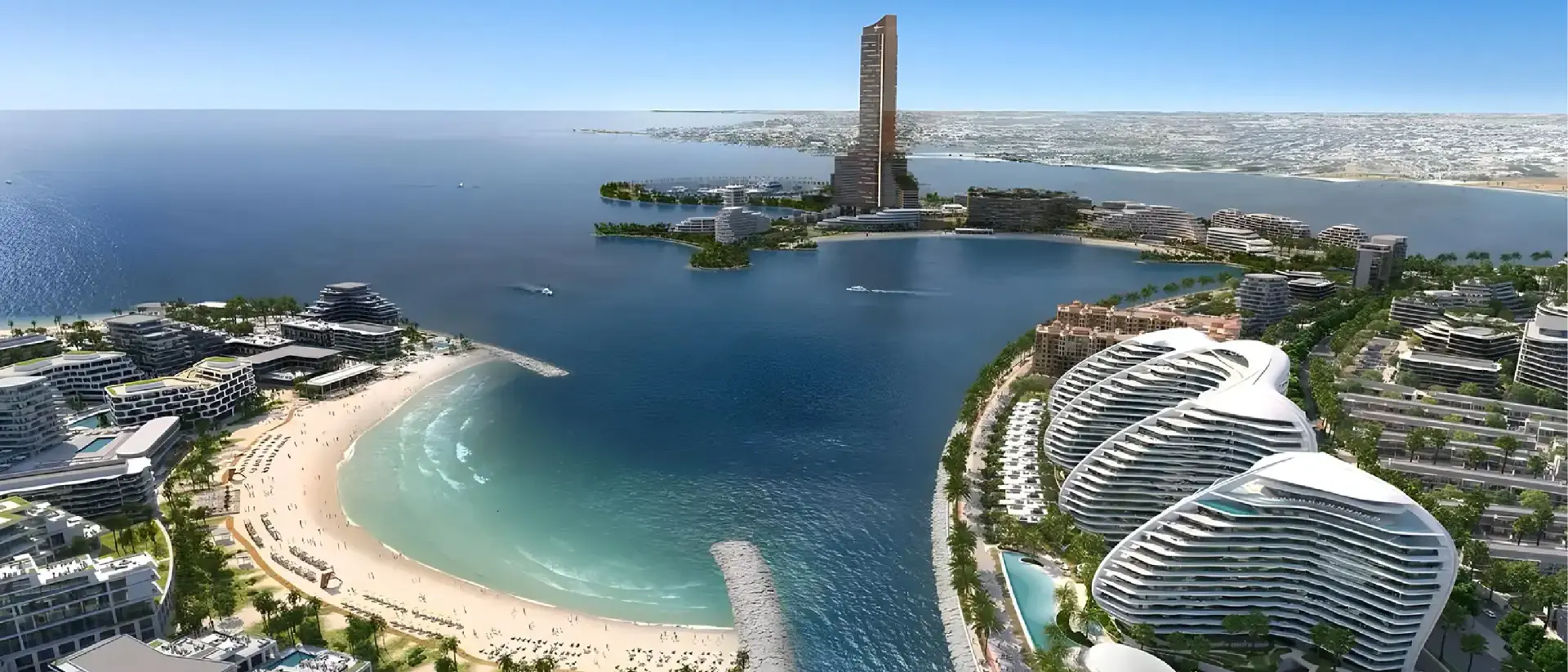
Coming from Dubai, two things stand out: the pace drops a notch, and you get more sea per dirham, usually. I like to view two or three projects back-to-back in one afternoon, ideally a ready building, a near-handover, and one credible off-plan, because the gap between an open-sea view and an interior one is exactly where the pricing logic sits. Factor service charges in early. Resort districts with rich amenities do not run cheap, and that is not a negative, just something to be intentional about.
The facts, source-checked
- Four islands (Breeze, Treasure, Dream, View) in a coral-like arc, 23 km waterfront, 7.8 km of beaches, extending about 4.5 km into the Gulf across roughly 2.7 million sq m of land.
- Wynn Al Marjan Island is under construction, on schedule for early 2027, positioned under 50 minutes from DXB.
Which product fits which buyer
| Project type | Pros | Cons | Best for |
|---|---|---|---|
| Beachfront apartments (hotel-linked) | Amenities, strong rental story, brand pull | Higher service charges, view-sensitive pricing | Yield plus lifestyle |
| Branded residences | Brand trust, design quality, resale liquidity | Premium entry prices | Capital preservation, lock and leave |
| Off-plan mid-rise | Payment plans, upside to 2027 catalysts | Construction exposure, leasing ramp-up risk | Growth-oriented investors |
| Beach villas and townhouses | Space, privacy, family appeal | Ticket size, limited supply | End-users, long-hold families |
Common questions
Is Al Marjan family-friendly?
Yes. Safe beaches, resort kids’ clubs, and cycling paths make it an easy family base.
How long is the drive from Dubai?
Plan 45 to 60 minutes depending on where you start. Official materials often cite 45 to 50 minutes to DXB.
What is special about 2027?
That is the targeted opening for Wynn Al Marjan Island, the integrated resort now under construction.

What actually moves the price
On Al Marjan, the view drives the price more than almost anything else. That is not news, but people underestimate the spread between a true open-sea, horizon-level outlook and a partial-water or courtyard one. Step down the stack, or rotate around the core, and you feel it in the number.
A simple way to think about it:
- Tier 1: uninterrupted open water, premium floor height, wide frontage. The glass-to-sea ratio is the quiet hero here.
- Tier 2: angled sea view or a framed water corridor. Still attractive, priced with a sensible discount.
- Tier 3: a sea glimpse or an inward orientation. Consider these for yield-first plays where entry price beats postcard drama.
Things that push price up: branded-residence cachet, hotel-serviced offerings, large balconies where the usable depth is real, and beach access you can reach without crossing a road. Things that drag it down: heavy podium massing that blocks the lower stacks, wind tunnels between wings (a real thing on coastal masterplans), and over-deep floorplates that starve daylight.

Service charges deserve a second mention. Resort-grade amenities, pools, spas, manicured greens, do not maintain themselves. Compared with a mid-market inland tower, your annual running cost will feel higher. That is not a red flag. It is the cost of the lifestyle, and frankly part of why guests book and rebook.
Short-term rentals: the mechanics before the math
The tourism story is the scaffolding for any rental model here. RAK’s visitor base has been growing. RAKTDA reported 2024 arrivals of about 1.22 million and roughly 4.35 million guest nights, up on 2023, momentum that smooths seasonality when you price smartly. The first half of 2025 also showed growth in arrivals and revenues, which matches what hosts feel when a major event or a new opening lands.

Compliance: RAK runs a Holiday Homes framework through RAKTDA. If you want to run a short-term rental you need the right Holiday Home licence or permit and you have to meet classification standards. Start with RAKTDA’s e-services portal, which lays out categories, documents, and inspection notes. The rule is simple: licence first, list second. Licensed stock commands better nightly rates, converts faster with travel partners, avoids sudden delisting, and future-proofs you as platforms tighten verification.
Where short-term rentals work best on the island:
- Waterfront buildings with an easy walk to the beach and decent food and drink on the promenade.
- Units with sleeping flexibility (a smart sofa-bed or a proper study/guest room) and a balcony you will actually use.
- Hotel-linked residences that permit compliant short-term rental. Check the building rules; some branded schemes limit it or require you to join an operator pool.
The Wynn effect, and what investors are pricing in
Wynn is a clear, time-dated catalyst: under construction, the first oceanfront Wynn, targeted to open early 2027, and positioned under 70 minutes from DXB. Whether or not you ever set foot in a gaming area, the integrated-resort playbook is proven elsewhere. It pulls airlift, lifts midweek occupancy, and draws global brands in its slipstream. Several hotel and residence concepts in RAK are already flagged by the tourism board and developers, which points to a thicker food, drink, and nightlife scene through the 2026 to 2028 window.
One caution: some headlines cite record-chasing amenities due by 2026 or 2027 across various projects. Fun to read, but treat them as marketing until delivered. Focus on operator credibility and financeable timelines.
Foreign ownership in RAK, the 60-second version
- Yes, foreigners can buy in designated freehold areas of Ras Al Khaimah, and Al Marjan is one of the poster children.
- The emirate’s framework allows full ownership in those zones, broadly similar in spirit to Dubai’s freehold logic. Always verify the exact plot or project designation before you sign.
Picking the actual unit
1) Start with the balcony. If it is shallow or shaded all day, the sea view is theoretical. You and your guests will spend real time out there in winter.
2) Measure glass-to-sea. Wide, low-sill glazing on the main room beats a thin vertical slice. Bring a tape measure. I do.
3) Chase cross-ventilation. In shoulder seasons, natural airflow is underrated. L-shaped corners and dual aspects help.
4) Stack logic. On curved facades, two stacks apart can be a different world. Mock up sightlines from the plan, then verify on site or with a developer’s drone shot.
5) Lifts and lobby. Guests dislike long, narrow lobbies and slow cores. It quietly hurts reviews.
6) Service-charge reality check. For a ready asset, get the last two years of budgets. For off-plan, use comps from similar hotel-serviced buildings and add a buffer.
7) Parking and drop-off. Weekend beach congestion is real. A decent porte-cochere and a managed valet bay make an outsized difference.
Mistakes to avoid
- Buying the render, not the corridor. Hall widths, lift count, and garbage rooms decide guest comfort.
- Ignoring the acoustic plan. Clubs, beach bars, or mechanical plant can undermine premium floors.
- Underestimating compliance. RAKTDA licensing is not optional. Build it into the plan from day one.
- Skipping the exit math. If the yield story softens, can you resell to end-users? Branded stock usually helps, but only if the fees are tolerable.
What suits whom, at a glance
| Buyer type | Best bet on Al Marjan | Why | Watch out for |
|---|---|---|---|
| Yield-focused rental host | 1BR/2BR in hotel-serviced buildings near the promenade | Walkability plus amenities lift nightly rate and occupancy | Service charges, operator rules |
| Lifestyle plus part-time letting | Corner 2BR with real balcony depth | Personal use plus seasonal income | View-sensitive pricing |
| End-user family | Townhouse, villa, or larger 3BR near calmer beach arcs | Space plus school commute via E311/E611 | Weekday commute realism |
| Capital preservation | Credible branded residence, good stack | Liquidity plus global buyer familiarity | Premium in, premium in fees |
Connectivity, for your listing copy
- Drive times: typically 60 to 70 minutes from Dubai; under 70 minutes from DXB is the figure cited for Wynn.
- Highways: E311 and E611 are the workhorses northbound.
- Nearby draws: Jebel Jais (hiking and zipline), RAK city dining, and desert experiences, all useful for shoulder-season itineraries.
What 2026 to 2028 likely looks like
- The pipeline adds density. More flags means deeper food, drink, and entertainment, which tends to stabilise nightly rates and stretch weekend demand into weekdays.
- Wynn’s targeted 2027 opening is the anchor. Expect a normal bedding-in arc through 2027 for staffing, food and drink, and events. Price your rentals conservatively for 2026, then reassess each quarter after opening. wynnresorts.com
- Infrastructure creeps forward. The UAE keeps improving corridors like E611. Do not model dramatic time savings, but expect marginal gains that help guest satisfaction. Verify annually.
Related reading
- Al Marjan Island, Ras Al Khaimah
- Comparative Investment Outlook: Al Marjan Island vs Dubai Islands
- Al Marjan Island: The Next Investment Frontier in the UAE
Short-term rental scenarios
These are illustrative, not guaranteed. They cover a 1BR, 70 m² waterfront-adjacent apartment with a usable balcony. Use them to sense-check ranges, then swap in your own unit, seasonality, and licence or operator costs. All figures in AED, over a 365-day year; occupancy refers to paid nights.
| Scenario | ADR (AED) | Occupancy | Nights sold | Gross room revenue | Cleaning fees (guest-paid) | Operating costs* | Net operating income (pre-finance) |
|---|---|---|---|---|---|---|---|
| Conservative | 380 | 58% | 212 | 80,560 | +10,600 | -46,700 | 44,460 |
| Base case | 480 | 66% | 241 | 115,680 | +12,050 | -50,700 | 77,030 |
| Bull | 560 | 72% | 263 | 147,280 | +13,150 | -55,200 | 105,230 |
*Illustrative operating costs: service charges 24,000; utilities 7,200; furnishing amortisation 5,000; maintenance 4,000; platform/OTA/PM 6,000; permits and inspections 1,500; contingency 3,000. Adjust per building and operator.
How to use it:
- Split ADR into peak months (October to April) and shoulder or off-peak (May to September), then rebuild a weighted ADR.
- Drop in your exact service charges. Ask for the latest budget if the building is ready; use comps and a buffer if off-plan.
- Add a housekeeping cadence tied to your stay length (say 4 to 5 nights) and decide whether you or the guest absorbs it.
- If you use a third-party operator, add their percentage plus set-up and onboarding.
Tourism context: RAKTDA reported record 2024 arrivals of roughly 1.22 to 1.28 million and about 4.35 to 4.51 million guest nights, depending on the release, which underlines a supportive demand base into 2026 to 2028 as the big openings land.
Reading a developer fast
The five-minute filter:
- Escrow and construction status: what is in the ground now, and which milestone triggers the next draw?
- Operator alignment: is the hotel brand signed, an MOU or a definitive agreement? Ask for the brand’s own press confirmation where you can.
- Specification and facade: real samples beat renders. Check balcony depth, handrail transparency, and sliding-door quality.
- Core capacity: lifts to units, lobby depth, back-of-house circulation. Guests feel bottlenecks.
- Post-handover services: is facilities management named? How is the service charge governed?
The SPA clauses worth reading twice: delay and penalty handling and the force majeure definition; variation orders and spec-change room; assignment and resale conditions (lock-ins, NOC fees); short-term rental rules inside the building (individual licensing versus operator pool); and the defects liability period with its snagging protocol.
Payment plan patterns and what they imply
In RAK’s beach districts you will usually see one of these. Examples only:
- Construction-linked, 60/40 or 70/30: roughly 10 to 20% on reservation or SPA, then milestone calls (superstructure, MEP, facade), with 30 to 40% at handover. This is financeable with less post-handover burden, but you carry construction risk, so watch site-progress images.
- Post-handover, for example 50/50 across 2 to 3 years: softer entry cash flow, but be careful about title-issuance timing, interest or admin on installments, and reselling while a balance is still outstanding.
- Operator-tied rental pool, sometimes branded: simple, but check use restrictions, lock-ins, and how transparent the revenue statements are. Compare the net yield against independent short-term rental with a licensed manager.
Exact percentages vary by project. Always request the developer’s documented plan.
Fees, permits, and compliance, the short list
- Holiday Homes licensing (RAKTDA): owners or operators need a permit and classification before listing. The RAKTDA e-services portal runs the flow.
- Building and community rules: some towers restrict short-term rental or require you to join an operator program. This sits outside the emirate permit and is enforced by the building.
- Insurance: confirm cover for short-term-rental liability, not just contents.
- Utilities and metering: check for individual electricity and water meters and any district cooling arrangement.
Three quick wins for a listing or brochure
- A balcony-depth and glass-to-sea callout with a photo. Buyers remember visuals better than numbers.
- Door-to-sand time in minutes, and whether the route crosses a road.
- A night check, a note that you tested the noise. It is rare, and it sticks.
One small thing
If you can, take one quiet walk along the promenade before sunrise. You will see runners, a couple of photographers, and the first coffee machines firing up. It sounds sentimental, but those ten minutes often decide whether someone buys. The numbers matter. So does the feeling.
Reading developers by type, without the gloss
| Developer / asset type | What to like | Questions to ask now | Potential red flags |
|---|---|---|---|
| Branded resort-led residences (hotel attached) | Global flag supports rental demand; concierge and services; food and drink at your elevator button | Operator agreement signed, not just an MOU? Rental rules, individual licensing or pool? Furniture package specs and replacement cycle? | Service charges can bite; brand standards may limit personalisation; blackout dates or usage limits in rental pools |
| Mid-rise beachfront apartments (pure residential) | Often better value per m²; simpler governance; family-friendly | Exact beach-access route; balcony depth and wind exposure; lifts to units | “Sea view” that is actually angled; podium massing blocking lower stacks; thin glazing for acoustics and heat |
| Townhouse and villa clusters near calmer arcs | Space, privacy, kid-friendly; end-user depth on resale | Plot setbacks, privacy screens, roof-terrace load; community retail timeline; the real school run | Landscaping and irrigation handover gaps; community facilities delivered late; HOA rules on short-term rental |
| Serviced apartments with optional operator | Hybrid of services and flexibility; easier rental onboarding | Can owners self-manage or must they join the in-house pool? Fee schedule, reporting cadence, exits | Opaque statements; high miscellaneous charges; costly furnishing standards |
| Ultra-design boutique blocks | Differentiation, nicer lobbies, art direction; resale story | Real unit mix versus render; sample finishes on site; facade maintenance plan | Design over function (storage, back-of-house, acoustics); a small core causing lift waits |
Two quick diligence tricks. First, ask to walk the back-of-house corridors, refuse areas, and MEP risers. Neat back-of-house usually means competent facilities management later. Second, visit after 9pm and listen for mechanical plant, club spill, and delivery bays. The sea is calm; noise, if it exists, stands out.
The first 90 days after handover
Days 0 to 7, paperwork and snagging. Collect keys, the title and SPA handover pack, utility activations, access cards, and the parking remote. Build a snag list (walls, doors, glazing, AC, plumbing) with photos pinned to the unit plan, and get target fix dates. Confirm the service-charge ledger is set and paid so the pool and parking turnstiles let you through.
Days 8 to 21, fit-out and rental foundations. Furnish for durability: a cleanable-fabric sofa, a resilient coffee table, blackout blinds in bedrooms, an outdoor set scaled to the balcony. Handle safety (smoke detectors, extinguisher, child-safe balcony latch, rug pads, cable hides). Shoot sunrise and golden-hour photos, one balcony coffee shot, and one plan-view shot to clarify the layout.
Days 22 to 35, compliance and distribution. Confirm your Holiday Home licensing path, owner-managed or through a licensed operator. Build a pricing calendar: peak (October to April), shoulder (May, September), low (June to August). Start conservative and distribute to two or three channels at first; add a channel manager only once you have found a rhythm.
Days 36 to 60, the guest journey. Tighten self check-in with a clear map, a lift note, and a parking-bay photo. Add a first-morning kit (coffee pods, tea, a little milk); people remember it. Keep a maintenance cadence (AC filter clean, balcony wash) and ask for private feedback before the public review so you can fix small things fast.
Days 61 to 90, optimisation. Review nightly rate against occupancy weekly and nudge minimum stays and lead-time promos. Launch a simple direct-booking page to capture repeat guests. Start quarterly reviews: track seasonality shifts, OTA take rates, and housekeeping costs, and aim for one margin improvement each quarter.