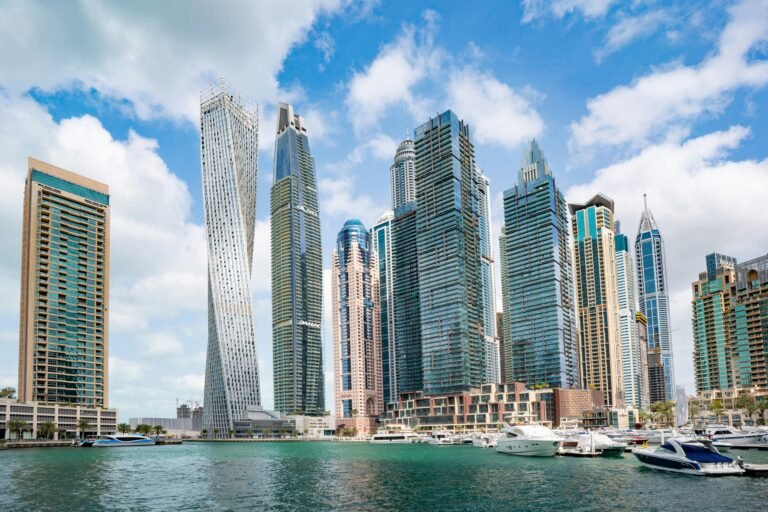

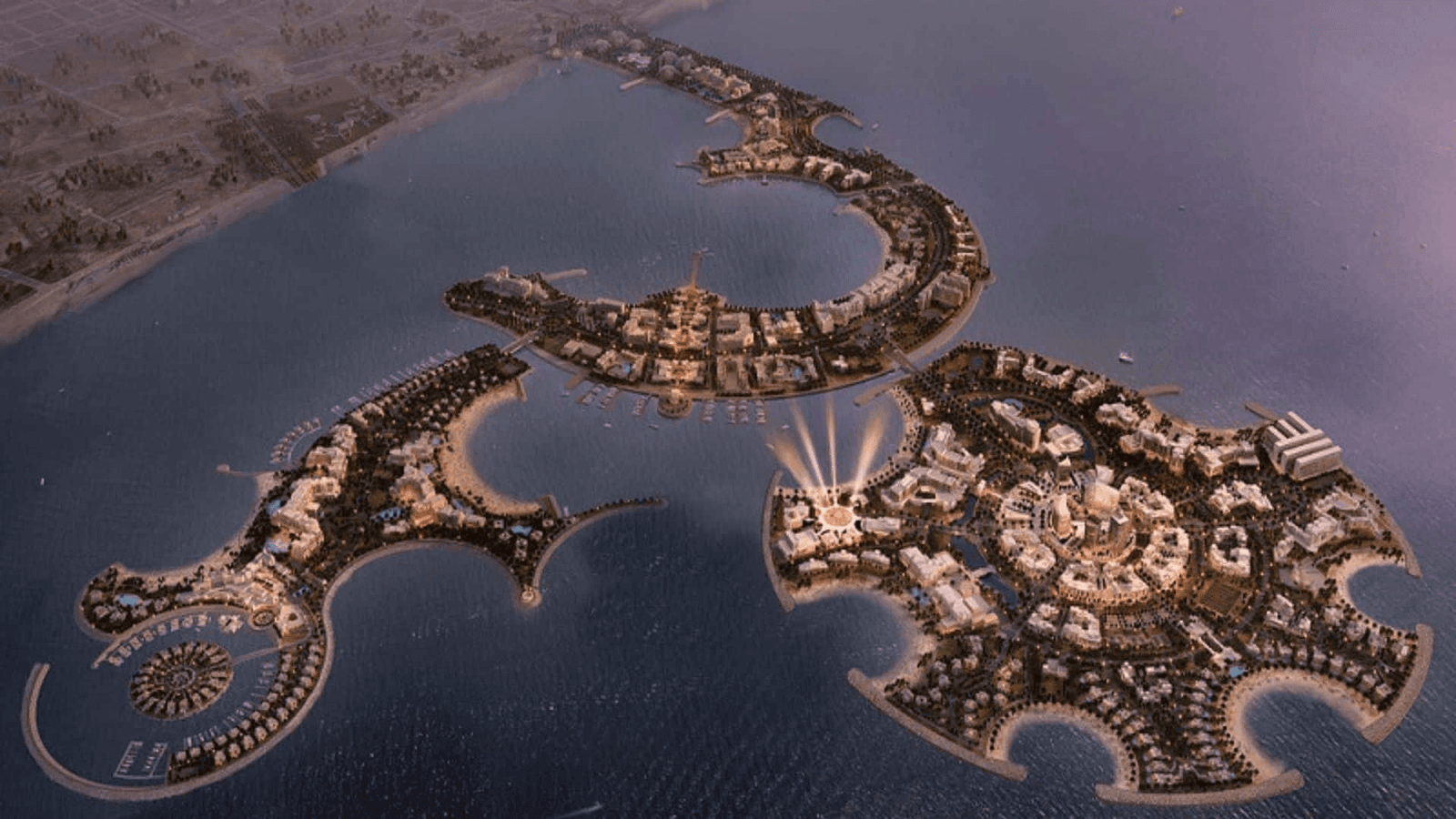
Al Marjan Island sits about 45 minutes up the coast from Dubai, in Ras Al Khaimah, and the pricing gap is the first thing that gets my clients’ attention. You can buy waterfront here for up to 60% less than a comparable address in Dubai, and Ras Al Khaimah charges no income tax and no capital gains tax. That combination, on a master-planned archipelago that is still filling in, is the reason I keep flying buyers up to see it.
None of that means it is a sure thing. It means the entry price is low and the timing is early, which cuts both ways. Below is what I tell people who ask whether Al Marjan belongs in their portfolio.
Location and connectivity
- Ras Al Khaimah is one of the more investor-accessible emirates in the UAE, with a government that has been openly courting foreign capital.
- Dubai International Airport is just under an hour away by road. RAK’s own airport is closer still and is being expanded.
- The island fronts the Arabian Gulf, with more than 7.8 km of beachfront across roughly 23 km of coastline.

What the numbers look like
- Prime waterfront at up to 60% lower acquisition cost than comparable Dubai stock.
- Freehold ownership for foreign buyers, with clear title.
- 0% income and capital gains tax in RAK.
- Estimated gross rental yields of 8% to 11%, depending on the asset and how you run it.
The Wynn resort is the real catalyst

The single development that changes the maths here is the Wynn Al Marjan Island Integrated Resort, due to open in 2027. It will hold the first legal casino in the GCC, which is not a small detail. The project value is put at more than $3.9 billion, and Wynn expects it to draw over 2.5 million visitors a year once it opens.
What that means for a property buyer is straightforward: a resort of that scale pulls demand into everything around it, residential and commercial alike. Buying near it before it opens is the whole thesis. Buying after it opens means paying for what everyone can already see.
Why the timing matters now
Al Marjan is still in its early phases. Enter now and you get pre-completion pricing, developer incentives, and first-mover position in a market that is accelerating rather than settling.
The tourism trend supports it. RAK welcomed more than 1.2 million visitors in 2023, a figure the emirate expects to double by 2030, with a stated goal of becoming a top 10 global tourist destination. Al Marjan is central to that plan, not a footnote to it.
On the rental side, short-term demand is climbing on the back of the island’s resort appeal and the tourist inflow, which is where those 8% to 11% gross yields come from. And the framework around all of this is stable: RAK runs digital land registration, escrow protection laws, and residency incentives including the UAE Golden Visa for qualifying investors.
What you can actually buy
Residential. Beachfront apartments, branded residences, and serviced villas. These work for personal use, holiday rental income, or both.
Hospitality. A strong hotel pipeline with Rixos, Hilton, Mövenpick and Wynn. You can get exposure through hotel-managed units or joint-venture participation rather than owning outright.
Retail and mixed-use. Plots near the resort zones, where demand should follow the rising population and visitor numbers.
How it stacks up against Dubai
| Metric | Al Marjan Island | Dubai Marina | Palm Jumeirah |
| Avg. price per sq. ft | ~$300 | ~$650 | ~$750 |
| Freehold for foreigners | Yes | Yes | Yes |
| Rental yield (gross) | 8% to 11% | 5% to 7% | 4% to 6% |
| Tourism growth (YoY) | 16% | 9% | 8% |
| Major developments underway | Yes, Wynn Resort | Limited | Saturated |
The risks I make people sit with
- Delivery timeline. Parts of the island are still under construction. If you go off-plan, do the work on the delivery schedule and the developer’s track record before you sign anything.
- Tourism dependency. RAK’s economy leans on hospitality more heavily than Dubai’s diversified base does. A shock to travel demand would land harder here in the short term.
- Liquidity. Demand is rising, but the resale market is thinner than Dubai’s. Come in with a mid- to long-term horizon, not a flip mentality.
How you eventually get out
- Capital appreciation sale, most likely five to seven years out as prices reset after the Wynn launch.
- Rental income, run as short-term holiday lets or long-term leases.
- Asset consolidation, bundling several units into a resale package or a REIT-eligible portfolio.
- Golden Visa, using the purchase as a route to UAE residency.
Al Marjan is early, cheap relative to Dubai, and backed by real infrastructure spending and a resort that will put it on the map. That is a genuine opportunity if you hold it for the medium term and buy the right unit at the right price. It is not a place to park money you might need back in eighteen months.
Next steps
If you want to look at Al Marjan seriously:
- Schedule a call to go through what is actually available.
- Review developer portfolios and the legal framework before you commit.
- Arrange a site visit or a virtual tour.
- Start the due diligence and acquisition process with us.
Related reading
- Al Marjan Island, Ras Al Khaimah: Buyer & Investor Guide
- Al Marjan Island – Ras Al Khaimah (RAK)
- Why Property Buyers Are Turning Their Attention to Al Marjan Island
- Comparative Investment Outlook: Al Marjan Island vs. Dubai Islands
- Al Marjan Island: A Rising Investment Beacon in the Middle East
- Al Marjan Island: The Next Investment Frontier in the UAE
- Al Marjan Island: Your Gateway to Luxury Waterfront Living and Profitable Investments