

 Investment Insights
Why the UAE Attracts Global Capital
The UAE pulls in global capital for reasons that are less about the skyline than people assume. Near-zero tax, real stability, a location between…
Straight answers on buying, owning, and investing in Dubai and UAE real estate. Choose a topic below.
Dubai banks look at two things: can you repay, and is the property worth what you’re borrowing against it. Everything in the process feeds one of those two questions. Here’s how it breaks down.
Registering a mortgage in Dubai carries several fees, most going to the Dubai Land Department (DLD) and its service partners. Here is the full breakdown so you can budget the real cost, not just the headline.
Fees can be settled through ePay, Dubai Pay, or Noqodi, or by manager’s cheque made out to the Dubai Land Department.
Add these up before you commit. On a financed purchase, the mortgage registration and arrangement fees plus valuation can move your total acquisition cost by a meaningful margin, so factor them in from the start.
Budget for roughly 1% to 2% of the property value in mortgage-related costs on top of your deposit. Here is where each piece goes so nothing catches you out at signing.
There is no annual property tax and no capital gains tax in Dubai, so once the mortgage is in place there is no ongoing tax bill. Watch two things though: an early settlement fee of 1% to 3% of the outstanding balance if you clear the loan ahead of schedule, and a broker fee of around 1% of the mortgage value if you use one. Some banks also require life insurance tied to the loan, priced on your age and the amount borrowed.
To process the mortgage you will hand over passport copies, your Emirates ID if you are a resident, proof of income (salary certificate or business documents if self-employed), three to six months of bank statements, the sales and purchase agreement, and proof of your down payment, usually 15% to 20% of the property value for expats. From approval to final registration with the DLD, allow 2 to 4 weeks, mostly depending on how fast the paperwork moves.
The difference is what the interest is charged on. A flat rate mortgage charges interest on your original loan amount for the whole term. A reduced rate mortgage, also called a reducing balance mortgage, charges interest only on what you still owe, which shrinks every time you make a payment. That one distinction drives everything else.
Flat rate. Interest is worked out on the full loan from day one, so your monthly payment stays the same the entire term. That makes budgeting simple, but you pay more interest overall. Borrow AED 1 million at 5% flat over 20 years and you’re paying interest on the whole AED 1 million every month, even in year 19 when most of it is already repaid.
Reduced (reducing balance). Interest is charged only on the outstanding balance, so as you pay the loan down the interest shrinks with it. Payments usually start higher and ease off over time, and the total interest is lower. Same AED 1 million at 5% over 20 years, but each month’s interest is calculated on the balance that’s left, not the original figure.
So which suits you. If you want a fixed, predictable payment every month with no surprises, a flat rate mortgage fits. If you’d rather pay less interest across the life of the loan and can handle heavier payments early on, a reducing balance mortgage is the cheaper option. Factor in where interest rates are heading and your own longer-term plans before you decide.
How much you can borrow comes down to the Loan-to-Value (LTV) ratio, which depends on your residency status, the property value, and whether it’s your first purchase or an investment.
Beyond the LTV, the lender assesses your income, existing liabilities, and credit history to set the actual figure. Terms run up to 25 years, and the maximum is usually tied to retirement age, capped around 65 for salaried employees and 70 for the self-employed.
If you earn no income in Dubai as a foreigner, you can still get a mortgage here, but expect tighter terms:
So it’s doable as a foreigner without local income. Just budget for the larger deposit, the extra documentation, and the slightly higher cost.
Budget for five sets of costs when you register a mortgage in Dubai: government fees, legal fees, valuation, bank charges, and insurance. On a typical deal the whole process runs two to four weeks. Here is what each part costs.
These go to the Dubai Land Department (DLD):
A lawyer is not mandatory, but I would usually involve one to review the agreement and paperwork.
Banks require an independent valuation before they lend, to confirm the loan matches the property’s market value. This applies to new and existing properties.
Some banks also ask for a credit report and further financial details to assess your creditworthiness.
Start to finish, registering a mortgage takes 2 to 4 weeks, depending on how fast you get documents in and reviewed.
Mortgage financing in Dubai is open to both residents and international buyers, and the terms depend heavily on which of those you are. Here is what actually drives the deal.
How much you can borrow. Residents can finance up to 80% of the value; non-residents usually top out around 75%.
Rates. Expect somewhere between 2.75% and 5%, depending on your profile and whether you take a fixed or variable rate.
Down payment. On properties under AED 5 million, budget 20% down as a resident and 25 to 30% as a non-resident.
What the bank checks. Income, employment, credit history and existing commitments. Non-residents are usually asked for extra paperwork, such as an international credit report.
Islamic financing. If you want a Shariah-compliant structure, Ijara mortgages are widely available.
Term. Tenures run from 10 to 25 years. You can settle early, though the bank may charge a fee for it.
One thing I tell every buyer: get pre-approved before you fall in love with a unit. A good mortgage broker will shop several banks at once and often find terms you would not get walking into a branch yourself.
Under Dubai law you can mortgage most types of real estate, residential, commercial, mixed-use and land, as long as it is properly registered. Here is how it breaks down by category.
Residential. Freehold apartments, villas and townhouses in designated freehold areas can be mortgaged by both UAE nationals and foreigners. Long-term leasehold homes, usually on 99-year leases in areas where expats cannot take full ownership, can also be mortgaged.
Commercial. Office space, retail units and shops, and warehouses or industrial units all qualify, whether freehold or leasehold.
Mixed-use. Buildings that combine residential and commercial, say retail on the ground floor with apartments above, can be mortgaged, though the terms may shift depending on the use.
Land. Freehold plots zoned for residential, commercial or industrial development can be mortgaged, with terms that usually depend on the intended use.
Two conditions apply across all of them. Every mortgage has to be registered with the Dubai Land Department to be legally enforceable, which means a proper mortgage contract, the associated fees and official registration. And the Loan-to-Value ratio, how much of the value you can borrow, varies by property type and residency status, with expats typically getting a lower LTV than UAE nationals.
The mortgage market has grown noticeably lately, particularly on the residential side, helped by competitive rates and a steady economy. Knowing which category your property falls into, and the LTV that comes with it, is the starting point for lining up the right financing.
Usually not. The standard practice in Dubai is to mortgage the whole property, with the entire asset used as collateral. There are a couple of exceptions, but they’re specific and depend on the lender agreeing.
The normal way
When you take a mortgage here, the lender secures it against the full property. That protects their position if you default, and it’s what almost every deal looks like.
Where a portion can be mortgaged
Co-ownership: if a property is owned by more than one party, each owner’s share can potentially be mortgaged separately, provided the ownership structure allows it and the lender agrees. For example, one of two equal owners could mortgage their 50% share, with the other owner’s consent and the bank’s.
Developer arrangements: some developers offer financing where only part of the property’s value is mortgaged, usually on off-plan and usually tied to a specific promotion. It’s uncommon.
What to check first
Any partial-mortgage arrangement has to comply with Dubai Land Department and RERA regulations, so get proper legal or real estate advice before assuming it’s possible. Bank policies vary too, and not every lender allows it, so confirm with the specific bank on their terms.
The catch
Mortgaging only part of a property complicates valuation, since pinning down the value of a share isn’t straightforward, and it can make a future sale or refinance harder if the title is encumbered by different mortgage agreements.
So while co-ownership can open the door to mortgaging a portion, it’s the exception, it needs lender approval and regulatory compliance, and it’s worth taking professional advice before you go down that road.
Sources:
Dubai Land Department (DLD)
Real Estate Regulatory Agency (RERA)
Local banking institutions in Dubai
Two parties hold that power together: the property owner and the lender. The owner grants the mortgage over the asset, the bank or financial institution provides the loan against it, and the Dubai Land Department registers the arrangement so it is legally binding.
As the owner, you need to actually be in a position to pledge the property. That means full ownership, or, for an off-plan unit, at least 50% of the value paid, which is the DLD’s threshold. The property also has to be clear of any existing encumbrance or restriction that would block registration.
The lender does its own homework before agreeing, assessing both the property and your finances. Once approved, you and the bank sign a mortgage agreement and register it with the DLD, which is the step that makes the charge enforceable.
To register, you will need:
A valid title deed issued by the DLD
The signed mortgage agreement
An NOC from the developer, if the property sits within a development
Your passport and Emirates ID
The whole process runs under Law No. (14) of 2008, which sets out the rights and obligations on both sides. Worth reading, or having read to you, before you sign.
Yes, though how easily depends on whether the property is completed or off-plan. Collateral just means the asset you pledge to secure a loan; default, and the lender can seize it to recover what it is owed.
With a completed property, this is routine. The bank holds the title deed as security until the mortgage is repaid, and both residents and non-residents have plenty of products to choose from. Nothing unusual.
Off-plan is where it gets more involved. It can be done, but three things govern it:
Approval. The developer and the project have to be approved by the DLD and RERA. Even then, not every bank will accept an off-plan unit as collateral.
Financing terms. Banks that do lend on off-plan usually want a bigger down payment, often 20% to 50%, and release funds in step with construction milestones to keep their risk down.
Escrow. Buyer payments sit in DLD-regulated escrow accounts tied to that specific project, which protects you but also ties the bank’s security to the project actually completing.
On current conditions, mortgage rates run roughly 3% to 4.5%, with off-plan often at the higher end for the added risk. Demand for off-plan stays strong in areas like Dubai Creek Harbour, Dubai South, and MBR City, and more banks are willing to finance units from reputable developers.
Before you count on an off-plan unit as collateral, weigh four things: the developer’s track record and whether they deliver on time, the location and property type, the loan-to-value the bank offers (lower for off-plan, so expect a larger deposit), and full compliance with DLD and RERA rules so the bank recognises the security. The developer’s reputation does more to shape your terms than almost anything else.
A mortgage portfolio is a collection of mortgage loans held by one party, usually a bank or lender, sometimes an investor. Each loan is secured against real estate, and the holder earns from the interest the borrowers pay. Think of it as owning the debt on many properties at once rather than the properties themselves.
What sits inside one, and what makes it work:
A mix of loans. A typical portfolio spreads across residential and commercial mortgages, fixed and adjustable rates, and interest-only loans. That variety is deliberate; it spreads risk and steadies the returns.
Income from interest. The money comes from borrowers’ interest payments, so the rates on those loans drive how profitable the portfolio is.
Risk management. The holder weighs borrower creditworthiness, the properties backing the loans, and the wider economy, then adjusts to guard against defaults or a downturn.
Loan-to-value. The LTV ratio, loan amount against property value, is the key measure. A lower LTV means less risk, because the property is worth more than the loan and there is a cushion if a borrower defaults.
Diversification. A well-built portfolio spreads not just across loan types but across locations and property types, so no single market or sector can sink it.
Monitoring. Holders track delinquency, prepayment, and default rates continuously, and use that to decide what to buy, hold, or sell.
For a bank, the mortgage portfolio is often a large share of its assets and income. For an investor, it is a way into real estate without owning buildings directly, giving a steady interest income while keeping exposure to the property market’s upside.
Yes. Both residents and non-residents can get a mortgage in Dubai, on completed units and off-plan projects alike. The main banks, including Emirates NBD, HSBC, Mashreq Bank, and Abu Dhabi Commercial Bank, all run mortgage products for different buyer profiles.
How much you can borrow depends on your residency. For residents, the loan-to-value ratio goes up to 80% on properties below AED 5 million. Non-residents are usually capped around 50% to 75%, depending on the bank and the property type. Rates as of 2024 sit roughly between 3.5% and 4.5% for residents, with terms of 15 and 25 years; non-residents can expect to pay a little more.
The whole thing runs inside a solid legal framework set by the Dubai Land Department and RERA. Mortgages have to be registered, and for off-plan projects your payments go into RERA-approved escrow accounts, which keeps your money tied to that specific development rather than exposed to the developer.
What makes Dubai stand out against most markets is the tax position: no property tax and no capital gains tax, plus higher LTVs for residents than you would see in a lot of countries. For non-residents the process is often more straightforward than back home, with clear rules for local and international buyers. You will still need a strong credit history to land the best terms, so get that in order before you apply.
We handle the financing side end to end, from working out which mortgage fits you to staying on the bank’s back until it’s approved. We work with a network of established Dubai banks and mortgage brokers to get you competitive rates and sensible payment terms. Here’s what that looks like in practice.
A consultation built around your numbers: we start by understanding your finances and what you’re trying to do, then walk you through the options, whether you’re buying your first home or adding to a portfolio, so you pick the right product rather than the first one offered.
Getting you a competitive rate: we use our relationships with the banks to compare offers and negotiate, fixed or variable, and push for the best terms available.
The paperwork: mortgage applications are heavy on documentation. We help you pull together everything from proof of income to property details and make sure the application goes in accurately and on time.
Off-plan payment plans: buying off-plan, we work with the developer on flexible payment plans that spread the cost across construction, so you’re not hit with everything upfront.
Through to approval: once it’s submitted, we stay in contact with the bank, chase timely approval, and handle any extra information or clarifications they ask for.
Advice that lasts: we don’t disappear at completion. If you want to refinance later or find ways to cut costs, we’re there to help you make decisions that fit your longer-term plans.
Dubai mortgages ask for more money down and hold you to shorter fixed terms than you would see in the US or UK, and they come with a few local rules and fees you will not find elsewhere. Here is where the differences actually bite.
1. Down payment. Expats put down more in Dubai. For a property under AED 5 million you typically need 20-25%, and above that the minimum jumps to 30%. In the US or UK, resident buyers can get away with 5-10% depending on the loan program.
2. Loan-to-value. The maximum LTV for expat buyers sits around 75%. Some markets let you borrow at 90% or even 95%. The upside for the bank is lower risk; the cost to you is having real liquidity ready before you start.
3. Debt Burden Ratio. Dubai caps your total debt, mortgage included, at 50% of income. That is actually more generous than the US, where housing expenses are usually held to around 28-30% of monthly income and total debt to roughly 36-45% depending on the lender.
4. Fixed vs variable. You can choose either, same as most places. But Dubai fixed-rate periods are short, usually 1-5 years, and then the rate goes variable. In the US a fixed rate can run the whole 15 or 30 year term.
5. Fees and insurance. Expect a 0.25% mortgage registration fee and compulsory mortgage life insurance. Those add to your upfront cost in a way many markets do not.
6. Islamic financing. Dubai offers Sharia-compliant mortgages built on profit-sharing rather than interest. That is a genuine option here and a common choice for buyers who want it.
Know these six before you apply and the process stops throwing surprises at you.
As of November 2024, mortgage rates in Dubai sit between 3% and 5%, depending on the type of loan, your profile as a borrower and which bank you go to.
Fixed rate. The rate is locked for a set period, so your payments are predictable. You pay a bit more for that certainty. A five-year fixed might come in around 3.45%.
Variable rate. The rate moves with the market, usually tracking the Emirates Interbank Offered Rate (EIBOR). It often starts lower, around 2.5%, but it can climb.
UAE nationals tend to get higher loan-to-value ratios, up to 85% financing, and sometimes slightly better rates.
Expatriates can usually borrow up to 80% LTV. The rates are broadly comparable to what nationals get, though the exact terms come down to the lender and your finances.
Rates vary a fair bit between lenders. In early 2024, some banks offered fixed rates from 3.94% for salaried applicants, while others ran variable rates at EIBOR plus a margin.
Tenure. Mortgage terms run from 5 to 25 years, and the rate shifts with the length.
Down payment. Expect to put down at least 20% of the property value.
Processing fees. UAE banks charge comparatively low processing fees against other markets.
Rates move, so before you commit, get current quotes directly from the banks or a broker for your own situation.
A pre-approval tells you exactly what a bank will lend you before you start viewing, so you shop with a real budget instead of a guess. Here is how to get one in Dubai.
Work out what you can actually afford
Add up your income, your outgoings and any existing debt. Banks in Dubai apply a debt burden ratio (DBR): your total monthly debt payments generally cannot exceed 50% of your monthly income. If you are already close to that ceiling, sort it out before you apply.
Check your credit
Your credit score decides whether you get approved and on what terms. Pull your history, clear anything outstanding and keep your card balances low. A clean record here does more for your application than almost anything else.
Get your documents together
You will need your passport, Emirates ID, salary certificate, and bank statements for the past 3 to 6 months, plus proof of any current debts. Self-employed applicants need audited financial statements and tax returns instead of a salary certificate.
Choose your lender
Compare rates, terms and conditions across banks. They vary more than people expect. A good mortgage broker earns their fee here by putting your file in front of the lenders most likely to say yes.
Submit the application
Fill in the lender’s form and hand over your documents. They will review your finances and credit history to confirm how much they will lend.
Get your pre-approval letter
If you are approved, the bank issues a letter stating your maximum loan, the term and any conditions attached. It is usually valid for 60 to 90 days, which is your window to find a property.
Find the property and go to final approval
Once you have chosen a home, send the details to your lender for final sign-off. The bank values the property before locking in the final terms and releasing the loan.
Do it in this order and the buying process runs far smoother, because you already know your number and the seller knows you are serious.
Yes. A mortgage in Dubai generally covers the land plus any buildings and permanent attachments on it, because the loan is secured against the property as a whole, not just the plot. Whatever forms part of the real estate at the time the mortgage is taken out is included.
The key points:
Structures are included
The financing typically covers the whole property: the buildings, fixtures and any permanent attachments. That gives the lender a secured interest in the entire asset.
The mortgage agreement spells out what is covered, and under UAE property law that normally means the land and all permanent structures.
Future additions
If you add new buildings or attachments after the mortgage is issued, they may fall under it too, depending on the terms. Tell your lender before you make any significant change to the property.
Registration and documentation
The mortgage must be registered with the Dubai Land Department (DLD), and the registration usually details everything covered: land, buildings and attachments.
The mortgage contract between lender and borrower states what is included. That document is what defines the extent of the lender’s security.
Standard market practice
Most banks in Dubai work this way to keep their lending fully secured. Per the DLD, covering buildings and attachments under a mortgage is standard across the market.
Where the rules come from:
Dubai Land Department (DLD): its guidelines confirm mortgages cover the whole property, land and any existing or future buildings.
UAE Central Bank: its property-financing regulations require mortgages to be comprehensive, covering the full property to protect the lender.
So both sides are protected: the loan reflects the property’s full value, and you know exactly what is secured before you sign.
To qualify for a mortgage in Dubai you need to meet the bank’s age, income and credit criteria, then work through pre-approval to final loan. Here is what that takes.
Eligibility criteria
Age: you must be 21 to 65 years old at the time the loan matures.
Employment and income:
Salaried: minimum monthly income of AED 15,000.
Self-employed: minimum monthly income of AED 25,000.
A stable employment history or business track record is usually expected.
Residency: both residents and non-residents can apply, though non-residents have fewer options and tighter requirements.
Creditworthiness: banks check your credit score and financial history to decide your eligibility.
Documents you will need
Passport copy and Emirates ID (if applicable).
Proof of income, such as salary certificates, pay slips, or audited financials if self-employed.
Bank statements for the past 3 to 6 months.
Tenancy contract or DEWA bills as proof of residence.
Credit card statements or loan details.
The process
Find a lender: compare banks, or use a mortgage broker for better deals and guidance.
Choose the right mortgage: fixed-rate or variable-rate. Your property type, loan amount and down payment all shape the choice.
Get pre-approval: a pre-approval letter sets out your maximum loan and eligibility, usually within 3 to 5 working days.
Search for property: with pre-approval in hand, find a home in budget. Pre-approvals typically last 60 to 90 days.
Finalise the loan: once you pick a property, the bank values it, confirms the terms, and releases funds to the seller on transfer.
Down payment and fees
Residents: 20% down for properties under AED 5M for UAE nationals, 25% for expatriates.
Non-residents: larger down payments, often 35 to 50%.
Add registration with the Dubai Land Department, valuation fees and mortgage arrangement charges.
The whole thing usually takes about two weeks, depending on the lender and the valuation. If you want help finding the right mortgage or property, ask.
The early settlement fee on a Dubai mortgage is capped at 1% of the outstanding loan amount or AED 10,000, whichever is lower. That ceiling is set by UAE Central Bank regulations, and it applies whether you are paying off part of the loan early or the whole thing.
The cap exists to give borrowers room to pay down a mortgage ahead of schedule without a heavy penalty. Individual banks can still have their own terms around early settlement, though, so read your mortgage agreement and check the exact figures with your lender before you make a large prepayment.
Nothing in the law stops an escrow account trustee from providing separate financing to a development, but the money already sitting in the escrow account cannot be touched for it. Those funds are ring-fenced for one project’s construction and nothing else.
In Dubai, escrow account trustees are approved banks or financial institutions that manage the funds set aside for a specific development. Their job is to make sure that money is spent only on that project’s construction and related costs, as required by Law No. (8) of 2007 Concerning Escrow Accounts for Real Estate Development in the Emirate of Dubai.
Can the trustee provide financing?
The law does not expressly prohibit an escrow trustee from offering additional financing to a development. Any such financing would go through the usual banking regulations and due diligence. The key point is that the funds held inside the escrow account are strictly for that project’s construction. They cannot be used as collateral or diverted elsewhere.
Two things to keep in mind:
Segregation of funds: The money in the escrow account is only for building the named project. It is protected from claims by the developer’s creditors and cannot be pledged as security for loans.
Regulatory compliance: Any financing the trustee provides has to comply with Central Bank of the UAE regulations and the guidelines set by the Dubai Land Department (DLD) and the Real Estate Regulatory Agency (RERA).
Yes. UAE banks lend to foreigners to finance property here, whether you live in the country or not. How much they lend depends on your residency status and the price of the property.
Off-plan property in Dubai is financed in a few different ways, and most buyers use more than one. Off-plan means you are buying before the building is finished, so the payment structure is built around the construction timeline rather than a single lump sum at handover.
Developer payment plans: the most common route. You put down a deposit, then pay in installments as construction progresses, with the balance due on completion. It spreads the cost over the build period instead of hitting you all at once.
Mortgage financing: some banks lend against off-plan, but usually only up to 50% of the value during construction, with the rest financed at completion. You will need a clean credit history and a decent down payment, and terms differ from bank to bank.
Post-handover payment plans: you keep paying part of the price after you have taken possession. That means you can move in or rent the place out while you are still paying it off, which takes a lot of pressure off the cash flow.
Savings plus a personal loan: buyers who do not qualify for a mortgage often cover the purchase with a mix of their own cash and a personal loan.
Off-plan can deliver strong returns, but check the developer’s track record and where the market is heading before you commit. That is where these deals are won or lost.
Yes, you can move an existing mortgage to a different bank in Dubai. It is known as mortgage refinancing or a mortgage transfer, and people do it to get a lower interest rate or better terms from another lender.
How the transfer works:
Compare the offers:
Look at rates, fees, and terms across banks. You are after a lower rate or better conditions that cut your total cost.
Get a buyout offer:
Once you find a better deal, the new bank issues a mortgage buyout offer setting out the terms on which it will pay off your current lender and take over the loan.
Settle the existing mortgage:
The new bank coordinates with your current lender to clear the outstanding balance in full, including any early settlement fee.
Register the new mortgage:
After settlement, the new mortgage is registered with the Dubai Land Department (DLD) so the title reflects the new lender.
Pay the fees:
A transfer carries costs to budget for:
Early settlement fee: usually 1% to 3% of the outstanding loan, paid to your original lender.
Processing fee: charged by the new lender.
Valuation fee: the new lender will likely want the property valued first.
DLD fees: to register the new mortgage.
Finalise:
With the paperwork done and fees paid, the transfer completes and you repay under the new lender’s terms.
Why people do it:
Lower interest rate: cuts your monthly payment and the total interest over the life of the loan.
Better terms: a longer repayment period or reduced fees.
Extra funds: some lenders let you borrow more as part of the transfer, freeing up cash for other needs.
Before you move:
Weigh cost against saving: make sure the interest saved beats the transfer costs, early settlement fee included. This is the whole decision in one line.
Credit check: the new lender runs one as part of approval, so your credit history needs to be in good shape.
Done for the right reasons, a transfer lowers your borrowing costs and gets you better terms. Just run the numbers and compare offers properly before committing.
Sources:
Dubai Land Department (DLD)
UAE Central Bank Guidelines
Emirates NBD Mortgage Services
Mashreq Bank Mortgage Transfer Programs
Getting a mortgage in Dubai is not hard, but it does require planning and hitting the lender’s criteria. Four things decide it.
Income and employment: you need to show a stable income through salary certificates, bank statements, and other financial documents. Lenders like applicants who have been in the same job for a while, so it is smoother for salaried employees. Self-employed applicants face more scrutiny.
Credit history: a strong credit score matters. Lenders use it to judge how reliably you will repay, and a higher score gets you better rates and terms. A lower one means higher rates or extra conditions.
Down payment: expect around 20% to 25% as a resident, and 35% as a non-resident. A larger down payment lowers your monthly repayments and can help your approval.
Property type: some lenders are more cautious with off-plan or with areas carrying high supply, which adds a layer to the process.
Prepare properly, get a pre-approval, and work with an experienced broker or bank, and the application runs smoothly. Clean documentation, a stable financial profile, and knowing your mortgage options are what keep it that way.
Yes, you can get a mortgage pre-approval in Dubai whether you’re a resident or not. It tells you exactly how much a bank will lend before you fall in love with a property you can’t finance, and it puts you in a stronger position when you negotiate.
Residents:
Residents can secure pre-approval at rates of 2.49% to 3.25% on loans up to 25 years, depending on the lender and how the loan is structured. Emirates NBD and Mashreq are among the banks offering competitive rates.
Non-residents:
Non-residents can get a mortgage too, but expect to pay more. Rates usually start at 3% to 5%, the down payment is larger, and you’ll need to hand over more financial documentation. You’re also limited to designated freehold areas. Mashreq and First Abu Dhabi Bank both handle non-resident mortgages, with tenures up to 25 years.
Terms:
Residents typically get 15 to 25 years. Non-residents may be capped at shorter terms with bigger deposits. HSBC and Dubai Islamic Bank offer a range of options across both groups, with fixed rates starting at 2.39%.
My advice: get your paperwork ready first, proof of income and ID, then take it to more than one bank. Rates and terms vary more than people expect, and the only way to find the best deal is to make them compete for you.
Banks in Dubai ask for a security cheque on a mortgage because it gives them a fast, enforceable way to recover their money if you stop paying. The property is the main collateral, but the cheque adds a second layer, and under UAE law it carries real legal teeth. Here’s how it works and why it matters.
Security for the lender
The cheque is collateral. A mortgage runs 15 to 25 years, and over that long a stretch the bank wants a guarantee it won’t be left exposed if you default. The property covers most of the risk, but the cheque gives the bank extra recourse if repayment stalls or a dispute drags on.
Legal recourse for default
In Dubai, a bounced cheque is a criminal offense, not just a civil one. That’s the real reason banks want it. If you default and there’s no other way to recover the balance, the bank presents the cheque. If it bounces, it has grounds to pursue criminal action.
It’s a last resort, but the criminal exposure is exactly what keeps borrowers paying on time.
Proof you can manage it
Handing over a cheque also tells the bank you hold a bank account in good standing and have the funds to back it. It’s a signal you can carry the monthly payments, which reassures the lender before it commits to a large loan.
A buffer against market swings
Dubai’s property market moves. If values dip and the loan ends up worth more than the property during a downturn, the cheque gives the bank a backstop. It cushions the lender against the gap.
It can work in your favour
The cheque isn’t only the bank’s protection. It signals you’re reliable, and that can earn you better terms, lower interest rates or more flexible repayment plans, and build a stronger relationship with the lender.
How it plays out in practice
The bank holds the cheque and does not cash it unless you default or break the mortgage terms. It’s usually written for the full mortgage value or a portion of it, depending on the lender.
Keep paying and the cheque never gets touched. It just sits there as a deterrent, which is the point.
.quick-answer-freehold{max-width:920px;margin:24px auto;padding:0 16px;font-family:system-ui,-apple-system,Segoe UI,Roboto,Helvetica,Arial,sans-serif;line-height:1.55;color:#0f172a}
.quick-answer-freehold .card{background:#ffffff;border:1px solid #e2e8f0;border-radius:14px;padding:16px 16px;box-shadow:0 6px 20px rgba(15,23,42,.05)}
.quick-answer-freehold ul{margin:10px 0 0 18px}
.quick-answer-freehold li{margin:6px 0}
.quick-answer-freehold .badge{display:inline-block;font-size:12px;font-weight:700;letter-spacing:.02em;text-transform:uppercase;padding:6px 10px;border-radius:999px;background:#0ea5e9;color:#ffffff;margin-bottom:10px}
Yes, plenty of foreigners buy off-plan property in Ras Al Khaimah with a mortgage, but approval is project-specific and conditional. Lenders weigh your profile, the developer’s track record, the construction stage and the legal documentation before they release the funds, so get pre-qualified before you book.
In practice this isn’t really a yes-or-no question, it’s a structuring one. Foreign buyers can finance property in RAK, including off-plan, but banks tighten up when construction risk is higher.
The common mistake is assuming a developer’s marketing means the mortgage is a given. It isn’t. Lender appetite shifts with the bank, your profile, the currency you earn in and the stage of the project.
Work through three checkpoints: are you eligible, is the project eligible, and does the timing line up. Most deals that fall apart do so because the buyer fixated on price and ignored how the loan process and the build have to move together.
Where policies conflict, go by the latest written lender term sheet and official guidance, not what you were told verbally.
.freehold-fact-table{max-width:920px;margin:2px auto;padding:0 16px;font-family:system-ui,-apple-system,Segoe UI,Roboto,Helvetica,Arial,sans-serif;line-height:1.55;color:#0f172a}
.freehold-fact-table .card{background:#ffffff;border:1px solid #e2e8f0;border-radius:14px;padding:16px 16px;box-shadow:0 6px 20px rgba(15,23,42,.05)}
.freehold-fact-table table{width:100%;border-collapse:separate;border-spacing:0;margin-top:10px;border:1px solid #e2e8f0;border-radius:12px;overflow:hidden}
.freehold-fact-table thead th{background:#f1f5f9;font-size:13px;text-align:left;padding:10px 12px;border-bottom:1px solid #e2e8f0}
.freehold-fact-table tbody td{padding:10px 12px;border-bottom:1px solid #e2e8f0;vertical-align:top}
.freehold-fact-table tbody tr:last-child td{border-bottom:none}
.freehold-fact-table .badge{display:inline-block;font-size:12px;font-weight:700;letter-spacing:.02em;text-transform:uppercase;padding:6px 10px;border-radius:999px;background:#0ea5e9;color:#fff;margin-bottom:px}
| Item | Practical detail |
|---|---|
| Foreign buyer financing | Often possible, depends on lender policy |
| Hardest stage | Early-phase off-plan at some banks |
| Critical step | Pre-qualification before reservation |
| Main risk | Timeline mismatch between SPA and loan process |
Yes, you can finance a short-term rental in Dubai, though it works a little differently from a standard home loan because lenders see these as higher-risk. Here are the routes and what to expect from each.
Conventional bank loans
You can apply for a normal mortgage through a local or international bank. Just know that banks treat short-term rentals as riskier than a home you’d live in, so the criteria are tighter and the rate can be higher. Expect a larger down payment, usually 20-30%, and questions about how reliably you can keep the place rented.
Commercial property loans
A commercial loan built for investment property is the other option. These are underwritten on the property’s income rather than yours, so the lender looks at projected earnings from Airbnb or Booking.com to decide how much to lend. This is the one to look at if you want to scale up a rental business.
Home equity loans
Already own property, here or elsewhere? A home equity loan lets you borrow against that equity to fund the purchase. It’s a way to put existing value to work on a new investment.
Private financing
Private lenders and specialist short-term rental financiers tend to offer more flexible terms and understand this kind of investment well. Companies like Host Financial do asset-based loans, where approval rests on the property’s projected income rather than your personal finances.
Weigh these against your own situation and pick the one that fits. A real estate finance specialist can point you to the best structure for what you’re trying to do.
In a Dubai mortgage, a security cheque is a post-dated cheque you hand the bank as backup collateral in case you default. It isn’t cashed while things are going normally. It just sits with the lender as a guarantee that protects both sides through the life of the loan. Here’s what it is, how it works, and why it’s there.
What it actually is
A security cheque is a post-dated cheque you give the bank when you take out the mortgage. It’s not for cashing on day one. The bank holds it as a backup guarantee in case you can’t keep up the payments.
It usually covers the full mortgage amount or a large chunk of it, depending on the lender. If you default, by missing payments or breaking the loan terms, the bank can cash it to recover what’s owed.
Why banks want one
It comes down to reducing risk. A mortgage is a long-term commitment, and while the property is the main collateral, the cheque gives the lender a second line of defence. Specifically:
Protection against default: if you stop paying, the bank can present the cheque to recover the balance.
Legal recourse: bouncing a cheque is a criminal offense in Dubai, which gives the bank real leverage and keeps borrowers focused on paying.
Commitment to the loan: handing one over shows you’re serious, which is what gives a bank the confidence to lend large sums.
How it works in practice
When your mortgage is approved you provide a post-dated security cheque as part of the agreement. It’s typically for the full mortgage or a set portion, and the bank keeps it for the whole term.
Keep paying and it never gets used. Fall behind or default and the bank can cash it to cover what’s outstanding. Even then, it isn’t cashed over a minor slip. You’ll be notified and given the chance to sort things out before the bank acts.
How it differs from the property collateral
The property is the primary collateral. The cheque is extra. If you default and the bank can’t sell the property or recover the full loan from it, the cheque is the backstop that covers the shortfall.
That two-layer setup, property plus cheque, is what keeps the bank from being badly exposed.
The legal weight for you
A security cheque carries serious legal consequences in Dubai. If it bounces because there aren’t enough funds to cover it, that’s a criminal offense under UAE law. It gives the lender strong grounds to pursue repayment and, if it isn’t resolved, to take legal action.
Why it can help you too
It can feel like an extra hoop, but it works in your favour. Providing one lets you:
Show you’re financially responsible: it signals to the lender that you intend to hold up your end.
Get better terms: the added security can earn you more favourable interest rates or flexible repayment terms.
In Dubai, a mortgage default is set out in the Dubai Mortgage Law (Law No. 14 of 2008). It happens when the borrower (mortgagor) misses the agreed payments or otherwise breaks the terms of the mortgage contract. At that point the lender (mortgagee) can start legal proceedings to recover what it is owed.
Key Points Regarding Mortgage Default:
Notice of Default: Miss your payments and the lender must serve a 30-day notice through a Notary Public. It is a formal warning, and it gives you the window to clear the overdue amount.
Legal Proceedings: If you do not fix the default inside those 30 days, the lender can file an execution case in the Dubai Courts. The court can then order the property sold at public auction to recover the debt.
Public Auction: The property may be sold through a public auction run by the Dubai Land Department (DLD). The proceeds clear the outstanding balance, and any surplus goes back to the borrower.
Grace Period: In some cases a judge may grant a 60-day extension before the auction, if the borrower can show they can settle the debt within that time.
The process lets lenders recover their money while giving borrowers a clear chance to avoid foreclosure. If you hold a mortgage in Dubai, know these provisions, because a default carries serious consequences.
The framework is built to be fair and transparent to both sides.
Investment Insights
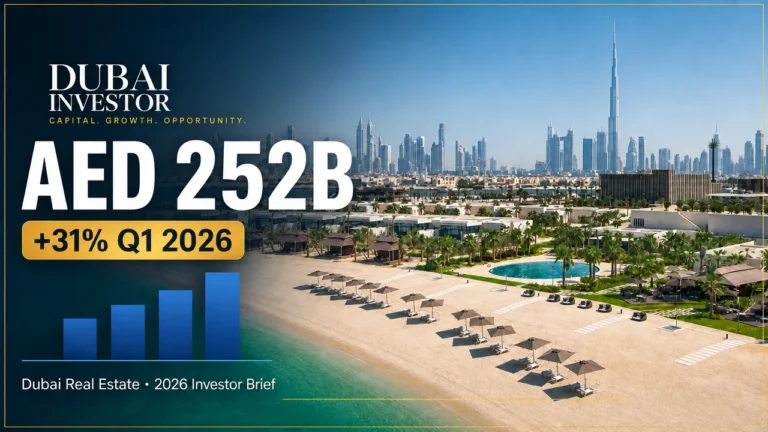
The UAE pulls in global capital for reasons that are less about the skyline than people assume. Near-zero tax, real stability, a location between…
 Investment Insights
Dubai real estate investment in 2026 remains attractive for investors seeking rental income, capital appreciation, tax efficiency and UAE residency options. The market is…
 Investment Insights
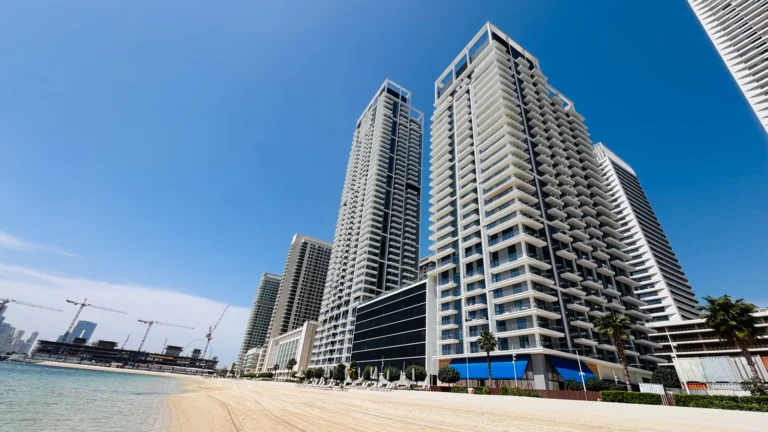
A 2026 investor's guide to Dubai's waterfront apartment market. District-by-district analysis of Marina, Emaar Beachfront, Creek Harbour, Bluewaters, and Dubai Islands, with yields, costs,…