

 Investment Insights
Why the UAE Attracts Global Capital
The UAE pulls in global capital for reasons that are less about the skyline than people assume. Near-zero tax, real stability, a location between…
Straight answers on buying, owning, and investing in Dubai and UAE real estate. Choose a topic below.
Look at five things: location, the size and type of the unit, whether it can be licensed, local demand, and the numbers. Get those right and a short-term rental in Dubai can perform well. Get them wrong and you tie up capital in a unit that sits empty. Here is how I’d work through it.
This is the single biggest driver. Guests want to be near the attractions, the business districts, and the metro. A unit in Downtown Dubai, Dubai Marina, Palm Jumeirah, or Business Bay, or within a short walk of the Burj Khalifa, Dubai Mall, or Jumeirah Beach, books far more consistently than one on the fringes. Property Finder puts properties within a 10-minute walk of a metro station at 20 to 30 percent higher occupancy than less central ones.
The unit decides who books it. A studio or one-bed suits solo travellers, couples, and business visitors. Larger apartments and villas pull in families and groups, and they command more. Villas in areas like Jumeirah Village Circle or Dubai Hills Estate can earn 30 to 40 percent more than smaller units, per AirDNA. Anything that sets you apart, a private pool, outdoor space, a real view, helps you stand out.
Every short-term let in Dubai needs a holiday home licence from the Dubai Department of Tourism and Commerce Marketing (DTCM). Before you count on the income, confirm three things: the unit is eligible for that licence, your building or community actually permits short lets (some HOAs ban them), and you understand the Tourism Dirham fee you collect from guests. DTCM reports that fully compliant properties run into roughly half the legal trouble of non-compliant ones.
Check what comparable units in your area are doing before you commit. AirDNA and Property Finder will show you occupancy, average daily rate, and how bookings move with the season. Then look at how crowded your patch is and be honest about what you can offer that the others can’t. Well-positioned units with a genuine edge tend to hold 80 to 90 percent occupancy through the year.
Reliable Wi-Fi, air conditioning, and a proper kitchen are the baseline guests assume. A pool, gym access, a balcony with a view, or secure parking move you into premium bookings. Booking.com data shows strong amenities drive around 30 percent more positive reviews, and reviews are what keep the calendar full.
Dubai’s peak runs November to March, when the weather turns and events like the Dubai Shopping Festival bring people in. Price to the season: push rates in prime spots during the peak, and use discounts or longer-stay deals to fill the quieter months. Owners who price dynamically instead of setting one flat rate see 15 to 25 percent more revenue, per AirDNA.
Someone has to handle bookings, cleaning, check-ins, and the inevitable maintenance. If that isn’t you, a management company will do it for a cut of the income, and AirDNA-tracked professionally managed units tend to run 20 to 30 percent higher occupancy with fewer complaints. Whichever way you go, run the math: take your expected daily rate and occupancy to an annual income figure, subtract mortgage or rent, cleaning, utilities, and any management fee, and see what’s left. Aim for a 10 to 15 percent annual return. Prime Dubai short-term rentals typically yield 7 to 12 percent, with luxury units in Dubai Marina or Downtown Dubai at the top of that range, according to Gulf News.
The hard part of running a rental from a distance is that everything guests expect to happen in person, arrivals, questions, a broken air conditioner, a mess between stays, still has to happen without you there. It works, but only if you build systems and put reliable people on the ground. Here are the main problems and how I’d handle each.
Flights land late, guests get lost, and you can’t hand over keys from another country. Smart locks or keyless entry solve most of it: each guest gets a unique code that changes after they leave, plus clear instructions sent ahead of arrival. Airbnb data shows keyless setups cut check-in problems by about 30 percent and rate well for convenience.
Slow replies across time zones cost you reviews. Automated messaging through Airbnb or Guesty can send check-in details, welcome notes, and follow-ups on time even while you sleep. Fast responders see roughly 24 percent higher booking rates, per AirDNA.
Leaks, AC failures, and dead appliances are inevitable, and you can’t fix them yourself from abroad. Line up a management company or a network of trusted local contractors who can respond on your behalf. Professionally maintained units report around 20 percent fewer negative reviews tied to operational issues, according to Booking.com.
Cleanliness is one of the first things guests judge, and you can’t scrub the place yourself between stays. Use a cleaning service that specialises in short lets and turns the unit around after every guest. Listings with professional cleaning see about 30 percent more five-star reviews for cleanliness, per Airbnb.
Noise, a security worry, or a mid-stay breakdown needs someone reachable now, not after a 12-hour flight. A local property manager or concierge who can step in real-time is worth the cost. Properties with a dedicated local team score around 40 percent higher on guest satisfaction when problems come up, per Property Finder.
Protecting an empty property you never see is a real concern. Security cameras at entrances, within privacy laws, and smart locks let you monitor access, and a deposit or damage waiver covers you against the worst. Units with these measures report about 30 percent fewer theft or damage incidents, per AirDNA.
From a distance it’s easy to miss the local events and seasonal swings that should move your rates. Dynamic pricing tools like Beyond Pricing or Pricelabs adjust automatically against demand and competing listings, and owners using them see revenue rise 15 to 20 percent on average, per AirDNA.
You still need a holiday home licence through the DTCM, and you still owe the Tourism Dirham fee and any VAT, wherever you happen to be sitting. A management company or a consultant who knows Dubai short lets can keep the licence current and the fees handled. Professionally managed properties run into about 50 percent fewer compliance problems, per DTCM.
It depends on the size of the unit. The DTCM sets occupancy for holiday homes by configuration:
Stick to the limit. Going over it risks fines or losing your holiday home permit outright. Two other rules go with it: you register every guest through the DTCM’s holiday home system within three hours of check-in, and you collect the Tourism Dirham fee per room, per night. Get those right and the operation runs clean.
You register through Dubai’s Holiday Homes System: set up an account, add your unit, upload your documents, submit the permit request, self-classify, pay, and download your permit and QR code. People still call it “DTCM registration,” but it now runs under the Department of Economy and Tourism (DET).
| Item | What it is | Why it matters |
|---|---|---|
| Holiday Homes account | Your owner or operator profile in the system | Required to apply for unit permits |
| Unit permit | Approval to rent a specific unit short-term | You need it before hosting or advertising |
| Core documents | ID, title deed, authorisation, DEWA bill | The most common reason applications stall |
| Self-classification | Online classification steps inside the portal | Needed to finalise the permit and unit setup |
| Permit and QR code | Downloadable e-permit and unit QR identifier | Used for compliance and operational checks |
It comes down to three things: communicate in the guest’s language, make paying easy and secure, and stay compliant with Dubai’s rules. Dubai pulls visitors from everywhere, so the smoother you make the experience, the more you book and the better your reviews. Here’s how I’d set it up.
Not every guest is comfortable in English. Use multilingual staff or a management company, automated messaging that translates, or the built-in translation on Airbnb and Booking.com. Listings that talk to guests in their own language see roughly 10 to 15% higher occupancy through better ratings and repeat bookings, per Airbnb.
Accept more than one method. Airbnb and Booking.com handle payment with protection for both sides; PayPal and Stripe cover cards and digital wallets; bank transfers suit longer or luxury stays booked direct. Offering multiple options and trusted platforms cuts fraud and chargeback risk, and Booking.com data links it to a 20 to 30% lift in booking conversion from international guests.
Guests want to know exactly what they’re paying without doing exchange-rate math. Automated conversion on Airbnb, Vrbo, or PayPal handles that. Property Finder found transparent local-currency pricing brings around 15% higher booking rates from international travellers.
Long-haul guests land at odd hours. Self-check-in through smart locks or keyless entry, or a management company running 24/7 check-in, means nobody has to coordinate an arrival at 3am. Self-check-in properties are about 25% more likely to earn positive reviews, per AirDNA.
International guests won’t know the building rules or the local etiquette. Put it in a welcome guide, digital or printed: rules on noise, waste, and smoking; a note on local customs like dress codes and holidays; and emergency contacts plus how the appliances work. A solid welcome guide earns 5 to 10% higher reviews, per Hostfully.
People want the real Dubai, not just a bed. Point them to the Burj Khalifa, The Dubai Mall, and Dubai Marina, and add insider tips on the Metro and where to eat. Hosts who give local recommendations are about 30% more likely to land five-star reviews, per Airbnb.
Get the legal side right before you host. That means a holiday home licence, the Tourism Dirham fee of AED 7 to AED 20 per night, and VAT registration if your annual revenue tops AED 375,000. Meeting the DTCM requirements and being upfront about fees builds trust, and international guests in particular value that transparency and rebook because of it.
Visa issues, flight disruptions, and changing travel rules hit international guests harder. A flexible or moderate cancellation policy gives them the confidence to book, and listings that offer one take 10 to 15% more bookings than strict ones, per Airbnb.
Scaling comes down to three things: more units in the right areas, systems that let you run them without living in your inbox, and staying inside the licensing rules. Everything else is detail.
Concentrate your portfolio in Downtown Dubai, Dubai Marina, Palm Jumeirah, and Business Bay. These areas pull a steady mix of tourists, business travellers, and expats, and short-term lets here run gross yields of around 7-10%, well above what long-term tenancies give you. In 2024 occupancy in the prime areas sat at 75-85% through peak season, with Marina and Downtown leading.
Once you are past two or three properties, manual management breaks down. Channel and management software like Guesty, Hostaway, or Tokeet handles bookings, guest messaging, and pricing across Airbnb, Booking.com and the rest from one place. Operators running proper channel management typically see 15-20% higher income and far fewer double-bookings.
On the platforms, your rating is your ranking. Listings averaging 4.8 or above get 20-30% more bookings and can charge 5-10% more per night than lower-rated ones. Good amenities, fast responses, and prompt maintenance are what keep the score up. Treat every review as revenue.
Dubai’s demand swings hard around events and seasons. Tools like Beyond Pricing or Pricelabs adjust your nightly rate to real-time demand, the Dubai Shopping Festival, holidays, and quieter summer months. Owners using dynamic pricing commonly lift annual revenue by 20-40%, and it is most effective in high-turnover areas like Business Bay and JBR.
As the portfolio grows, outsource check-ins, cleaning, and maintenance to a management company. It frees you to focus on acquisition, and a good one will also keep you compliant on licensing and Tourism Dirham fees. Professionally managed units tend to run occupancy up to 15% higher.
Spreading across unit types smooths your income across the year. Luxury villas for high-net-worth guests, affordable studios for budget travellers, and serviced apartments for business and mid-term stays. Studios and serviced apartments in areas like Dubai Hills Estate and Al Barari have been running 70-80% occupancy on mid-term demand.
Eco-friendly and pet-friendly listings face less competition and command premiums. Airbnb data shows those tags can charge up to 15% more per night at 5-10% higher occupancy than standard listings.
Every unit you rent short-term needs a holiday home licence through the Dubai Tourism and Commerce Marketing (DTCM). Rules have been simplified in recent years to encourage investment, but non-compliance still carries fines of up to AED 5,000 per violation. Do not let a scaling portfolio outrun your paperwork.
A branded booking site, professional photography, and an active social presence reduce your reliance on third-party platforms and the commissions that come with them. Owners taking direct bookings alongside the platforms report meaningfully higher net rates.
Tourism swings drive your short-term rental income directly, because Dubai’s rental demand tracks the tourism calendar closely. The city runs on clear seasonal peaks, event spikes, and a quiet summer, and if you plan around them you can hold income steady all year instead of riding the highs and lows.
Peak runs November to March, when the weather is cool and events like the Dubai Shopping Festival and New Year draw crowds. In that window, units in Downtown Dubai, Dubai Marina, and Palm Jumeirah can hit 80-90% occupancy and command higher rates. Summer, June to August, is the off-peak: fewer tourists, though business travellers and long-stay guests keep some demand alive. Property Finder data shows peak rates rising 30-50%, with off-peak rates dropping 20-30% depending on location and unit.
Major events like the Dubai World Cup and the Dubai Airshow pull in both leisure and business travellers and spike rental demand. Business tourism runs year-round too, so Business Bay and DIFC stay busy with corporate guests even when leisure demand dips. During Expo 2020, rates near the site and districts like Dubai South surged 50-70%. Position near a venue during an event and you can charge a premium.
Prime areas ride out the swings better. Downtown Dubai, Dubai Marina, and JBR sit next to the Burj Khalifa, The Dubai Mall, and Jumeirah Beach, so they stay busy year-round and held around 85% occupancy through the 2023 peak. Emerging areas like Dubai Creek Harbour, Bluewaters Island, and Dubai South are more volatile but can spike hard during events, Creek Harbour saw occupancy jump 40% around Expo.
The COVID period hit tourism and rentals through 2020 and early 2021, but Dubai reopened fast and rebounded. In 2023 international visitors rose 97% versus 2020, and short-term bookings rose with them. Travellers now want flexibility, which pushes demand toward short-term rentals over hotels, especially units with a workspace and long-stay options.
A service charge is the annual fee owners pay to run and maintain the shared parts of a building or community. It covers the pool, gym, lifts, security, landscaping, waste disposal, utilities for common areas, and general repairs, everything outside your own front door that keeps the property functioning and holding its value.
It is charged per square foot of your unit, and the rate varies widely, from around AED 3 to AED 30 or more depending on the location, building type, and how much amenity you are paying for. A tower in Dubai Marina carries a higher charge than something in Discovery Gardens, simply because there is more to maintain.
Part of what you pay goes into a sinking fund, which is money set aside for the big-ticket replacements down the line: roofing, chillers, lift systems. That is what stops owners getting hit with a large one-off bill when major infrastructure needs replacing.
Paying it is not optional. It is a legal obligation, it keeps the building safe and well-run, and the rates themselves are regulated and overseen by Dubai’s Real Estate Regulatory Authority (RERA). When you are assessing a property, check the service charge before you buy, on a high-amenity building it can take a real bite out of your net rental yield.
Ejari registration is usually same-day, and if you do it online it can be done within a few hours. The exact time depends on how you file.
Either way, the thing that slows people down is incomplete paperwork. Have your documents in order and it is quick.
For most owners, Airbnb and Booking.com do the heavy lifting, with the local portals Property Finder, Bayut, and Dubizzle adding reach. List across several rather than betting on one. Here is where each earns its place.
The practical move is to list on the two globals plus one or two local portals and run them through channel management so your calendar stays in sync. That is how you keep occupancy up without double-bookings.
Handle cancellations and refunds with a clear, written policy set out before the booking, that is what keeps disputes off your listing and your reviews intact. Here is how I would run it.
Pick a policy and display it prominently on the listing. The common tiers are:
Match the refund to how far ahead the guest cancels:
Long stays work differently. On a 30-day booking, for example, you might keep the first month’s rent but refund any payments beyond that.
Use property management software to process cancellations, track refunds, and handle charges like the Tourism Dirham Fee. It cuts manual errors and keeps guest communication consistent.
Tell guests about any change or exception to the policy promptly. Most disputes come from surprise, not the policy itself, so if the guest understands the reasoning up front, you avoid the argument. Do that consistently and your reputation holds.
Worth it, and the numbers back it up. Listings with professional photos book more often, and good images can command up to 26% more per booking than amateur shots. Here is where the money actually comes from.
Guests book what they can picture. When someone can see the space clearly, they trust it, and they book. Dark, crooked phone photos plant doubt, and doubt loses the reservation to the next listing.
Dubai is a crowded market. There are thousands of short-term rentals competing for the same traveler. First impression is the thumbnail. A strong lead image gets the click, and the click is where everything starts.
A good photographer sells the right features to the right guest. The view, the light coming through in the morning, the space in the living room. Framed well, those details let you target who you actually want, whether that is families, couples, or business travelers.
It also saves you time. Shooting your own property well is harder than it looks, and running a rental already eats your day. Hand it to a professional once and you get a consistent set of images that work across every platform.
Spend on the photos. It is one of the few upfront costs in this business that pays you back on every booking.
One year. That is the standard term across Dubai, and it gives both sides a clear commitment to work from. A few things worth knowing beyond that.
One year is the norm, but the term is ultimately whatever landlord and tenant agree, so shorter or longer arrangements are fine as long as they are written clearly into the contract. If you want the full picture on your rights, the governing law is the Dubai Tenancy Law (Law No. 26 of 2007) and its amendments, which is worth reading before you sign anything you are unsure about.
The Ejari registration itself is AED 220. That is the core fee, and everything else is small add-ons depending on how you file. Ejari is mandatory, it registers your tenancy with the Dubai Land Department (DLD) so the contract is legally recognised and both sides are protected.
To register, have these ready: the signed tenancy contract, a copy of the property’s title deed, your Emirates ID, your passport (and visa if relevant), and a recent DEWA bill. With those in hand it is a quick process.
Expect 5% to 20% of your annual rental income, with most landlords landing somewhere in that band depending on the property and how much they want the manager to handle.
Here is how it usually breaks down:
What you are really buying is your time back. A good manager screens tenants properly, which is where most landlord headaches start, handles the day-to-day, and keeps the property running while you get on with everything else. When you compare firms, weigh the fee against the actual service, not just the lowest number, because a cheap manager who places a bad tenant costs you far more than the saving.
After enough turnovers you see the same handful of complaints again and again, and nearly all of them are preventable. Dubai guests arrive with high expectations, so getting these right is what protects your reviews and your occupancy. Here are the ones that come up most, and what fixes each.
Cleanliness. This is the one guests punish you hardest for. A dirty bathroom, grubby linens or a dusty shelf reads as a dealbreaker in a market built on luxury standards. Use a cleaner who knows short-term turnovers, inspect between stays, and put out fresh linens, towels and toiletries every booking. Properties with higher cleanliness ratings see 20-25% more positive reviews and more repeat bookings, per Airbnb.
Slow communication. Vague check-in details or a delayed reply frustrates guests fast, particularly international travellers who need a bit more guidance. Use automated messaging for check-in, check-out and house rules, aim to answer questions within an hour, and put the Wi-Fi password, emergency numbers and appliance notes in a welcome guide. Hosts who reply within one hour get 24% higher booking rates, according to Airbnb.
Listing doesn’t match reality. When the space, room count, view or amenities don’t line up with the photos, guests feel misled. Keep the description and images accurate and current, update them the moment anything changes, and get a professional photographer who shows the place honestly rather than overselling it. Accurate listings pull in 30% fewer negative reviews tied to unmet expectations, per booking.com.
Noise. Construction, neighbours or traffic can wreck a stay, especially in busy spots like Business Bay, Downtown Dubai or Dubai Marina. Flag any likely noise in the listing up front, and provide white noise machines, earplugs or noise-cancelling windows. Guests warned about noise in advance are 60% less likely to leave a bad review, per Airbnb.
Maintenance faults. Broken appliances, failing AC, plumbing issues or dead Wi-Fi come up constantly, and in Dubai’s heat an AC failure ruins a stay outright. Run maintenance checks before every arrival, keep a reliable repair contact on call, and set up a preventive schedule. Properties with minimal maintenance issues are 20% more likely to earn five stars, especially where high-end amenities are expected like Dubai Marina, per Property Finder.
Unreliable Wi-Fi. Slow internet is a top complaint from business travellers and digital nomads. Invest in high-speed Wi-Fi that reaches the whole property, test it regularly, keep a mobile data router as backup, and put the details in the welcome guide. Listings with strong connectivity are 30-40% more likely to attract business travellers, per Airbnb.
Missing basics. Guests expect toiletries, towels, kitchenware and clean bedding as a given. Stock the standards, soap, shampoo, fresh linen, cooking utensils, a coffee maker, bottled water, and small extras like local snacks or a welcome basket lift the experience further. Properties that go past the basics see a 15-20% increase in positive feedback, per AirDNA.
Awkward check-in. A complicated or delayed arrival is a real irritant, particularly for late or long-haul guests. Fit smart locks for self-check-in and send clear step-by-step instructions, with photos or video if it helps, well ahead of arrival. Self-check-in options draw 25% fewer complaints about the process, per AirDNA.
Overloaded house rules. A wall of strict rules can overwhelm guests. Keep them short, flag the ones that matter, quiet hours, smoking policy, and don’t drown people in instructions. Clear, simple rules earn 10-15% more positive reviews, per Airbnb.
No local guidance. International guests in particular can feel lost without a steer on getting around, what to see and where to eat. Leave a welcome guide with dining and transport tips and the nearby landmarks, the Burj Khalifa, Dubai Mall, Palm Jumeirah. Hosts who offer local recommendations get 20-25% more five-star reviews, especially from overseas travellers, per Airbnb.
For a short-term rental you need cleaning built around turnovers, not the once-a-week domestic clean most companies default to. Here’s what to line up.
Turnover cleaning between guests. The core job: every room, bathroom, kitchen and shared space cleaned, linens changed, high-touch surfaces sanitised, before each arrival and after each departure. In Dubai this is what your reviews hinge on.
Periodic deep cleaning. On top of the regular turnovers, book deep cleans, steam cleaning carpets, upholstery and mattresses, heavier disinfection in kitchens and bathrooms. The higher your turnover, the more often you’ll need it.
Laundry. Fresh bed linen, towels and kitchen towels for every guest. Either handle it in-house or use a cleaner who folds laundry into the service.
Outdoor areas. If you’ve got a garden, balcony or pool, they need attention too, sweeping, washing down the furniture, keeping the pool area clean.
Eco-friendly options. More cleaners in Dubai now use non-toxic products, and it lands well with health-conscious and environmentally minded guests.
Get this right and the property holds its condition, the reviews follow, and the calendar stays full.
.service-charges-faq{max-width:920px;margin:24px auto;padding:0 16px;font-family:system-ui,-apple-system,Segoe UI,Roboto,Helvetica,Arial,sans-serif;line-height:1.55;color:#0f172a}
.service-charges-faq h1,.service-charges-faq h2{line-height:1.2;margin:0 0 10px}
.service-charges-faq h1{font-size:28px}
.service-charges-faq h2{font-size:18px;margin-top:22px}
.service-charges-faq p{margin:10px 0}
.service-charges-faq .kicker{font-size:13px;color:#64748b;margin-top:4px}
.service-charges-faq .card{background:#ffffff;border:1px solid #e2e8f0;border-radius:14px;padding:16px;margin-top:14px;box-shadow:0 6px 20px rgba(15,23,42,.05)}
.service-charges-faq .badge{display:inline-block;font-size:12px;font-weight:700;letter-spacing:.02em;text-transform:uppercase;padding:6px 10px;border-radius:999px;background:#0ea5e9;color:#ffffff;margin-bottom:10px}
.service-charges-faq ul{margin:10px 0 0 18px}
.service-charges-faq li{margin:6px 0}
.service-charges-faq .note{background:#f8fafc;border:1px solid #e2e8f0;border-radius:12px;padding:12px 14px;margin-top:12px}
.service-charges-faq .note strong{display:block;margin-bottom:6px}
.service-charges-faq .muted{color:#475569}
.service-charges-faq table{width:100%;border-collapse:separate;border-spacing:0;margin-top:10px;border:1px solid #e2e8f0;border-radius:12px;overflow:hidden}
.service-charges-faq thead th{background:#f1f5f9;font-size:13px;text-align:left;padding:10px 12px;border-bottom:1px solid #e2e8f0}
.service-charges-faq tbody td{padding:10px 12px;border-bottom:1px solid #e2e8f0;vertical-align:top}
.service-charges-faq tbody tr:last-child td{border-bottom:none}
What the charges are, where to confirm the exact rate, and how they eat into net yield.
Dubai service charges are annual building and community fees billed per square foot, and they vary from one building to the next.
The only reliable way to get your exact rate is the Dubai Land Department Service Charge Index (Mollak, Dubai REST),
where you search by project, usage and year, then export the result.
Here’s the thing about service charges by building: there’s no single average that holds across Dubai. Two towers side by side in the
same area can carry completely different charges. So instead of guessing off a rough number, use the verification route the DLD gives you.
That’s exactly what the Dubai Land Department Service Charge Index is for. DLD describes it as a service that lets you check the approved
service fees for jointly owned properties, approved through RERA. You can reach it online, including through the Mollak system, or through Dubai REST.
How to confirm an exact building rate:
What pushes charges up or down?
Size counts, since it’s billed per square foot, but it isn’t the only factor. In practice it comes down to building type,
usage (residential versus commercial), and what the community actually maintains, pools, lifts, gyms, security,
landscaping, and sometimes district cooling.
This is where investors get caught. A high gross yield looks great until the service charges land. Do it properly:
net rent is your annual rent minus service charges and operating costs, and net yield is net rent divided by the purchase price.
| What you want to know | Best way to get it | Why it matters |
|---|---|---|
| Service charge rate for your exact building | DLD Service Charge Index, project, usage, year | This is the verified, building-level number |
| How charges are presented | Per sq ft, by year, exportable result | Easy to model in a yield calculator |
| Typical market range context | Many guides cite AED 3 to AED 30 | Helpful context, not a substitute for building lookup |
| Main drivers | Usage, size, type, location, amenities | Explains why the “same area” can differ |
| Yield impact | Use net yield, not gross yield | Prevents overestimating returns |
| Owner verification method | Dubai REST app also supports lookup | Useful when you need it quickly on your phone |
Pick a cleaner who understands short-term turnovers, because that’s a different job from a standard domestic clean. For a short-term rental in Dubai, cleanliness is one of the top things guests rate you on, so the choice matters more than it looks. Here’s what to check for.
Short-term rental experience. Turnover cleaning has to be fast, thorough and guest-ready every time, which not every company is set up for. Ask whether they specialise in vacation homes and can handle high turnover and same-day cleans between check-out and check-in. Properties with dedicated cleaning services get 20-30% fewer cleanliness complaints, per Property Finder.
Flexibility and availability. Last-minute bookings and same-day check-outs are normal here, so your cleaner needs to work around your calendar. Look for 24/7 availability or an app or online booking system for short-notice jobs. Properties offering same-day turnarounds have 15-20% higher occupancy and win more last-minute bookings, per AirDNA.
Consistency. Every clean has to hit the same standard no matter how rushed the day is. Ask whether they run a quality assurance program or supervisory checks and use a room-by-room checklist so nothing gets missed. Consistent cleaning services report 25% higher guest satisfaction on cleanliness, per Airbnb.
Quality and eco-friendly products. Dubai’s guests often expect high-end or environmentally conscious cleaning, and good products protect your furniture and surfaces. Ask if they use non-toxic products and know how to handle delicate finishes like marble or expensive flooring. Eco-friendly cleaning earns properties 10-15% higher ratings from guests who value it, per Booking.com.
Reviews and references. Feedback from other hosts tells you what you need to know about reliability. Read reviews on Google, Trustpilot or Facebook, and ask the company for references from other short-term rental owners, paying attention to punctuality and how they handle quick turnovers. Cleaners with strong host reviews are 40% more likely to deliver consistent quality, per AirDNA.
Laundry. Fresh linens and towels are a core part of every turnover. Check that laundry is included in their package or that they partner with a reliable provider, and that they can cope with the volume if you run multiple units. Properties with professional laundry are 30% more likely to earn five stars for cleanliness, per Booking.com.
Transparent pricing. Hidden fees eat into your margin, especially across several properties. Ask for a clear breakdown, including any charges for rush or same-day cleans, and check for discounts on regular or bulk bookings. Hosts using transparent-pricing cleaners report 15-20% higher profitability, per Lodgify.
Licensing and insurance. A licensed, insured cleaner protects you if there’s an accident or damage. Make sure they’re licensed to operate in Dubai and carry cover for damages or injuries on your property. Licensed and insured companies see 50% fewer liability and damage issues, per DTCM.
Customisable services. Your needs shift with property size, turnover and any special requirements, so you want to pay only for what you use. Look for customisable packages, deep cleans, extra laundry, restocking, tailored to the property. Hosts using customisable services report 20% higher guest satisfaction, per Airbnb.
Communication. Clear, responsive service is essential when you’re coordinating remotely or arranging a last-minute clean. Test their responsiveness before you hire, and make sure you get a dedicated point of contact. Properties with responsive cleaners report 30% fewer issues around last-minute or emergency cleans, per Booking.com.
Guest safety in a Dubai short-term rental comes down to meeting the DTCM’s rules, then adding a few sensible measures on top. Here’s what matters.
Meet the DTCM standards. Every holiday home has to pass health, safety and cleanliness inspections and hold a valid Holiday Home Permit, which covers fire safety, proper lighting and accessibility. Register the property and keep the permit current, this is the legal baseline.
Secure the access. Keyless entry and surveillance cameras (common areas only, never inside the living space, to protect privacy) let you control who gets in and flag anything unusual. Many hosts also use these to keep an eye on noise without intruding.
Make emergencies easy to handle. Post emergency contacts, the nearest hospital and fire procedures somewhere visible. Fit fire extinguishers, smoke detectors and carbon monoxide detectors, and check them regularly. It meets DTCM standards and reassures guests.
Stay on top of maintenance. Regular checks on appliances, plumbing and electrical systems stop small faults turning into hazards, and keep everything meeting the required standards.
Carry proper insurance. Comprehensive property and liability cover protects both you and your guests if there’s an accident, injury or damage during a stay. In this market it’s not optional.
Do these and you’re compliant and your guests feel looked after, which is exactly what shows up in the reviews.
In Dubai’s rental market the property goes to whoever is ready to move first, so speed comes down to preparation. In high-demand areas like Downtown Dubai, Dubai Marina and Palm Jumeirah, good units can be gone within hours. Here’s how to have the deposit down before someone else does.
Have your documents ready. Landlords and agents move fast, and having your paperwork sorted puts you ahead of other tenants. You’ll typically need a passport copy, your Emirates ID (or proof you’re getting one), a visa copy if you’re an expat, and a salary certificate or bank statements to show you’re good for it.
Have your cheques ready. Rent in Dubai is usually paid by post-dated cheques, and landlords expect them upfront. Keep your chequebook on hand for the deposit and rent. The security deposit is normally 5% of the annual rent for unfurnished properties and 10% for furnished ones. Turn up with the deposit cheque and you can close on the spot. If a large lump sum worries you, ask about splitting the rent into two or four cheques, which is standard practice here.
View and decide fast. Good deals go quickly, so schedule viewings promptly and be ready to commit straight after. A trusted agent who knows your brief can flag new listings the moment they appear, sometimes before they hit the wider market.
Offer competitive terms. It isn’t always about the highest rent. You can stand out by paying in fewer cheques (one or two instead of four), offering to move in quickly to cut the landlord’s vacancy, or putting up a slightly higher deposit to show you’re serious.
Build a rapport with the landlord. Polite communication, flexibility on move-in dates and being open about your plans can tip the decision your way, even against other tenants.
Use a good agent. An experienced agent often has access to properties before they’re listed publicly, can negotiate terms in your favour, and will make sure your contract is sound.
Know the market. Understanding current trends helps you decide quickly. As of 2024, areas like Dubai Hills Estate, Jumeirah Village Circle (JVC) and Business Bay have seen rising interest and more competition.
If you’re targeting those high-demand areas, stay flexible on budget and timing. A small adjustment to your preferences can be the difference between securing a property and missing it.
Most short-term rental maintenance problems in Dubai trace back to two things: the climate and the constant turnover. Catch them early and you avoid the expensive repairs, the bad reviews and the scramble mid-stay. Here are the common ones and how to stay ahead of them.
Air conditioning failures. In Dubai’s heat, AC is everything, and constant summer use wears units out fast. Service them before peak season and have them cleaned and inspected every three to six months, and leave guests a simple guide so they don’t overwork the system. Properties that maintain their AC report 15% fewer complaints, especially in summer, per Property Finder.
Plumbing and leaks. Clogged drains, dripping taps and running toilets are common with high turnover, and AC condensation leaks are a frequent Dubai-specific issue. Check fixtures regularly, fit good-quality taps and pipe fittings, and keep condensation systems maintained so water doesn’t pool. Properties with fewer plumbing complaints see 10-15% higher satisfaction, per Airbnb.
Electrical problems. Blown fuses, faulty sockets and dead appliances come up often, and older Dubai buildings can overload when guests run several high-power devices at once. Have a licensed electrician inspect the wiring and outlets annually, replace old wiring where needed, and give guests clear instructions for using appliances safely. Annual electrical inspections cut incidents by 20%, per booking.com.
Wi-Fi and connectivity. Slow internet is a top complaint, particularly with multiple devices connected. Invest in reliable high-speed internet with full coverage, position the router centrally, add an extender for larger units, and test the speed regularly. High-speed internet brings 30-40% higher bookings from business travellers, per AirDNA.
Wear on furniture and appliances. Frequent use means stained upholstery, broken chairs, scratched floors and tired kitchen appliances. Buy durable, quality pieces that take the punishment, inspect regularly, and repair or replace as you go. Rentals that keep furniture and appliances updated get 20-25% better reviews for comfort, per booking.com.
Pests. The warm climate brings ants, cockroaches and mosquitoes, worse near parks, water or construction. Schedule pest control at least quarterly, seal doors, windows and any gaps, and provide repellent or fly screens where needed. Regular pest treatments cut cleanliness complaints by 15%, per Airbnb.
Window and door seals. Seals degrade over time, letting in drafts, noise and heat, a real problem during sandstorms or in busy areas. Check and replace worn seals regularly, and consider double-glazing to cut noise and heat. Properties with well-maintained windows and doors report 10-15% higher satisfaction on noise and comfort, especially in Business Bay or Downtown Dubai, per Property Finder.
Cleaning between stays. Guests expect hotel-level cleanliness, and even a small lapse, dirty linens, a grubby bathroom, dust in the living room, costs you a review. Use professional cleaners between stays, provide quality linens and towels and replace them regularly, and inspect after every clean. A professional cleaning schedule cuts cleanliness complaints by 25%, per AirDNA.
Keys and access. Lost keys, faulty keycards or a glitchy smart lock delay check-ins and raise security concerns. Use smart locks or keyless entry with unique codes you reset between guests. Keyless entry means 30% fewer check-in issues, per Airbnb.
Water heaters. Heavy turnover overworks hot water systems, leading to breakdowns or inconsistent supply mid-stay. Inspect and maintain the heater and plumbing regularly, keep the temperature at a safe, steady level, and replace ageing units. Well-maintained water heating results in 15% fewer complaints about comfort, per Booking.com.
Dealing with noisy guests comes down to preventing the problem before it starts, then acting fast when it does. It matters more in Dubai because so many rentals sit in dense residential towers in Dubai Marina, Downtown Dubai and Palm Jumeirah, where one loud group affects a whole building. Here’s how to handle it and protect your property and reputation.
Set clear house rules up front. Spell out the expectations in the listing and welcome guide, quiet hours (say no loud music after 10 p.m.), limits on guest numbers and parties, and respect for neighbours and shared amenities. When guests know the boundaries before they book, most issues never come up. Listings with clearly communicated rules get 25% fewer noise complaints, per Airbnb.
Install noise monitoring. Devices like Minut or NoiseAware track noise levels without recording conversations, so privacy holds and you get an alert if it crosses a threshold. That lets you step in before things escalate, and gives you evidence if a guest disputes it. Properties using noise monitoring report 40% fewer issues with noisy guests, since the devices act as a deterrent, per Minut.
Screen before you confirm. Be more careful around high-demand dates like New Year’s Eve or the Dubai Shopping Festival, when noise incidents spike. Look for guests with good reviews from past hosts and ask about the nature of the stay. You can’t discriminate, but families and business travellers are simply less likely to throw a party than a large group of young travellers. Hosts who screen and confirm expectations see 30% fewer noise complaints, per Airbnb.
Keep a manager on call. If you run the property remotely, hire a local manager or concierge who can turn up in person. Someone available around the clock means complaints get handled fast, which matters most in apartment buildings where noise hits several units. Professionally managed properties report 20% higher guest satisfaction and fewer disruptions, per Property Finder.
Talk to the guest directly. If a neighbour complains or a monitor alerts you, contact the guests, remind them of the rules, and stay friendly but firm, noting that continued disturbance can mean penalties or an early end to the stay. Often they simply didn’t realise, and a calm message settles it. Hosts who address issues directly and promptly see a 50% higher resolution rate without escalation, per Airbnb.
Put penalties in the agreement. Spell out the consequences for breaking house rules, extra fees for excessive noise or damage, and eviction in extreme cases, and use the platform’s security deposit through Airbnb or Booking.com to cover damage. Clear penalties deter bad behaviour and give you legal backing. Listings with defined penalties report 15-20% fewer noise incidents, per AirDNA.
Work with building management and neighbours. Keep a good relationship with the building team and the people nearby, tell them when you’re expecting guests, and give them your contact details. Building management can help enforce noise rules, particularly in places like Jumeirah Beach Residence (JBR) and Dubai Marina, and it keeps complaints from going straight to the authorities. Properties that maintain good relations with building management see 30% fewer neighbour complaints, per booking.com.
Offer compensation when it’s warranted. When noise has genuinely disrupted neighbours or other guests, a discount on a future stay or a partial refund can smooth things over. It may feel like a cost, but it protects goodwill and heads off negative reviews. Hosts who offer compensation after a complaint are 70% more likely to still get a neutral or positive review, per Airbnb.
Evict as a last resort. If guests keep breaking the rules or cause major disruption, you may need to end the stay early. Document everything, communication, complaints, monitor data, and follow the Airbnb or Booking.com guidelines for guest removals. It should be the final step, but sometimes it’s necessary to protect the property and your neighbours. Properties that remove seriously disruptive guests hold 90% higher ratings, per AirDNA.
Yes, you can hand the whole thing to a property manager, and plenty of owners do exactly that to earn from a short-term rental without running it day to day. A good management company in Dubai covers everything, guest communication, check-ins, cleaning, maintenance and keeping you compliant with the short-term rental rules.
What a manager takes off your plate:
Guest management. They handle inquiries, bookings, check-ins and check-outs, and guest support throughout the stay, resolving issues directly so every guest gets a smooth experience. Professionally managed properties have a 20-30% higher chance of five-star reviews on Airbnb and Booking.com, per Property Finder.
Pricing and revenue. Using dynamic pricing tools, they adjust rates to demand, season and events like the Dubai Shopping Festival, keeping you competitive and full. Dynamic pricing can lift revenue by 20-40%, particularly in Downtown Dubai and Dubai Marina, per AirDNA.
Maintenance and repairs. They coordinate regular maintenance, handle repairs and inspect between stays, catching the usual AC, plumbing and appliance problems early. Proactive maintenance means 15% fewer complaints about faults or cleanliness, per Airbnb.
Compliance. The DTCM requires every short-term rental to be registered with a valid holiday home license. A manager handles the licensing end to end, including the Tourism Dirham fee, and keeps you current as rules change. Compliant properties see 40% fewer legal complications, per DTCM.
Cleaning and turnover. They arrange professional cleaning between stays and inspect before each guest, which is critical since cleanliness drives your reviews. Professional cleaning brings 30% more five-star reviews for cleanliness, per AirDNA.
Marketing and listings. They list across Airbnb, Booking.com, Vrbo and Expedia with professional photos, optimised descriptions and targeted keywords to rank higher. Professionally managed listings see a 20-25% higher booking rate, especially in JBR and Palm Jumeirah, per Lodgify.
Payments and deposits. They manage the whole payment flow, security deposits, guest payments, refunds, and make sure Tourism Dirham fees and VAT are charged correctly. Professional payment handling means 25% fewer payment disputes, per Airbnb.
How to pick the right one:
Experience and portfolio. Look for a company that already manages properties in your area, with a track record on units similar to yours in size and target guest.
Fee structure. Most charge 15-25% of rental income. Get clear on what’s included, cleaning, maintenance, marketing, and what costs extra.
Marketing and pricing strategy. They should have a clear plan for listing across platforms and adjusting pricing to demand, which is what actually maximises your income.
Reviews and references. Ask other owners and read reviews of the company. It tells you a lot about their responsiveness and how well they manage both guests and the property.
Yes, you can run a short-term rental while the property is listed for sale in Dubai, as long as you follow the rules and think through the trade-offs. The market allows you to earn rental income and market for sale at the same time, but it has to comply with Dubai Land Department (DLD) and DTCM requirements.
What to weigh before you do it:
Regulatory compliance. You’ll need to register the property with the DTCM and get a holiday home license, which is what lets you list on Airbnb, Booking.com and similar platforms. The property also has to meet DTCM standards on furnishings, cleanliness and safety.
Mortgage consent. If the property is mortgaged, get your lender’s approval to let it short-term. Some lenders restrict how a property can be used while it’s on the market.
Flexible tenancy terms. Build viewing and inspection access into the rental agreement so you can show the property to buyers. This matters more with short-term guests, who tend to be less accommodating than long-term tenants.
Effect on the sale. Income is good, but an occupied property can slow the sale, some buyers are put off by tenants in place, and juggling viewings and maintenance around guests takes coordination.
Demand for the rental. Short-term rentals in sought-after areas like Downtown Dubai, Dubai Marina and Business Bay are in strong demand from tourists and business travellers, so the income can be substantial. Per Property Finder, a 1-bedroom apartment in Business Bay can fetch AED 118,000 a year, with Downtown often higher on the back of tourist demand.
The returns. AirDNA puts the average daily rate for Dubai short-term rentals at roughly AED 500-600 depending on location and type, with occupancy typically between 60% and 80%. A well-run property in a high-demand area like Dubai Marina or JBR can generate gross rental yields of 8% to 10% a year.
The process, in order:
Get the holiday home license from DTCM, applying directly or through a licensed operator who can manage the property for you.
List and manage on platforms like Airbnb, or hand it to a short-term rental management company.
Keep marketing for sale through agencies and portals. Be upfront with buyers about the short-term rental status, and make clear it can be delivered vacant if needed.
Have an exit plan. Line up how you’ll give vacant possession on completion, and communicate it to both guests and buyers.
It works best in areas with strong rental demand. Get the licensing right and keep the tenancy terms flexible, and you can earn from the property while it’s on the market.
Yes, you can run a short-term rental in Dubai without living in the city. Plenty of owners earn from the market without ever setting foot in the UAE, but you have to set it up properly. Here’s what that involves.
Get a holiday home license. To let legally short-term, you need a holiday home license through the DTCM, whether you’re local or abroad. You can apply yourself or hand it to a licensed holiday home operator who handles the permit, the listing and the guests. It matters because the DTCM regulates these properties for safety and quality, and operating without a license brings heavy fines.
Hire a property management company. If you’re not in Dubai, this is close to essential. A good company manages bookings and guest inquiries, check-ins and check-outs, cleaning and maintenance between stays, and keeps you compliant with local rules. Running all of that from another country is hard on your own. Professionally managed properties see up to 20% higher occupancy than owner-managed ones, per AirDNA.
List on the major platforms. Once the license and management are in place, list on Airbnb, Booking.com and Vrbo. These reach a global audience, and a licensed, well-kept property lets you charge competitive rates. Dubai is one of the top short-term rental cities, with occupancy averaging 60-80% depending on season and location, per Property Finder.
Manage pricing and yield. Price competitively to stay booked. Many managers offer yield management, adjusting rates dynamically to demand, season and events like the Dubai Shopping Festival. Accurate pricing is what maximises income in a market this dynamic. Prime locations like Dubai Marina, Palm Jumeirah and Downtown Dubai can hit gross yields of 7-10%, per AirDNA.
Stay on top of tax and fees. Dubai charges no income tax on rental income, but other costs apply. A Tourism Dirham fee of AED 7 to AED 20 per night applies depending on the property’s classification, and you must comply with VAT rules if revenue exceeds AED 375,000 a year. A manager or tax advisor can keep you compliant and clear of penalties.
Get the right insurance. Standard home insurance often won’t cover short-term letting, so get a policy covering guest damage, liability and loss of rental income. Short-term guests raise the risk, and proper cover protects you from the financial hit. Platforms like Airbnb offer host protection, but a comprehensive policy of your own is worth having to close the gaps.
The upside of doing this from abroad:
Higher yields. Short-term typically out-earns long-term leases, especially in prime areas like Dubai Marina, Downtown Dubai and Business Bay, up to 50% more per year, per AirDNA.
Flexible use. You can block off dates and use the property yourself when you visit.
Strong demand. Dubai’s tourism runs into the millions of visitors a year, with peaks around events like the Dubai Shopping Festival.
The main challenge is managing maintenance and guest issues from a distance. A management company handles most of it, but agree clearly upfront who deals with maintenance, emergency repairs and guest problems so nothing falls through the cracks.
When a guest damages your property, you recover the cost through three layers: the security deposit, the platform’s own protection, and separate short-term rental insurance for anything the first two miss. The key is documenting condition before every stay so a claim actually holds up.
Start with a security deposit. Airbnb and the other platforms let you set one, and it covers the small stuff: a broken appliance, a damaged chair, a stained sofa. If a guest breaks something, you deduct the repair cost and send them a clear itemised breakdown.
For bigger losses, lean on platform protection. Airbnb’s Host Damage Protection covers property damage up to $3 million. Booking.com and VRBO run similar schemes, though the terms differ, so read what each one actually covers before you rely on it.
Photograph the property before every check-in. Dated photos are your evidence when you file a claim, and they settle most arguments before they start. This one habit does more than any policy wording.
If damage happens, contact the guest directly first. Explain the problem, attach the photos and a repair estimate, and keep the tone civil. Most people pay without a fight when you are straight with them.
If they refuse, file through the platform. On Airbnb you submit through the Resolution Center within 14 days of checkout. The guest has 72 hours to respond, and if they won’t pay, Airbnb steps in to mediate.
Finally, carry your own short-term rental insurance on top of the platform cover. It fills the gaps the platforms leave open, like damage from negligence or outright theft. Between a deposit, platform protection, and your own policy, you’re covered on every level and your downside stays small.
Good house rules protect the property and set guest expectations before anyone walks in. Put them in the listing and repeat them at booking, so nobody can claim they didn’t know. Here are the ones that actually matter in Dubai.
Keep the rules short and specific. Clear expectations up front prevent almost every dispute and most of the damage.
To get the most out of peak season, focus on five things: presentation, pricing, technology, compliance, and turnover. Do them well and you’ll fill the calendar at strong rates when demand is highest.
1. The guest experience
2. Dynamic pricing
3. Smart and sustainable upgrades
4. Licensing and compliance
Register the property with the Dubai Department of Tourism and Commerce Marketing (DTCM) and make sure you meet local rules. Get your holiday home permit and collect the Tourism Dirham Fee from guests, which is required for short-term rentals.
5. Handling high occupancy
Get these five right and peak season does the heavy lifting on your annual return.
To stand out in Dubai’s crowded short-term market, you compete on three fronts: what your property offers, how the guest is treated, and how visible your listing is. Here’s what moves the needle.
1. Offer amenities others don’t
Give guests something the competing listings can’t:
2. Invest in the listing itself
Photo quality gets overlooked and it shouldn’t. Professional photos can lift bookings by up to 20%. Pair them with a description that leads on your best features, your proximity to attractions, and anything extra you offer, like 24/7 guest support.
3. Pick a guest segment and build for it
Tailor the property to a specific type of guest rather than trying to please everyone:
4. Get the experience right
Reviews and repeat bookings come from a smooth stay. Offer flexible check-in and check-out, communicate personally before, during, and after the stay, and reply to enquiries fast, which also helps your ranking on the platforms.
5. Use dynamic pricing
Adjust rates for seasonality, local events, and competitor pricing so you stay competitive through peak and quiet periods. Tools like Beyond Pricing or PriceLabs handle it for you.
6. Lean into sustainability
Eco-conscious travel keeps growing. Energy-efficient appliances, solar, or recycling options appeal to that crowd, so put them in the listing.
7. Work your visibility
Optimise the listing’s SEO on Airbnb or Booking.com. Use the terms guests actually search, like “luxury apartment in Downtown Dubai” or “beachfront villa in Palm Jumeirah.” Keep the listing fresh and reply to reviews, both of which help you rank.
Stack these and your property earns its place near the top of the results, which is where the bookings are.
The marketing that works for Dubai short-term rentals comes down to a strong listing, active social media, smart pricing, direct email, and a guest experience worth reviewing. Here’s how to run each one.
1. Nail the listing
A good listing does most of the work. Use professional photography to show the property at its best and write a description that leads on the unique amenities, the location, and any special services. Keep it SEO-friendly with terms guests search, like “short-term rentals in Dubai” or “holiday homes Dubai,” so you show up.
2. Use social media
Instagram, Facebook, and Twitter put you in front of the right audience. Post sharp images of the property, local events, and nearby attractions, and encourage past guests to share their stays. Reply quickly to messages, which builds trust and turns interest into bookings.
3. Price dynamically
Dubai’s rates swing with the season and the events calendar. Use dynamic pricing to move your rate with demand and competition, so you capture the peaks and stay competitive when things slow down.
4. Email your guest list
Build a list of past and prospective guests and send the occasional update: promotions, discounts, or local events worth travelling for. A personalised campaign keeps you front of mind and brings repeat bookings.
5. Consider a management company
If you’d rather stay hands-off, a property management company extends your reach. They handle guest communication, maintenance, and marketing, and keep the listing competitive.
6. Make the stay memorable
The experience is what sets you apart. Concierge touches, a welcome package, or a few local recommendations lift the stay, and that shows up in the reviews and brings guests back.
Do these consistently and you build visibility, a steady stream of bookings, and stronger returns.
To push your listing up the rankings on Airbnb or Booking.com, work on the things the platforms actually reward: strong content, great photos, competitive pricing, fast response, and good reviews. Here’s the practical set.
1. Write a sharp title and full description
The title is the first thing a guest sees, so make it work: “Luxury Downtown Apartment with Burj Khalifa Views” or “Cozy Marina Studio with Pool Access.” Then make the description thorough and honest, covering amenities, location, and what’s nearby. Fold in the terms guests search on, like “beachfront,” “city center,” “free Wi-Fi,” or “pet-friendly,” so you surface in more results.
2. Use high-quality photos
Photos sell the booking. Get them taken professionally, well lit, covering every space including bedrooms, bathrooms, living areas, and any highlight like a balcony or pool. Declutter and stage before the shoot. Better photos lift both interest and your ranking.
3. Price competitively and dynamically
Research comparable properties and set your rate against them. Then use dynamic pricing tools to adjust automatically for demand, local events, and season, so you stay competitively priced through peak and quiet periods.
4. Turn on Instant Book
Instant Book lets guests reserve without waiting for your approval, and it tends to lift your ranking on platforms like Airbnb. If you want a measure of control, set requirements like positive reviews or a verified ID.
5. Build up reviews
Positive reviews build trust and rankings. Earn them by giving guests a genuinely good stay, then follow up politely after checkout. Reply to reviews too, good and bad, so guests see you take feedback seriously.
6. Highlight what’s unique
Flag anything that sets the place apart: a rooftop terrace, free parking, a home office, or being walkable to local attractions. Extra services like local tours or airport pickups give you another point of difference.
7. Stay flexible on cancellation and minimum stay
A more lenient cancellation policy and a shorter minimum stay pull in more guests, including last-minute travellers, and those listings tend to rank higher.
8. Respond fast
Quick, clear communication is rewarded by the platforms and by guests, who book with hosts who reply promptly. Automation tools help you send timely messages on check-in, house rules, and stay instructions.
Apply these and you lift your visibility, your bookings, and your income in a competitive market.
Have three things sorted before a guest ever checks in: working safety equipment, clear instructions on the wall, and a way for guests to reach you day or night. Get those right and most emergencies stay small.
Here is what I put in place for a short-term rental in Dubai.
Smoke detectors, carbon monoxide detectors, and cameras in the public areas only. A smart lock earns its keep here too. You can grant access remotely if emergency services need to get in, and keyless entry means guests are never locked out during a crisis.
Put them somewhere obvious, near the entrance or in a common area, and include:
Check plumbing, wiring, and gas lines on a schedule. Dubai’s heat is hard on appliances and infrastructure, so problems that would take years to surface elsewhere show up faster here. Catching them early is how you avoid the 2am panic call.
Fire extinguishers, first aid kits, and emergency lights, all easy to reach and tested regularly. This is also a Dubai regulatory requirement, not just good practice.
Phone, email, a messaging app, whatever works. Tell them clearly how to report an emergency. A guest who can reach you in thirty seconds rarely lets a leak become a flood.
If handling all this yourself feels like too much, a property management company with 24/7 support and set emergency protocols will take it off your hands and coordinate any repairs and guest contact for you.
Guests book on the basics done well: fast Wi-Fi, cold air conditioning, a proper kitchen, and hotel-quality beds and towels. Get those right first, then add the extras that make your short-term rental in Dubai stand out.
Be reachable for questions or emergencies, either yourself or through a management service. Quick responses turn into good reviews, and good reviews turn into repeat bookings.
A meaningful drop in Dubai rents in 2025 looks unlikely. Demand is simply too strong, and the fundamentals behind it are not going away in the short term. Here is what is holding prices up.
Some analysts do warn about the market overheating, and that is worth watching. But the longer view stays stable, underpinned by the economy and the Dubai 2040 Urban Master Plan.
If you are renting, watch your specific neighborhood rather than the citywide averages, and look at longer leases or co-living if you want to save in a tight market.
Prevent noise complaints before they start with clear house rules and screened bookings, then respond fast when one does come in. Dubai takes this seriously, and repeat disturbances can cost you fines or your rental licence, so it pays to stay ahead of it.
Put the rules in your listing, in the welcome message, and inside the property itself. Cover:
Setting these expectations up front heads off most problems.
Devices like NoiseAware or Minut alert you when noise crosses a set threshold, so you can step in before things escalate. They measure decibel levels only, they do not record conversations. Budget roughly AED 500 to AED 1,000 for installation and service. Worth it if you take group bookings.
Tell them your place is a short-term rental and give them your number. A neighbor who can call you directly is far less likely to call the authorities. A short, polite note saying you will handle any noise straight away goes a long way.
When one comes in, from a neighbor or the authorities, reach out to your guests right away and keep it friendly. Often they do not realise they are being loud, and a quick reminder of the quiet hours through the booking platform’s messaging settles it.
Large groups, one-night stays, and events are where trouble usually comes from. Screen guests, set a minimum age, and use the platform filters to avoid party-prone reservations.
A management company that handles short-term rentals will have its own noise protocols and can sit between you and the neighbors. Firms like GuestReady or Primestay handle guest contact, maintenance, and complaints for a cut of your rental income.
One thing to keep in mind: Dubai’s Department of Economy and Tourism (DET) holds you responsible for your guests’ behavior. Manage disturbances or risk fines and a suspended licence.
Yes, you can sell a property in Dubai that is currently rented, but the tenant’s rights come with it. Under Dubai’s tenancy laws the existing rental agreement stays valid after the sale, and the new owner has to honor the lease until it expires. The tenant keeps their right to stay.
If the new owner wants the tenant out, they can only do it with 12 months’ notice, sent by registered mail or notary, and only if they intend to use the property themselves or sell it. That is set out in Law No. 26 of 2007.
Through the lease, the tenant is entitled to enjoy the property in peace, so viewings need to be arranged with them and reasonable advance notice, usually 24 to 48 hours. If both sides agree, the tenant can leave early in exchange for compensation or a relocation fee.
Before you list, read your tenancy contract for any clause covering termination on a sale. It saves complications later.
Automate the four things that eat your time: check-in, guest messages, pricing and calendars, and the post-stay turnaround. Set these up once and a short-term rental in Dubai mostly runs itself.
A smart lock is the single biggest time-saver. Guests enter with a unique code and you never hand over a key. Tie it to a platform like Hospitable or Hostex and the code generates and sends itself before arrival, valid only for the length of the stay. Locks like the Schlage Encode, August, and Yale Keypad are popular with hosts because they integrate cleanly with the management systems.
Host Tools and Hospitable let you set up automatic messages for check-in instructions, Wi-Fi details, and house rules, triggered at the right moment, such as when a booking is confirmed or just before arrival. Guests get everything they need without you typing it out each time.
If you list on more than one platform, use a tool like Guesty or Host Tools to sync availability across Airbnb, Booking.com, and Vrbo so you never double-book. The same tools adjust pricing automatically for demand, season, and market trends, which keeps revenue up without you watching the calendar all day.
Breezeway or Hostex can assign the cleaning the moment a guest checks out, so you are ready for the next booking fast. They can also send review requests automatically after a stay, which nudges guests toward leaving feedback and lifts your ranking.
Automate these and you cut the manual work, reduce mistakes, and give yourself room to scale up the number of properties you run.
Location shapes a guest’s stay more than almost anything else you can control. It decides how close they are to what they came for, how easily they get around, and whether the surroundings match what they were expecting. Here is where it makes the difference.
Choose or promote a property in the right location for your target guest and you get better reviews, more repeat bookings, and higher occupancy.
Price your short-term rental off real market data, then let a dynamic pricing tool move your rates with demand. That combination keeps you competitive without leaving money on the table or sitting empty. Here is how I approach it.
Look at similar properties in your area first. Prime spots like Downtown Dubai, Palm Jumeirah, and Dubai Marina command higher rates because of where they are. Airbnb and Booking.com will give you a feel for the average daily rate on places like yours.
Dynamic pricing adjusts your rates automatically for demand, season, and local events. It works especially well in Dubai, where demand swings with tourism and big events like Expo 2024. Tools like AirDNA and PriceLabs handle this, so you are not underpricing in a boom or sitting vacant in a lull.
Peak periods, winter holidays and the major festivals, let you push rates up by 30 to 50%. In the quieter months, ease prices down a little to hold your occupancy.
Free cleaning, airport pick-up, complimentary Wi-Fi or gym access, these let you charge a bit more. Guests will pay for the convenience, and it sets your place apart.
Short-term rentals in Dubai average 50 to 65% occupancy, rising to around 75% in prime locations with the pricing dialed in. Keep an eye on yours and adjust so you stay attractively priced through the slower stretches.
Yes, you can move the same property between short-term and long-term letting, and doing it well can lift your income. The catch is that each type sits under a different set of rules, so you have to update your paperwork every time you switch. Here is what you need to know before you do.
Rentals in Dubai fall under the Dubai Land Department (DLD) and the Real Estate Regulatory Agency (RERA), but the details differ:
Switch from one to the other and you move between these frameworks, so your contracts and licences have to change accordingly.
Short-term (STR)
On the plus side: higher yields, especially in peak season, and daily rates in areas like Downtown Dubai or Dubai Marina can far outstrip a monthly long-term rent. You keep the flexibility to use the place yourself or switch back if demand dips. And Dubai’s tourism, 14.36 million visitors in 2022, keeps demand strong near the landmarks.
The downsides: income swings with the season, it takes far more hands-on management (guests, cleaning, maintenance, which many owners hand to a management company), and the DTCM licence with its annual fees is mandatory.
Long-term (LTR)
On the plus side: stable, guaranteed monthly income with less risk of empty months, very little day-to-day management once a tenant is in, and fewer formalities, with most paperwork done at the Ejari signing.
The downsides: you are locked in for 12 months or more, so you cannot raise rents or change strategy quickly, and long-term tenants have more rights under Dubai law, which can make disputes more involved.
Step 1: Read the market. Check conditions before you move. Tourism influx can favor short-term (as during Expo 2020), while a wave of expats arriving for work can favor long-term. Property Finder data puts short-term ROI in areas like Business Bay and Dubai Marina at 7 to 10%, against 5 to 7% for long-term. Use that to decide what suits your property.
Step 2: Update the paperwork. For short-term, obtain or renew your DTCM licence. For long-term, register the tenancy in Ejari. The terms differ, so have the contracts drafted properly.
Step 3: Adjust your marketing. Short-term guests come through Airbnb, Booking.com, and VRBO. Long-term tenants come through Property Finder, Bayut, and Dubizzle.
Step 4: Cost it out. Short-term brings higher yields but higher costs: frequent cleaning and maintenance between guests, management fees of 10 to 20% of rental income if you outsource, and DTCM licence renewal at AED 300 per bedroom per year. Long-term is simpler but still carries maintenance and any legal costs tied to tenant disputes or renewals.
Yes. You can run a hybrid, letting short-term through the high tourist season and securing a long-term tenant for the off-season. Done right, that combination maximises income and keeps vacancy down.
Yes, and it is one of the easier ways to stand out and earn a little extra. Tours, airport pickups, and other concierge touches lift the guest experience and set your place apart in a crowded market. Here are the ones worth offering.
How to offer them: present the options during booking or just before arrival. Most platforms, Airbnb included, let you list and charge for these separately, or you can bundle them into a premium package. Just keep the pricing and what is included clear so there is no confusion.
Repeat guests come from one thing above all: a stay good enough that booking you again is the obvious choice. Give them a memorable experience, keep in touch, and make returning worth their while. Here is what actually moves the needle.
Guests read your reviews before rebooking, so aim for a consistent 5-star experience. Reply promptly, address any concerns, and thank people for the good feedback.
Put your property on Airbnb, Booking.com, and VRBO. Each has a different audience, which widens your reach and your pool of potential repeat guests.
If you are near the Burj Khalifa, Dubai Marina, or JBR Beach, lead with it. Guests often choose on proximity to the big attractions, so put it front and center in your listing.
Use property management software to log guest preferences, special requests, and past stays. That makes it easy to offer the kind of personal touch that keeps people coming back.
For context, AirDNA data shows Dubai short-term rental demand staying high, with occupancy averaging 80 to 85% in popular areas. For a well-run property, repeat bookings can make up 20 to 30% of the total. With a steady stream of tourists, expats, and business travelers, retention is well worth the effort here.
Guests in Dubai expect fast replies, a spotless property, and someone reachable if something goes wrong. Meet those and the good reviews and repeat bookings follow. Here is what to focus on.
Reply to inquiries fast, ideally within 24 hours, and stay reachable through the stay. Airbnb and Booking.com reward prompt hosts with better ranking, which brings more bookings. Automated messaging takes the load off and keeps guests feeling looked after.
Guests want an experience, not just a bed. A welcome basket, local recommendations, a suggested itinerary, small things like these set you apart in a competitive market.
Professional cleaning between every stay, and regular maintenance checks to catch problems early. Dubai enforces its health and safety standards strictly, so staying compliant matters as much as the guest’s comfort.
Guests expect help at any hour, especially for urgent things like a plumbing fault, a power cut, or a lockout. Make sure you or a property manager can be reached round the clock, and leave clear instructions and emergency contacts.
Keyless entry and automated check-in smooth the arrival, which matters for international guests landing at odd hours. It improves the experience and keeps you competitive in Dubai’s tech-forward market.
Do these well and you build the kind of stay that earns positive reviews, repeat bookings, and higher occupancy.
Keep a short-term rental busy year-round with three things working together: a listing that converts, pricing that moves with demand, and a stay good enough to bring guests back. Here is how to put that in place.
Get your property onto all the major platforms, Airbnb, Booking.com, and Vrbo, with high-quality photos and a detailed description that plays up what is special: proximity to attractions, a pool, gym access, waterfront views. Add clear house rules and flexible check-in and check-out to appeal to a wider range of guests. The better the listing, the more it converts.
Use a tool like AirDNA or PriceLabs to adjust rates automatically for demand, season, and local events like Expo 2024 or the Dubai Shopping Festival. Discounting for off-peak stretches or longer stays keeps you booked when tourist demand drops. Many owners pull in remote workers and digital nomads with discounted monthly rates.
A clean, comfortable property earns the positive reviews that drive more bookings. Use a professional cleaning service between stays and provide the things guests notice: fast Wi-Fi, good linens, a stocked kitchen. Prompt replies and a few local tips go a long way, and strong ratings are what make you stand out.
In the hot months, roughly June to September, target business travelers, digital nomads, and long-stay tourists. Build packages for corporate stays or offer something extra like a city tour or dining recommendations. Niche platforms, social media, and email aimed at remote workers and expats all help fill the slow periods.
Encourage rebooking with loyalty discounts and exclusive deals for returning guests. Follow-up emails after a stay, promotions on future bookings, and a referral program build a steady base of repeat customers.
If the day-to-day is too much, a management service can handle guest communication, pricing, and marketing, and keep your property booked more consistently.
Think about security in three layers: control who gets in, watch the entry points, and cover yourself if something goes wrong. Here’s what I’d put in place for a short-term let in Dubai.
Not really. Under Dubai’s holiday home rules, only an entire unit can be let short-term. You can’t rent out a spare room while you carry on living in the property. The place has to be vacated and given over to the guest for the whole of their stay, so renting a portion of your own home isn’t allowed the way it is in some other cities.
If you’re willing to let the whole unit when you’re away, here’s what’s involved:
There’s no income tax on what you earn, but you do have to keep proper records and stay inside the DTCM rules. Miss them and you’re looking at penalties.
Guest management comes down to fast communication, clean handovers, and being reachable when something goes wrong. Get those right and the reviews follow.
If that sounds like a full-time job, it can be. A management company will take the lot off your hands if you’d rather stay hands-off.
Pick a cancellation policy that fits your property, state it plainly up front, and leave room for genuine emergencies. That’s the balance between protecting your income and not scaring off bookings.
The three standard policies:
Whichever you choose, show the terms clearly during booking and repeat them in the confirmation so nobody’s surprised later.
Two more things worth doing. For genuine force majeure, a natural disaster or serious illness, offer the full refund even where you’re not strictly obliged to; it protects your reputation. And if you run a strict policy, offer a cheaper non-refundable rate for guests who are sure of their plans, and point the rest towards travel insurance.
Start with the three big portals, then decide whether you want an agent in the mix. Most people renting in Dubai find their apartment through Dubai real estate listing sites, and the rest comes down to legwork and timing.
The portals do most of the work
Property Finder, Bayut, and Dubizzle are where nearly every available unit gets listed. You can filter by area, price, size, and amenities, and each listing carries photos, floor plans, and the agent’s contact. Dubizzle in particular is worth a look for furnished and short-term rentals. All three have apps with push notifications, so you hear about new listings the day they go up.
Using an agent
A licensed real estate agent in Dubai can shortcut the search, especially if you’re new to the city. Betterhomes, Allsopp & Allsopp, and fam Properties have large rental books. Some agencies specialise: LuxuryProperty.com works the high end, Asteco covers a broader spread of neighbourhoods. Whoever you use, check they’re RERA registered before you hand over anything.
The other routes people forget
Facebook rental groups and expat forums like ExpatWoman often surface units before they hit the portals, sometimes direct from the landlord with no agency fee.
Gulf News and Khaleej Times classifieds still run rental ads, useful if you want to skip agents entirely.
If you already know the building or community you want, drive around and look for “For Rent” signs. Smaller landlords still advertise this way.
Ask around. Plenty of rentals get filled by word of mouth before anyone advertises them.
Two practical points. Budget for more than the rent itself: DEWA setup, service charges, and utilities all add up. And time your search for the end of the month or year, when a lot of contracts expire and more units come free.
You can absolutely self-manage a short-term rental in Dubai, and plenty of owners do it to keep control and hold onto the margin. The question is whether you have the time, because it’s closer to a job than a side project.
Why owners self-manage
You keep full control over pricing, marketing, and how you deal with guests, and you skip the 20 to 30% a management company takes. On a property in a high-demand area, that commission is a real chunk of your return. Guests also tend to like dealing with the owner directly, which shows up in reviews and repeat bookings.
What you’re signing up for
It’s constant. Bookings, guest messages, check-ins and check-outs, cleaning turnarounds, upkeep, all of it lands on you. To do it well you’ll need booking platforms, automated messaging, and dynamic pricing software to stay competitive. And you have to be reachable around the clock, because a guest locked out at midnight is your problem whether you live nearby or not.
When to hand it off
A management service takes the whole thing off your plate, from marketing to maintenance, and their experience often means higher occupancy. They charge 25 to 30% of your rental income for it. That’s the trade: you pay away some yield to buy back your time.
So it comes down to how hands-on you want to be. If you’ve got the hours, self-managing pays better. If you’d rather keep building your portfolio and not field 2am calls, a management company earns its cut.
A tenant in Dubai typically pays a security deposit, the rent itself, an agency fee, the Ejari registration, and a DEWA deposit, with a few extras depending on the building. Here’s each one and what to expect.
Security deposit
Usually 5% of the annual rent for an unfurnished place, up to 10% if it’s furnished. The landlord holds it against damage beyond normal wear and tear, and it comes back at the end of the tenancy if you return the property in good shape.
Rent
Almost always paid by post-dated cheques, commonly 1 to 4 a year. The fewer cheques you split it into, the more upfront cash you need. Whether you pay annually, half-yearly, or quarterly is a matter of negotiation in the tenancy contract.
Agency fee
If an agent is involved, the tenant pays 5% of the annual rent, usually due upfront when you sign.
Ejari registration
AED 220 to register the contract with Ejari, Dubai’s official rental registration system. It’s mandatory and it’s what gives the agreement legal standing, protecting both sides.
DEWA deposit
To connect electricity and water in your name, DEWA takes a deposit of AED 2,000 to 4,000 depending on property size. It’s refundable when you close the account at the end of the tenancy.
The extras
Chiller charges: in some buildings, especially around Dubai Marina, cooling is billed separately on top of DEWA.
Maintenance: major repairs are usually the landlord’s, but some contracts push minor upkeep, like AC servicing, onto the tenant. Check the wording.
Parking: most units include one space, but an extra spot can cost more in high-demand areas.
Add these up before you sign and there are no surprises when you move in.
Ejari is the online system that registers your tenancy contract with the Dubai Land Department (DLD). The word means “my rent” in Arabic, and the system turns a private lease into a contract the government recognises.
Registering through Ejari standardises the agreement and makes it legally binding, so both landlord and tenant are protected and the details sit in a secure government database. It is mandatory for every rental in Dubai, and you will be asked for it constantly: setting up DEWA, renewing a residence visa, sorting out school places. If a dispute ends up at the Rental Dispute Centre, the Ejari contract is what they look at first.
For short-term rentals in Dubai, the tools most owners settle on are Guesty, Hostaway, Tokeet, Lodgify, Zeevou and Smoobu. They all sync your listings across Airbnb, Booking.com and Vrbo and automate the repetitive parts, but they suit different sizes of operation. Here is how I’d sort them.
Guesty is the heavyweight. Channel management, automated guest messaging, task assignment for cleaning and maintenance, and pricing tools that react to real-time market data. It earns its keep when you run several units and need dynamic pricing around peaks like Dubai Expo or the Shopping Festival. Owners on it report booking rates up 20 to 30% according to industry data.
Hostaway is the other all-in-one. Strong channel management, a guest CRM that makes repeat bookings easy, a multi-calendar view, and clean payment integration through Stripe. It fits hosts juggling several units in Downtown Dubai, Business Bay or Dubai Marina. Users report a 40% cut in admin work.
Tokeet is the cost-effective pick, and it scales from one unit to a large portfolio. Channel manager, booking automation, invoicing and a clean availability calendar. Good for tourist-heavy spots like Palm Jumeirah and JBR, where owners report up to 25% fewer booking errors thanks to tighter sync across channels.
Lodgify is for owners who want their own booking website and to take reservations directly, skipping some of the platform fees. It bundles a website builder, a centralised calendar synced with Airbnb and Vrbo, card and PayPal processing, and automated guest comms. It pays off on higher-end stock in Dubai Hills Estate or Emirates Hills, where users report direct bookings up 10 to 15%.
Zeevou is cloud-based and built purely for short-term rentals: a commission-free direct booking engine, channel sync, automated invoicing and maintenance tracking. It suits the luxury end on The Palm or Bluewaters, with users reporting operational costs 20 to 25% lower.
Smoobu is the one I point smaller landlords toward. A unified inbox, a central booking calendar, scheduled check-in and check-out messages, and a simple website builder, without the complexity of the bigger platforms. Handy for smaller luxury stock in Dubai Creek Harbour or Al Barari, and users save roughly 10 to 15 hours a week on admin.
Pick the one that matches how many units you run and whether you want to build direct bookings or just manage the channels well. In a market this seasonal, the automation is what protects your calendar.
Dubai’s rental market is in a rising phase. As of 2024 rents have recovered and kept climbing across both residential and commercial, driven by strong demand and limited new supply in the most popular areas. That is the short version. Here is what sits underneath it.
The economy is diversified across finance, tourism, trade and technology, and GDP grew 3.9% in 2022 as the city came out of the pandemic. The tax position does a lot of the work too: no property tax, no capital gains tax, no inheritance tax, so you keep more of your return than you would in most markets. Add foreign ownership in freehold zones, regulation by the Dubai Land Department (DLD) and RERA, and Golden Visa residency for larger purchases, and you have a steady base of tenants and buyers.
Prime areas like Downtown Dubai, Dubai Marina and JBR have seen rents rise 5 to 15% over the past year.
More affordable neighbourhoods, Jumeirah Village Circle, Dubai Silicon Oasis, Town Square, Dubai South, Al Barsha and Dubai Production City, are drawing tenants who want value and good amenities.
Demand for villas and townhouses has grown, especially in family communities like Dubai Hills Estate, Arabian Ranches and The Springs, where people want space and a community feel.
Short-term rentals through platforms like Airbnb stay strong in tourist zones, Downtown, Palm Jumeirah and Dubai Marina, on the back of the city’s tourism numbers.
Sustainability is starting to matter as well, with greener, energy-efficient units commanding more attention from tenants.
It is still a real estate market, so it moves with global conditions and oil prices. The luxury segment in particular can hit pockets of oversupply that soften rents and returns, and government policy on visas or rental rules can shift the picture for tenants and investors alike. None of that changes the direction of travel right now, but it is why I underwrite deals on conservative rent assumptions rather than the headline growth figures.
Yes. A short-term rental in Dubai has to be fully furnished before you can list it. The Dubai Department of Economy and Tourism (DET) requires the property to be furnished and equipped to its standard, which means the furniture, the appliances and the kitchenware a guest needs for a comfortable stay.
On top of that, the unit has to meet basic safety rules: smoke detectors fitted, fire extinguishers on hand, and the property kept in good repair. Skip any of it and you risk penalties or losing your short-term rental permit outright.
Beyond the rulebook, furnishing well is what actually earns you money here. Guests compare listings on photos and reviews, and a property that is properly kitted out books more nights at better rates. So treat the standard as the floor, not the target.
Rent in Dubai turns almost entirely on location and property type, so the spread is wide. Here is where the numbers sit for the main options.
One-bedroom. In the prime areas like Dubai Marina, Downtown, and Jumeirah Beach Residence, expect AED 90,000 to AED 130,000 a year. In more affordable neighbourhoods such as Al Nahda or Dubai Sports City, it drops to AED 45,000 to AED 70,000.
Two-bedroom. Prime spots like Business Bay and Palm Jumeirah run AED 150,000 to AED 250,000. Cheaper areas bring that down to AED 70,000 to AED 110,000.
Luxury. In the top Downtown and Palm Jumeirah developments, apartments can go above AED 300,000, especially for premium views or exclusive amenities.
The wider trend is a push toward affordability, helped by government housing initiatives and long-term visas that keep drawing people in. That said, prices in prime and emerging areas are still climbing on the back of new infrastructure and general market growth, so budget for movement rather than a fixed figure.
For current listings and what specific buildings are actually renting for, talk to a Totality Real Estate advisor.
It depends on how your current rent compares to the market rate for your area, and the law caps how far a landlord can push it. The Dubai Land Department‘s Rental Price Index sets the benchmark, and a landlord can only raise your rent if you are already paying below what similar properties command.
The permitted increases work on a sliding scale, tied to how far below the RPI average your rent sits:
Up to 10% below the market average: the landlord can raise your rent by up to 10%.
11% to 20% below: up to 15%.
More than 20% below: up to 20%.
Whatever the figure, a landlord can only raise the rent once a year and must give you at least 90 days’ written notice before renewal. If your rent is already at or above the average for your area, there is little to no room to raise it.
Where you are does the rest. In the high-demand areas, Downtown Dubai, Dubai Marina, Palm Jumeirah, Jumeirah Beach Residence, limited supply and strong demand have pushed rents up 5% to 15% over the past year, and those pressures are still there. Emerging spots like Dubai Hills Estate, Meydan, and Business Bay have seen 8% to 12%. Meanwhile some outer areas such as Al Qusais and International City have stayed flat or softened, because there is more supply and less competition for tenants.
So check your rent against the RPI for your building’s area. That number, not your landlord’s wishes, decides what is actually allowed.
A one-bedroom apartment in Dubai runs anywhere from about AED 50,000 to AED 200,000 a year, and the neighbourhood is what moves it. Here is where the main areas sit on recent late-2024 data.
Downtown Dubai: AED 120,000 to 140,000. Prime location and the landmark views, so among the highest rents in the city.
Business Bay: AED 90,000 to 110,000. A modern commercial and residential district next to Downtown, a step cheaper.
Jumeirah Village Circle (JVC): AED 70,000 to 85,000. Budget-friendly and popular with families and young professionals.
Dubai Marina: AED 100,000 to 120,000. Waterfront living with the views and the lifestyle to match.
Dubai Harbour (EMAAR Beachfront): AED 150,000 to 160,000. High-end apartments with sea views.
Palm Jumeirah: AED 150,000 to 200,000. One of the most prestigious addresses in Dubai, with beachfront access.
Jumeirah Lake Towers (JLT): AED 85,000 to 100,000. More affordable than the Marina next door, and still well served.
Meydan: AED 90,000 to 110,000. A developing area picking up popularity for its modern communities.
Dubai South: AED 50,000 to 70,000. One of the most affordable options, near Expo City.
These figures shift with the unit’s size, view, and amenities. The pattern is straightforward: Downtown, Dubai Harbour, and Palm command the top rents for their luxury and positioning, while JVC and Dubai South give you far more space for your money, and Marina and JLT stay popular with professionals and expats for the waterfront setting and closeness to work.
One thing people forget when comparing: the rent is not the whole cost. Factor in utilities, DEWA charges, and service fees on premium buildings before you decide what you can actually afford. If you tell me your budget and what you want out of the area, I can narrow it to specific options.
Guest satisfaction in Dubai comes down to nailing the whole journey, from the listing photos to the check-out review, because guests here compare you to five-star hotels. The city pulls in tourists, business travellers, and long-stay expats, and they all expect a high standard. These are the things that actually move the needle.
First impressions start with the listing. The stay begins the moment someone opens your listing. Get professional photos that show the property well and flag the selling points, proximity to Burj Khalifa or Dubai Marina, the amenities, balcony views, smart-home features. Airbnb data shows listings with professional photos can earn up to 40% more than those with standard shots, and clear, detailed descriptions with high-res images lift booking conversion by 2 to 3% over average properties in the same area.
Make check-in effortless. Dubai is a global travel hub, so guests land at all hours. Keyless entry or self-check-in lets them arrive on their own schedule without hassle, and Booking.com finds properties with flexible check-in score better on satisfaction. Property Finder reports 90% of guests prefer self-check-in or 24-hour availability, and getting it right can lift overall ratings by 15%.
Give them hotel-grade amenities. Quality linens, plush towels, good toiletries, fast reliable Wi-Fi, a smart TV with streaming, a coffee machine, some local snacks. It all adds perceived value and comfort. AirDNA data shows properties with above-average amenities like smart-home features, premium bedding, and fully equipped kitchens command 10 to 20% higher nightly rates while holding occupancy.
Be responsive. A host who replies fast is one of the biggest factors in satisfaction. Answer booking enquiries quickly and make sure you or your team are reachable 24/7 for questions or emergencies. Airbnb finds hosts who respond within an hour see a 24% higher booking rate, and Property Finder notes 60% of guests cite responsiveness as a key reason they leave a positive review.
Keep it spotless and working. Cleanliness is one of the top things guests rate, and in Dubai’s heat a working AC and dust-free interiors aren’t optional. Use a professional cleaning service between stays and fix maintenance issues before they become complaints. Booking.com data shows 94% of guests say cleanliness affects their booking decision, and well-rated properties see occupancy 15 to 20% above competitors.
Add personal touches. A welcome note, a small gift, a guide to local spots in Dubai Marina, Downtown, or Jumeirah Beach, plus tips on the Metro and taxis. It makes the stay feel considered. AirDNA finds properties offering personalised welcome kits or local recommendations pick up 5 to 10% more positive reviews.
Act on feedback. Encourage reviews and respond to them promptly. Handle complaints professionally and resolve them, which shows future guests you care and helps you improve. Booking.com notes properties responsive to reviews are more likely to reach Superhost or Preferred Partner status, and Property Finder finds guests are 20% more likely to book a host who takes complaints seriously.
Price it competitively. Set your rate against location, size, and amenities, and use deals for long stays, early bookings, or off-peak periods. Airbnb analytics show properties offering discounts or flexible pricing see a 12% lift in bookings, especially in competitive areas like Business Bay and Palm Jumeirah.
Sort your Ejari first, then apply through DEWA’s app or website, pay the deposit, and services are usually on within 24 hours. Here’s the full process both ways.
Before you start: Ejari
Your tenancy contract has to be registered with Ejari before you can apply, because you’ll need the Ejari certificate number during the DEWA application.
Applying online
Go to the DEWA website or download the DEWA Smart App (iOS and Android).
Log in, or create an account using your Emirates ID.
On the dashboard, choose “Move In” to set up electricity and water for your property.
Enter your Ejari certificate number, tenancy contract details, and Emirates ID. You’ll also need the property’s DEWA premise number, which is on the property’s utility bills or documents.
Pay the security deposit online: AED 2,000 for apartments, AED 4,000 for villas. It’s refundable at the end of your tenancy once the final bill is settled.
DEWA processes the request and services are usually active within 24 hours. You’ll get confirmation by email or SMS.
Applying in person
If you’d rather do it face to face, go to a DEWA Customer Happiness Centre with your Ejari certificate, Emirates ID, and tenancy contract. Staff help you fill out the forms, you pay the deposit there, and as with the online route the services are typically live within 24 hours.
Either way, that’s your electricity and water connected so you can move in without a break in supply.
Fast Wi-Fi, a proper kitchen, pool access, parking, and reliable air conditioning are what move the needle most in Dubai. The city pulls in everyone from holidaymakers to corporate visitors, and the properties that stay booked are the ones that get the practical things right. Here is what guests actually reward, with the numbers behind each.
High-speed Wi-Fi and a workspace. Business travelers and remote workers need internet that holds up, and Dubai draws a lot of both. Cover the whole unit with fast Wi-Fi and set up a real desk with good lighting, power, and a comfortable chair. A smart TV helps too. Airbnb data shows properties with fast Wi-Fi and a workspace see 40% higher booking rates from that crowd.
A fully equipped kitchen. Families and longer-stay guests want to cook, whether to save money or manage their own diets. Stock the basics, fridge, microwave, stove, coffee maker, toaster, plus cookware, utensils, and pantry staples like salt, pepper, and oil. Booking.com reports properties with full kitchens get 25% more bookings from families and long-term guests.
Pool access. In this climate a pool sells itself, especially to leisure travelers. If you are in a building with a shared pool, feature it in the listing; if it is a villa pool, keep it clean and add seating or a BBQ area. Property Finder found pool access drives 30% higher occupancy in peak season, particularly November to March.
Parking. Plenty of guests rent a car here, so free or secure parking is a real draw, more so in areas that aren’t well served by transit. Spell out the parking in your listing with clear access instructions, or point to nearby options if you don’t have a space. Lodgify data puts booking rates 20% higher for rentals with parking, especially in Jumeirah Village Circle and Dubai Hills Estate.
Air conditioning. Non-negotiable given summer highs past 40°C. Guests expect a cool unit, and weak AC earns bad reviews fast. Keep the units serviced so they don’t fail in July. AirDNA reports well-maintained AC leads to 15% fewer comfort complaints over summer.
Close to public transport. Many international tourists prefer the Metro. Being near a station or major bus route makes you an easy pick for budget-minded or first-time visitors. Call out the nearest stops, Business Bay, Dubai Marina, Downtown Dubai, and give guests a quick note on using the system. Booking.com found properties within a 10-minute walk of a Metro station get 25% more bookings from tourists.
Outdoor space and views. Views of the Burj Khalifa, Palm Jumeirah, or Dubai Marina command attention, and balconies, terraces, or gardens add real appeal. Shoot them well and furnish outdoor areas with seating or a dining set. Property Finder reports strong views and outdoor space can lift rates 20-30%.
Luxury touches. Dubai attracts guests looking for something premium, so a Jacuzzi, sauna, or high-end appliances can set you apart. Think smart-home features, marble bathrooms, premium bedding, and services like housekeeping or concierge. Airbnb data shows luxury amenities pull in 25-35% higher-end guests, often for longer or special-occasion stays.
Pet-friendly. More travelers bring pets, especially families and long-stay renters, so allowing them widens your pool. Add pet beds and bowls, set aside outdoor space, and state your policy and any fees clearly. AirDNA reports pet-friendly properties see a 15-20% increase in bookings.
Strong reviews. Your rating does as much work as any physical amenity. Answer inquiries quickly, deliver exactly what the listing promises, and ask happy guests to leave a review on Airbnb, Booking.com, or Vrbo. AirDNA found properties rated 4.8 stars or higher get 35% more bookings than lower-rated ones.
Clean modern interiors, a few genuine luxury touches, and hotel-grade bathrooms are what book best in Dubai. The short-let market here is crowded and travelers expect a stylish, functional space, so the design does real work in your listing. Here are the trends that consistently earn their keep.
Modern minimalism. Clean lines, neutral palette, furniture that does its job. Business travelers and tourists gravitate to uncluttered, sleek spaces, and the open feel makes a studio or small apartment look bigger, which also photographs well for online bookings. AirDNA data shows minimalist interiors book better because the look suits a wide range of guests.
Luxury with natural elements. Pair high-end finishes with wood, stone, and greenery, think marble countertops, wooden furniture, and indoor plants. Guests here expect a high standard, and the natural materials soften the opulence and make the place feel warm rather than sterile. Property Finder reports luxury units with these touches in Downtown Dubai and Dubai Marina hold higher occupancy and better reviews.
Neutral tones with pops of color. A base of white, beige, or light grey lifted by a bold accent like navy, emerald, or burnt orange. It reads fresh and modern while the color adds character without feeling personal, which is why it appeals broadly. Airbnb data links this look to higher conversion from views to bookings.
Functional, multi-purpose furniture. Fold-out beds, modular seating, coffee tables with hidden storage, sofa beds. A lot of Dubai guests are families or groups, and flexible pieces let a smaller apartment sleep more people, which lifts your income. Space-saving layouts tend to run higher occupancy in tight areas like Business Bay.
Hotel-inspired bathrooms. Walk-in showers, rainfall heads, marble or stone finishes, good toiletries, big mirrors, statement lighting. Guests expect hotel-level bathrooms, and this is one of the details reviews hinge on. AirDNA notes listings with luxury bathrooms review better, and well-reviewed Dubai properties see occupancy of 80-90%.
Smart home features. Smart lighting, keyless entry, climate control like Nest or Ecobee. Guests coming to a tech-forward city appreciate it, and it trims your energy costs too. Booking.com analytics show properties with smart features get more repeat bookings.
Local cultural accents. Subtle Arabian touches, geometric patterns, Arabic art, Moroccan lanterns, mashrabiya screens, a Persian rug, give a place a sense of where it is. Many travelers want that, and blending it with a modern base earns higher satisfaction scores, especially from international guests, per Airbnb reviews.
Outdoor living. If you have a balcony or terrace, furnish it with comfortable seating, plants, and mood lighting, and add a small dining set if it fits. Dubai’s weather makes outdoor space a real draw, and even a small, well-set balcony adds noticeable value to your listing.
Short-term rentals earn more but demand hands-on management, while long-term rentals trade some income for stability and far less work. In Dubai the two also run under different rules and permits. Here is how they compare on the things that actually affect your return.
Rental periods and flexibility.
Short-term: You can let for anywhere from 1 day to 6 months and reprice constantly around demand, seasonality, and events like Expo or festivals. It suits tourists, business travelers, and digital nomads.
Long-term: Usually a 12-month minimum. Steadier, but you lose the ability to move the price, and you have to work within Dubai’s RERA rent caps and renewal rules.
Revenue and profitability.
Short-term: More turnover and more management, but higher yields. Riding peak season and event demand can push returns to around 12-15% annually in high-demand spots like Downtown Dubai or Palm Jumeirah.
Long-term: Reliable, consistent income, but lower overall potential since you cannot adjust rates through the year.
Management and maintenance.
Short-term: Active work, cleaning between stays, guest messaging, check-ins and check-outs, and higher wear from constant turnover. A management company will take this on, typically for 20-30% of rental income.
Long-term: Lighter maintenance, with tenants handling minor repairs. The trade-off is limited access to the property, so problems can go unnoticed longer.
Tenant expectations.
Short-term: Guests expect a fully furnished place with Wi-Fi, utilities, and housekeeping included. It is closer to a hotel stay, and reviews drive your future bookings.
Long-term: Tenants usually bring their own furniture and pay their own utilities; you provide the basics like kitchen appliances.
Permits and legal requirements.
Short-term: You need a Holiday Home Permit from the Department of Economy and Tourism (DET) to operate legally, and you collect and remit the Tourism Dirham Fee per room per night.
Long-term: The tenancy must be registered with Ejari, the system that governs Dubai lease contracts and protects both sides.
Renting out your Dubai property comes down to choosing your rental type, getting the paperwork right, and registering the contract with Ejari. Do those in order and the rest is straightforward. Here is the process.
1. Pick your rental type. Short-term suits properties in tourist areas and pays more, but it takes real management, and you have to register with the Dubai Department of Tourism and Commerce Marketing (DTCM) to let short-term legally. Long-term gives steadier income with less turnover and far less day-to-day effort, which is why it fits most residential areas.
2. Prepare the property. Handle any maintenance and upgrades first, then market it with good photos and video. Professional staging is worth considering if you want it to stand out.
3. Price it right. Run a Comparative Market Analysis, look at similar properties nearby and where the market is now, and set a competitive figure. Price it wrong and you either sit empty or leave money on the table.
4. Sort the legal documents.
Title deed: Have the original ready.
Ejari registration: Register the tenancy contract with Ejari to make it legally binding. This is mandatory and protects both you and the tenant.
RERA listing form: If you use an agent, you sign this to authorize them to market and rent the property.
5. Market it. List on the main property portals and social media, with professional photos and a detailed description to pull in tenants.
6. Screen tenants. Run background and credit checks, confirm employment and financial stability, and ask for references from previous landlords. This is what keeps you from chasing unpaid rent later.
7. Sign the contract. Use the RERA Unified Tenancy Contract, which sets out the terms, payment schedule, and each side’s responsibilities. Once signed, register it with Ejari.
8. Manage it. You can run it yourself or hire a property management company to handle rent collection, maintenance, and tenant relations, which helps a lot if you have several properties or live outside Dubai.
Follow these steps and stay inside the legal framework, and you will have a steady income stream without putting your investment at risk.
The tenant is the one normally responsible for Ejari registration, but landlords, property management companies, and real estate agents can all do it too. Ejari, “my rent” in Arabic, is the Dubai Land Department‘s online system that makes a tenancy contract legally binding. Here is who can register and what you need.
Who can register:
Tenants. Usually the primary responsibility. You register at the start of the lease and again on every renewal. This applies to both residential and commercial tenants, whether it is an apartment, villa, office, or retail unit.
Landlords. You can register on the tenant’s behalf, which is common when you want to be sure of compliance or the tenant does not know the process. You will need to provide documents like the title deed and register within the DLD framework.
Property management companies. They can handle it for either side, which is typical when a third party manages several units.
Real estate agents. Agents who arrange the lease often register the Ejari as part of their service, making sure the documents are prepared and submitted correctly.
Documents you will need:
The original tenancy contract, signed by both sides.
The property title deed, from the landlord as proof of ownership.
The tenant’s passport copy and Emirates ID.
The landlord’s passport copy if an individual, or trade license if a company.
The previous Ejari certificate, for renewals.
The latest DEWA bill or connection receipt.
Why it matters: Registering with Ejari gives both sides legal protection and makes the lease recognized by Dubai’s courts, which is what lets you resolve a dispute. It is also required to set up DEWA, internet, and phone connections. Skip it and you risk fines, and you cannot bring a rental dispute to the authorities without it.
Fill off-peak dates by dropping your rate sensibly, chasing longer stays, and marketing to the people who come to Dubai when the tourists don’t: business travelers, remote workers, and staycationers. The peak here runs November to March and the hot summer is the slow stretch, so the job is to stay visible and useful when demand thins out. Here is what works.
Use dynamic pricing. Set rates to match off-peak demand with a tool like Beyond Pricing or Pricelabs. Come down enough to appeal to budget-minded travelers, but don’t slash so deep you cheapen the property. It keeps you competitive automatically without constant hands-on tweaking. AirDNA reports dynamic pricing lifts off-peak occupancy by 20-30%.
Offer long-stay discounts. Weekly and monthly rates pull in business travelers, remote workers, and digital nomads, who are exactly the guests still coming in the quiet months. Longer stays also mean fewer turnovers, less cleaning, and steadier income. Booking.com found properties offering these discounts hit 40% higher occupancy in slower months.
Target new guests. Widen who you market to: business travelers here for conferences, digital nomads who want fast Wi-Fi and a quiet workspace, and locals after an affordable weekend staycation. Dubai’s business and expat community means there is always some demand even when tourism dips. Airbnb reports properties set up for business travelers and nomads run 30% higher occupancy off-peak.
Lead with your selling points. Guests get pickier when there is less to compete for, so put your best features forward: proximity to Dubai Marina, Palm Jumeirah, or Burj Khalifa, a rooftop pool or balcony view, private parking, or quiet space for remote work. Booking.com found listings that clearly highlight unique amenities get 15-20% more bookings off-peak than generic ones.
Optimize the listing for search. Use targeted keywords on Airbnb, Vrbo, and Booking.com, things like “affordable holiday rental in Dubai,” “business-friendly short-term rental in Dubai,” “long-term stay rental near Dubai Marina,” or “work-from-home Dubai rental.” Better keywords mean better visibility and the right guests finding you. Lodgify reports well-targeted keywords earn 25-30% more visibility.
Market directly and on social. Post the property on Instagram, Facebook, and Twitter with strong photos and off-peak deals, and consider paid ads aimed at nearby GCC countries or Europe. Build a mailing list of past guests and send them off-season offers. AirDNA reports active social and email marketing lifts off-peak bookings by 15-20%.
Add value with extras. Small perks tip the decision: free or discounted airport transfers, a welcome basket with local snacks, or discounts at nearby attractions through local partnerships. Airbnb found properties offering incentives like free transport or local experiences see 10-15% higher booking rates.
Keep your reviews strong. Ask past guests to leave reviews and reply to the ones you get, since it shows you are engaged. Reviews carry more weight when demand is low, and a strong rating lifts your ranking. AirDNA reports properties at 4.8 stars or higher are 30% more likely to book off-peak.
Partner with local businesses. Team up with restaurants, tour operators, or wellness centers to offer guests exclusive deals, discounted dining, special rates on desert safaris, or a complimentary fitness class. It adds value for guests, supports local businesses, and drives cross-promotion back to you. Booking.com found these partnerships boost slow-period bookings by 10-20%.
You register a tenancy with Ejari either online or at an authorised typing centre, and it is mandatory in Dubai. Once it is done, the contract is legally recognised and both landlord and tenant are covered.
The signed tenancy contract.
A copy of the title deed or affection plan, proving the landlord owns the property.
Emirates ID copies for both tenant and landlord, or a passport copy if the landlord isn’t a resident.
The latest DEWA bill for the property.
The tenant’s trade license, if the property is rented for commercial use.
Either visit an authorised Ejari typing centre in Dubai, or do it online through the DLD‘s Ejari system via the Dubai REST app or the Ejari website.
Hand over or upload the documents. Check the details are accurate and complete, or you will hit delays.
Registration is AED 220, with additional service fees depending on where you complete it.
You receive the Ejari certificate with a unique Ejari number, confirming the tenancy is legally on record.
Why it matters: the certificate is what legally protects both sides under Dubai’s rental law, it is what you need to connect DEWA, telephone and internet, and if a dispute lands at the Rental Disputes Settlement Centre (RDSC), an Ejari-registered contract is what you stand on.
Seasonal demand swings your short-term rental occupancy hard in Dubai. Bookings track tourism patterns, international events and the weather, so the calendar largely decides how full you are.
Peak tourism season
The high season runs roughly October to March, when the weather is cooler and visitors arrive for holidays and events like the Dubai Shopping Festival and New Year’s Eve. Occupancy can hit 75 to 85%, and you can charge 30 to 50% higher nightly rates than in the off-season.
Off-peak months
Through the summer heat of June to September, tourist demand drops. But digital nomads and remote workers on extended stays keep some properties at 50 to 65% occupancy. Discounting your rates over these months helps hold the numbers up.
Major events and business travel
Big international events like Expo 2024, trade shows and conferences bring a surge of corporate travellers. Price against the event calendar and you can capture the spikes.
Managing the swings
Use dynamic pricing that adjusts rates to real-time demand. Targeting long-stay business travellers in the quiet months also keeps bookings ticking over when tourism dries up.
The owners who do well here read the tourism calendar and price flexibly against it, rather than setting one rate and hoping.
Yes, you can rent out your short-term property during major Dubai events like Expo 2020 (now Expo City Dubai), and these are some of the strongest earning windows in the calendar as tourists, business travellers and event-goers all compete for accommodation. To make the most of it you need to be licensed, price smartly and make your listing stand out. Here is how.
Get your licensing right first
What you need: before renting short-term during an event like Expo City Dubai, you must hold a Holiday Home License. Dubai’s Department of Tourism and Commerce Marketing (DTCM) requires it to let a property short-term.
How to get it: apply directly to the DTCM, or use a licensed holiday home operator to handle the process and make sure your property meets the safety, quality and guest-service standards.
Why it matters: renting without the correct licence risks fines and penalties. Being licensed also reassures guests they are booking somewhere legitimate.
The data: per Airbnb, licensed short-term rentals are 20 to 30% more likely to get positive reviews and avoid legal trouble.
Set dynamic pricing to demand
The move: during events like Expo 2020, demand jumps. Use dynamic pricing tools such as Beyond Pricing or Pricelabs to adjust your rates in real time based on demand, the event schedule and local supply.
Why it matters: the right pricing lifts your income, but overprice and you scare guests off. Aim for competitive rates that still capture the demand spike.
The data: per AirDNA, short-term rates in Dubai rose 30 to 50% during Expo 2020, with the biggest jumps near Expo City Dubai and Downtown Dubai.
Market to the event crowd
The move: play up proximity to the venue and transport links. For Expo 2020, that means easy access to Expo City Dubai via the Dubai Metro or Sheikh Zayed Road.
Why it matters: event guests want convenience. Highlighting it makes your listing more attractive, especially near hotspots like Dubai Marina, Business Bay or Downtown Dubai.
The data: per Property Finder, properties within 15 to 20 minutes of major venues see 40 to 50% higher occupancy at peak times.
Offer flexible booking and cancellation
The move: travellers’ plans shift, so flexible booking and cancellation policies pull in more guests who value that room to change.
Why it matters: flexibility gives guests confidence they will not lose money if plans change, which counts for a lot around big international events with possible travel disruptions.
The data: per Airbnb, listings with moderate or flexible cancellation policies are 15 to 20% more likely to get booked during major events than strict ones.
Add event-specific amenities
The move: give event guests what they actually need, for example:
High-speed Wi-Fi for business travellers.
A welcome guide covering Expo City Dubai, local dining and transport.
Shuttle suggestions or directions to nearby Dubai Metro stations.
Why it matters: guests attending events want more than a bed. Tailored touches lift their stay and earn better reviews and repeat bookings.
The data: per Airbnb and booking.com, properties offering amenities aimed at event-goers see 20 to 30% higher guest satisfaction scores.
List on the big international platforms
The move: use Airbnb, Vrbo and Booking.com to reach overseas guests, and optimise your listing with terms like “Expo 2020 accommodations,” “close to Expo City Dubai” or “short-term rental near Dubai Marina.”
Why it matters: these events pull a global audience, so international platforms are where the bookings are. Keep your description search-friendly so it ranks well.
The data: per Lodgify, listings with event-related keywords see a 10 to 15% lift in visibility on platforms like Airbnb during busy periods.
Stay on top of taxes and fees
What you need: short-term renting during events means complying with Dubai’s tax and fee rules, including:
Tourism Dirham fee: a nightly charge of AED 7 to AED 20, depending on your property’s classification.
VAT: if your property earns more than AED 375,000 a year, you must register for VAT.
Why it matters: miss these and you face fines. Build them into your pricing so there are no surprises for you or your guests.
The data: per DTCM, rentals that stay compliant with tax and fee rules tend to get fewer complaints and more consistent reviews.
Communicate well and be available
The move: event guests often have questions, especially if Dubai is new to them. Offer 24/7 support, through a management company or automated messaging, for directions, transport and check-in.
Why it matters: quick, helpful replies make the stay smoother, which turns into higher ratings and repeat bookings from international visitors.
The data: per Airbnb, properties with strong communication and fast response times get 30 to 40% more five-star reviews than slow ones.
The rent is only part of what you pay to live in a Dubai rental. The costs that catch people out are the deposits, fees and utility charges layered on top. Here is what to budget for.
Security deposit
Typically 5% of the annual rent for unfurnished properties, 10% for furnished.
Refundable when you leave, as long as the property is in good condition.
Agency fees
Most agents charge a one-time fee of 5% of the annual rent plus VAT, paid when you sign the lease.
Ejari registration
Registering the tenancy contract with the Dubai Land Department costs AED 220 and makes the contract legally binding.
DEWA deposit and utilities
A deposit of AED 2,000 to 4,000 to activate your Dubai Electricity and Water Authority (DEWA) account.
Monthly bills for electricity and water, plus a housing fee equal to 5% of the annual rent.
Chiller fees
In some communities you pay for cooling separately: AED 500 to 1,500 a month for apartments, AED 1,500 to 3,000 for villas.
Maintenance and repairs
Tenants usually cover minor maintenance, typically under AED 1,000. Major repairs normally fall to the landlord, but check your lease, because it varies.
Moving costs
Hiring movers and setting up internet and cable adds up too.
How to keep these down:
Negotiate who covers fees like Ejari and maintenance before you sign.
Read the lease carefully, especially any clause about repainting or repairs at the end of the tenancy.
Know these numbers upfront and you can budget properly instead of getting hit with surprises. If you want help finding a rental in Dubai, get in touch.
The best property management software for a Dubai short-term rental depends on how many units you run and how much you want automated. Here are five strong options for 2024, with pricing.
Lodgify
An all-in-one platform with a channel manager, booking system, dynamic pricing and a website builder for direct bookings. It is user-friendly and integrates cleanly with Airbnb and Booking.com, so it suits hosts who want to run multiple listings while keeping control of direct bookings. The pricing climbs for larger portfolios, which makes it a better fit for small to mid-sized managers.
Price: from $67 per month for up to 20 rentals, plus a 1.9% booking fee.
Guesty
Built for larger portfolios, with multi-channel management, automated guest communication, payment processing and 24/7 support. Its integrations make it robust for anyone juggling many listings across booking sites. It sits at the premium end, but the automation and support can justify it.
Price: from $49 per month for a single property, scaling up for larger portfolios.
RentalReady
AI-powered tools including guest communication, a unified inbox and dynamic pricing, plus a direct booking widget and upselling. It scales well, so it works for both small and large portfolios.
Price: €15 per unit per month.
Smoobu
Affordable and easy to use, which makes it a good pick for small to medium portfolios. You get a channel manager, direct booking engine and guest communication automation, without the complexity of the bigger systems.
Price: tiered pricing based on the number of units.
Hostfully
Known for its digital guidebooks, which let you give guests personalised recommendations and property information. It also includes a channel manager and payment processing, and handles both short-term and long-term rentals.
Price: from $119 per month, with additional cost for guidebooks.
For managing short-term rental bookings in Dubai, the platforms worth knowing are Airbnb and Booking.com for reach, and Lodgify, Guesty, or Smoobu when you need to run everything from one place. Which one fits depends on how many units you have.
The right choice comes down to how many properties you are running and how much you want automated. One or two units, Airbnb and Booking.com may be enough. A growing portfolio, and a channel manager like Guesty or Smoobu earns its keep by keeping calendars in sync.
DEWA is the Dubai Electricity and Water Authority, the government body that supplies electricity and water across the emirate. It generates, transmits, and distributes both, and it is who you set up an account with when you move into a property. Here is what it covers:
You register Ejari either online through the Dubai REST app or in person at a typing centre, and it costs the same either way. Ejari makes your tenancy contract official with the Dubai Land Department, which is why you need it for DEWA and visa renewals.
Online through the Dubai REST app:
Download the app. It is on both iOS and Android.
Log in or create an account. New users register with their Emirates ID. Existing users just log in.
Go to Ejari registration. Open the “Services” section, select “RERA,” then choose “Register Ejari Contract.”
Enter the details. You will need your tenancy contract details, the tenant’s Emirates ID, and a copy of the landlord’s passport.
Upload the documents. Have the original signed tenancy contract, security deposit receipt, Emirates ID, passport copies (for non-GCC nationals), and the title deed of the property ready.
Pay the fee. AED 219.75 including VAT, through the app.
Get your certificate. Once it is processed and approved, your Ejari certificate comes back to you electronically. That is the document DEWA activation and visa renewals ask for.
In person at a typing centre:
Visit a centre. Go to an authorised real estate services trustee centre or typing centre in Dubai.
Hand over the documents. Bring the same paperwork listed above. Staff enter your details into the Ejari system for you.
Pay. The fee is the same as online.
A vacating premises letter needs to cover who you are, the property, your notice period, your move-out date, and where to send your deposit. Keep it short, professional, and inside your lease terms. Here is what to put in it.
Your details
Your full name
The address of the rental property
Current phone number and email
Landlord’s details
Address it to the landlord or property manager by name and title, with their address.
Your intent to vacate
State plainly that this is formal notice to vacate, and name the notice period your lease requires (for example 30 or 60 days).
Move-out date
Give the exact date you will leave. That removes any ambiguity and heads off disputes.
Security deposit
Include your new forwarding address so the landlord can return your deposit and reach you.
Lease obligations
Confirm you will meet your obligations under the lease, such as leaving the property in good condition and handling any required repairs.
A closing thank you
End politely, thanking the landlord for their management during your tenancy.
Example template:
[Your Name]
[Your Current Address]
[City, State, ZIP Code]
[Phone Number]
[Email Address]
[Date]
[Landlord/Property Manager’s Name]
[Landlord’s Address]
[City, State, ZIP Code]
Dear [Landlord/Property Manager’s Name],
This letter serves as my [30/60]-day notice to vacate the premises located at [Rental Property Address]. My intended move-out date is [Move-Out Date], as per the terms of our lease agreement.
Please send my security deposit to my new forwarding address:
[Your New Address]
I will ensure the property is clean and in good condition, as outlined in the lease. Thank you for your support and management during my tenancy. Please contact me at [Phone Number or Email] if you require further details.
Sincerely,
[Your Name]
A few tips:
Leave out personal grievances or your reasons for moving. They only undercut the professionalism of the letter.
Azibo
Legal Templates
Zumper – Apartments for Rent & Houses
Proofread it so it reads cleanly and clearly.
Stick to your lease’s notice period, or you risk penalties.
For more templates and guidance, reliable resources like Legal Templates or Zumper are worth a look.
A security deposit is money you pay the landlord before moving in, held through the tenancy as protection against damage or breaches of the lease. It is 5% of the annual rent for unfurnished properties and around 10% for furnished ones, and you get it back at the end if the property is in good order.
What it is
It is a sum paid before you move in, held by the landlord for the length of the tenancy. It is normally refundable at the end of the lease, as long as you return the property in good condition and have met all your obligations.
How much
Unfurnished: Usually 5% of the annual rent.
Furnished: Higher, often around 10% of the annual rent.
What it covers
Property damage: Anything beyond normal wear and tear, like broken fixtures, stained carpets, or holes in the walls, can be deducted.
Unpaid rent or bills: If you leave rent or utility bills outstanding, the landlord can cover them from the deposit.
Cleaning: If the property needs professional cleaning beyond the normal, that can be deducted too.
At the end of the tenancy, if the property is in good condition and everything is paid, the deposit is refunded. The exact refund terms should be spelled out in your tenancy agreement, so read them carefully. Knowing when a deposit can be withheld is what keeps both sides out of a dispute at move-out.
On a per-square-foot basis, apartments in Dubai carry higher service charges than villas. The reason is the shared amenities. Lifts, pools, gyms, and communal areas all need constant maintenance, and that cost lands in the apartment service charge. In prime areas like Downtown Dubai and Dubai Marina, fees run from AED 10 to AED 30 per square foot.
Villas have fewer shared facilities, and their charges are based on plot size rather than communal amenities. In communities like Dubai Hills Estate or Jumeirah Golf Estates, service charges range from AED 3 to AED 7 per square foot. So while a luxury apartment costs more per square foot, a large villa can still end up with a higher total bill simply because of its size.
The total you pay comes down to the size of the property and what the community offers. But rate for rate, per square foot, apartments sit higher than villas.
Renewing Ejari online costs AED 120 before VAT (AED 100 renewal fee, AED 10 knowledge fee, AED 10 innovation fee). Do it in person at a trustee centre and it comes to AED 235. Here is the full breakdown.
Online, via the Dubai REST app or DLD website:
Ejari renewal fee: AED 100
Knowledge fee: AED 10
Innovation fee: AED 10
Total: AED 120 (excluding VAT)
Online renewal is the convenient route, done through the Dubai REST App or the Dubai Land Department‘s official website.
At a Real Estate Services Trustee Centre:
Service fee: AED 215 (including VAT)
Knowledge fee: AED 10
Innovation fee: AED 10
Total: AED 235
Renewing in person at an authorised centre may carry additional service partner fees.
A few more things to note:
VAT: A 5% Value Added Tax applies to all fees.
Service partner fees: When you renew through a Real Estate Services Trustee Centre, additional service partner fees may apply.
Documents: Have the original tenancy contract, your Emirates ID, and the previous Ejari certificate ready when you renew.
For the latest figures, check the Dubai Land Department’s official website or contact an authorised Ejari centre directly.
Budget for five things: service charges, cleaning, utilities, repairs and insurance. Get those right and a short-term rental in Dubai stays in the shape guests expect. Here is what each one runs to.
Annual service charges
Buildings and communities. If your unit sits in a building or gated community, the annual service charge is typically AED 3 to AED 30 per square meter. That pays for the shared stuff: pools, gyms, security, landscaping.
Villas. Villa upkeep depends on size and what it comes with, like a private pool or garden. Villas cost more to maintain than apartments because there’s more space and more to look after.
Cleaning and turnover
Short lets need cleaning between every guest. A professional clean in Dubai runs AED 100 to AED 400 a visit depending on size. With a high turnover, that adds up fast.
Utilities
Electricity, water and air conditioning come to roughly AED 160 to AED 180 a month for an 85 sqm apartment. Short lets usually include utilities in the rate, so this bill is on you.
General repairs
Guests use a place harder than a long-term tenant. Appliances break, walls need repainting, furniture wears out. A simple rule: set aside 1-2% of the property’s value each year for ongoing upkeep.
Insurance
Property insurance is mandatory for short-term rentals in Dubai and usually costs AED 800 to AED 1,500 a year. It covers guest-caused damage and other surprises.
The owners who plan for all five, not just the obvious ones, are the ones who keep their reviews and occupancy up.
No, a decline looks unlikely. Rents climbed hard in 2024, short-term rates up 18% and long-term leases up 13%, and that trend is expected to carry into 2025 rather than reverse.
What the 2025 forecasts point to:
Short-term rentals: another 18% rise in rates.
Long-term leases: a further 13% increase.
Why it keeps going up:
Demand holds. Dubai’s pull as a business and lifestyle hub keeps drawing expats and tourists, and that keeps rental demand high.
Population growth. Projections put Dubai at 5.8 million people by 2040, which means roughly 54,440 new homes a year just to keep up.
Economic stability. Government reforms and a solid economy have cemented Dubai as a real estate hub for local and international money alike.
Put those together and rents aren’t set to fall in 2025. The market is pointed at more growth, which is good news if you own and something to plan around if you rent.
Yes, you can stay in your own short-term rental between guest bookings. That flexibility is one of the perks of running a short let: block off the dates you want while the property is empty, use it yourself, and you’re not giving up rental income to do it.
Two things to keep on top of. First, the property still has to meet Dubai’s Department of Tourism and Commerce Marketing (DTCM) rules at all times, so cleanliness, safety and maintenance stay at the required standard even when you’re the one staying there. Second, keep your calendar accurate on whatever platform you use, Airbnb or Booking.com, so you don’t end up double-booked when you’ve planned to be in the place yourself.
That balance of personal use and income is a big part of why short lets appeal to owners.
Owning in Dubai means budgeting for two ongoing charges, maintenance and parking, on top of the purchase.
Maintenance fees. These are charged per square foot, AED 3 to AED 30 a year depending on the property type and location. Luxury spots like Downtown Dubai or Palm Jumeirah sit at the higher end; more affordable areas like Jumeirah Village Circle (JVC) come in lower. The fee covers the common areas, building facilities and the essentials: cleaning, security, landscaping.
Parking fees. Most residential properties come with one or more parking spaces in the purchase. Extra spaces cost more, either a one-time purchase or an annual fee, and in high-demand areas where spaces are tight they carry a premium.
Extras. If your property has a pool, garden or advanced security, budget for their upkeep too: roughly AED 3,000 to AED 8,000 a year for gardens and AED 4,000 to AED 6,000 a year for pool maintenance.
Know these numbers before you buy, so you can budget properly and keep the property in the shape it should be.
Expect occupancy to drop to roughly 50-60% during Dubai’s off-season, the hot summer months from June to August. Peak winter season is a different world, where popular areas like Downtown Dubai, Dubai Marina, and Palm Jumeirah run at 85-95%. Summer will not match that, but a well-located property still fills at a workable rate because the city keeps pulling in business travellers, digital nomads, and longer-stay visitors year round.
Where the property sits matters most for the summer number. Business Bay and Jumeirah Village Circle hold up better than most, since they draw both tourists and people here to work.
Fill the gaps with the right guests
The summer softness is easiest to cover with longer-stay professionals. Dubai’s Remote Work Visa brought in a steady stream of remote workers looking for furnished places to base themselves for a few months, and that demand does not care about tourist season. Lean into it when the holiday traffic thins out.
Move your pricing with the season
Drop your rates in the slow months and hold them high in winter. Discounts, short promotions, or a few extras like airport transfers make a listing more competitive when guests have their pick. Run pricing dynamically rather than setting one rate for the whole year, and a summer that would otherwise sit half empty becomes far more profitable.
In Dubai the landlord handles structural and major repairs, and you as the tenant handle the small stuff. That split comes from Law No. 26 of 2007, which governs the landlord-tenant relationship, though the exact line should always be spelled out in your contract.
Landlord’s responsibilities
The landlord is on the hook for maintenance and structural repairs:
Major repairs: structural problems, leaks, electrical faults, or AC breakdowns that happen without any fault of yours.
General maintenance: keeping the place livable, with water, electricity, and AC all working from the day you move in.
Wear and tear: things that degrade naturally over time, like peeling paint, an appliance giving out, or plumbing issues.
Tenant’s responsibilities
You cover the minor repairs and keep the property in good order:
Minor maintenance: replacing light bulbs, unclogging drains, general cleanliness.
Damage you cause: anything broken through misuse or negligence is yours to fix, whether that is a window, furniture, or an appliance.
Routine upkeep: keep the place tidy and tell the landlord straight away when something needs urgent attention.
What the contract says
Landlord and tenant can agree their own terms on top of the law, and those terms belong in writing in the lease. A common one makes the tenant responsible for repairs under a set value, usually around AED 500 to AED 1,000. Read these clauses before you sign, and negotiate anything that is unclear rather than leaving it to chance.
Rental Dispute Settlement Centre (RDSC)
If you cannot agree, either side can file with the Rental Dispute Settlement Centre (RDSC). They rule based on the law and your contract, which is the route when a landlord refuses a repair he owes or a tenant lets the property fall apart.
Stay ahead of it
Report problems the moment they show up rather than letting them grow. A quick check for early signs of wear saves a bigger bill later. Landlords should schedule routine servicing on major kit like the AC, since keeping the property in good condition is their duty.
Yes, you can rent your short-term property to business travellers in Dubai, and it is one of the better segments to target. Dubai is a major business hub, so demand is steady, but a few things decide whether you actually capture it.
Location is key
Business travellers want to be near the business districts: Business Bay, Dubai International Financial Centre (DIFC), and Dubai Media City. Being close to offices, conference venues, and the Dubai Metro keeps occupancy high.
Amenities and comfort
Give them fast Wi-Fi, a proper workspace, and a comfortable place to stay. Nearby restaurants, a gym, and transport links all help.
Flexible stay lengths
These guests book anything from a few nights to a few weeks. Dubai’s rules let you rent for as little as one day, so you can match whatever they need.
Stay compliant
Register the property with the Dubai Department of Economy and Tourism (DET) and get a Holiday Home Permit. That is mandatory for every short-term rental in Dubai, whether the guest is a tourist or here for work.
Why they choose rentals over hotels
Business travellers on longer trips often prefer a rental for the privacy, the extra space, and being able to cook. As Dubai’s business scene keeps growing, that preference translates into strong rental income.
Put the property in the right spot and fit it out for how these guests actually work, and you will pull a steady stream of bookings from them.
Short-term rentals win on income and flexibility, which is why many Dubai owners run them instead of signing a long lease. Here is what you actually gain.
Higher income potential
You can move nightly rates with peak seasons and big events. In high-demand spots like Dubai Marina and Downtown Dubai, that can pull 2-3 times the monthly rent a long-term lease would bring during tourist season.
Flexibility to use the property
You can block dates for your own use or for maintenance without a sitting tenant in the way. Handy if you want to stay in it yourself now and then, or keep it open for friends and family.
Easier to maintain
Because the place is cleaned between guests, you catch wear and tear early instead of discovering it a year later. Long-term tenancies limit your access, so problems tend to hide until they are expensive.
You can react to the market
Push rates up when demand spikes, like around major Dubai Expo events, and drop them in quiet spells to keep the calendar full. That control is what protects your income across the whole year.
Tourism keeps the demand coming
Dubai’s tourist numbers feed steady bookings in areas like Palm Jumeirah, Business Bay, and Jumeirah Beach Residence (JBR), which draw both holidaymakers and business travellers through the year.
Short-term does mean more hands-on management and upkeep. But for owners chasing higher income and the freedom to use the place, that trade is usually worth making.
The simplest approach for short stays is to fold utilities into the nightly rate and pass the actual bills through only for longer tenants. Here is how to handle it in Dubai.
Utilities
DEWA (Dubai Electricity and Water Authority): electricity, water, and cooling are normally the owner’s responsibility. For short stays, most owners build these into the rental price rather than managing bills each time. It keeps things clean for the guest.
Internet and TV: treat these as essential. A reliable connection and decent entertainment make the property an easier sell.
Bundle it into the rate
Many owners include all utilities (DEWA, internet, gas) in one price. The guest pays a single fee, and you are not exposed to usage swings from one booking to the next.
Tourism Dirham fee: you are legally required to collect the Tourism Dirham Fee, AED 10 to AED 15 per night depending on the property’s classification. Build it into your pricing.
Longer stays
For guests staying over a month, it is common to pass the real utility costs straight to the tenant. Share the monthly DEWA bills so they pay for what they actually use, which is fairer over a longer stay.
Smart monitoring
A smart home system lets you track electricity, water, and cooling in real time, so you can set pricing against genuine usage.
Keep the costs clear and predictable and you avoid disputes while giving guests a clean, simple experience.
Service charges are annual fees you pay to keep the shared parts of your building or community running. Every owner pays them, and they fund the things you don’t own outright but still use every day.
Charges are quoted per square foot of your unit, so a bigger place costs more even at the same rate.
1,000 sq ft apartment at AED 15 per sq ft = AED 15,000 per year
Budget for repairs on a short-term rental by setting aside a fixed slice of the property’s value each year, then adding a separate cushion for the things that break without warning. Here’s how the numbers work in Dubai.
Set up a maintenance fund
A good rule is 1-3% of the property’s value a year. On a rental worth AED 1 million that’s AED 10,000 to AED 30,000 annually. Where you land in that range depends on the age of the property, how many amenities it has, and how often it’s booked.
Newer properties usually need less, around 1-2%.
Older properties, or ones taking heavy wear, closer to 3% or more.
Plan for the climate and the routine stuff
Dubai’s heat and dust wear a property down faster than most places. HVAC is the big one. Service it twice a year, at roughly AED 300 to AED 500 a visit, which comes to AED 600 to AED 1,000 a year for the air conditioning alone.
If you have shared amenities, factor those in too. Pool cleaning runs AED 200 to AED 400 a month, and garden maintenance AED 500 to AED 1,000 a month, depending on size.
Wear from guests
Guests turn over constantly, so appliances, fixtures and furniture take more punishment than they would in your own home. A few numbers:
Appliances like washing machines, fridges and microwaves may need repair or replacement every 3-5 years. Budget roughly AED 500 to AED 2,000 per appliance.
Furniture in the living room and kitchen takes the hardest hit. Set aside AED 5,000 to AED 15,000 every 3-5 years for updates, depending on size and how busy the place is.
Emergency repairs
Leaks, electrical faults and sudden breakdowns will happen, so keep a separate fund for them. Most managers suggest an extra 10-20% on top of your annual maintenance budget. If that budget is AED 30,000, put AED 3,000 to AED 6,000 aside just for emergencies.
Using a management company
Outsource the management and maintenance is often bundled into the fee, which runs 15-25% of your rental income. On a property earning AED 200,000 a year, that’s AED 30,000 to AED 50,000, typically covering maintenance coordination, emergency repairs and routine inspections.
Smart tech that pays for itself
Devices like Nest thermostats or smart leak detectors catch problems before they turn into expensive ones. They cost AED 500 to AED 1,500 upfront but can save you more over time by cutting energy use and stopping water damage early.
Track what you spend
Log every repair. Over time the patterns tell you what’s coming. If the AC keeps needing work, that’s your cue to replace it before it fails in peak season, when a broken unit costs you bookings as well as the repair.
Stay compliant
As a landlord you’re legally required to keep the property fit to live in, which covers the structure, plumbing and electrics. Slip on that and you risk fines, so build inspections and compliance into the budget too.
Yes, you need a valid Ejari certificate to activate DEWA electricity and water. There’s no way around it. Here’s why, and how the two connect:
It’s a legal requirement: DEWA links your electricity and water to a specific property using the Ejari, which confirms the tenancy is real and that you’re the recognised occupant in the government’s records.
You’ll need the number to apply: DEWA asks for your Ejari number during the application and uses it to check the tenancy is properly registered. It’s their way of blocking fraudulent or unauthorised connections.
No Ejari, no utilities: without it DEWA won’t switch on power or water, which means you can’t legally move in until the registration is done. Sort the Ejari first.
No. Dubai doesn’t allow you to rent out just part of your home on a short-term basis. Under the Department of Tourism and Commerce Marketing (DTCM) rules, only the whole property can go on short-term let. The entire unit has to be available to the guest, and you can’t be living there alongside them during the stay.
This holds for apartments and villas alike. The property also has to be fully furnished and registered with the DTCM before you list it on Airbnb, Booking.com or anywhere similar. Only standalone homes and properties in gated communities qualify, and hotel apartments are generally excluded.
Stick to the rules and you avoid the fines while running the place as a proper independent rental, which is where the returns are anyway.
You improve a short-term rental’s reviews by getting the basics right every single stay, cleanliness, check-in, communication, and fixing problems fast. In a Dubai market where your guests are often comparing you to hotels, reviews on Airbnb, Booking.com, and Vrbo drive your ranking, your trust, and your occupancy. Here is where to put the effort.
Get the Cleanliness Right, Every Time
Why It Matters: Cleanliness moves reviews more than almost anything else. In a market like Dubai, your guests are measuring you against luxury hotels, so a spotless unit is the baseline, not a bonus.
How to Improve: Use a professional cleaning service that knows short-term turnovers. Every bathroom, kitchen, and bedroom gets cleaned between stays, and every guest gets fresh linens, towels, and toiletries.
Data Insight: According to Airbnb, properties that hold five-star cleanliness ratings see 30% more bookings than those rated lower.
Make Check-In Easy and Flexible
Why It Matters: Check-in sets the tone for the whole stay. A guest who hits delays or confusion getting in is far more likely to leave a bad review.
How to Improve: Fit keyless entry or smart locks so guests can let themselves in whenever they land, even late. Send clear check-in instructions ahead of time, with photos or a short video if the entrance is tricky.
Data Insight: Properties with easy self-check-in receive 25% higher ratings for guest convenience, according to AirDNA.
Communicate Early and Clearly
Why It Matters: Guests notice a host who replies fast, answers the question, and sorts issues without fuss. It shows before they even arrive.
How to Improve: Set up automated messaging through Airbnb or software like Guesty to fire off pre-arrival instructions, a welcome note, and a follow-up. Aim to answer any inquiry within one hour.
Data Insight: Hosts who reply within an hour are 24% more likely to get a positive review, according to Airbnb.
Stock Amenities That Land
Why It Matters: A few extra touches can lift the whole experience and the review with it. Dubai guests often arrive expecting a bit of luxury.
How to Improve: Cover the essentials first, high-speed Wi-Fi, bottled water, coffee, tea, toiletries. Then add the touches that get remembered, quality bedding, a smart TV, a small welcome basket of local treats. If you host business travellers, give them a proper workspace and internet they can rely on.
Data Insight: Properties with extras like free Wi-Fi, coffee machines, and welcome gifts report 15-20% higher guest satisfaction, according to Booking.com.
Keep the Place Comfortable and Maintained
Why It Matters: Guests expect everything to work as advertised. A broken appliance, a saggy sofa, or tired decor shows up in the feedback.
How to Improve: Inspect the property on a schedule and fix issues before a guest finds them. Spend on good furniture, mattresses, and bedding, and refresh the decor now and then so it still looks current.
Data Insight: Well-maintained properties with comfortable furnishings get 25% more positive reviews on comfort and overall experience, according to AirDNA.
Share Local Tips
Why It Matters: Guests coming from abroad value a host who points them in the right direction.
How to Improve: Leave a welcome guide with nearby restaurants, attractions, and transport. Cover the obvious spots around Downtown Dubai, Dubai Marina, and Jumeirah Beach Residence (JBR), and throw in a couple of places most tourists miss.
Data Insight: Listings with local recommendations and personalized guides get 10-15% more five-star reviews, according to Airbnb.
Fix Problems Fast
Why It Matters: A broken AC or a noise complaint can wreck a stay. Sort it quickly and you usually keep the review positive anyway.
How to Improve: Have a property manager or concierge service on call. Tell guests exactly how to reach you in an emergency, and aim to resolve anything within a few hours.
Data Insight: According to Booking.com, guests whose issues get resolved promptly are 50% more likely to leave a positive review despite the initial problem.
Ask for the Review, Politely
Why It Matters: Plenty of happy guests simply forget to leave one. A gentle nudge fixes that.
How to Improve: Send a short thank-you after checkout and ask for feedback. Keep it friendly and brief, and don’t lean on them.
Data Insight: Hosts who ask thoughtfully see a 15-20% increase in reviews left, according to Airbnb.
Price It Fairly
Why It Matters: Value drives reviews. Guests who feel they got their money’s worth rate you well. Overprice the place for what it offers and the score drops, even after a decent stay.
How to Improve: Use dynamic pricing tools like Beyond Pricing or Pricelabs to move rates with demand, season, and local events. Keep the price honest against what the property actually delivers.
Data Insight: Properties with optimized pricing see 15% higher guest satisfaction on value for money, according to AirDNA.
Do a Little More Than Expected
Why It Matters: The small surprises are what guests write about, and what brings them back.
How to Improve: A handwritten welcome note, a few complimentary snacks, a small treat for guests marking an occasion. These cost little and stick in the memory.
Data Insight: Properties that go beyond expectations get 40% more five-star reviews and more repeat bookings, according to Booking.com.
Yes, you can rent your villa for short-term stays in Dubai, once you hold the right permit. You need a Holiday Home Permit from the Dubai Department of Economy and Tourism (DET) before you list it. Here is what that involves:
Which villas qualify
Villas can go on short-term rental, but they have to sit in a gated community with at least four villas. That is a specific requirement the authorities set to hold a standard on quality and security.
Commercial villas on highways may also qualify.
The permit
Apply for the Holiday Home Permit through the DET portal before you list. You submit your Title Deed, a No Objection Certificate (NOC) if applicable, and a copy of your Emirates ID or passport. The permit runs annually and has to be renewed to stay valid.
Standards you have to meet
The villa has to meet DET standards on safety, quality, and amenities. That means fully furnished, with the essentials in place including fire safety equipment, and kept clean and guest-ready after every stay.
What it can earn
Short-term villa rentals can pay well, because you can charge premium rates through peak tourist season. In areas like Palm Jumeirah and Downtown Dubai, a villa on short-term stays can bring in noticeably more than a long lease, often 20% higher.
Meet the regulations and the villa can work as a short-term rental, pulling in tourists and business visitors alike, with more flexibility and better returns than a long-term let.
Short-term rental prices in Dubai turn on a handful of things, mainly location, season, the property itself, and supply against demand. Get a read on each and you can price the property properly. Here is what moves the number:
Location
Location is the biggest lever. Units in tourist-heavy areas like Downtown Dubai, Dubai Marina, and Palm Jumeirah command more because they sit next to the draws, the Burj Khalifa, Dubai Mall, and the beach. Easy access to transport, shopping, and the business districts pushes nightly rates up too.
Seasonality and Events
The market swings with the calendar. Peak season, October to April, brings a jump in demand and lets you charge premium rates. Big events like Expo 2020, the Dubai Shopping Festival, and the Dubai World Cup lift demand and prices further while they run.
Property Features and Amenities
A property with swimming pools, gyms, beachfront views, and smart home technologies pulls higher rates. Dubai guests expect a certain standard, so keyless entry, high-speed internet, and concierge services make a unit easier to book at a better price.
Market Demand and Supply
Rates follow the balance between the two. Dubai’s population keeps growing, and the flow of skilled professionals and tourists keeps short-term demand high. With limited new stock in the prime areas, that pushes prices up. Some reports put the potential rise in short-term rental prices at 20% in 2024 on the back of these pressures.
Economic Factors and Investor Sentiment
The wider economy sets the backdrop, population growth, investor confidence, and the health of the UAE economy all feed into rental prices. Steady demand for Dubai property, a lot of it from international buyers, keeps prices firm and carries through to the short-term market.
Work these factors and you can position a short-term rental for stronger returns in a competitive market.
A tenant in Dubai can use a third-party cheque for rent, but only if the landlord agrees to it. Nothing in the law bans it, so it comes down to consent and how the contract is written. A few things to keep in mind:
1. The landlord has to agree:
Approval Required: It is entirely the landlord’s call. Some accept a third-party cheque, especially if they know the third party. Others want the cheque straight from the tenant to keep things clean.
2. The risk:
Potential Issues: The main risk is the cheque bouncing, whether from insufficient funds or some other problem on the third party’s side. That lands on the tenant, because the responsibility for the rent stays with them.
3. Agree it up front:
Clear Communication: Tell the landlord in advance if you plan to pay with a third-party cheque. Both sides should agree, and put that agreement in writing so there is no confusion later.
4. What the contract says:
Tenancy Contract: The tenancy contract should spell out the accepted payment methods. If it says the rent must come directly from the tenant, using a third-party cheque without approval could breach it.
So it is possible, but it is not the most secure or the preferred route. Get the landlord’s sign-off, and document whatever you agree.
The clean approach is to stick to the payment methods set out in the tenancy contract, unless the landlord has explicitly authorised something else.
Yes, you can list a short-term rental on Airbnb, Booking.com, Vrbo, and others at the same time to widen your reach and pull in more bookings. In a market as competitive as Dubai’s, spreading across platforms puts you in front of tourists, business travellers, and digital nomads worldwide. The catch is coordination, you have to manage those listings carefully so you don’t end up double-booked or dropping the ball on a guest.
Benefits of Listing on Multiple Platforms
Increased Exposure to Global Audiences
Key Benefit: Each platform brings its own crowd. Airbnb leans toward leisure travellers, particularly from Europe and North America. Booking.com pulls business travellers and guests who want a more hotel-like stay. Vrbo caters to families and groups.
Why It Matters: More reach means steadier occupancy, in peak season and out of it. Since each platform draws a different traveller, listing across several lifts your visibility.
Data Insight: Properties on multiple platforms see up to 50% more bookings than single-platform listings, according to AirDNA.
Diversification of Guest Demographics
Key Benefit: Every platform has its own user base. Airbnb tends to draw younger, experience-driven travellers, while Booking.com reaches a broader mix, corporate guests and shorter stays included.
Why It Matters: Serving different guest types, from solo travellers to large groups, keeps bookings steady through the year and stops you relying on one platform’s audience.
Data Insight: A property on Airbnb, Booking.com, and Vrbo can hit 80-90% occupancy in peak periods in Dubai, especially in high-demand areas like Dubai Marina and Downtown Dubai, according to Property Finder.
Maximized Income Potential
Key Benefit: More platforms means more shots at a booking, so you fill more nights and cut vacancy. That matters most in high-demand windows like the Dubai Shopping Festival or Expo City Dubai events.
Why It Matters: Reaching more guests lifts your yield across the year. Even off-peak, a property visible on several platforms is more likely to book.
Data Insight: Properties on Airbnb and Booking.com earn on average 30-40% more revenue than single-platform listings, according to AirDNA.
Challenges of Listing on Multiple Platforms
Managing Multiple Calendars
Key Challenge: The biggest one is tracking availability so you avoid double bookings, two guests booking the same dates on different platforms.
Solution: Run a channel management tool like Hostaway, Guesty, or Tokeet to sync your calendars. When a booking comes in, they update every listing automatically, so your availability stays right.
Why It Matters: Clean calendar management keeps the guest experience smooth. A double booking forces a cancellation and a bad review, and that follows you across every platform.
Data Insight: Properties using channel management tools report 95% fewer double booking issues and 25% higher guest satisfaction, according to Airbnb data.
Consistent Guest Communication
Key Challenge: Handling inquiries and bookings across several platforms eats time, especially when guests need different levels of hand-holding.
Solution: Use the automated messaging in your channel management software to send the same pre-arrival info, check-in instructions, and post-checkout notes every time. Nothing slips through from one platform or another.
Why It Matters: Fast, clear communication is what earns five-star reviews. Automating it keeps you on top of bookings while guests get everything they need.
Data Insight: Properties that reply within one hour are 24% more likely to get the booking, according to Airbnb analytics.
Managing Platform-Specific Requirements
Key Challenge: Each platform runs its own rules on pricing, cancellations, and reviews. Airbnb gives you more room on cancellation policy, while Booking.com can be stricter.
Solution: Shape each listing to its platform’s audience. Offer different cancellation terms or pricing tiers depending on who books there, and use your channel management tool to keep those settings consistent.
Why It Matters: Playing by each platform’s rules keeps you compliant and clear of penalties or suspension. It also matches guest expectations more closely, which helps your reviews.
Data Insight: Hosts who adjust listings to each platform see 10-15% higher booking rates than those running one strategy everywhere, according to Lodgify.
Optimizing Your Listings Across Multiple Platforms
Tailor Listings to Each Platform’s Audience
Key Strategy: Adjust your descriptions, photos, and pricing per platform. Play up the experience and local culture on Airbnb, and lead with convenience and business amenities on Booking.com.
Why It Matters: Different platforms, different guests. Tailoring the listing helps the property click with the people actually browsing there.
Data Insight: Properties tailored to platform-specific audiences see 15-20% higher conversion rates, according to Property Finder.
Optimize Your SEO for Each Platform
Key Strategy: Write each listing so it surfaces in search. Work in relevant keywords like “luxury Dubai short-term rental,” “vacation rental near Dubai Marina,” or “business-friendly apartment in Downtown Dubai.”
Why It Matters: A listing that ranks higher on Airbnb or Booking.com gets more inquiries and more bookings, because guests can actually find it.
Data Insight: Listings with SEO-optimized descriptions and titles get 25-30% more bookings on Airbnb and Booking.com, according to Lodgify.
Maintain Consistent Branding
Key Strategy: Keep your branding, the photos, logo, and tone, the same across every platform. That builds trust, especially with repeat guests who might book through a different site next time on price or availability.
Why It Matters: A consistent look makes you recognisable and trusted. Good photos, clear descriptions, and a professional tone bring in more guests and better reviews.
Data Insight: Listings with consistent branding across platforms get 20% more repeat bookings, according to Hostfully.
The cool months are the peak, roughly October to April, with big one-off events spiking demand on top of that. Here is how it plays out.
Winter and early spring, October to April. This is the money window. The weather is pleasant, so visitors from colder parts of Europe come in numbers, and the calendar is stacked with draws like New Year’s Eve, the Dubai Shopping Festival, and the Dubai World Cup. Occupancy and nightly rates both climb, and October through April is consistently the busiest stretch of the year.
Major events and conferences. Large events move the needle hard. Expo 2020 ran until March 2022 and showed just how much a single event can lift demand. One-off events like COP28, plus annual fixtures like GITEX and Arab Health, pull in thousands of international visitors and tighten supply while they run.
Festive and holiday periods. Christmas and New Year’s, along with Eid al-Fitr and Eid al-Adha, bring their own surge. Dubai reads as a luxury break during these times, so premium units fill up fast.
If you are pricing for the year, load your rates into the cooler months and around the big events, and expect the quieter, hotter stretch to carry the softer numbers.
A tenancy in Dubai needs paperwork from both sides, plus a couple of cheques. Here is the full list.
From the tenant
From the landlord
The rest
Have all of this ready before signing and the process runs clean, with both sides covered under Dubai’s rental laws.
No. Dubai rents are expected to keep climbing through 2025, not fall. After 2024’s roughly 20% surge, analysts see prices rising another 5 to 7% a year. The pressure comes from the same place it has for a while: demand from overseas investors and a growing expat population running ahead of supply, helped along by infrastructure and policies like the Golden Visa.
There is a caveat worth watching. A wave of new deliveries is due in 2025 and 2026, and that extra stock could take some heat out of the market. It will not reverse the trend, but where a lot of new units come online at once, prices may flatten and give tenants in those pockets a bit of breathing room.
So if you are renting, that is where to look. Track which neighbourhoods have the most supply coming, and lean toward emerging areas rather than the established ones. That is where the more competitive rates will show up first.
Yes. Every tenancy contract in Dubai has to be registered with Ejari, and it is on you as the tenant to make sure it happens. Ejari is the Dubai Land Department system that logs rental contracts into the government record, so both you and the landlord have something legally recognised behind the agreement.
You will hit a wall fast without it. The Ejari certificate is what lets you set up utilities in your name, water and electricity through DEWA and your internet. It is the record the courts look at if you and the landlord end up in a dispute. And you need it for certain government services, including renewing family residency visas, because it proves your accommodation meets the requirements.
What you need to register:
You can do it yourself online through the Dubai REST app, or walk into one of the approved Ejari typing centres. You submit the documents, fill in the form, and pay the fee, which is AED 220 plus VAT. The certificate usually lands within 1 to 2 working days.
Get it done the moment the contract is signed. Leave it and you are looking at no utilities, a weaker position in any dispute, and headaches with government paperwork later.
An Ejari registration gets cancelled when a tenancy ends, and it is a simple process as long as both sides agree and the paperwork is clean. Ejari is Dubai’s official rental registration system, run by the Dubai Land Department (DLD) and regulated by RERA (Real Estate Regulatory Authority), so cancelling it is what formally closes the contract in the government’s records. Here is when it happens, how to do it, and what it means for both sides.
1. When Ejari can be cancelled
2. How to cancel it
You do it through the Ejari portal or at an authorised Ejari centre, and the steps run in order:
The documents you need: the original Ejari certificate or Ejari number, the original tenancy contract, proof of termination (non-renewal notice, early termination agreement, or eviction order), the tenant’s Emirates ID or passport copy, the landlord’s Emirates ID or passport copy (or trade licence for companies), and a No Objection Certificate (NOC) from the landlord or property management company.
3. Legal requirements
4. Fees
Cancelling the registration itself is normally free, but a few costs can attach depending on the situation:
5. What it means once it is cancelled
Investment Insights
The UAE pulls in global capital for reasons that are less about the skyline than people assume. Near-zero tax, real stability, a location between…
 Investment Insights
Dubai real estate investment in 2026 remains attractive for investors seeking rental income, capital appreciation, tax efficiency and UAE residency options. The market is…
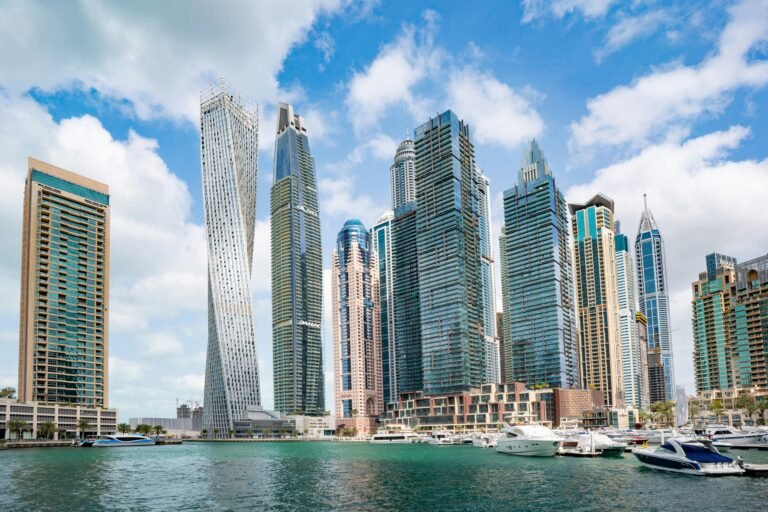 Areas & Communities
Investor guide to 1 bedroom apartments in Dubai Marina: real pricing across entry, mid-market, and premium tiers, top 5 buildings, long-term and short-term yield…