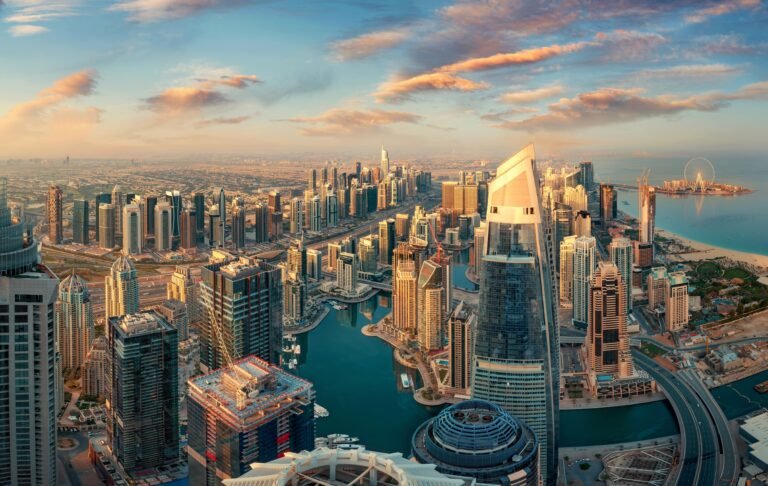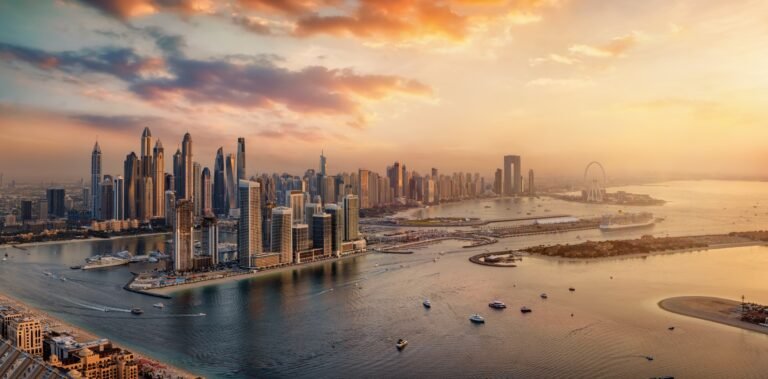

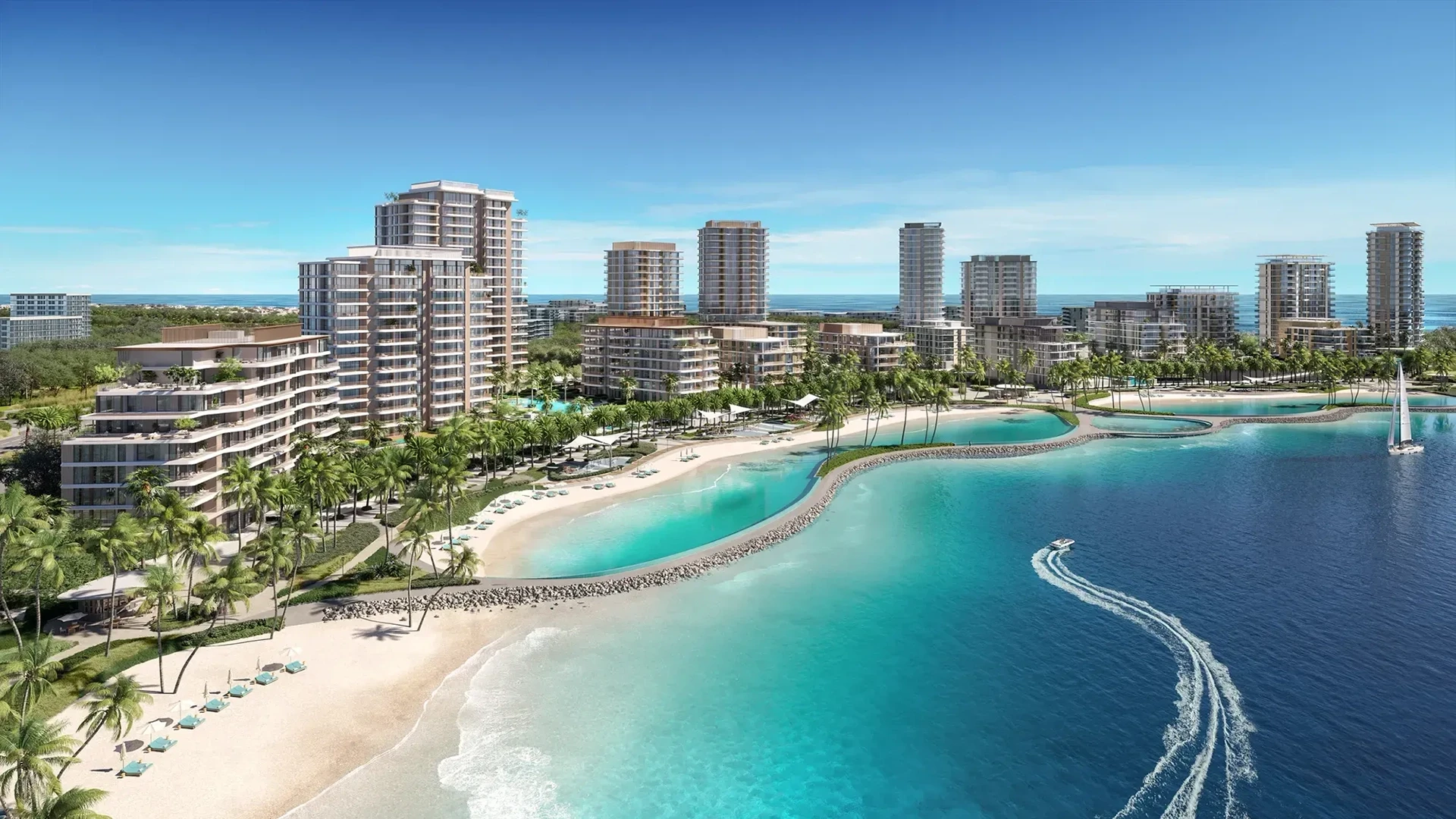
The Dubai real estate market is shaping up with robust growth—average prices up ~8.4% in H1 2025 and ~93k+ deals closed—underpinned by visa-linked population growth, disciplined new-supply releases, and a steady pivot toward affordable luxury alongside enduring strength in prime. Off-plan keeps leading; liquidity remains exceptional; and the mid-market is gaining oxygen as buyers chase long-term value over shiny extras.
You feel it walking through sales galleries: the conversation sounds different this year. Less hype about “the tallest” or “the first,” more questions like What are the service charges? What’s the exit story if I hold five years? Perhaps it’s maturity—on both sides of the table. Developers are still ambitious, sure, but they’re calibrating launches and focusing on deliverability. Investors, meanwhile, are sifting through the noise and gravitating to assets that actually fit their life and cash-flow needs.

Before we zoom in on Dubai, it helps to place it in context. The Middle East has several rising hubs—Riyadh, Abu Dhabi, Doha, Cairo—each with a distinct risk/return profile. Yet Dubai keeps acting like a regional—and increasingly global—benchmark for access, speed, and transparency. That’s not a slogan; it’s the daily reality of how quickly you can transact, lease, refinance, or exit here. (We’ll compare markets shortly.)
Why 2025 Still Belongs to Dubai (Even as the Market Evolves)
1) Hard data still leans bullish—especially on liquidity
-
Prices: Average psf climbed ~8.4% in H1 2025, continuing a multi-year uptrend, albeit at a saner clip than 2023–2024.
-
Transactions: Multiple trackers put H1 activity above 90k deals (depending on what’s included—freehold vs. all asset classes), reflecting deep market breadth.
-
Structure of demand: Off-plan retains a dominant share of volumes and value—supported by payment plans and global buyer inflows—while the resale market stays active in proven communities.
There is, admittedly, more debate about how long this pace lasts as supply pipelines fatten. Some houses (and headlines) expect a moderation in 2026, particularly in overbuilt apartment tiers, while prime and “right product/right address” assets look sturdier. Sensible takeaway: buy selectively, underwrite longer, and avoid the froth.
2) Policy and process keep turning friction into flywheel
Golden/retirement/entrepreneur visas, digital conveyancing, e-contracts, escrow regimes—Dubai built an ecosystem that reduces frictions that typically spook cross-border capital. That “ease premium” shows up not only in absorption but also in how quickly capital recycles through resales and rentals. (Compare this to the more controlled, slower-moving transactions you often encounter in peer markets.)
3) The affordability pivot is real (and healthy)
Developers keep packaging premium-feeling communities at mid-market price points: smarter layouts, shared amenities, and reasonable service charges—without gold-plated gimmicks. It’s not anti-luxury; it’s pro-value. And it’s sticky with families and long-hold investors. (Even top-ranking competitor roundups now put “affordable luxury” high on 2025 trend lists.)
Dubai vs. the Region: Similar Ambitions, Very Different Operating Realities
Real estate in the Middle East says as much about national vision as it does about buildings. The past five years have been transformative across the board—but the investor experience still varies widely.
Snapshot Comparison (Investor-Centric)
|
Market |
Liquidity & Exit |
Off-Plan Dynamics |
Rental/Yield Texture |
Key Risks to Watch |
|
|---|---|---|---|---|---|
|
Dubai |
Freehold in extensive zones; mature digital/escrow frameworks |
Very high; deep brokerage, mortgage, and secondary markets |
Dominant share; staged launches; varied payment plans |
Apts ~5–7%, villas/townhouses ~4.5–6% (indicative) |
Localized over-supply risk in lower tiers; cyclical swings; fee creep |
|
Riyadh |
2025 law opens designated zones to non-Saudis (phased, approvals needed); broader rollout likely 2026 |
Improving, but currently thinner vs. Dubai |
Growing pipeline under Vision 2030 |
Yields can be attractive, but data dispersion |
Policy cadence; new-law implementation; rent freeze signals active intervention |
|
Abu Dhabi |
Freehold investment zones; conservative launch cycles |
Good, but slower velocity vs. Dubai |
Fewer, larger launches; emphasis on stability |
Solid, family-led end-user base; resilient prime islands |
Lower liquidity; more measured price discovery |
|
Doha |
Foreign ownership in designated areas (Pearl, Lusail, etc.) + residency options |
Moderate; smaller base market |
Showcase projects; post-World Cup maturation |
Select pockets perform, others still forming |
Domestic-demand sensitivity; slower deal churn |
|
Cairo |
Open, large-scale development with heavy local demand |
High in EGP terms; FX/inflation complicate USD returns |
Massive pipeline (NAC, New Cairo, etc.) |
Headline price growth distorted by FX/inflation |
Currency risk; cost inflation; regulatory variability |
Sources & notes: Dubai yields (directional) from recent research commentary; Riyadh foreign-ownership law: new 2025 framework (phased, designated zones; effect from early 2026); Qatar designated-zone regime is established; Abu Dhabi H1 2025 data underscores stability with slower churn; Egypt remains a value play with macro caveats.
Dubai’s Unique Market Identity: It’s the Framework, Not Just the Facades

From the early 2000s, Dubai engineered a transaction-friendly real estate environment: freehold zones for non-GCC buyers, escrow protections, RERA oversight, e-contracts, and now visa-linked residency routes for investors. The net effect? The city does not merely build towers; it builds certainty. That’s why end-users and institutions can co-exist with short-term traders without the market breaking every cycle.
Where that shows up today:
-
Off-plan depth without unhinged payment gimmicks; better phasing of inventory.
-
Secondary market liquidity across Downtown, Marina, Business Bay, Dubai Hills, and increasingly Dubai Creek Harbour and Dubai South—reflecting confidence in the handover pipeline.
-
Data transparency improving via Land Department open data and constant third-party reporting, making pricing more grounded and less narrative-driven.
Riyadh’s Ambition vs. Dubai’s Maturity
Riyadh’s transformation is breathtaking—new districts, giga-projects, corporate relocations. For investors, 2025 brought big legal news: a new foreign ownership law enabling non-Saudis to acquire property in designated zones, with the framework slated to take full effect after the regulation period (expected around early 2026). That’s huge for the region. But it’s still, to be candid, early innings operationally; approvals, zone mapping, and market plumbing will take time.
There’s also policy signaling worth noting: a five-year rent-freeze order in Riyadh (announced Sept 25, 2025)—a tenant-relief measure amid fast price rises—underscoring that Saudi authorities will intervene decisively when needed. For long-term holders that may be fine; for short-cycle investors it introduces policy-timing risk. Dubai’s edge, for now, is its predictability and exit velocity.
Abu Dhabi’s Stability (And Deliberate Pace)

Abu Dhabi feels like Dubai’s calmer, more conservative sibling: fewer launches, heavier weighting to end-users, and a finely managed supply tap. The H1 2025 transaction value of ~AED 52–54bn highlights strength, yet on-the-ground velocity is gentler than Dubai’s churn—not worse, just different. If you prize stability, family neighborhoods, and quieter price action, Saadiyat, Yas, Al Reem continue to make sense. If you want rapid recycling of capital, Dubai still wins.
Doha’s Progress Meets Measured Demand
Post-World Cup infrastructure was the spark; The Pearl, Lusail, Msheireb are now the stage. The legal framework allows foreign ownership in designated freehold/leasehold areas and even residency pathways—but the deal pace is smaller, and the market remains sensitive to domestic cycles. For many cross-border buyers, Doha is complementary to a Dubai core holding—not a replacement.
Cairo’s Value Play (With Real Macro Homework)
Cairo is enormous: 110m+ population, chronic housing gaps, and city-scale megaprojects like New Administrative Capital. Price charts look spectacular in local currency, but FX and inflation can distort returns for dollar-based investors. It’s a market where partnering locally, stress-testing build costs, and thinking in real (inflation-adjusted) terms is essential. Dubai may cost more up front, but it arguably buys you predictability.
Where the Demand Is Trending Inside Dubai
-
Prime remains resilient: True scarcity (absolute waterfronts, trophy views) keeps bid/ask tight, even if the growth rate normalizes.
-
“Affordable luxury” rises: Better layouts, smart amenities, credible brands at mid-market prices; this is where families and long-term investors are sneaking in upgraded quality without paying a Palm premium.
-
Off-plan leadership continues: Payment plans + brand trust + visa pull = absorption. That said, screen developer balance sheets and delivery histories.
Quick Buyer’s Table: What to Prioritize in 2025
|
Priority |
Why it matters now |
Simple test |
|---|---|---|
|
Service charges (OPEX) |
Net yield is decided here; low-headline/ high-OPEX units underperform on resale |
Compare AED/sq ft vs. peer buildings |
|
Transport + social infrastructure |
Day-to-day utility boosts rentability and stickiness |
Time to metro/arterial; school/hospital index |
|
Developer discipline |
Delivery track record > brochure gloss |
Past handovers, snag rates, escrow usage |
|
Exit stories |
Five-year resale narrative is clearer in proven districts |
Look for deep buyer pools, not fads |
|
FX exposure |
You may be USD/GBP/EUR funded; hedge prudently |
Map payments vs. your base currency |
Helpful resources
-
Plug & Play Rentals in Dubai: The Complete Guide for UK Landlords
-
How to Choose a Reliable Dubai Property Manager – Overseas Owner’s Guide
-
Register now for our Free Webinar – Investing in Dubai Property as a Foreigner
Macro Drivers: What’s Actually Powering This Cycle (Beyond the Headlines)
Population, Visas, and “Sticky” Demand
If you zoom out, Dubai’s 2020s story is simple: more people want to live here—some permanently, many seasonally, and a growing slice semi-permanently through business ties or remote work. Visa frameworks (investor, entrepreneur, retirement, golden) didn’t just widen the funnel; they reduced friction. What felt like a once-in-a-lifetime move ten years ago now feels… normal. That “lower-friction migration” matters because it anchors end-user demand rather than relying purely on speculative flows. You see it in longer lease terms, family upgrades (townhouses → villas), and a preference for communities with real schools, greenery, and a decent coffee shop within five minutes.
There’s also a subtle behavior change I keep noticing in showrooms: buyers ask fewer “What’s the view?” questions and more “What’s the exit story if my life changes?” It’s a small thing, but it signals maturity—people are shopping for lifecycle utility and optionality, not only novelty.
Interest Rates and the Cost-to-Carry Mindset
Rates set the tone, of course. But even as financing costs tug at monthly affordability, three counterweights keep showing up:
-
Off-plan payment schedules that stage cash outlays over years.
-
Strong rental absorption in “liveable” communities, which cushions yields.
-
Serious preference for service-charge discipline (more on that shortly).
Put simply, buyers aren’t blindly chasing appreciation; they’re asking, “What does this cost to hold?” That’s healthy.
Supply: Disciplined, Not Drastic
Launch calendars remain busy, but developers are staging releases and focusing on deliverability and branding. You still get spectacular launches (because that’s Dubai), but there’s less appetite for product that looks expensive to maintain. The phrase I keep hearing from families: affordable luxury. You know, the kind where the pool is functional, the gym is actually used, and service charges don’t erase your rental yield.
Off-Plan vs. Ready in 2025: The Pragmatic Deep Dive
I’m not going to claim one is “better.” They simply solve different investor problems.
Off-Plan (2025 Lens)
Why it works now:
-
Staged payments align with income or business cycles, especially for global entrepreneurs.
-
Brand + master-plan value: the right developers still command trust, which lowers perceived delivery risk and boosts resale liquidity near handover phases.
-
Asset-by-asset “upgrade” effect: spec is cooling, but end-users still want smarter layouts, daylight, storage, and the mid-market “premium feel.”
What to watch:
-
Balance sheets and delivery cadence: glossy brochures are easy; handover quality isn’t. Track past handovers and snagging performance.
-
Handover spike in cash needs: many plans back-load 30–40% to handover; don’t ignore that lump.
-
Service charges: new amenities feel great—until you see the OPEX line. If it’s too high, your net yield gets thin quickly.
Best use case: You have a medium horizon (3–6 years), want modern product, and prefer a designed cash-flow ramp (construction → handover → leasing → refinance/exit).
Ready (Secondary)
Why it works now:
-
Immediate income: buy, renovate lightly (if needed), and lease.
-
Known service charges: there’s history; comps exist; fees are rarely a surprise.
-
Proven micro-locations: walkability, school access, commute clarity—these soft factors translate to fewer voids.
What to watch:
-
Renovation creep: small fixes balloon if the MEP bones are tired.
-
Legacy service charges: older towers with fancy-but-aging amenities can eat yields.
-
Over-optimistic rent assumptions: use conservative figures; factor 4–6 weeks of void per year as a quality check.
Best use case: You value certainty today (cash flow, known costs) and want an asset with established resale depth.
Community Spotlights (Short, Practical Notes)
Dubai Creek Harbour (DCH)
A modern waterfront with a calmer rhythm than the Marina and better skyline sightlines than people expect. Who thrives: couples and young families who want water, parks, and a ten-minute “decompression” walk at sunset. Watch: handover waves; pick buildings and stacks with service-charge logic and wind/sun orientation in your favor.
Dubai South
The long-game play tied to the airport expansion, logistics, and broader South corridor. Who thrives: end-users prioritizing value-per-square-foot and investors with 5–10 year horizons. Watch: phasing and community amenities catching up with population (schools, healthcare, retail nodes). When those fill in, stickiness rises.
Jumeirah Village Circle (JVC)
The mid-market’s “Swiss Army knife.” Plenty of product, so asset selection is everything: daylight, logical floor plans, and parking stack matters. Who thrives: yield-focused buyers who screen building-by-building and avoid “bargain” units with awkward layouts or noisy mechanicals.
Business Bay
Still walkable to Downtown with a lively mixed-use texture. Who thrives: professionals, single/couple tenants, furnished rentals done tastefully. Watch: service charges and unit orientation; tight, efficient 1BRs with good light and decent acoustics out-lease larger “meh” layouts.
Cost-to-Carry & Yield: Two Practical Tables (Illustrative Only)
Assumptions are examples, not forecasts. Always price with current quotes, building-specific service charges, and realistic rents.
Table A — Monthly Cost-to-Carry Examples (Owner with Mortgage)
|
Scenario |
Purchase Price (AED) |
LTV |
Tenor |
Rate (APR) |
Est. Monthly Mortgage (AED) |
Notes |
|---|---|---|---|---|---|---|
|
A: Mid-market 1BR (ready) |
1,500,000 |
75% |
25y |
4.75% |
~6,414 |
Efficient 1BR; strong tenant depth |
|
B: Townhouse/Villa |
4,000,000 |
70% |
25y |
4.75% |
~15,963 |
Lower HOA per sq ft, but higher ticket |
|
C: Off-plan (during build) |
1,200,000 |
0–50% |
— |
— |
0–staged |
Pay in tranches; mortgage at handover |
(Monthly payment computed with a standard amortization formula for the examples above.)
Table B — Simple Yield & Cash-Flow Lens (Annual, AED)
|
Scenario |
Gross Rent |
Service Charges |
Maint. |
Mgmt. (5%) |
Vacancy (5%) |
Net Operating |
Net Yield |
Debt Service (From A) |
Cash Flow After Debt |
|---|---|---|---|---|---|---|---|---|---|
|
A: 1BR (1.5m) |
95,000 |
13,500 |
2,500 |
4,750 |
4,750 |
69,500 |
~4.63% |
~76,968 |
~-7,468 |
|
B: Villa (4.0m) |
210,000 |
8,000 |
12,000 |
10,500 |
10,500 |
169,000 |
~4.23% |
~191,559 |
~-22,559 |
|
C: Off-plan (post-handover) |
85,000 |
11,000 |
2,000 |
4,250 |
4,250 |
63,500 |
~5.29% on AED 1.2m |
Depends on LTV |
Varies |
Read this the right way:
-
Net yields can be perfectly fine if service charges are sensible and layouts rent easily.
-
Debt service can turn a good operating asset into slight negative carry in year one. Many investors accept that for appreciation + currency + residency benefits, then refinance on better terms.
-
Off-plan’s “zero during build” is appealing, but the handover balloon must be planned well in advance.
The 2025 Buy-Box Framework (Dubai)
Use this to stay disciplined. Tweak ranges to your goals.
Buy Box A — “Durable Yield, Central-ish” (AED 1.1–1.6m)
Target: Efficient 1BR (650–800 sq ft) in Business Bay / JLT / select Creek Harbour stacks; covered parking, good daylight, quiet stack (avoid elevators/MEP walls).
Why: Tenant depth + liquidity; manageable service charges.
Avoid: “Bargain” units with awkward nooks, poor acoustics, or high OPEX.
Buy Box B — “Family Upgrade, Holdable” (AED 2.5–4.0m)
Target: 2BR+study in Dubai Marina/Downtown fringe or tidy townhouse in Dubai Hills/Ranches/South; real storage, easy stroller routes, parks matter.
Why: Life-cycle utility (owner-use now, rental later); strong resale narratives.
Avoid: High-fee buildings without premium finishes or transit convenience.
Buy Box C — “Selective Premium” (AED 7–12m+)
Target: Palm Jumeirah 2–3BR with uninterrupted water or villas with land/plot advantages; prioritize orientation, privacy, and parking.
Why: Scarcity + global appeal; less rate-sensitive buyer base.
Avoid: Compromised views, noisy shoreline pockets, or showy amenities that bloat OPEX.
How to Underwrite a Dubai Asset in 20 Minutes (AIO-Friendly)
-
Price sanity check: pull three true comps in the same building (or closest twin) in the past 90–180 days.
-
Service charges: confirm AED/sq ft and get the last two years of fee history—watch for surprises.
-
Layout audit: daylight, column placements, bedrooms that fit a real bed + side tables, and a kitchen that isn’t purely decorative.
-
Noise + orientation: elevators, MEP shafts, road hum, nightlife spillover—visit at night.
-
Exit depth: how many similar listings exist? What’s their average DOM (days on market)?
-
Rentability: test furnished vs. unfurnished demand; review past 12 months’ rental comps and actual void periods.
-
Developer delivery: for off-plan, list past handovers and snag rates; call a past buyer if possible.
-
Cash-flow stress test: run yield at -10% rent and OPEX at +10%. If it still holds, it’s robust.
-
Refinance route: clarify eligibility and seasoning with your lender; model a conservative refinance year 2–3.
-
Lifestyle fit (if end-use): commuting, schools, healthcare, and the “what do we do on a Wednesday night?” test.
Micro-Comparisons: Where Value Hides (2025)
|
“This vs. That” |
When to pick the left |
When to pick the right |
|---|---|---|
|
New mid-rise in a master-plan vs. Older central high-rise |
Lower OPEX risk, modern MEP, family appeal |
Better walkability now; immediate rental depth |
|
Townhouse fringe vs. Apartment prime-core |
Space for money, stickier tenants |
Faster exit velocity, corporate tenants |
|
Water-adjacent (secondary row) vs. Non-water but park-front |
Premium cachet for future resale |
Tenants with kids often choose parks over water |
|
Off-plan with handover 24–36m vs. Ready resale |
Cash-flow ramp, modern specs |
Certainty, known OPEX, day-1 income |
Subtle Risks No One Likes to Write About (But You Should Note)
-
Amenity creep → fee creep: A stunning amenities deck is a double-edged sword. Ask how it’s maintained and budgeted.
-
Speculative furniture packages: If furnishing, go for durable, neutral, easy-to-replace items. Tenants notice wobble.
-
Over-“branded” mid-market: A logo doesn’t replace layout logic. Read the floor plan, not the marketing.
-
Overlapping investor pools: If dozens of near-identical units hit the market simultaneously, your void may widen. Consider staging your listing a month earlier or later than the herd.
Personal Take
I’ll admit, I used to roll my eyes when someone said “affordable luxury.” It sounded like a brochure phrase. But walking through a couple of new mid-rise communities this year changed my mind a bit. When the sun is right and a courtyard breathes—when you can hear your own footsteps and not the AC compressors—there’s a sense of… sanity. If the fee line stays honest, I think that’s where a chunk of stable returns will come from over the next cycle.
FAQ: Straight Answers to What Buyers Keep Asking
1) Is 2025 still a “good time” to buy in Dubai?
In my view—yes, if you’re selective and honest about hold horizons. Prices cooled from the frenzy years but still climbed in H1 2025. The nuance: buy assets with lifecyle utility (layout that rents, fees that don’t bloat, and an exit story that isn’t just “hope”). If you’re chasing a quick flip, your margin for error is thinner than, say, 2023.
2) Off-plan or ready—how should I choose?
Start with your timing and cash-flow needs. If you prefer staged payments and modern specs, off-plan works; just diligence the developer and service charges. If you want day-1 income and known OPEX, ready assets in proven buildings are wonderfully boring (that’s a compliment).
3) What are “affordable luxury” projects and are they legit?
Broadly: homes with thoughtfully designed layouts, good shared amenities, and reasonable service charges—without the price inflation of trophy addresses. Not all are created equal; aim for mid-rise, sun-smart orientation, and amenities you’ll actually use (or your tenants will).
4) How much do service charges affect my returns?
A lot. A building at, say, AED 25–30/sq ft with efficient systems can outperform a flashy one at AED 40–45/sq ft even if purchase prices are similar. It’s why I harp on OPEX. Future buyers do the same math.
5) Which areas balance value and liquidity right now?
For central-ish 1BRs: Business Bay stacks with light and parking; select JLT clusters. For family value: Dubai Hills/Ranches townhomes; in the long game: parts of Dubai South. For waterfront lifestyle with calmer rhythm: Dubai Creek Harbour (asset selection matters).
6) What tenancy yields should I underwrite?
Directional only (every building differs): apartments ~4.5–6.0% net if you manage OPEX; villas/townhouses ~4.0–5.5% depending on land, finish, and location. Underwrite conservatively, then be pleasantly surprised.
7) How do I reduce vacancy risk?
Pick human-friendly layouts (real bedrooms, storage, daylight), aim for school/transport convenience, and price to move in month one. Furnished can work for professionals near Downtown/Business Bay—just stay tasteful and durable.
8) What are the red flags on off-plan?
Thin developer delivery history, heavy back-loaded payments, and amenities that scream fee creep. Ask about community OPEX assumptions now, not at handover.
“How to Choose” Checklist (printer-friendly)
Use this as your 5-minute pre-offer sanity pass. It’s intentionally simple; sometimes simple is best.
A. Price & Comps
-
Three recent true comps (same building or twin) within 90–180 days
-
Your target price within ±3% of comp average (or a reason why not)
B. OPEX Discipline
-
Service charges (AED/sq ft) confirmed, last two years reviewed
-
Amenities you’ll actually use (or tenants will)—no “museum pieces”
-
Reserve fund policy understood (ask the owners’ association if possible)
C. Layout & Orientation
-
Bedrooms fit a bed + side tables; wardrobes not blocking circulation
-
Daylight in living spaces; avoid constant mechanical or road noise
-
Kitchen usable for real cooking (venting, counter run, storage)
D. Rentability & Exit
-
12-month rental comp range reviewed; conservative rent penciled
-
Days-on-market trends acceptable; depth of buyer pool confirmed
-
One plausible resale narrative in five years (not just “it’ll go up”)
E. Financing & Cash Flow
-
Debt service modeled at current rates + 50 bps buffer
-
Yield stress test at -10% rent / +10% OPEX still workable
-
Refinance plan sanity checked (eligibility, timing, seasoning)
F. Developer / Building Diligence (Off-Plan)
-
Past handovers (quantity & snagging feedback)
-
Handover payment balloon planned (cash / loan)
-
Community OPEX assumptions disclosed in writing
(If you tick 80% of this list and nothing feels “off” on site, you’re likely in safe territory.)
See Handpicked Off-Plan (No Hype)
Only phased launches with developer discipline, sensible OPEX, and clear exit stories.
Show me the short-list → /dubai-off-plan
If there’s a single theme to 2025, it’s restraint. The market still moves—briskly, at times—but the best results I’m seeing come from boringly good decisions: layouts that live well, buildings that don’t bleed fees, and micro-locations where people actually want to linger after work. Perhaps that’s the real luxury now: a home (or investment) that doesn’t need a sales pitch every time you walk through the door.