
Where Dubai’s off-plan market is heading
Off-plan is where most of the early money gets made or lost in Dubai, and the reasons are not glamorous. You buy at a lower price than a ready unit, you pay in installments while it is built, and if you picked the right location and developer, the value moves before you ever hold the keys. That is the whole case, stripped of the marketing. Dubai’s real estate keeps pulling in global capital because the numbers have largely held up, but the market is far more selective now than it was a few years ago.
So this is a look at where off-plan is going: the market data, the neighbourhoods worth studying, the government policy that actually moves prices, and the technology and sustainability shifts changing what buyers will pay for.
The current state of the market
The headline number is real. According to the Dubai Land Department, total real estate transactions reached AED 528 billion in 2023, up sharply from AED 300 billion in 2022. That is not a soft recovery, it is a step change, and it was driven by genuine demand rather than pure speculation: a stable economy leaning on tourism, trade and finance, the lasting demand pull from Expo 2020, and a growing population that needs housing, particularly in the newer communities.
On the villa side, the spread tells you how wide this market is. Palm Jumeirah waterfront villas run from AED 15 million to AED 100 million, with average rental yields around 5% to 6%. Dubai Hills Estate villas sit between AED 3 million and AED 15 million, yielding roughly 4% to 5%. Different buyers, different logic, same city.
What the forecasts point to
The macro backdrop matters more than any single project pitch. The International Monetary Fund projected the UAE at 4% GDP growth in 2024, driven by the non-oil economy, tourism, trade and finance. Growth of that kind feeds housing demand, especially in the emerging districts where supply is still being built out.
Off-plan stays attractive for the same three reasons it always has. It usually costs less than ready stock, so your entry is cheaper. Developers spread payment across the construction period, which eases the cash strain. And well-chosen units tend to appreciate by handover. The customisation angle, choosing finishes and layout early, is a genuine advantage the secondary market cannot match.
What has changed is what buyers now demand inside the product. Sustainability and smart-living features are no longer a bonus. Green building, energy efficiency and smart-home technology are increasingly the baseline, with Dubai Creek Harbour and Mohammed Bin Rashid City among the areas pushing hardest on this. Mixed-use is the other clear shift: schemes that fold residential, retail and leisure into one place, like Dubai Hills Estate and District One in MBR City. And since the pandemic, wellness amenities, gyms, parks and open space, carry more weight in a buyer’s decision, which is part of why communities like Arabian Ranches and Jumeirah Golf Estates keep leaning into lifestyle.
Emerging neighbourhoods worth studying
Dubai Creek Harbour
Creek Harbour is positioned to be a major commercial and residential centre, built along the water with the Dubai Creek Tower at its heart, planned to be the tallest structure in the world once complete.

The pitch here is panoramic skyline and creek views, modern retail and recreation, and a real commitment to green space and energy-efficient buildings. It is a mixed-use waterfront play that tries to blend urban living with environmental design, and its combination of location and ambition is what underpins the capital-growth and rental-yield case.

Luxury waterfront apartments and villas, the planned Creek Marina, and extensive parks give it a distinct profile. The striking landmarks are the marketing, but the underlying draw is that it sits close to the heart of Dubai with a lot still to be delivered.
Dubai South
Dubai South, also known as Dubai World Central, is a master-planned city built around commerce and logistics, next to Al Maktoum International Airport and the Expo 2020 site. It is designed to be self-sustaining, mixing residential, commercial and logistic projects.

The clearest hook is affordability. It targets middle-income buyers and renters, and the ongoing infrastructure, transport links and commercial facilities, keeps strengthening the case. This is a patient investment. The location and the planning are credible, and as the area fills in, early buyers stand to benefit from rising demand. It is a growth story more than a yield story today.
Mohammed Bin Rashid City
MBR City is one of Dubai’s largest mixed-use developments, designed as a city within a city, with luxury homes sitting alongside retail, leisure and entertainment. It carries the ruler’s name and the scale to match.

Its strongest cards are the upscale developments like District One and Sobha Hartland, a central position near Downtown Dubai and Business Bay, and a full amenity set including schools, hospitals, malls and the Meydan One Mall. For investors chasing long-term growth and solid rental yields, the continued build-out of leisure and entertainment is what should keep values moving.
Jumeirah Village Circle
JVC is the practical one. A family-oriented community offering apartments, villas and townhouses at accessible prices, built for everyday living with easy access to the main business districts.

Parks, schools and retail, affordable stock aimed at families and young professionals, and good road connectivity give it consistent rental demand. It rarely makes glossy headlines, but it delivers reliable yields and steady appreciation, which is exactly why it stays popular with investors.
Downtown Dubai
Downtown is the established anchor, built around the Burj Khalifa, the Dubai Mall and the Dubai Fountain, blending residential, commercial and entertainment in one place.

Landmark identity, premium residences and a deep dining, shopping and entertainment offer keep it in constant demand. It is not an emerging bet, it is a liquidity and prestige bet, and it keeps drawing both local and international buyers on the strength of its prime location and lifestyle.
The government policy that actually moves prices
Policy is not background noise in Dubai, it is a genuine driver of demand.
Long-term residency visas
The UAE offers long-term residency to property investors, available on properties worth AED 1 million or more. That security has fed real demand for higher-value stock, particularly in prime areas like Downtown Dubai and Palm Jumeirah. Alongside it sit the Golden Visa for investors, entrepreneurs and specialised talent, a Retirement Visa for retirees meeting the financial criteria, and a Remote Work Visa for professionals working for companies based outside the UAE. Together these keep pulling residents into the market who then buy or rent.
Lower transaction fees and stimulus
Reduced transaction fees have made buying and selling cheaper, which lifts transaction volume. In tougher periods, the government has also used economic stimulus, fee reductions on transactions and business setup, support for SMEs, and heavier infrastructure investment, to keep liquidity and confidence up.
Investor protection and transparency
The Dubai Land Department regulates the market, and its protections are the part that matters most to an off-plan buyer. Escrow accounts for off-plan projects safeguard your money by ring-fencing it. The Ejari system mandates registration of rental contracts and protects tenant rights. Continuous regulatory reform, stricter rules for developers, better transparency, stronger dispute resolution, has made the market more stable and more trusted. That trust is a big reason foreign capital keeps arriving.
Foreign ownership
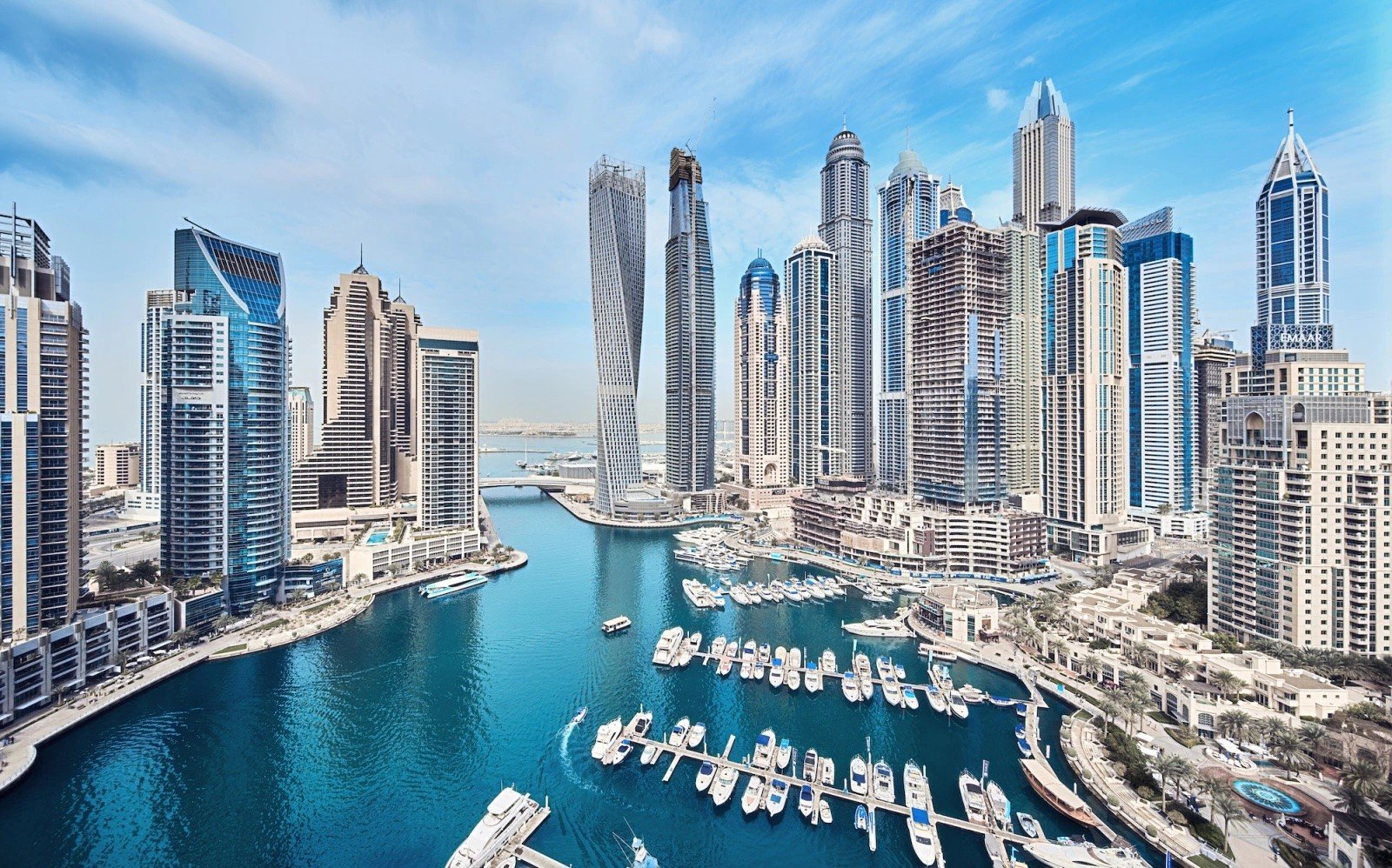
Relaxed foreign ownership rules let expatriates own property in designated freehold areas without a local partner, which widened the buyer pool considerably, especially in freehold zones like Dubai Marina and Jumeirah Lake Towers.
Sustainability incentives
Developers who build green get reduced fees and faster approvals. This runs through the Dubai Green Building Regulations and Specifications, which mandate sustainable construction, and the Dubai Clean Energy Strategy 2050, which targets 75% of Dubai’s energy from clean sources by 2050, aligned with UAE Vision 2021. The effect is more demand for sustainable stock in places like Dubai Creek Harbour and Mohammed Bin Rashid City.
Technology changing what buyers pay for
Smart homes and IoT
Smart-home technology and the Internet of Things are reshaping how property is designed and run. Automated lighting, heating and cooling controlled from a phone, smart locks and surveillance and motion sensors, and IoT devices that trim energy use and utility bills. Buyers increasingly expect it, and tech-enabled units command more attention.
Virtual and augmented reality
VR and AR have changed how property is marketed. Virtual tours let a buyer walk a layout from another country. Interactive showrooms let people visualise furniture and finishes before deciding. Remote viewing means an international investor can assess and buy without flying in, which widens the audience for every Dubai project.
Blockchain
The DLD has led on blockchain in real estate, using it for a secure, transparent transaction ledger that cuts fraud risk. Smart contracts enforce agreement terms automatically and reduce the need for intermediaries, and registration gets faster and cleaner. The net effect is more efficiency and more trust, with fewer disputes.
PropTech
A growing base of PropTech startups is pushing innovation across the property lifecycle: digital marketplaces for transactions, management software for landlords and tenants, and platforms enabling property crowdfunding. The result is more accessible transactions and a new cohort of tech-savvy investors.
Sustainability moving from nice-to-have to baseline
Green building is spreading because both government and buyers now demand it. That means eco-friendly materials, energy-efficient design and water conservation, with many new developments targeting LEED certification. In practice it looks like solar panels, LED lighting and better insulation to cut energy use, plus water-saving fixtures, greywater recycling and sustainable landscaping. Beyond a healthier place to live, it improves marketability, because buyers increasingly want the long-term savings. The Sustainable City is the clearest example.
Renewable energy is following the same path. Solar is the main play for on-site generation, some projects are looking at wind, and battery storage is being used to hold excess energy for a steadier supply. It lifts a property’s appeal and cuts running costs over time. And at community scale, developers are building smart, self-sufficient neighbourhoods with smart grids, waste and water-recycling systems, sustainable transport, cycling and walking routes, and generous green space. The Sustainable City and Masdar City are setting the benchmark.
Why foreign investment keeps flowing in
Foreign capital has always been central to this market, and the reasons are structural. Dubai sits between East and West, it has no personal income tax, no capital gains tax and no property tax on most real estate, and it offers a high standard of living with strong healthcare, education and safety. Add long-term residency visas, freehold ownership for expatriates and a regulatory framework built to protect investors, and the pull is easy to understand.
That inflow has diversified the market across residential, commercial and hospitality, which makes it more resilient when the economy wobbles. It has also driven the high-end, striking projects, because international demand pushes developers to build for a global buyer.
The direction of travel is fairly clear:
- Environmental awareness is steering foreign buyers toward sustainable, eco-friendly stock, which drives more green building and sustainable communities.
- Virtual tours, blockchain-based transactions and smart-home features make remote buying and management easier, which should lift the volume of foreign investment.
- Wider long-term residency and retirement visa programmes give expatriates more reason to buy, not just rent.
- Dubai South, Dubai Creek Harbour and Jumeirah Village Circle keep emerging as investment hotspots on location and growth potential.
- Residency reform and economic stimulus continue to underpin confidence and stability.
The through-line is that the market rewards buyers who stay informed on trends, emerging areas and regulation, and punishes those who chase a headline. Off-plan and luxury villas are seeing renewed demand, and the bar on sustainability and technology keeps rising.
If you want to compare specific opportunities, off-plan projects, luxury villas or the emerging communities, speaking to a Totality Estates expert gives you access to premium listings and someone who can pressure-test a deal before you commit.
Getting access to the best villa deals in Dubai
If villas are the target, the range runs from the striking Palm Jumeirah to the quieter Jumeirah Islands, and the strongest deals are rarely the ones sitting on public portals. A Totality Estates expert can open up insider knowledge, tailored advice and listings that do not reach the general market.
Why speak to a Totality Estates expert
- Exclusive listings: access to properties and deals you will not find elsewhere.
- Expert advice: seasoned professionals who know the Dubai market in depth.
- Tailored solutions: investment strategy and property recommendations built around your goals.
- Market insight: current data and a read on where the market is actually heading.
- End-to-end support: from choosing the property to closing the transaction.