


Off-plan or ready is really a question about what you are willing to trade. Off-plan buys you a lower entry price and some upside, but you wait and you carry construction risk. Ready buys you income from day one and a clean exit, but you pay for that certainty up front. In the 2026 market, with transactions down and prices holding, there is a third thing worth more than either: the distressed seller on both sides who has to move. That is where the real buying is right now.
Here is the full picture. First the straight comparison on the five things that decide it, then where distress actually sits in off-plan and ready, what I would buy today, what the August 2026 numbers show, and how to get out of an off-plan unit if you are the one who needs to exit.
Off-plan vs ready, the fast comparison
If you want the whole thing in one screen, this is it. The detail is underneath.
| Factor | Off-plan | Ready |
|---|---|---|
| Entry price | Lower, priced below finished stock to pull buyers in early | A premium, because you get it now |
| Customization | Real input on finishes and layout during the build | What you see is what you get |
| Risk | Construction and developer risk until handover | No construction risk, market risk only |
| Returns | You wait, but the gain by handover can be bigger | Rent from day one, faster capital plays |
| Liquidity | Resale often restricted before completion | Sell when you want, price is easy to read |
1. Price
This is the first thing people notice. Off-plan almost always comes in cheaper than a finished unit.
Off-plan
- Lower entry cost. Developers price off-plan below completed stock to pull buyers in early and fund the build. If you want into a market at a lower number, this is the door.
- Room to appreciate. As the project moves toward handover, value often climbs, so you can be sitting on a gain by the time it is delivered.
Ready
- You pay for having it now. A finished unit carries a premium because you get immediate use and none of the waiting.
- Steadier pricing. Ready prices track current demand rather than a construction timeline, so there is no gap-period volatility to sit through.
2. Customization
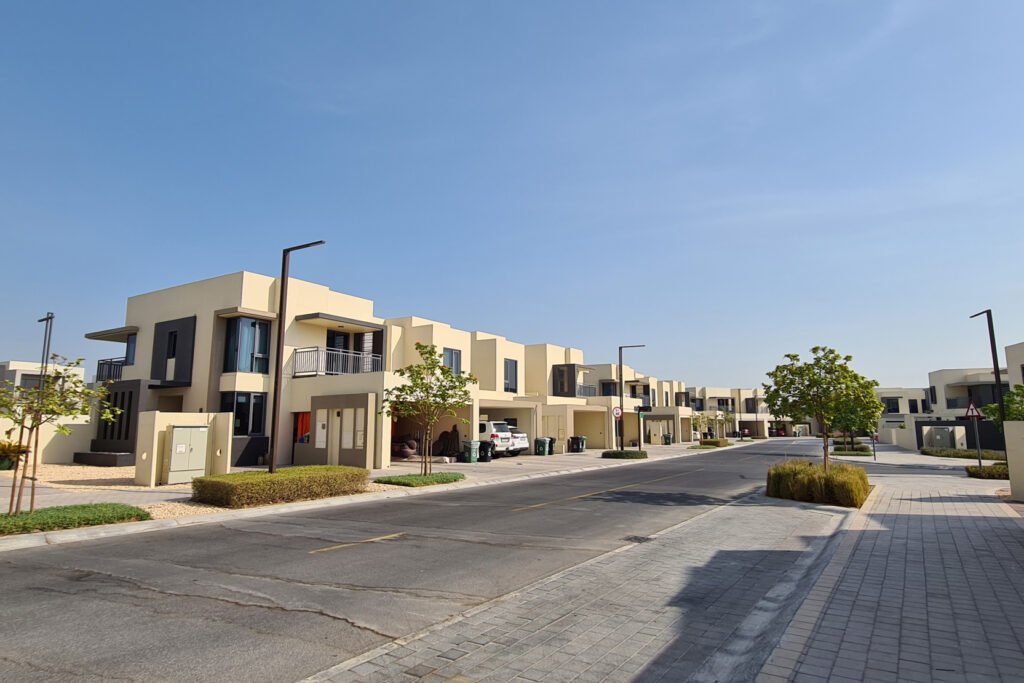
If you care about shaping the place to your taste, off-plan has the clear edge.
Off-plan
- Real input during the build. You can often pick finishes, layouts and design details while the unit is still going up, which gets you a space closer to what you actually want.
- Upgrade options. Developers frequently offer premium materials or finish packages that lift the unit’s value. You rarely get that on a completed property.
Ready
- What you see is what you get. Paint and décor aside, structural changes are impractical and expensive after the fact.
- No say in the build. You take the developer’s choices as they are. Fine if you value convenience over specifics.
3. Risk
The risks are different in kind, not just degree.
Off-plan
- Construction risk. Delays happen, from supply-chain snags to labour shortages to rule changes, and a late handover throws off both your timeline and your cash planning.
- The developer matters more than anything. An established name with a delivery record carries far less risk than a newer outfit that might slip or, worst case, cancel.
Ready
- No construction risk. The building exists. There is no handover date to worry about and you can take possession now.
- Market risk still applies. Economic shifts move completed values too, but those swings tend to be more predictable than the uncertainty around an unbuilt project.
4. Returns
How fast you see money back depends heavily on which route you take.
Off-plan
- You wait. No rent, no realised gain until the unit completes, and that can be a few years out depending on the project.
- But the payoff can be bigger. If the property appreciates meaningfully during construction, early buyers often capture the largest gain by handover.
Ready
- Rent from the start. You can put a tenant in almost immediately, which is what you want if you are after a steady income stream.
- Faster capital plays. In a strong market you can buy, refresh and resell inside a short window.
5. Liquidity
How easily you can get out is the part people forget until they need it.
Off-plan
- Resale is often restricted before completion. Developers attach conditions or penalties to early resale to keep speculation down, which limits how fast you exit. More on that in the off-plan assignment strategy.
- Liquidity tracks the market. In a hot market you may resell before handover at a profit. In a soft one, finding a buyer for an unfinished unit is genuinely hard.
Ready
- Sell when you want. Completed property moves without the same restrictions, which matters if you might need quick access to capital.
- A price that is easy to read. Finished units have an established market value, so pricing and selling carry far less guesswork.
Where distress actually sits, off-plan and ready
A distressed deal is not a type of property. It is a type of seller. Someone who has to sell faster than the market wants to buy, so they trade a clean price for speed and certainty. That happens in both off-plan and ready, for different reasons, and the discount shows up in different places.

Off-plan distress
This is usually a cash-flow story. Someone bought on a payment plan, then life changed: a job moved, a business needed the capital back, another plan came due at the wrong time, or they simply cannot fund the next instalment before handover. They are not selling a finished home. They are selling their position in a contract, which means the discount is against what they have already paid in, and the buyer takes over the remaining plan. Fewer buyers can do that, which is exactly why the price is soft.
Ready distress
This is a motivated owner of a finished unit: a relocation, a divorce, an estate, a leveraged owner who needs out before a rate reset. The property is complete and rentable, so the discount is against a clean, readable market value. Easier for a normal buyer to act on, and the saving is simpler to prove because you can compare it directly to recent sales in the same building.
How off-plan distress and ready distress differ
| Point | Off-plan distress | Ready distress |
|---|---|---|
| What you buy | A contract position, mid payment plan | A finished, titled unit |
| Where the discount is | Against money already paid in | Against current market value |
| Who can buy it | Narrower pool, you take over the plan | Any cash or mortgage buyer |
| Income | None until handover | Rentable from day one |
| How to verify | Developer ledger, paid vs outstanding, NOC and transfer rules | DLD comparables in the same building |
| Main risk | Build still has to complete | Market risk only |
So what is better to buy right now
Not the answer people want, but the honest one: it depends on whether you need income or growth, and on your access to the seller. Here is how I actually split it.
Want income and a clean exit: ready, and ideally a ready distressed unit where the discount is provable against recent sales. You collect rent immediately and you are never waiting on a crane.
Want maximum upside and can wait: off-plan from a developer with a real delivery record, bought well. The best version of this is an off-plan distress position, where you step into someone else’s early entry price below where the plan sits today.
Nervous about the market: ready beats off-plan in a soft or uncertain stretch, because you are not carrying construction risk on top of market risk. In 2026 that matters more than it did in 2024.
In today’s market, the thing that beats the off-plan versus ready question is simply buying below market on either side. A fair off-plan unit at full price is worse than a ready unit bought 15% under a proven comparable. The category matters less than the entry.
The Dubai market in August 2026, in plain numbers
You cannot judge off-plan, ready or distress without knowing where the market actually sits. Here are the real figures, straight from the Dubai Land Department register.

Read it together and one fact stands out. Transactions fell by a third, but price per foot barely moved. Sellers did not reprice. Buyers simply bought less, and what they bought was smaller. The half-year says the same at scale: Q1 ran 47,820 deals and was up on 2025, Q2 fell to 38,257, roughly 28% below Q2 2025, with the correction concentrated in land and large villas while mid-market apartments, three quarters of the market, held their share.
That gap between falling activity and held prices is the whole point for a buyer. When fewer deals close but asking prices stay put, the owners who genuinely have to sell cannot wait for the market to come to them. They move off-market, at a real discount. A thin market does not kill the deals. It hides them.
How many Dubai properties are actually in distress?
Nobody can give you a clean number, and anyone who quotes one precisely is guessing. The Dubai Land Department does not publish a “distressed” category. Distress is a seller’s situation, not a tag on the listing, so it never shows up as a line in the data.
What you can read is the pressure behind it. With volume down around a third year on year and prices held, the pool of owners who need to exit faster than the market will buy is growing, not shrinking. Most of them never appear as a discount on the portals. A truly motivated seller does not advertise the discount, because listing it low invites lowballs and tells the market they are in trouble. They sell quietly, through people who already have the buyer. So the handful of “below market” units you see publicly understate the real pool. The genuine distress is off-market by design.
That is the whole reason I keep a private list rather than a public one. If you want to see what is actually trading below value right now, that is where it lives.
How to sell your off-plan and exit
If you are on the other side of this, holding an off-plan unit you need to get out of, the first question is not price. It is what you would actually walk away with after the developer balance, the fees and the transfer. Plenty of owners find out too late that the headline resale number and the cash in their account are very different things.
I built a free tool that answers exactly that: whether you can assign and sell before handover, and what reaches your account once everything is settled. Run your own numbers first, then talk to me.
Check your off-plan exit in two minutes.
See whether you can sell before handover and what you would actually walk away with.
If the numbers work and you want it handled, I sell off-plan positions to a buyer pool that can take over a payment plan, which is the hard part most agents cannot solve. The mechanics of assigning before completion are in the off-plan assignment strategy.
So which one fits you
It comes down to your timeline, your appetite for risk, and what you need the money to do. Off-plan gives you a lower entry, the chance to customise and a bigger potential gain, at the cost of construction delays and resale limits. Ready gives you income now, no construction risk and easy liquidity, but you pay more for it. And in this market, a distressed entry on either side beats a full-price entry on the “better” category almost every time.
The decision gets easy once you stop arguing the category in the abstract and look at the specific developer, the specific building, the seller’s situation, and where the market actually sits. That last part is what I do all day.
FAQs
Is off-plan or ready property better in Dubai?
It depends on what you need. Ready gives you rent from day one, no construction risk and easy resale, at a higher price. Off-plan gives you a lower entry, the chance to customise and bigger upside, but you wait and carry construction risk. In the current market, a below-market entry on either side beats a full-price entry on the “better” category.
What is a distressed property in Dubai?
It is not a type of property, it is a type of seller: someone who has to sell faster than the market wants to buy, so they trade a clean price for speed. It happens in both off-plan (a buyer who cannot fund the next instalment) and ready (relocation, divorce, a leveraged owner facing a rate reset). The genuine ones usually trade off-market, not on the portals.
Can you buy distressed off-plan property in Dubai?
Yes. You step into the seller’s position in the payment plan, so the discount is against what they have already paid in, and you take over the remaining instalments. The buyer pool for that is narrower than for a finished unit, which is exactly why the price is soft. It needs checking against the developer ledger and the transfer rules before you commit.
How do I sell my off-plan property before completion in Dubai?
First work out what you would actually walk away with after the developer balance and fees, not just the resale headline. Our free Off-Plan Exit Check answers that in two minutes. If the numbers work, the unit is sold by assigning your contract to a buyer who can take over the payment plan, which is the hard part most agents cannot solve.
Is now a good time to buy property in Dubai?
August 2026 saw transactions down about a third year on year while price per square foot held near AED 1,680. That gap, falling activity with steady prices, is where motivated sellers get squeezed into off-market discounts. It is a selective buyer’s market: the broad market is not cheap, but the forced sellers are.
How many properties are distressed in Dubai right now?
There is no official figure. The Dubai Land Department does not publish a “distressed” category, because it is a seller’s situation, not a listing tag. With volume down and prices held, the pool of owners who need to exit is growing, but most sell quietly off-market rather than advertise a discount, so the public listings understate it.
Want the version built around your money?
Tell me your budget, timeline and whether you want income or growth, and I will come back with off-plan, ready or distressed options that fit.