
The single biggest reason capital keeps flowing into Dubai property is that you keep almost all of what it earns. No property tax, no capital gains tax, no income tax. Pair that with a legal framework that has grown far more investor-protective over the past decade, and you have a market that competes on net returns rather than headline yields. The rest of the case builds from there.
An economy that stopped depending on oil
Dubai’s economy has diversified to the point where oil now contributes less than 1% of GDP. Trade, tourism, real estate, and financial services carry the weight instead. The UAE’s GDP growth was forecast at around 3.9% in 2023, which is a healthy, stable base rather than a boom-and-bust one.
The direction is set out in Dubai’s 2040 Urban Master Plan, which prioritises sustainable growth and infrastructure, building on the earlier National Agenda 2021 push toward a diversified, innovation-led economy. That kind of visible long-term planning is what gives investors the confidence to commit, and the pipeline of hospitality, retail, and infrastructure projects keeps reinforcing it.
The tax position, in plain numbers
The tax-free structure is the headline advantage. Where London or New York can carve a meaningful chunk out of your returns through property and capital gains taxes, Dubai does not. Transaction costs are low too: a 4% transfer fee to the Dubai Land Department (DLD) plus modest admin costs, and that is broadly it. Higher net yields follow directly from lower deductions.
Policy that is actually built for foreign buyers
The government has put real mechanisms behind the rhetoric: 100% foreign ownership in certain sectors, visa reform, and stronger transparency requirements.
Legislative reforms
The Real Estate Regulatory Agency (RERA) sets the rules that keep the market honest, from guidelines on developer conduct to a working dispute-resolution process. That oversight is a large part of why cross-border buyers treat Dubai as a market they can trust rather than a gamble.
Residency you can buy into
Property here can come with the right to live here, which very few investment destinations offer:
- 3-Year Visa: buy property worth AED 750,000 or more and you qualify for a 3-year renewable residency visa.
- 10-Year Golden Visa: buy at AED 2 million or above and you qualify for the Golden Visa, giving extended residency with no local sponsor.
Both let you live, work, and study in the UAE. In most markets, owning property gets you an asset and nothing more; here it can get you a base.
Geography that does real work
Dubai sits within an eight-hour flight of two-thirds of the world’s population, which makes it a genuine hub for travel, commerce, and logistics rather than a marketing line. Dubai International, one of the busiest airports on earth, connects to over 240 destinations. For an investor, that connectivity is what feeds constant tourist and business-traveller demand, which matters especially if you are looking at short-stay rentals.
A place people actually want to live
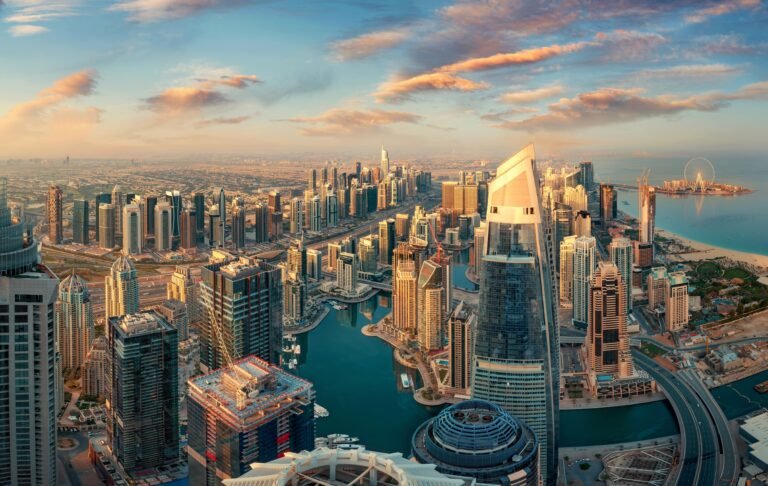
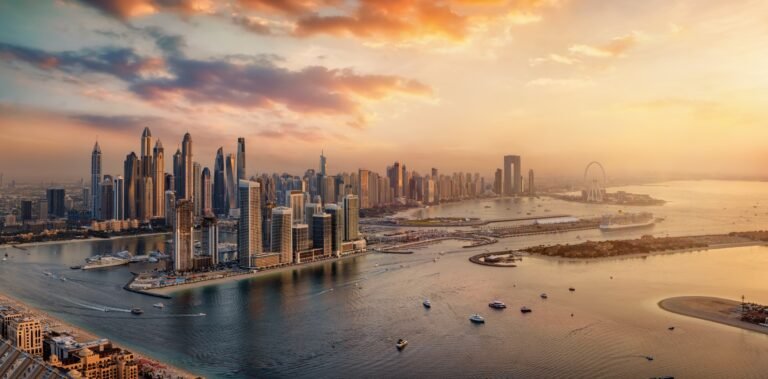
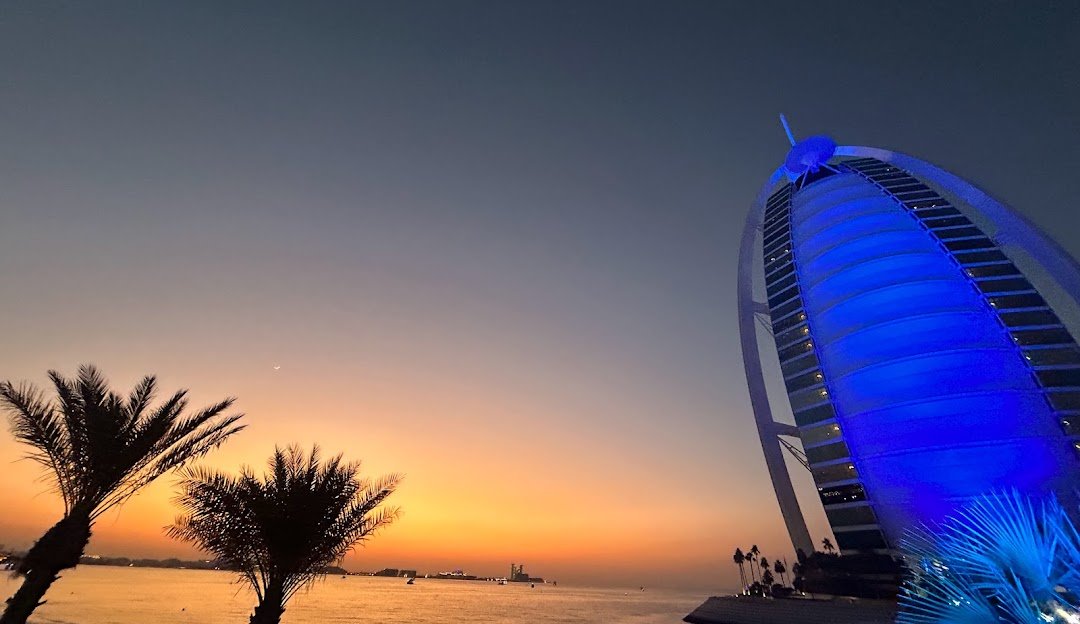
Quality of life is what converts a passing investor into a resident. Downtown Dubai, Dubai Marina, and Palm Jumeirah offer properties built to high standards next to landmarks like the Burj Khalifa. Behind the postcard views sit the practical things: a comprehensive transport system, strong medical facilities, and top-tier international schools. That combination keeps demand broad, across budgets and buyer types, not just at the luxury end.
Tourism and the short-stay market
Dubai’s tourism engine underpins a strong short-term rental market through platforms like Airbnb. The city welcomed over 16 million international visitors in 2019 and has recovered strongly since. The areas that consistently perform for short-stay:
- Downtown Dubai: high demand off the back of the Burj Khalifa and Dubai Mall.
- Jumeirah Village Circle (JVC): affordable entry prices and high rental yields.
- Dubai Marina and Palm Jumeirah: steady luxury demand from tourists and business travellers alike.
Where the returns concentrate
The neighbourhoods split fairly cleanly between prestige and yield:
- Downtown Dubai: one of the priciest areas, with property that tends to appreciate and stay in demand.
- Dubai Creek Harbour: a waterfront community mixing affordable luxury, with projects like Creek Tower set to anchor it.
- Jumeirah Village Circle (JVC): affordable and high-yielding, popular with young professionals and families.
- Meydan: mid-to-high-end stock near Downtown, with ongoing hospitality and residential development.
Yields and appreciation
Dubai’s rental yields are among the strongest globally, averaging 5 to 8% and reaching up to 15% in areas like JVC and Dubai Sports City. Against mature markets, that is a clear edge for anyone after income. On top of the yield, values in high-demand areas such as Dubai Marina and Downtown have continued to appreciate according to DLD data, so the better plays give you both rental income and capital growth rather than one at the expense of the other.
Transparency and the tech behind it
The DLD runs an open data platform where you can pull transaction history, valuations, and regulatory guidance, and it has moved parts of the transaction process onto blockchain for speed and security. For a foreign buyer, that access matters: you can check what comparable units actually sold for rather than take an agent’s word for it.
The bottom line for an investor
Put the pieces together and the case is straightforward: you keep more of your returns, you can buy residency alongside the asset, the market is well-regulated and transparent, and demand is fed by geography and tourism that are not going anywhere. Recent additions like Dubai Creek Tower and the metro expansion keep improving connectivity and long-term potential, and the market held up through global shocks that hurt others, which tells you something about its resilience. With yields reaching up to 15% in the strongest areas, well above most global cities, Dubai remains one of the few places where high income and long-term growth genuinely sit in the same asset.