
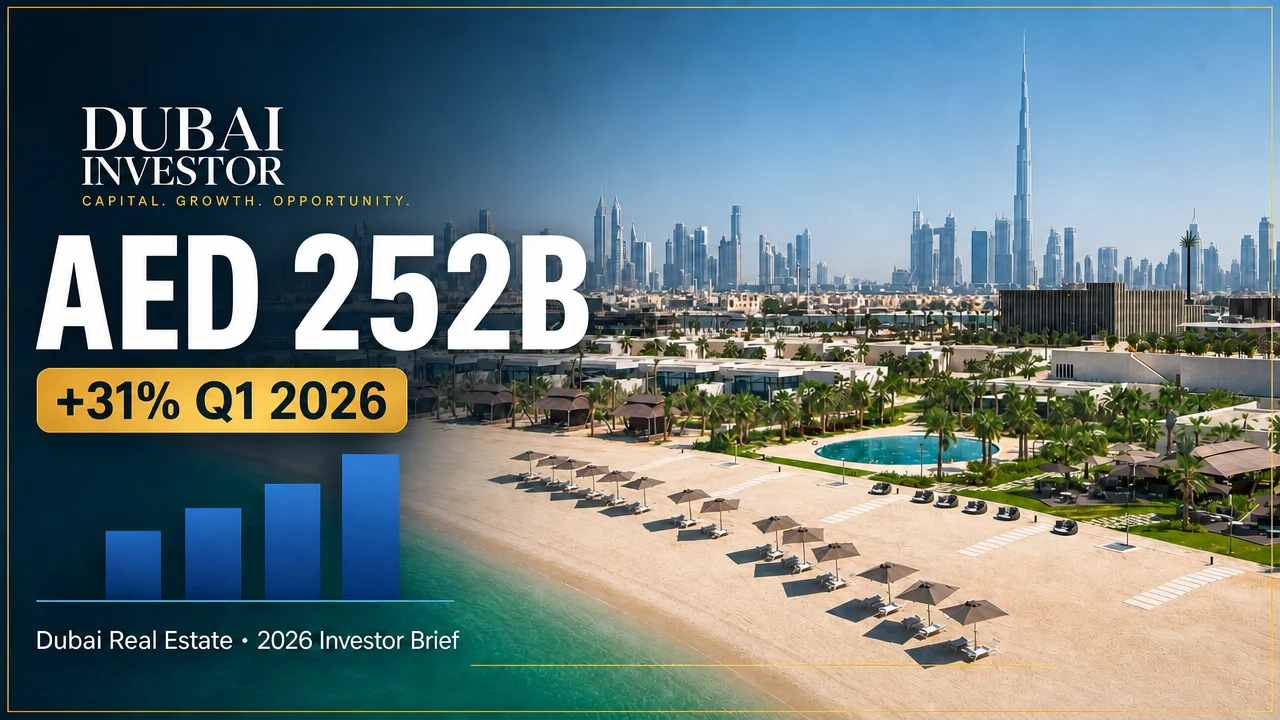
By May 2026, Dubai property stopped rewarding people just for showing up. The market is still active, still global, but more disciplined than the run that followed 2021. In Q1 2026 Dubai recorded AED 252 billion in total real estate transactions, a 31% year-on-year increase in value, according to Dubai Land Department data. The same quarter logged over 60,000 transactions, with investment activity reaching AED 173 billion across 57,744 investment transactions. That is not a quiet market. It is also not a market where every unit, in every building, at every price, is a good buy.
For the deal-by-deal mechanics, including how to exit before completion, see our off-plan assignment strategy guide.
Most of what follows is easier with a specialist in your corner; this is exactly what we do as a buy-side Dubai real estate advisory.
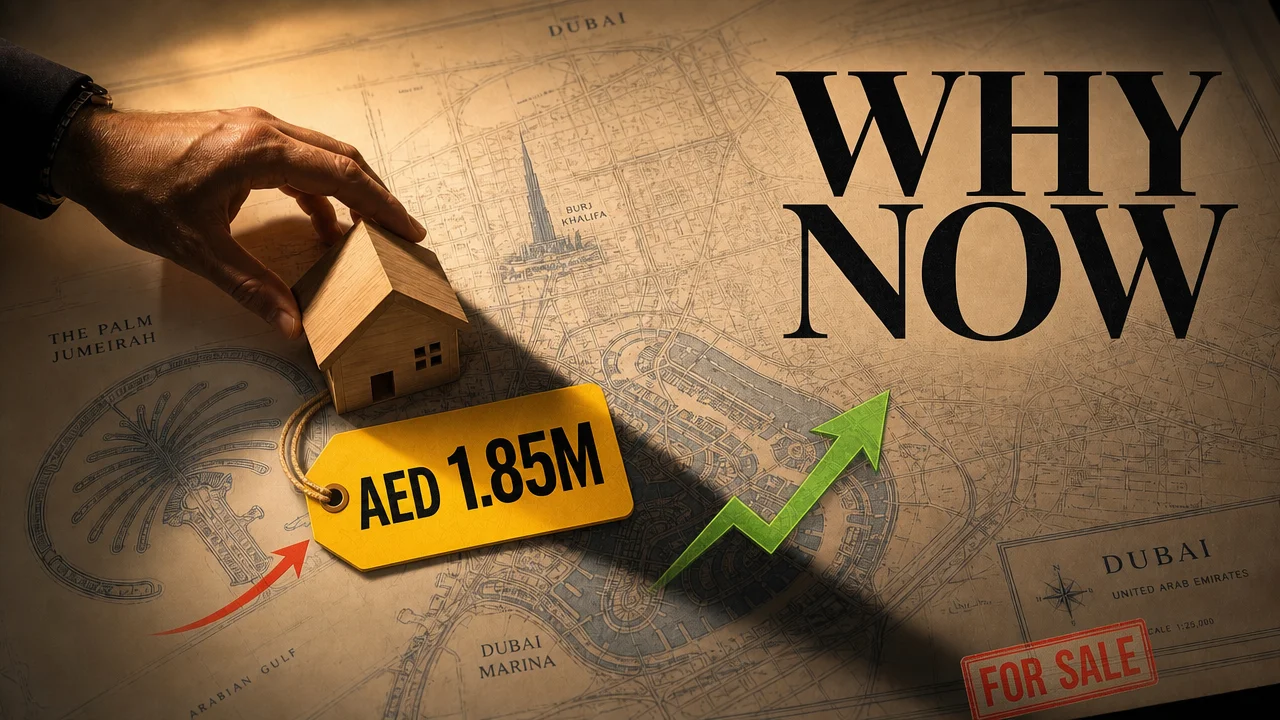
Look at how split it has become. Average villa values sat around AED 13.6 million in Q1 2026, while average apartment values were closer to AED 1.85 million. The luxury villa segment is still expensive. Apartments still offer accessible entry points for investors who care about yield, liquidity and building a portfolio over time.
Dubai real estate investment in 2026 is not one strategy. It can mean a studio in JVC for rental income, an off-plan waterfront apartment in Dubai Islands bought before the area matures, a family villa in Dubai Hills Estate for capital preservation, or exposure through REITs and fractional platforms, which is a very different thing from owning the physical asset. This is exactly where people go wrong. They ask “Is Dubai property a good investment?” That question is too broad to answer. The useful one is: which Dubai property, at what price, in which area, for which strategy? That is what this guide is built to answer. For the wider market picture, read our Dubai Real Estate Market Overview April 2026.
The 2026 picture at a glance
Dubai holds its appeal because several layers stack at once: yield, tax efficiency, residency, lifestyle, infrastructure, safety and long-term global demand. That combination is rare. Not perfect. No market is.
| Investment factor | 2026 market view | What it means for investors |
|---|---|---|
| Market activity | AED 252B in Q1 2026 | Strong liquidity, but selectivity matters |
| Average gross yields | Often around 6% to 7%, higher in some smaller units | Dubai still compares well against many global cities |
| Studio and 1-bed potential | Can reach higher yields in selected buildings and areas | Best suited for income-focused investors |
| Tax position | No personal income tax and no capital gains tax on property gains in Dubai | Strong appeal for global investors |
| Golden Visa threshold | AED 2M property, 10-year route | Useful for investors seeking lifestyle and residency benefits |
| 2-year property investor visa | Dubai has reportedly removed the AED 750,000 minimum for sole owners in 2026 | Opens residency access to more property buyers |
| Main risks | Overpaying, weak due diligence | Due diligence matters more than marketing brochures |
Why invest in Dubai real estate?
Dubai offers a mix of income, growth and tax efficiency that many mature global cities struggle to match. In London, New York, Paris or Singapore, investors accept lower yields in exchange for stability, liquidity and recognition. Dubai is globally recognised now too, but in many areas it still pays stronger rental returns. Industry reports in 2026 keep placing Dubai’s residential yields above many major cities, with smaller apartments in well-connected communities often producing the strongest numbers.
Yield is not the whole story. Dubai became a capital magnet because it gives global investors something they increasingly want: a stable operating base. Modern infrastructure, international schools, strong air connectivity, low crime, a business-friendly environment, and a market regulated by the Dubai Land Department and RERA. For foreigners, ownership is straightforward in designated freehold areas. Non-UAE nationals can buy, sell, lease and own property in Dubai’s approved freehold zones, which is part of why the city has drawn buyers from Europe, India, Russia, China, the GCC, Africa and North America. The UAE Government confirms foreign ownership is permitted in Dubai’s designated freehold areas.
The tax advantage is still one of the strongest arguments
Dubai does not charge annual property tax the way many Western countries do. There is no personal income tax on rental income for most individual investors, and no capital gains tax on property resale gains for individuals. That does not make buying cost-free. Budget for the DLD transfer fee, trustee fees, agency commission, mortgage registration fees if financing, service charges, maintenance, furnishing and possible holiday-home licensing. The DLD sale registration process commonly includes a 4% transfer fee, and mortgage registration is typically 0.25% of the mortgage value where it applies. Even with all that, the tax profile remains one of Dubai’s strongest advantages.
This is a migration story, not just a rental market
Much of the investment case is tied to population growth. More residents means more rental demand. More companies means more executive housing demand. More wealthy families relocating means more demand for larger units, branded residences, villas and waterfront. So do not only look at today’s yield. Ask who will live here in five years. Is the area improving? Is infrastructure coming? Is supply manageable? Will the tenant profile strengthen or weaken? That last question is underrated. A cheap apartment in the wrong building looks good on a spreadsheet and becomes a headache. A slightly dearer unit in the right location, with the right floor plan and a better tenant pool, quietly outperforms.
Ways to invest in 2026
Most investors think only about buying an apartment, but the market is broader. The first decision is control. If you want control over the exact property, tenant strategy, furnishing, resale timing and long-term use, direct ownership is the cleaner route. If you only want exposure without handling the asset, REITs or fractional platforms are worth a look. For serious investors building a portfolio or seeking residency, physical ownership is usually the main route.
| Investment type | Best for | Main advantage | Main risk |
|---|---|---|---|
| Ready apartment | Immediate rental income | Cash flow starts quickly | Lower capital appreciation if bought at peak pricing |
| Off-plan apartment | Capital appreciation and flexible payments | Lower upfront payment, possible uplift by handover | Developer delay, oversupply, poor project selection |
| Villa or townhouse | Families, long-term capital preservation | Strong end-user demand, limited prime supply | Higher entry price |
| Commercial property | Income-focused investors | Longer leases, business tenants | Vacancy risk and fit-out considerations |
| REITs | Passive investors | Easier entry, more liquid than direct ownership | Less control over asset selection |
| Fractional ownership | Small-ticket exposure | Low entry point, diversification | Platform risk and limited control |
Types of investment, and who each suits
Choose the strategy before the project. That sounds obvious, and it is where people get distracted. A beautiful brochure, a waterfront rendering, a famous brand, a flexible payment plan: all of it can make a project feel attractive. A property is only a good investment when it matches your objective.
1. Apartments
Usually the easiest entry point. More affordable than villas, easier to rent in many areas, and often stronger on gross yield. In many communities the smallest units, studios and 1-beds, produce the highest returns because the entry price is low and tenant demand is broad. Property Finder’s 2026 rental investment guide notes smaller units often generate returns in the 7% to 10% range, depending on community, condition and purchase price. But apartments are not equal. A studio in a badly managed building underperforms. A 1-bed with a poor layout sits vacant. A unit with high service charges shows a nice gross yield and a weak net one. Price, service charges, layout, view, building quality and tenant profile matter more than the area name. If you are new to Dubai, start with our step-by-step guide for foreign buyers.
| Apartment investment area | Typical investor profile | Why it works |
|---|---|---|
| Jumeirah Village Circle | Yield-focused investors | Affordable entry prices, strong tenant demand, large rental market |
| Dubai Marina | Lifestyle and short-term rental investors | High tourist appeal, established rental demand, strong liquidity |
| Business Bay | Professionals and executive tenants | Central location, canal lifestyle, close to Downtown |
| Dubai Creek Harbour | Long-term appreciation investors | Master-planned waterfront community, still maturing |
| Dubai South | Growth investors | Airport expansion, logistics, affordability and future population growth |
2. Villas and townhouses
Less about maximum yield, more about capital preservation, lifestyle demand and long-term scarcity. The villa market got far more competitive after the pandemic. Families want space, gardens, privacy, schools nearby and enough room to live properly, which is one reason villa prices stayed elevated. Reported average villa prices around AED 13.6 million in Q1 2026 show how expensive the family-home segment has become in prime communities. That does not make every villa overpriced, but it does demand care. A villa in a strong community with limited future supply holds value. One in a remote location with too much similar supply takes longer to rent or resell. Townhouses sit in the middle: more affordable than large villas, more space than apartments, a good balance of income and appreciation where schools, parks, retail and road access already exist. More on Dubai townhouses.
3. Commercial property
It can work well, but it is rarely the best starting point for a new investor. Offices, retail and warehouses can pay attractive income when leased correctly, but they need harder tenant analysis. A residential tenant needs a home. A commercial tenant needs a business case, and that changes the risk. An office in the wrong tower sits empty for months. A retail unit without foot traffic looks impressive and still struggles. A well-located office in a strong business district produces reliable corporate income. Commercial suits investors who already understand leasing demand, fit-out costs, licensing and tenant risk. Profitable, but less forgiving.
4. REITs and fractional ownership
Not everyone wants a physical unit. Listed real estate investment trusts and fractional platforms give exposure with lower entry and less operational responsibility. The trade-off is control. You do not choose the tenant, or decide when to furnish, renovate or sell. You rely on the platform or fund manager. For some people that is perfect. For serious property investors who want control, direct ownership stays the preferred route.
Off-plan versus ready property
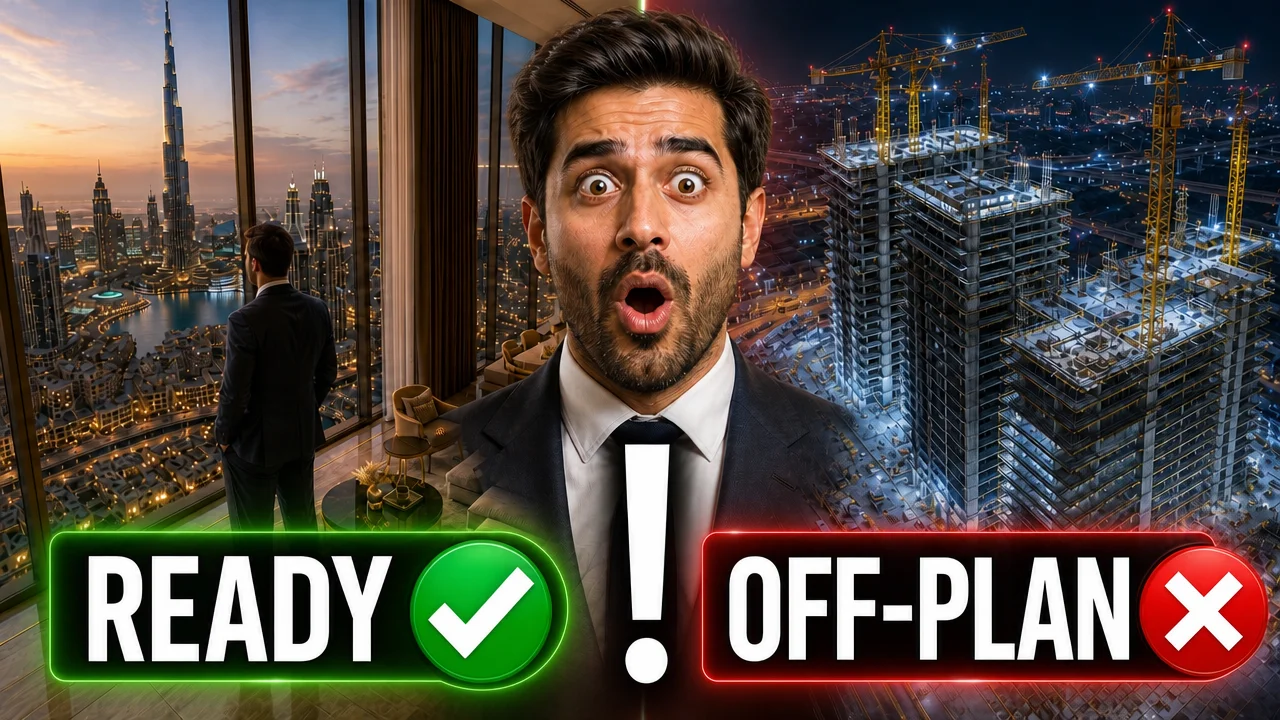
One of the biggest decisions you will make. Buy off-plan before completion, or buy a ready property you can rent immediately? There is no universal answer. Both work, both fail, depending on price, developer, location, payment plan, supply pipeline and your cash flow.
Off-plan
Buying before completion. Common in Dubai: developers launch early, buyers pay in stages, handover comes later. The main draw is the payment plan. Instead of the full price upfront, you might pay 10% or 20% at booking, then construction-linked installments, controlling an asset with less capital. The second draw is potential appreciation. Bought early, in the right location, from the right developer, prices can grow by handover. Many investors target 10% to 30% appreciation before completion, but treat that as a possibility, not a promise. The market owes nobody a profit. The risk is buying the story instead of the asset. Beautiful marketing does not fix a price that is too high, a location that is not ready, or handover supply that is too heavy. Off-plan can be a goldmine, but only with due diligence. Otherwise it is expensive speculation. Read the full breakdown: Dubai off-plan properties, goldmine or death trap.
| Off-plan works best when | Why it matters |
|---|---|
| The developer has a strong delivery record | Reduces delay and quality risk |
| The payment plan is realistic | Protects investor cash flow |
| The launch price is genuinely competitive | Creates room for appreciation |
| The area has future infrastructure or demand growth | Supports resale and rental demand |
| The unit layout is practical | Easier to rent or resell |
| Supply is not excessive | Prevents pressure at handover |
Ready property
The unit is finished. You can inspect it, verify condition, check actual service charges and start renting almost immediately. For income investors that is a big advantage: no two or three year wait, and rent based on real market evidence rather than projected future rents. Ready property also makes financing easier, because banks prefer completed assets they can value properly. Off-plan mortgages exist but are more restricted. The downside is more upfront capital, and you may be buying after much of the appreciation has happened. In a hot market sellers price aggressively, which compresses returns.
| Ready property works best when | Why it matters |
|---|---|
| You want immediate rental income | Cash flow can start quickly |
| You want lower construction risk | The property already exists |
| You want clearer valuation | Comparable transactions are easier to verify |
| You are buying for short-term rental | Furnishing and listing can begin quickly |
| You want bank financing | Completed assets are often easier to mortgage |
So the real question is not off-plan or ready. It is whether you want potential growth before completion, or income and certainty now. A balanced investor can do both: one ready apartment for income, one off-plan unit for appreciation. Often smarter than putting everything into one strategy.
| Factor | Off-plan property | Ready property |
|---|---|---|
| Upfront capital | Usually lower | Usually higher |
| Rental income | Starts after handover | Can start immediately |
| Capital appreciation | Higher potential if bought early | Depends on market and entry price |
| Risk level | Higher (delay/delivery) | Lower construction risk |
| Financing | More limited | More widely available |
| Due diligence | Developer, escrow, project registration, payment plan | Title deed, condition, service charges, tenancy status |
| Best for | Growth-focused investors | Income-focused investors |
Best areas by strategy in 2026
The best area depends on what you are trying to do. A yield investor and a capital appreciation investor should not always buy in the same place. A Golden Visa buyer thinks differently from someone building a short-term rental portfolio. A family office buying for preservation looks at different assets from a younger investor entering with AED 800,000. So the sharper question is whether you are investing for income, appreciation, lifestyle, residency, or long-term wealth preservation. Keep the backdrop in mind: AED 252 billion in transactions in Q1 2026, up 31% year-on-year, with AED 173 billion across 57,744 investment transactions. Demand is strong, and the market is crowded. Good assets move. Overpriced assets sit. For a wider community comparison, see our guide on best residential areas in Dubai.
High-yield areas
These are usually not the glamorous ones, and that is worth saying plainly. A studio in JVC or Dubai Sports City does not feel as exciting as a branded beach residence, but the numbers can be stronger. Income investors want affordable entry, large tenant pools, strong occupancy and manageable service charges. In 2026, JVC, Business Bay and Dubai South are often cited as strong rental-yield locations, with smaller units in selected buildings sometimes producing 7% to 9%. Property Finder also highlights Dubai Silicon Oasis, International City and Dubai Sports City among the highest-yielding areas. JVC deserves attention: a wide range of buildings, good connectivity, affordable pricing and consistent demand. Some buildings are excellent, others are not, which is exactly why deal selection matters. In JVC I look hard at three things: building management, service charges and layout. A good layout rents faster, a well-managed building holds demand, and low service charges protect net ROI. Not glamorous. It is the stuff that protects returns.
| Area | Best for | Typical investor logic | Watch-out |
|---|---|---|---|
| Jumeirah Village Circle | Yield and liquidity | Affordable entry, large tenant base, strong demand for studios and 1-beds | Building quality varies a lot |
| Dubai Sports City | Yield-focused buyers | Lower prices, affordable rentals, good for budget-conscious tenants | Some buildings older or less liquid |
| Dubai Silicon Oasis | Stable rental demand | Tech, student and professional tenant base | Less luxury appeal |
| International City | Maximum yield | Low entry price, mass rental market | Lower capital growth profile |
| Dubai South | Future growth and affordability | Airport expansion, logistics, Expo City proximity | Needs patience as the area matures |
Established liquidity areas
Some investors want liquidity: a property easier to rent, finance and resell. That does not always mean the highest yield. The more desirable an area becomes, the more yields compress, because prices rise faster than rents. Dubai Marina is the classic example. Tourists know it, residents know it, agents know it, banks know it. That recognition matters when you want to exit. This category is about market depth. A Marina or Business Bay unit may not top the yield chart, but there is a deeper buyer and tenant pool, which matters during slower periods. When the market cools, weak locations show weakness first. Prime areas can correct too, but usually recover faster because demand is broader. Be honest though: some established areas have older buildings, high service charges or dated layouts. Even inside strong areas, not every tower is a good investment.
| Area | Best for | Why investors like it | Yield profile |
|---|---|---|---|
| Dubai Marina | Liquidity and short-term rental demand | Waterfront lifestyle, tourist demand, strong resale recognition | Moderate to strong |
| Business Bay | Central rental demand | Close to Downtown, canal lifestyle, business tenant pool | Strong in selected buildings |
| Downtown Dubai | Prestige and capital preservation | Global landmark location, Burj Khalifa, Dubai Mall | Usually lower yield, stronger trophy value |
| Jumeirah Lakes Towers | Stable rental income | Metro access, office/residential mix, more affordable than Marina | Often practical for income |
| Dubai Creek Harbour | Long-term waterfront appreciation | Master-planned by Emaar, still maturing | Better for patient investors |
Luxury and capital appreciation
Luxury works differently. The buyer is not only buying square footage. They are buying scarcity, address, view, privacy, brand, lifestyle, and sometimes ego. That last part is real. In prime markets, emotional demand moves prices. For preservation and long-term appreciation, investors look at Palm Jumeirah, Dubai Hills Estate, Downtown Dubai, Emirates Hills, Jumeirah Bay Island and selected waterfront or branded developments. Palm Jumeirah remains one of Dubai’s strongest global addresses. Dubai Hills Estate has become a major family community with schools, parks, golf, retail and strong villa demand. Downtown stays a global trophy location. Dubai Creek Harbour and Dubai Islands are more future-facing, for investors who believe the next growth phase is tied to waterfront master plans. The key here is patience. Luxury appreciation is rarely about fast yield. It is about buying the right asset before the next wave of demand prices it in.
Dubai Islands is interesting because it is not one building or project. Nakheel describes it as five interconnected islands aligned with the Dubai 2040 Urban Master Plan, with over 20 kilometres of beaches, resort and hospitality components, marinas, parks and golf-related infrastructure. Scale like that, executed properly, can create its own demand curve. Still, early-stage areas need caution. Infrastructure takes time, handover timelines shift, and rental demand is not fully proven at the start. So with Dubai Islands the play is less “buy today, rent tomorrow” and more “secure coastal exposure before the full destination matures.” A different type of investor.
| Luxury / appreciation area | Best for | Investment thesis |
|---|---|---|
| Palm Jumeirah | Global luxury recognition | Scarcity, beachfront, high-net-worth demand |
| Dubai Hills Estate | Family demand and long-term lifestyle | Golf, schools, mall, villas, master-planned community |
| Downtown Dubai | Trophy property and global address | Landmark location, tourism, prestige |
| Dubai Creek Harbour | Long-term waterfront growth | Emaar master plan, future skyline, family and lifestyle demand |
| Dubai Islands | Early-stage waterfront positioning | New coastal supply, beaches, hotels, long-term transformation |
| Jumeirah Bay Island | Ultra-prime scarcity | Limited supply and UHNW buyer profile |
Dubai South and the long-term case
Not for everyone, but not one to ignore. The case ties to affordability, future population growth, logistics, aviation, Expo City and the expansion around Al Maktoum International Airport. It is not as liquid as Dubai Marina, not as polished as Dubai Hills, but it has room to grow, which matters for a longer horizon. The risk is timing. Investors buy into future-growth areas too early, then get impatient, expecting a five-year thesis to perform in twelve months. Treat Dubai South as a patient capital play, especially for affordable units near future demand drivers.
| Investment goal | Strong areas to consider | Why |
|---|---|---|
| Maximum rental yield | JVC, Dubai Sports City, Dubai Silicon Oasis, International City | Lower entry prices and broad tenant demand |
| Short-term rental income | Dubai Marina, Business Bay, Downtown Dubai, Palm Jumeirah | Tourism, lifestyle and business travel demand |
| Long-term capital appreciation | Dubai Islands, Dubai Creek Harbour, Dubai Hills Estate, Dubai South | Master-plan growth and future infrastructure |
| Luxury wealth preservation | Palm Jumeirah, Jumeirah Bay Island, Emirates Hills, Downtown Dubai | Scarcity, prestige and global buyer demand |
| Family rental demand | Dubai Hills Estate, Arabian Ranches, Town Square, JVC townhouses | Schools, parks, space and community lifestyle |
| Entry-level investor | JVC, Dubai South, Dubai Sports City | Lower price points and easier portfolio entry |
The best portfolios are rarely built around one location. They are balanced: one income asset, one appreciation asset, perhaps a villa or townhouse for family demand, maybe a luxury or waterfront asset later. The 2026 question is not “where is the hottest area?” It is “what role does this property play in my portfolio?”
Rental yields and ROI, defined properly
Yield is a main reason investors look at Dubai. But people throw around “ROI” without defining it. Some mean gross yield, some net yield after costs, some total return including resale, some short-term income before management fees. These are not the same, so separate the numbers before comparing properties.
Gross rental yield
The simplest number: annual rent as a percentage of price. Annual rent divided by purchase price, times 100.
| Annual rent | AED 90,000 |
| Purchase price | AED 1,200,000 |
| Gross rental yield | 7.5% |
Clean, but not the full picture. Gross yield ignores service charges, maintenance, vacancy, management fees, furnishing, insurance, platform fees and transaction costs. Use it for quick comparisons, never as the final decision. In 2026, average gross yields are often reported around 5.5% to 7%, with some affordable communities and smaller units higher depending on location, quality and price. International City, Discovery Gardens and JVC come up frequently for stronger yields on smaller apartments. That does not mean every JVC studio delivers. Some do, some do not. The difference is in the details.
Net rental yield
More useful, because it shows what you actually keep. This is where attractive-looking deals get less attractive.
| Purchase price | AED 1,200,000 |
| Annual rent | AED 90,000 |
| Service charges | AED 15,000 |
| Maintenance allowance | AED 4,000 |
| Property management | AED 4,500 |
| Vacancy allowance | AED 5,000 |
| Net rental income | AED 61,500 |
| Net rental yield | 5.1% |
Gross 7.5%, net closer to 5.1%. Still fine. Just different. Always check service charges before buying. Dubai has a RERA Service Charge Index through the DLD, which lets owners review approved fees for jointly owned properties. Charges vary by building, size, amenities and community, and they move net ROI a lot. A building with luxury facilities can look beautiful and, once the service charges land, deliver a weak yield. A plainer, practical building sometimes performs better. Not always. Often enough that it matters.
| Metric | What it shows | Good for | Limitation |
|---|---|---|---|
| Gross rental yield | Rent before expenses | Fast comparison between properties | Too optimistic if used alone |
| Net rental yield | Rent after operating costs | Real income analysis | Requires more accurate cost assumptions |
| Total ROI | Rent plus capital appreciation | Long-term investment picture | Depends on future resale value |
| Cash-on-cash return | Return on actual cash invested | Useful for mortgage buyers | Depends heavily on leverage and interest rate |
Long-term versus short-term rental
Two main strategies: long-term leasing and short-term holiday homes. Both work. The right choice depends on the property, location, furnishing, building rules, owner involvement and risk tolerance.
Long-term
Simpler. Lease for a year, sometimes one to four cheques, and the tenant lives there. More predictable income, lower management intensity. Better for investors who want peace of mind. Not always the highest income, but cleaner, especially with a reliable tenant.
| Long-term rental advantage | Why it matters |
|---|---|
| Stable income | Easier to forecast annual cash flow |
| Lower management effort | Less guest turnover and fewer daily issues |
| Lower furnishing requirements | Some tenants prefer unfurnished units |
| Lower operational risk | Less exposure to tourism seasonality |
| Easier financing analysis | Banks and investors understand annual tenancy income |
Short-term
Higher income potential in the right areas, especially Dubai Marina, Downtown Dubai, Palm Jumeirah, Business Bay and selected beachfront or tourist-friendly communities. But far more operational: furnishing, photography, guest management, cleaning, maintenance, pricing, reviews and compliance. In Dubai, apartments and villas must be registered and approved by the Department of Economy and Tourism before being listed as holiday homes. So it is not passive income unless you hire a strong operator. Treat it almost like a hospitality business. Short-term can beat long-term on gross income, but after all costs the gap narrows, and sometimes a long-term tenant nets more with less headache. The strategy has to match the asset. A well-furnished Marina apartment with strong views suits short-term. A basic apartment in a family community does better on a long lease. A villa near schools attracts stable family tenants. A branded beachfront unit does better with holiday guests. For a deeper look, read The new reality of the Dubai rental market in 2026.
| Short-term rental cost | Why investors must include it |
|---|---|
| Furniture and appliances | The unit needs to be guest-ready |
| Linen, kitchenware and décor | Small details affect reviews |
| Cleaning and turnover | Required after every guest stay |
| Platform fees | Booking platforms take a percentage |
| Management fees | Operators usually charge a share of revenue |
| Vacancy and seasonality | Income can vary month to month |
| Permit and compliance costs | Needed before legal operation |
A worked ROI example
Assume a 1-bedroom bought for AED 1,250,000. The 2% agency fee below applies to resale transactions only. Buy directly from a developer on a new launch or off-plan and the buyer pays no broker commission, because the developer pays the agent.
| Purchase price | AED 1,250,000 |
| DLD transfer fee, 4% | AED 50,000 |
| Agency fee, assumed 2% plus VAT (resale only, 2% + 5% VAT) | AED 26,250 |
| Trustee/admin and miscellaneous | AED 5,000 |
| Furnishing budget | AED 45,000 |
| Total estimated capital deployed | AED 1,376,250 |
Now assume it rents for AED 95,000 a year on a long lease. On the purchase price alone, gross yield is 7.6% (AED 95,000 divided by AED 1,250,000). On full capital deployed and after costs, the net yield is closer to 4.96% (AED 68,250 divided by AED 1,376,250).
| Annual rent | AED 95,000 |
| Service charges | AED 14,000 |
| Maintenance allowance | AED 4,000 |
| Property management | AED 4,750 |
| Vacancy allowance | AED 4,000 |
| Estimated net income | AED 68,250 |
That net figure is the number to care about. Gross yield is useful, but net gives an honest view. And remember acquisition costs: the DLD sale registration fee is commonly 4% of the sale value, and it belongs in your total investment cost, especially if you plan to resell within a short period.
What counts as a good ROI?
It depends on the strategy. For a ready apartment in a strong rental area, a gross yield of 6% to 8% is healthy. Smaller units in high-yield areas may target higher. Prime villas and ultra-luxury may yield less, because the buyer is really paying for preservation, scarcity and long-term appreciation. There is no magic number. An 8% gross yield in a weak building can be worse than 6.5% in a better building with stronger resale demand. A lower-yielding waterfront property can outperform over five years if the area matures. A high-yield studio is great income but may not appreciate like a well-bought townhouse. View ROI in two layers: income return, how much rent it produces, and capital return, how much it could appreciate. The best investments have both, but most lean one way.
| Property type | Typical investment goal | Yield expectation |
|---|---|---|
| Studio apartment | Rental income | Higher gross yield potential |
| 1-bedroom apartment | Balanced income and liquidity | Strong tenant demand |
| 2-bedroom apartment | Family or shared tenant demand | Moderate yield, wider resale market |
| Townhouse | Family tenant demand | Balanced income and appreciation |
| Villa | Capital preservation and lifestyle demand | Lower yield, stronger scarcity in prime areas |
| Branded residence | Prestige and appreciation | Yield depends heavily on entry price |
Common ROI mistakes
Most investors who fail do not fail because Dubai is a bad market. They fail because they buy badly, and the mistakes are simple. The market is no longer forgiving enough to buy anything and expect it to work. In 2026, underwriting matters. Compare price per square foot, service charges, rent evidence, handover supply, developer history, building management, floor plan, view, parking, payment plan and exit liquidity. That is a lot. It is also the job. This is where advisory earns its place. The right property is not always the one being pushed hardest. Often the best deal is quieter, less flashy and simply better priced.
| Mistake | Why it hurts ROI |
|---|---|
| Using gross yield only | Ignores service charges, vacancy and maintenance |
| Ignoring service charges | Can reduce net income significantly |
| Overpaying for a payment plan | Flexible terms can hide inflated pricing |
| Buying the wrong layout | Harder to rent and harder to resell |
| Assuming short-term rental always wins | Higher income can come with higher costs |
| Ignoring building quality | Poor management affects tenant demand |
| Not checking comparable transactions | Asking prices are not market value |
| Buying only because of developer brand | Good developers can still sell overpriced units |
The legal process for foreign buyers
Part of Dubai’s appeal is that the buying process is structured. Not casual, not handshake-and-hope. There are formal steps, approved documents, government systems, trustee offices, developer NOCs, escrow rules for off-plan and registration through the DLD. That structure matters for foreign buyers used to a different system. The process can feel fast, sometimes surprisingly fast, but it still has to be done correctly. Speed is an advantage only when the due diligence is clean. Foreign investors and expatriate residents may buy in designated freehold areas, acquiring freehold ownership rights, which is a main reason Dubai became a global investment market. The ownership structure is relatively clear compared with countries where foreign buyers face heavy restrictions. Full walkthrough: Buy Property in Dubai, A Practical Step-by-Step Guide for Foreign Buyers.
Freehold versus leasehold
The first concept to understand. For most foreign investors buying apartments, townhouses or villas, freehold is the preferred route: direct ownership, with resale, leasing and inheritance planning, subject to the applicable laws. But not every area is freehold for foreign buyers. Before you look at the view, payment plan or yield, verify the property sits in an approved freehold zone. Basic due diligence, and still missed more often than people think.
| Ownership type | What it means | Best for | Investor note |
|---|---|---|---|
| Freehold | The buyer owns the property outright in a designated freehold area | Foreign investors, long-term owners, resale investors | Most international investors focus here |
| Leasehold | The buyer owns the right to use the property for a fixed term, often up to 99 years | Specific areas or structures | Less common for foreign investment strategies |
| Usufruct / Musataha | A legal right to use or develop property under specific terms | More complex commercial or land structures | Requires legal review |
DLD and RERA
The market is regulated mainly through the Dubai Land Department (DLD) and the Real Estate Regulatory Agency (RERA). The DLD handles land and property registration, ownership transfer, title deed issuance and transaction records. RERA operates under the DLD and regulates brokers, advertisements, service charges and rental frameworks. For an investor, that means a formal record of ownership and registration. When a completed property sells, the DLD’s property sale registration service registers the sale between seller and buyer, or their authorised representatives, through Real Estate Registration Trustee offices, where documents are checked, data is entered, fees are paid and the output is emailed. The deal is not complete when the offer is accepted. It is complete when ownership transfers and the new title deed is issued.
Key documents
The required documents depend on whether you are buying ready or off-plan, cash or mortgage, as an individual or a company. For most individual foreign buyers, these are the core ones. The DLD says buyers should conduct legal due diligence by confirming the seller or developer owns the property and that it is free of mortgages, liens or other charges. Parties must use the standard sale contract, Form F, and may attach additional terms as long as they do not conflict with the standard terms. This is the boring part, and it is exactly where investors protect themselves. A beautiful property is not enough. The seller must have the right to sell, the title must be clean, any mortgage must be discharged or handled, service charges must be settled, and the contract must reflect the real commercial terms.
| Document | When it is used | Why it matters |
|---|---|---|
| Passport | Required for non-resident foreign buyers | Confirms buyer identity |
| Emirates ID | Required where the buyer or seller is UAE resident | Used for identity verification |
| Form A | Seller appoints broker | Needed before formal broker-led sale process |
| Form B | Buyer appoints broker | Confirms buyer-broker relationship |
| Form F | Sale agreement / unified sale contract | Sets agreed terms between buyer and seller |
| NOC | Issued by developer for ready property transfer | Confirms no outstanding service charge issues |
| Title deed | Proof of ownership | Must be verified before transfer |
| Oqood / initial sale registration | Used for off-plan purchases | Shows provisional registration of off-plan sale |
| Mortgage pre-approval | Used when financing | Confirms buyer’s bank eligibility |
Form F
The standard sale agreement in secondary-market transactions. It records the deal: buyer, seller, property, price, deposit, payment method, completion timeline, broker commission and any additional terms. The DLD’s broker journey for Contract F shows brokers create the Unified Sale Contract through the Dubai REST App or Dubai Broker web application after selecting the approved Contract A and linking the active Contract B. Do not treat Form F as a casual reservation form. It is the formal sale agreement. A common mistake is agreeing verbally to important conditions and leaving them out. If it matters, document it.
| Form F item | What to check |
|---|---|
| Purchase price | Must match the agreed final price |
| Deposit amount | Usually paid as part of commitment to purchase |
| Completion date | Must be realistic, especially with mortgages |
| Seller details | Must match ownership records |
| Buyer details | Passport or Emirates ID details must be correct |
| Mortgage status | Existing seller mortgage must be disclosed |
| Special conditions | Any furniture, vacant possession or payment terms should be written |
| Default clauses | Buyer and seller obligations should be understood |
Developer NOC
For ready property transfers, the buyer usually needs a No Objection Certificate from the developer before transfer. The developer confirms there are no outstanding service charges or blocking issues. The DLD’s investor guidance says an NOC should be obtained to ensure the seller has paid service charges and that there are no issues under jointly owned property regulations, with transfers handled through licensed trustee offices where documents are checked and a new title deed issued after approval. The NOC is not just paperwork. It is a checkpoint that stops you buying into unpaid charges or unresolved developer issues. Routine in a smooth deal, and exactly where problems surface in a messy one.
Off-plan protection: Oqood and escrow
Off-plan follows a different process because the unit is not finished. Off-plan sales are registered in the provisional register, associated with Oqood. The DLD’s initial sale registration service lets developers register off-plan units whose value is not fully paid, by selecting the property, attaching documents and submitting online, with the output emailed to the purchaser. Verify the project itself is registered and that an escrow account exists. The DLD’s project registration service states developers register projects and open escrow accounts for off-plan sales, with steps including submission through the Oqood portal and a request to open escrow through the account custodian. This is where off-plan due diligence gets serious. The point is not to scare you off. Off-plan can be one of the most profitable strategies here. But treat it as a structured investment, not an emotional purchase from a sales gallery. See Dubai Off-Plan Properties, Goldmine or Death Trap.
| Off-plan due diligence item | Why it matters |
|---|---|
| Developer registration | Confirms the developer is recognised in the system |
| Project registration | Confirms the project is approved |
| Escrow account | Ensures payments are made into the correct protected account |
| Oqood registration | Provides provisional registration of the buyer’s interest |
| Payment plan | Must match the SPA and buyer cash flow |
| Handover date | Should be realistic, not only promotional |
| Construction progress | Helps assess delivery risk |
| Resale restrictions | Some developers restrict resale until a percentage is paid |
Step-by-step buying process
Here is the simplified flow for a typical ready purchase. The DLD’s property sale registration page confirms the procedure: visit a Real Estate Registration Trustee office, submit documents for verification, enter transaction data, pay fees and receive the output by email. The same page lists passport as an acceptable identity document for non-resident foreigners, and lists buyer and seller sale registration fees at 2% each, commonly understood in the market as a total 4% DLD transfer fee. That 4% is not small. Include it in total acquisition cost, especially if you plan to resell within a short period.
| Step | Stage | Detail |
|---|---|---|
| 1 | Define budget and strategy | Decide yield, appreciation, residency or lifestyle objective |
| 2 | Shortlist areas and properties | Compare price per sq ft, rent, service charges and liquidity |
| 3 | Verify broker and property | Check broker licence, title deed, ownership and listing authority |
| 4 | Make offer | Negotiate price, deposit, timeline and conditions |
| 5 | Sign Form F | Buyer and seller formalise the agreement |
| 6 | Apply for NOC | Developer confirms no blocking issues |
| 7 | Arrange manager’s cheques | Buyer prepares payment for seller, DLD fees and costs |
| 8 | Attend trustee office | Documents checked and transaction submitted |
| 9 | Pay fees and complete transfer | DLD registration is completed |
| 10 | Receive title deed | Buyer becomes the registered owner |
Costs to budget for
Never calculate returns using only the property price. The 2% broker commission applies to resale transactions only. Buy directly from a developer on a new launch or off-plan and the buyer pays no broker commission, because the developer pays the agent. The DLD’s property sale registration service lists additional fees such as title deed issuance, map fees, knowledge and innovation fees, plus service partner fees through trustee centres. For sales valued at AED 500,000 or more, the listed service partner fee is AED 4,000 plus VAT. A deal can look attractive before costs and slimmer after DLD fees, commission, trustee fees and furnishing. That does not make it bad. It means you should calculate properly.
| Cost | Typical treatment |
|---|---|
| DLD transfer fee | Usually 4% total of the sale value |
| Trustee office fee | Depends on property value, plus VAT |
| Title deed issuance | DLD fee applies |
| Broker commission | Resale only, 2% + 5% VAT |
| Mortgage registration | Applies when bank finance is used |
| Valuation fee | Usually required by banks |
| Developer NOC | Required in many ready property transfers |
| Service charge adjustment | Seller and buyer settle based on transfer date |
| Furnishing | Relevant for rental or holiday home strategy |
Legal mistakes to avoid
Most legal issues are avoidable if you follow the process. Verify first, sign second, transfer properly. The system is strong when used correctly, but no system protects an investor who skips basic checks because the deal feels urgent. In Dubai there is always another launch, another seller, another opportunity. Good investors do not panic buy. They underwrite, negotiate and move when the numbers make sense.
| Mistake | Why it creates risk |
|---|---|
| Buying from an unverified seller | Ownership or authority may be unclear |
| Ignoring title deed checks | Mortgage, lien or ownership issues may appear late |
| Signing vague terms | Verbal promises are hard to enforce |
| Paying outside approved channels | Creates unnecessary payment risk |
| Not checking service charges | Can damage net yield |
| Not verifying off-plan escrow | Critical for buyer protection |
| Ignoring resale restrictions | Can trap investors who plan to flip |
| Rushing into branded projects | Brand does not automatically mean good pricing |
Visas and residency through property
For many international buyers, this is not only about ROI. It is about access. Access to the UAE, a tax-efficient lifestyle, banking, schools, business setup, family relocation, regional travel and a more stable base in a world that feels less predictable than it used to. Some investors buy for yield first and residency second. Others do the opposite: they want a base in Dubai, and property is what makes it practical. Both are valid. But understand the difference between buying for return and buying for residency. Ideally the asset serves both. Not every visa-eligible property is a good investment, and not every strong investment is the right lifestyle property for a family. Dedicated page: Golden Visa Dubai.
The routes in 2026
| Visa route | General property requirement | Typical use case |
|---|---|---|
| 2-year property investor residence | For individual owners, DLD now allows applications regardless of property value. Joint owners need at least AED 400,000 share each | Entry-level property owners, smaller investors, first Dubai base |
| Golden Residency through real estate | AED 2M+ property value | Long-term investors, families, high-net-worth buyers, relocation planning |
The DLD’s Taskeen service currently states an individual property owner may apply for the 2-year investor residence regardless of the property value, while a co-owner must hold a share of at least AED 400,000. The same page lists the issued document as a 2-year residency permit with a service time of 7 to 10 business days. This lowers the barrier for property-linked residency. Previously many investors understood the 2-year visa around a minimum property value of AED 750,000. As of the April 2026 update, that threshold has been removed for sole owners, while joint ownership rules still apply. Khaleej Times reported this on April 29, 2026, noting the revised conditions were published through the Cube Centre, affiliated with the DLD. For Golden Residency, the UAE’s Federal Authority for Identity, Citizenship, Customs and Port Security lists real estate investors under the Golden Residency framework and requires a letter from the Real Estate Registration Department proving ownership of one or more properties valued at AED 2 million or more, plus proof of residence inside the UAE. Official portals can display durations differently by service page and route, so confirm at application stage the AED 2 million threshold, the residence duration, mortgage treatment, title deed status and family sponsorship eligibility.
The 2-year investor visa
Now far more accessible for smaller owners, which is relevant for studios and affordable 1-beds in JVC, Dubai Sports City, Dubai Silicon Oasis, International City or Dubai South. Before the 2026 update, a buyer with a smaller property could be locked out if the asset value was below the threshold, which produced the strange situation of owning a fully paid Dubai property and still not qualifying. The new approach is more practical. Sole owner: apply regardless of property value, per the Taskeen page. Jointly owned: each co-owner needs a share value of at least AED 400,000.
| Document | Why it is needed |
|---|---|
| Passport | Confirms identity |
| Electronic copy of title deed | Confirms property ownership |
| Personal photograph | Required for residence application |
| Emirates ID, if available | Used if applicant already has UAE status |
| Current residence visa or entry permit, if available | Confirms current immigration position |
| Good Conduct Certificate issued in Dubai | Required and addressed to Dubai Land Department |
The DLD notes the applicant must attend in person, with no companions or representatives allowed for the application. Buying the property is one step. Applying for residency is another, with its own documentation, medical, identity and administrative requirements.
Golden Residency through property
For larger budgets, the AED 2 million route is one of the most attractive residency options. Instead of renting a home, you buy an asset that may produce income, appreciate, and support long-term UAE residency planning. The official ICP page lists real estate investor documents including a letter from the Real Estate Registration Department proving ownership of one or more properties valued at AED 2 million or more, plus proof of residence inside the UAE through property ownership or a tenancy contract.
| Investor type | Why it fits |
|---|---|
| Families relocating to Dubai | Long-term stability, schooling, lifestyle and family sponsorship planning |
| Entrepreneurs | UAE base, banking, company formation and regional access |
| High-net-worth investors | Asset ownership plus residency optionality |
| Frequent travellers | Dubai as a global hub between Europe, Asia, Africa and the GCC |
| Portfolio investors | Ability to combine yield, appreciation and residency planning |
The property still needs to make sense as an investment. Do not overpay by AED 300,000 just to reach a visa threshold. That destroys value. Better to find a property, or a combination, that qualifies and holds up under investment analysis.
| Structure | Example |
|---|---|
| One property | One apartment or villa valued at AED 2 million or more |
| Multiple properties | Two apartments with combined value of AED 2 million or more |
| Mortgaged property | May be possible depending on bank documentation and current rules |
| Joint ownership | Must be checked carefully, because share value matters |
GDRFA’s real estate investment guidance states the applicant must own a property or group of properties worth at least AED 2 million, certified by a property status statement certificate from the DLD, and that a joint property share must not be less than AED 2 million. So joint ownership needs planning. A married couple buying one AED 2 million property together may not automatically be treated the same as one sole owner, depending on how the application is assessed. Check before purchase, not after.
Should you buy mainly for the visa?
Sometimes, but not blindly. The residency benefit is valuable, especially if you want to spend more time in the UAE, open bank accounts, sponsor family, build a business or create a second base. But it should not be the only reason. A weak property with poor resale demand does not become strong because it qualifies. A bad layout is still a bad layout. High service charges still hit net ROI. A remote area with limited demand still needs patience. The best investment ideally does three things at once.
| Objective | What the property should deliver |
|---|---|
| Investment return | Rental income and/or capital appreciation |
| Residency value | Eligibility for the appropriate UAE residence route |
| Lifestyle flexibility | Option to use, rent, hold or resell depending on future plans |
For many buyers, especially from high-tax countries, the wider UAE picture is the real draw. Dubai is not just a property market. It is a place to live, operate, bank, travel from and build around. The best investors look past the brochure and ask whether the property helps them build the life or structure they want.
Residency benefits
The ICP states Golden Residency offers long-term residency without needing a sponsor, the ability to issue permits for spouse and children, and freedom to live, work, study and invest in the UAE while enjoying resident benefits. That is a large part of why Dubai attracts entrepreneurs and international families. The property becomes part of a broader relocation and wealth strategy.
| Benefit | Why it matters |
|---|---|
| Ability to live in the UAE | Gives the investor a legal residence base |
| Emirates ID eligibility | Useful for banking, telecoms, services and contracts |
| Family sponsorship | Can support spouse, children and in some cases parents, subject to rules |
| Business setup support | Easier to operate locally with UAE residency |
| Banking access | Residency may make UAE banking smoother, though banks still perform compliance checks |
| Lifestyle flexibility | Investor can use Dubai as a home, second home or regional base |
| Long-term planning | Useful for families thinking about education, succession and relocation |
Visa mistakes to avoid
Most are avoidable with early planning. One deserves a pause: holding UAE residency does not automatically make you tax resident in the UAE for every international purpose. Investors with businesses, income or family ties elsewhere should take proper cross-border tax advice. Dubai is tax-efficient. Tax residency is not something to guess.
| Mistake | Why it creates problems |
|---|---|
| Buying below the required share value for joint ownership | The buyer may not qualify individually |
| Assuming all properties qualify | Completed, off-plan, mortgaged and jointly owned properties may be treated differently |
| Not checking title deed name spelling | Name must match passport and application documents |
| Forgetting good conduct certificate requirements | Can delay application |
| Assuming residency equals tax residency | Tax residency is a separate analysis |
| Buying only to hit AED 2 million | Overpaying can damage investment returns |
| Not checking family sponsorship rules | Family applications have separate documents and fees |
| Not confirming current rules before transfer | Visa rules can change, and application details matter |
Aligning visa and property strategy
Decide the residency target first, then match the property to it. The wrong approach is “I need a visa, show me anything that qualifies.” The better one is “I need a property that qualifies, rents well, is easy to resell and supports my long-term Dubai plan.” Very different conversations. Dubai rewards strategic investors and punishes rushed buyers. When visa, tax, lifestyle and investment goals overlap, the property decision matters far more than just picking the cheapest qualifying unit.
| Investor goal | Suggested property approach |
|---|---|
| Wants basic UAE residency with lower capital | Consider sole ownership of an affordable completed property |
| Wants Golden Residency route | Target AED 2 million or more in qualifying property value |
| Wants family relocation | Prioritise schools, community, space and daily lifestyle |
| Wants rental income first | Focus on net yield and tenant demand, then check visa eligibility |
| Wants long-term wealth preservation | Focus on prime locations, scarcity and exit liquidity |
| Wants business base in Dubai | Consider location, banking, company setup and residence timing |
Financing your investment
Not everyone buys in cash. Cash is common in luxury and off-plan, but mortgages still matter, and for many investors financing is the difference between one property and a portfolio. Used properly, leverage improves cash-on-cash returns. Used badly, it turns a decent investment into a stressful one. The question is not “Can I get a mortgage in Dubai?” It is whether this particular property should be financed, and whether it still works after interest, fees and repayments. Dedicated guide: How to Finance Your Property Purchase in Dubai, Options and Tips.
Can foreigners get a mortgage?
Yes, but terms depend on whether you are a UAE resident or non-resident, plus property type, income, the bank’s criteria, age, nationality, credit profile and whether the property is ready or off-plan. Residents usually have more options and higher loan-to-value ratios than non-residents. Non-residents can still qualify, but banks ask for larger down payments, stronger documentation and more conservative affordability checks. The UAE Central Bank mortgage regulations define loan-to-value as the ratio of the loan outstanding to the appraised value of the residential property. In practice, the bank lends against the lower of purchase price or valuation, not the number you agreed with the seller. Agree AED 2 million, the bank values at AED 1.9 million, and your mortgage may be based on AED 1.9 million, meaning you contribute more cash than expected.
| Buyer type | Typical financing position | Investor note |
|---|---|---|
| UAE resident | Usually better access to bank financing and higher LTV options | Stronger if salary, business income or local banking history is clear |
| Non-resident | Financing is possible, but often with lower LTV and stricter documentation | Down payment is usually higher, and fewer banks may be available |
| Self-employed buyer | Possible, but documentation matters heavily | Banks will review business income, statements and stability |
| Company owner | Possible, but more complex | Structure, accounts and income proof need to be clean |
| Cash buyer | Fastest and strongest negotiating position | No bank delay, but more capital tied into one asset |
Many Dubai mortgage brokers report non-resident buyers are often asked to contribute around 35% to 40% as a down payment, depending on the bank and profile. Not a fixed rule, but a useful planning range. Residents may qualify for better terms and still need to pass affordability checks. A high salary does not guarantee approval. Existing loans, credit cards, business obligations, dependents and age all affect borrowing power.
Get pre-approval before the offer
Do not wait until after signing to find out what the bank will lend. Pre-approval gives a clearer budget before you make offers, and it strengthens your negotiating position because the seller and broker can see financing has been reviewed. It is especially important in the secondary market, because once Form F is signed, timelines matter. If financing does not land on time, the transaction gets stressful fast. Speed is useful in Dubai. Prepared speed is better.
| Pre-approval checks | Why it matters |
|---|---|
| Maximum loan amount | Helps define real budget |
| Expected down payment | Prevents cash shortfall later |
| Mortgage term | Affects monthly repayment |
| Interest rate type | Fixed, variable or hybrid options |
| Required documents | Avoids delays after offer acceptance |
| Property eligibility | Some buildings or developers may not be acceptable to all banks |
Mortgage costs to include
Financing costs more than the down payment. The DLD’s mortgage registration service lists the mortgage fee at 0.25% of the mortgage value, and the mortgaged sale registration page confirms the same where applicable. Add valuation fees, bank processing fees, life insurance, property insurance and trustee or service partner fees. A financed deal can look profitable before these costs and much tighter after them. Not a reason to avoid financing. A reason to calculate properly.
| Mortgage-related cost | Why it matters |
|---|---|
| Mortgage registration fee | Paid to register the bank’s mortgage with DLD |
| Bank processing fee | Charged by the lender for arranging the loan |
| Valuation fee | Bank orders valuation before final approval |
| Life insurance | Often required by the bank |
| Property insurance | Usually required for mortgaged property |
| Early settlement fee | Relevant if the investor plans to sell or refinance early |
| Monthly repayments | Must be tested against realistic rental income |
Developer payment plans versus bank mortgages
A big attraction here is the developer payment plan. On an off-plan purchase the developer may offer construction-linked terms, such as 60/40, 70/30, 50/50 or post-handover structures, so you pay in installments rather than everything upfront. That is not the same as a mortgage, and this is where care is needed. A payment plan can make a property feel affordable while the price is inflated because the terms are flexible. A unit at AED 1.5 million with an easy plan is not automatically better than a similar one at AED 1.35 million with less flexible terms. The real question is the effective price. If the plan helps your cash flow and the price is fair, useful. If it is hiding an overpriced asset, it damages your return.
| Feature | Developer payment plan | Bank mortgage |
|---|---|---|
| Used mostly for | Off-plan properties | Ready properties, and selected off-plan cases |
| Approval process | Usually easier than bank finance | Full bank underwriting required |
| Interest | Often marketed as interest-free | Interest applies |
| Ownership status | Progresses through SPA/Oqood until handover/title | Bank holds mortgage over property |
| Flexibility | Depends on developer terms | Depends on bank terms |
| Main risk | Overpaying for easy terms | Repayment pressure and interest cost |
Cash buyers
Cash has a clear edge: faster closing, harder negotiation, no bank delays, and sellers often prefer it because the deal is cleaner. In competitive resales, cash can win even when it is not the highest offer. But cash has a cost too. Put AED 2 million fully into one property and that capital is locked in one asset. Use financing responsibly and you can spread capital across several properties or keep liquidity for other investments. Conservative investors may like cash. Portfolio builders may prefer leverage. Neither is automatically better.
| Cash purchase advantage | Cash purchase trade-off |
|---|---|
| Faster closing | More capital tied up |
| Stronger negotiating position | Lower portfolio diversification |
| No interest cost | Lower cash-on-cash leverage |
| Simpler transaction | Opportunity cost of capital |
| Easier for distressed deals | Less liquidity after purchase |
How financing changes ROI
Take an apartment bought for AED 1,500,000 renting at AED 105,000 a year.
| Scenario 1: cash purchase | |
|---|---|
| Purchase price | AED 1,500,000 |
| Annual rent | AED 105,000 |
| Gross yield | 7.0% |
| Estimated annual costs | AED 30,000 |
| Net income | AED 75,000 |
| Net yield before acquisition costs | 5.0% |
| Scenario 2: mortgage purchase | |
|---|---|
| Purchase price | AED 1,500,000 |
| Buyer cash invested, simplified example | AED 600,000 |
| Annual rent | AED 105,000 |
| Estimated annual costs before mortgage | AED 30,000 |
| Net income before mortgage payments | AED 75,000 |
| Annual mortgage payments | Depends on loan amount, rate and term |
| Final cash flow | Positive, neutral or negative |
Do not look only at property yield. Look at cash flow after debt. A mortgage improves cash-on-cash return if rent comfortably covers borrowing and the property appreciates. If rates are high or the loan is too aggressive, you may need to top up every month. That is not always bad. Some investors accept negative cash flow when buying for long-term appreciation. It should be intentional, not a surprise.
What banks review
Banks want to know you can repay. Obvious, and yet many buyers focus only on the property and forget the bank underwrites the person as much as the asset. Non-residents should expect more documentation: foreign bank statements, tax returns, payslips, company documents or proof of income depending on the case. That is normal.
| Bank review area | Examples |
|---|---|
| Income | Salary, business income, dividends or rental income |
| Employment / business stability | Employer history or company accounts |
| Bank statements | Usually several months of statements |
| Existing debts | Loans, credit cards, obligations |
| Age | Affects maximum mortgage term |
| Nationality and residence status | Can affect available lenders |
| Property type | Ready, off-plan, villa, apartment, approved project |
| Valuation | Independent bank valuation |
| Credit history | UAE credit bureau or international banking profile |
Financing mistakes to avoid
The strongest investors are not the ones who borrow the most. They are the ones who borrow intelligently.
| Mistake | Why it hurts |
|---|---|
| Making an offer before pre-approval | Buyer may not qualify for expected loan |
| Ignoring valuation risk | Bank may value below purchase price |
| Using the maximum loan just because it is available | Can create repayment pressure |
| Forgetting mortgage registration costs | Reduces real ROI |
| Assuming rent will cover everything | Vacancy and service charges still matter |
| Buying off-plan without checking future financing options | Mortgage availability may differ at handover |
| Overvaluing payment plans | Easy terms do not always mean good value |
| Not stress-testing interest rates | Variable rates can affect monthly cash flow |
A practical financing strategy
Answer five questions before you buy.
| Question | Why it matters |
|---|---|
| How much cash do I want to keep liquid? | Protects flexibility |
| Will the property be cash-flow positive after debt? | Shows repayment comfort |
| What happens if rent drops or vacancy increases? | Stress-tests the investment |
| Is the bank valuation likely to support the price? | Avoids last-minute cash gaps |
| Is this property easy to refinance or resell? | Protects exit options |
For some the answer is cash. For others a conservative mortgage. For off-plan buyers, a developer payment plan with a clear refinancing plan near handover. The financing product is not the point. Whether it supports the strategy is. Dubai can be strong for leveraged property investment, but only when the numbers are real. Not brochure numbers. Purchase price, fees, service charges, interest, vacancy, exit value. That is the version of ROI that matters.
Is Dubai real estate still worth it in 2026?
Still attractive, but not the market it was a few years ago. From 2021 to 2024 many investors made money simply because the market moved fast. Prices rose, demand surged, foreign capital poured in, off-plan sold quickly, and even average decisions looked smart. 2026 is deeper, more mature and more selective. Dubai recorded AED 252 billion in transactions in Q1 2026, value up 31% year-on-year, with AED 173 billion across 57,744 investment transactions. Confidence is strong. A strong market does not make every property a strong investment. It means you need to be sharper.
The best opportunities now come from matching the right property with the right strategy. So the question is not “Should I invest in Dubai real estate?” It is what to buy, at what price, in which area, and for what purpose. That is where serious investors separate themselves from casual buyers. Dubai still offers a rare mix of tax efficiency, high rental demand, global lifestyle appeal, infrastructure, safety and long-term population growth. But you have to underwrite: price per square foot, service charges, developer history, building quality, payment plan, rental demand, exit liquidity and visa eligibility. And the most important point. Do not buy because a project is popular. Buy because the numbers make sense, the area has a clear demand story, the asset has a real tenant or resale market, and the property fits your portfolio, not because someone called it the next big thing.
If you are considering Dubai property in 2026, the smartest next step is to build a clear strategy before looking at individual units. At Totality Real Estate our role is to help investors compare the market properly, identify high-potential opportunities and avoid the mistakes that are easy to make when everything looks attractive on the surface. Speak with the advisory team to review your budget, target return, holding period and the best Dubai property strategy for your goals.
| A studio in JVC may be excellent for yield. |
| A waterfront off-plan unit in Dubai Islands may be better for long-term appreciation. |
| A villa in Dubai Hills Estate may be more suitable for family demand and capital preservation. |
| A ready apartment in Dubai Marina may work for short-term rental income. |
| A property above AED 2 million may also support Golden Visa planning, depending on the final eligibility details and documentation. The UAE’s ICP lists real estate investors as requiring proof of ownership of one or more properties valued at AED 2 million or more for the relevant Golden Residency route. |
Frequently asked questions
Is Dubai real estate a good investment in 2026?
Yes, it can still be strong, especially for rental income, capital appreciation, tax efficiency and residency. But the market is more selective now. Focus on net ROI, service charges, location quality, developer track record and resale liquidity rather than marketing claims.
What is the average rental yield in Dubai?
It varies by area, property type and purchase price. Many investors target gross yields around 6% to 7%, while smaller units in selected affordable communities can perform higher. Net yield matters more than gross, because it includes service charges, vacancy, maintenance and management.
What are the best areas to invest in?
It depends on strategy. JVC, Dubai Sports City and Dubai Silicon Oasis for yield. Dubai Marina, Business Bay and Downtown for liquidity and short-term rental demand. Dubai Hills Estate, Dubai Creek Harbour, Dubai Islands and Dubai South for long-term growth and appreciation.
Should I buy off-plan or ready?
Off-plan offers flexible payment plans and potential appreciation before handover. Ready gives immediate income and lower construction risk. Off-plan suits growth-focused investors, ready suits those who want income now. The right choice depends on budget, timeline, risk tolerance and cash flow.
Can foreigners buy property in Dubai?
Yes, in designated freehold areas, where non-UAE nationals can own, rent out, resell and use property as part of a long-term investment or residency strategy.
Can I get a Golden Visa by buying property?
Yes, real estate investors may qualify for UAE Golden Residency if they meet the value and documentation criteria. The ICP lists a requirement for a letter proving ownership of one or more properties valued at AED 2 million or more. Always confirm the latest requirements before purchasing.
What costs should I include when calculating ROI?
Purchase price, DLD transfer fee, trustee fees, broker commission, mortgage registration fees if applicable, service charges, maintenance, furnishing, property management, vacancy and possible holiday-home operating costs. Gross yield alone is not enough.
Is Dubai property tax-free?
There is no annual property tax the way many Western markets have it, and individual investors generally benefit from no personal income tax on rental income and no capital gains tax on resale gains. Transaction costs, service charges and maintenance still apply.
Can non-residents get a mortgage?
Yes, but terms are usually more conservative than for residents. Banks may require larger down payments, stronger documentation and full affordability checks. Pre-approval is recommended before making an offer.
What is the minimum budget to invest?
Entry-level options can start in the lower hundreds of thousands of dirhams for smaller units in affordable communities, while stronger options often start around AED 700,000 to AED 1.5 million depending on area and type. For Golden Visa planning, investors usually look at AED 2 million or more in qualifying property value.