
The reason investors from London, Mumbai and Toronto keep buying in Dubai comes down to a short list: no tax on your rental income or gains, yields that shame most Western cities, and residency tied directly to what you buy. Everything else is detail. This guide walks through that detail so you know what you are actually getting into.
An economy that no longer runs on oil
Dubai has spent years moving its economy off oil and onto tourism, trade, financial services and real estate. That diversification is why the place holds steady when oil prices swing. The UAE’s GDP was projected to grow 3.9% in 2023, carried by non-oil sectors and a government that keeps positioning Dubai as a financial and lifestyle hub.
What is driving the growth
- Tourism. Dubai pulled in over 16 million international visitors in 2019, and the recovery since has kept the shopping, dining and landmarks full.
- Trade. The location between East and West, plus the port and airport infrastructure, keeps Dubai central to global trade. Deals like the UAE-India Comprehensive Economic Partnership Agreement add to that.
- Financial services. International banks and corporations keep basing their regional headquarters here.
Add the Dubai 2040 Urban Master Plan on top and you have a solid floor under long-term property values.
The tax picture, which is the real draw
No income tax, no capital gains tax, no annual property tax. In most markets, one or more of those quietly eats your return every year. In Dubai you keep the rent and you keep the appreciation.
How that compares
In London, New York and Hong Kong, property taxes can run 2 to 4% a year and capital gains taxes take a real bite. Dubai charges none of that. The main cost you meet is a 4% transfer fee paid to the Dubai Land Department. That combination of high yields and a light tax load is genuinely rare among major markets, and it is the single biggest reason the maths works here.
Regulation that protects the buyer
Dubai built its market to be safe for foreign buyers, and the Real Estate Regulatory Agency enforces the rules that keep it transparent. That structure is why I am comfortable putting overseas clients into this market.
Freehold ownership
Foreign buyers can own outright in designated freehold zones, no local sponsor required. The well-known ones are Downtown Dubai, Dubai Marina, Palm Jumeirah and Jumeirah Lake Towers, each with a mix of residential, commercial and mixed-use stock across a wide price range.
The DLD and RERA
The Dubai Land Department and RERA keep transactions transparent, and they publish data on prices, valuations and trends. That open data is worth using. It lets you check what similar units actually traded for rather than taking an agent’s word for it.
Residency you can buy into
Dubai ties visas directly to property, which few markets do.
- 3-Year Investor Visa. A purchase of at least AED 750,000 qualifies you for a renewable three-year residency visa.
- 10-Year Golden Visa. Invest AED 2 million or more and you qualify for the Golden Visa, a renewable ten-year residency that lets you live, work and study in the UAE without a local sponsor.
Both let you bring your family, open bank accounts and set up a business here. For a lot of my clients, that residency is worth as much as the rental yield.
Location and connectivity
Dubai sits at the crossroads of Europe, Asia and Africa, and its two airports, Dubai International and Dubai World Central, connect to over 240 destinations. That steady flow of tourists and business travellers is what keeps short-term rentals full. The metro, the road network and the links between residential and business districts back it up. If you are buying for short-let income, this connectivity is the reason the occupancy holds.
Lifestyle, and why it feeds values
Dubai offers the shopping, dining, entertainment, safety, healthcare and international schools that pull professionals and families in for the long term. That demand is what holds up prices in the marquee neighbourhoods.
The lifestyle areas
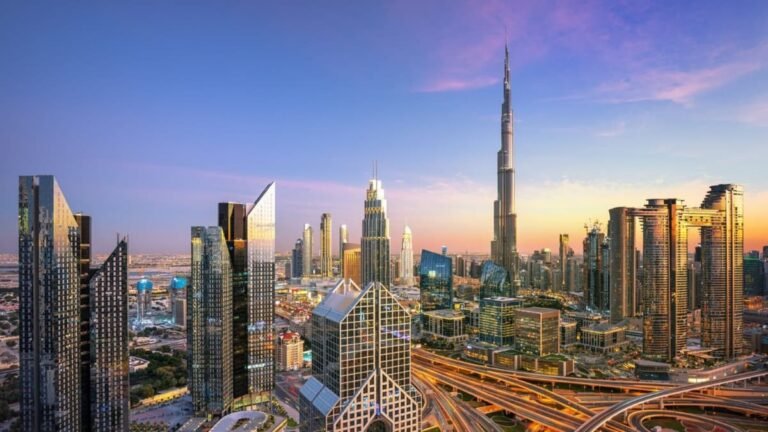
- Downtown Dubai, home to the Burj Khalifa and Dubai Mall, and the default for high-net-worth buyers and families after luxury living.
- Dubai Marina, waterfront living with restaurants and nightlife, and consistently strong rental demand.
- Palm Jumeirah, the man-made island synonymous with exclusivity, beachfront villas and apartments that draw a global buyer.
Where the yields are
Every budget has a play here, from trophy assets to high-yield rentals.
Neighbourhoods to look at
- Jumeirah Village Circle. Affordable and high-yielding, popular with young professionals and families, with yields reaching up to 10%.
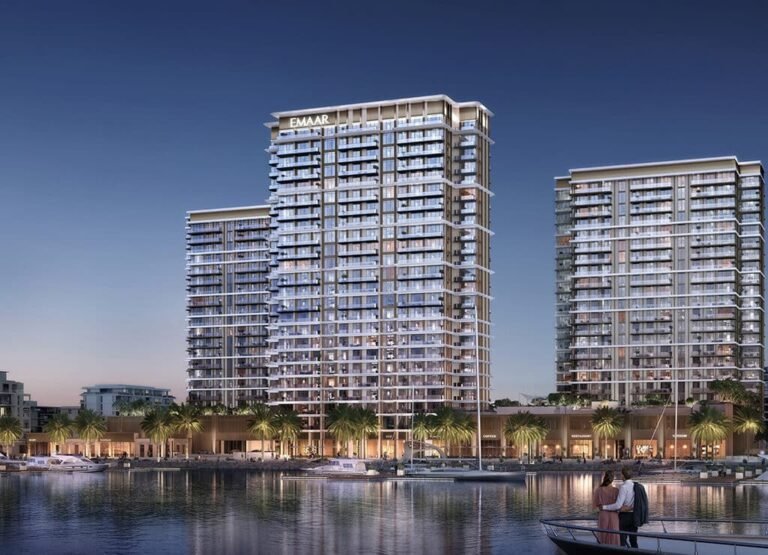
- Dubai Creek Harbour. A mix of residential and commercial, and a real up-and-comer, with Creek Tower set to be the world’s tallest.
- Meydan. Close to Downtown, mid to high-end stock in a well-built area with room to grow.
Yields and appreciation
Dubai rental yields average between 5 to 8% and can hit 10% in areas like Jumeirah Village Circle. Compare that with London and New York, where yields often sit below 4%. On top of the income, property in high-demand areas has appreciated steadily, so you get capital growth alongside the rent. That pairing is what makes the case here.
A market you can actually see into
The Dubai Land Department has put blockchain behind property transactions, which cuts processing time and the risk of fraud. Its open-data work gives you access to transactions, valuations and trends, so you can make decisions on numbers rather than sales patter.
Dubai REST
The DLD’s Dubai REST app uses blockchain to let you buy, sell and register property online. It speeds the process up and makes it more secure, which is part of why this market is one of the more investor-friendly ones going.
The bottom line
Dubai stands apart on the things that matter to a buyer: tax-free returns, high yields, residency tied to your purchase and a location that keeps demand steady. The government protections and open data mean you are not flying blind. Whether that is a luxury unit in Downtown Dubai, a high-yield rental in Jumeirah Village Circle, or a purchase aimed at residency, the fundamentals here hold up to scrutiny, which is more than you can say for a lot of markets promising the same returns.