
The first half of 2025 broke records, and that is not the interesting part. The interesting part is that it did it while the market was clearly maturing. Demand is still strong, wealth is still arriving, and the top end keeps reshaping what “upper end” means. But buyers are tilting toward ready homes over off-plan, and sensible people are starting to price in a mild correction over the next 12 to 18 months. I read that as healthy, not contradictory. A market can consolidate its status as a global wealth hub and catch its breath at the same time.
The headline numbers, before the detail:
- H1 2025 set sales records. The exact total depends on whether you count residential sales only or all real-estate procedures, which I will untangle below. Either way the direction is not in doubt.
- Ready (resale) homes edged ahead to 54% of H1 transactions, up from a near 50/50 split in 2024. That is end-users voting with their feet.
- The AED 10m-plus segment is the fastest-expanding niche. Some trackers show a ten-fold surge since 2020, and Q2 2025 alone posted a record US$2.6B of $10m-plus sales.
- A measured cool-down is likely. Fitch expects up to a 15% price dip into 2026 after roughly 60% gains since 2022. Alarming at first glance, but closer to normalisation given the supply pipeline.
What the H1 2025 numbers actually say
Record sales, with the good kind of asterisk
You will see two families of numbers in the H1 round-ups, and both are correct. On residential sales only, multiple reputable sources put H1 2025 around 99,000 sales and roughly AED 329B in value, the strongest half-year on record. On all real-estate procedures, meaning sales, leases, transfers, and the rest, the Government Media Office reported AED 431B across 125,538 transactions. They measure different scopes. I keep both on the dashboard: sales tell you what is trading, the broader figure tells you how deep and institutional the machine has become.
We keep a rolling market digest here: Dubai Market Updates, Totality Estates
Ready homes tip the scales
Ready homes took roughly 54% of H1 2025 transactions, up from that near even split a year earlier. This is the change you feel on the ground. Families, relocators, and long-term residents want certainty, immediate handover, and simpler risk, and mortgage buyers especially crave it. Off-plan still posts big volumes, but the shift toward ready is a maturing-cycle signal. You can love off-plan and still admit that predictability is soothing when you are moving in within 90 days.
Luxury is still the fastest horse

Prime prices are not exploding the way they did in 2022, but activity at AED 10m-plus is extraordinary. Analysts track a ten-fold rise in those transactions versus 2020, and Q2 2025 hit US$2.6B in $10m-plus deals, another quarterly high. The super-prime buyer, new money, crypto gains, family offices, fund principals, is resilient, and many are moving their lives here, not just their capital.
Villas: ready wins

Villa buying is where intent feels most decisive, because it is hard to half-want a villa. Some H1 reports flag villa value growth above 50% year-on-year and broad category strength; others show most villa deals went to ready units rather than off-plan. The split varies by source and method, but the direction holds: families want the keys now.
If you are benchmarking villa and townhome communities, our guide is here: Dubai Villa & Townhome Communities, kept current with pricing sentiment and rental math.
Yields: apartments still carry the flag
On yields, apartments continue to post the most reliable long-term returns, especially in transit-rich zones like Marina, Downtown, and Business Bay where occupancy has fewer soft patches. Villas rent easily enough, but higher entry prices and maintenance compress the yield unless you are very particular about the product and its micro-location. I have watched beautiful, badly positioned villas underperform for years. For a cautious investor, a strong one or two-bed in a high-absorption urban node is still the dependable workhorse.
If you would rather see rentals modeled by area and plan type: Request a Yield Model.
Off-plan vs ready in H1 2025
Deliberately simplified, so you feel how the market is moving rather than drown in decimals.
| Dimension | Off-Plan (Developers) | Ready / Resale (Secondary) |
|---|---|---|
| Share of H1 transactions | Still large, but under 50% in some trackers as ready edges ahead | ~54% share (H1 2025) |
| Who is buying | Investors chasing payment plans, future handovers, brand-new stock | End-users, relocators, and yield buyers wanting immediate handover |
| Liquidity today | High on Q2 launches; flipping cooled in pockets as timelines lengthened | High in mainstream communities; villas particularly active |
| Risk profile | Construction timing, escrow discipline, pre-handover resale liquidity | Less build risk; cleaner price discovery; inspection matters |
| Where yields line up | Depends on entry price, handover horizon, short-term rental rules | Apartments in urban centres most consistent long-term |
Why demand holds up even as a correction trims the froth
Three pillars keep turning up in every serious analysis, and in hallway conversations with developers, bankers, and the very mobile wealthy.
Policy and visas
Multi-year residency tied to property, simpler renewals, and reforms that make relocating a family and a business genuinely practical. The point is boring and powerful: clarity reduces friction, and capital follows clarity. Anyone who has tried to open a bank account in three other “global hubs” knows exactly what I mean.
Wealth migration
Private capital is structurally re-weighting toward Dubai. Knight Frank tallies record millionaire migration into the UAE and confirms Dubai’s lead in US$10m-plus home sales for a second straight year. Q2’s luxury print does not look like a one-off; it looks like momentum.
The numbers under the vibe
Deloitte’s 2025 outlook frames Dubai as a resilient, safe-retreat market, and Hamptons’ monthly trackers had April and May 2025 setting fresh records for transactions and values. Consecutive record months are not the signature of a thin market. They are the signature of a thick, liquid one with many price-setters.
New to the city? We run 5-day investor immersions with site visits, legal briefings, and developer meetings: Register for an Investor Tour.
The correction talk is rational
I do not love the word “correction,” but it is the right one. Fitch expects up to 15% price relief into 2026 after that 60% climb since 2022, with the 2025 to 2027 supply pipeline doing most of the heavy lifting. This is not 2008-style systemic stress; banks and large developers are better insulated than in prior cycles. It is price discovery ahead, not a structural break. Independent media have also started catching the flip side of off-plan fever, pockets where flipping cooled and some investors learned that paper profit is not the same as an exit. The market needs that lesson every few years.
If you want to talk defense as much as offense, we do that: Book a Free Investment Consultation.
Two tables you can actually use
Prime vs mainstream (directional H1 2025 feel)
| Segment | Price momentum | Liquidity | Who should consider |
|---|---|---|---|
| Super-prime ($10m+/AED 36.7m+) | High transaction values, resilient volumes | Moderate (large tickets, discreet buyers) | UHNWI planning relocation or trophy diversification |
| Prime (AED 5-10m) | Solid but rational | High in Palm, JBR, Marina, Downtown | Families and end-users wanting lifestyle plus decent yield |
| Mainstream (AED 1-3m) | Stable to mildly rising | Very high in Business Bay, JVC, suburbs | First-timers, yield hunters, long-term landlords |
Community cheat sheet (directional, from recent H1 round-ups)
- Dubai Marina / Downtown: deep liquidity, strong long-term rental demand, efficient for one and two-bed yield strategies.
- JVC / Arjan / Dubailand fringes: lower entry, attractive yields, more supply sensitivity, so choose quality carefully.
- Palm Jumeirah / Dubai Hills / Emirates Living: lifestyle premium; villas outperform on end-user demand, not always on yield.
Want a tailored entry plan by price bracket, area, mortgage, and exit timeline? Start here: Work with Totality Estates
Yields, made practical
Published average yields tend to look tidier than reality. In H1 2025, apartments produced the most reliable long-term yields, mostly because entry prices are lower and absorption is broader across urban nodes. Villas can yield well, but maintenance, landscaping, and community fees nibble at returns. Underwriting conservatively, apartments in high-velocity districts, Marina, Business Bay, Downtown, and JVC chosen carefully, are the baseline. Three common profiles, rounded for readability and illustrative rather than advice:
| Profile | Typical ticket | Gross annual rent | Opex (fees, upkeep) | Net yield (indicative) | Comment |
|---|---|---|---|---|---|
| 1BR in Business Bay (newer tower) | AED 1.4m | AED 95k | AED 12k | ~5.9% | Liquidity plus steady corporate demand. |
| 2BR in Dubai Marina (prime tower) | AED 2.6m | AED 170k | AED 20k | ~5.8% | Slightly lower yield, higher resilience and resale depth. |
| Townhouse in JVC (ready) | AED 2.1m | AED 135k | AED 22k | ~5.4% | Vacancy sensitive; choose micro-location carefully. |
Short-term rentals can lift income, but watch seasonality and building rules. My cautious take: underwrite at long-term rates first, treat STR upside as a bonus, not the plan. For a custom sheet down to service charges and vacancy assumptions: Request a Yield Model.
Demand drivers you can point to
Visa reforms and policy clarity. Long-term residency tracks and property-linked visas cut friction for global families. Deloitte’s 2025 outlook frames Dubai as a safe-retreat market with strong visitor performance, 9% more overnight visitors in 2024 at roughly 78% occupancy, which flows straight into rental demand.
Wealth migration and the luxury flywheel. Knight Frank keeps reaffirming Dubai as the world’s busiest market for US$10m-plus home sales. That is not just a status line; it changes neighbourhoods. Schools fill, restaurants thrive, private medical expands.
Tourism and population growth. Visitor highs and steady net migration drive absorption in apartments first, then townhomes, which keeps occupancy and pricing resilient in the best-connected districts, exactly where new arrivals start their Dubai story.
Supply, the word everyone is circling
The ratings agencies are broadly aligned. Fitch expects up to 15% softening into late 2025 and 2026 after roughly 60% gains since 2022, mostly on heavy deliveries, with banks and major developers better insulated than before. Moody’s and others caution that 150k to 250k homes could deliver across 2025 to 2027, with a particularly chunky handover wave in 2026. That does not mean blanket stress. It means price discovery in overbuilt apartment tiers while prime and super-prime stay more idiosyncratic. The Financial Times caught the human angle: off-plan flipping cooled, and some speculators learned that profit on paper is not exit liquidity.
Risk controls that matter
- Developer due diligence. Delivery record, snag history, financials where available. For the big names, check which brand partnerships are real and which are marketing perfume.
- Escrow and payment schedules. Verify the escrow arrangement, construction milestones, and delay penalties. Not all schedules are equal.
- Resale liquidity before handover. Check assignment clauses, fees, and market depth for that specific sub-market. Outcomes vary wildly within the same postcode.
- Service charges. Line-item them. High fees quietly erase a great yield.
- Exit math. Price your exit with a conservative haircut, especially if the plan depends on selling into a handover wave.
We go through all of it, line by line: Book a Free Investment Consultation
The 12-month view
I am holding two ideas at once. First, stabilisation is healthy. H1 prints were record-heavy with real breadth, no single-buyer illusion, which suggests depth even if prices chop sideways. Second, selective softening makes sense. As deliveries climb, thinly differentiated apartment tiers will negotiate. That is rotation, not catastrophe. Well-located ready stock with end-user pull should stay sticky, and super-prime stays idiosyncratic because those buyers are not rate-sensitive in the same way. Fitch’s base case of a moderate correction looks reasonable.
Positioning ideas, not advice:
- Buy: quality ready apartments with provable rent rolls, prime-location two-beds with parking and good light, villas where land scarcity is real rather than theoretical.
- Hold: off-plan that is 50%-plus paid with clear handover dates. Do not force exits into soft windows.
- Trim: paper-profit allocations in crowded STR corridors where five near-identical schemes hand over in the same quarter.
To distil this to your budget and timeline: Work with Totality Estates.
Who should buy what in 2025-26
| Buyer profile | Goal | Product fit | Why now / why wait |
|---|---|---|---|
| First-time investor (AED 1-1.5m) | Durable net yield | Ready 1BR or compact 2BR in high-absorption zones | Now: predictable rent and liquidity. Wait: if 3-6 months brings better entry on oversupplied tiers. |
| Family end-user (AED 3-6m) | Lifestyle plus schools | Ready villa or townhouse in established communities | Now: genuine need beats market-timing. Wait: if flexible, shop patiently for Q4-Q1 negotiability. |
| UHNWI (AED 20m+) | Trophy plus relocation | Super-prime villa or branded residence | Now: supply is thin and custom. Wait: only if the exact spec is not yet available. |
| Yield-maximiser | Income | Mid-market apartments with low fees | Now: but underwrite conservatively and do not bank on STR premiums. |
Quick answers
Will prices crash? Unlikely in the systemic sense. A moderate correction of up to 15% into 2026 is plausible in selected segments given supply. Strong underlying demand and better banking discipline change the shape of any downturn versus the old cycles.
Is luxury a bubble? Luxury is cyclical, but it is fed by net-worth migration and limited trophy supply. Q2 2025’s record US$10m-plus volume tends to cushion volatility at the very top.
Are ready homes really leading? Yes, roughly 54% of H1 2025 transactions were ready or resale, a notable shift from 2024.
Should I avoid off-plan? Not necessarily. Choose the right sponsor, escrow structure, and exit plan, and assume your profit is not realised until someone buys your assignment or you take keys and rent it.
What about interest rates? Leverage helps, but this is still an equity-heavy market. Focus on entry price, fees, and rentability rather than micro-bets on rate cuts.
Neighbourhood snapshots, 2025 lens
Plain-spoken and useful. No hard sell, just what I have seen work and where people get surprised.
Dubai Marina
If you want liquidity, you come here. Apartments turn fast, occupancy is sticky, and the waterfront energy does not tire.

Best for: one and two-bed rental plays, professional tenants, easy resales.
Pros: deep tenant pool, walkability, retail everywhere, strong long-term demand.
Watch-outs: older towers with dated lobbies and higher service charges nibble your net; construction noise in pockets.
Downtown Dubai
Striking and polished, and occasionally pricier than the yield arithmetic justifies. It holds value when markets wobble.

Best for: balanced lifestyle plus capital preservation, corporate tenants.
Pros: transit, retail gravity in Dubai Mall, global appeal.
Watch-outs: service charges; pick buildings with proven maintenance and efficient floor plans.
Business Bay
The workhorse of central Dubai. Less glossy than Downtown, but the math often pencils better.

Best for: value seekers who still want central access, strong one and two-bed demand.
Pros: newer stock keeps arriving, corporate tenant flow, good liquidity.
Watch-outs: micro-location matters, street approach, stack orientation, and immediate neighbours all change rentability.
Jumeirah Lake Towers (JLT)
Underrated for years, better appreciated now. Parks and lakes soften the office-tower feel.
Best for: yield hunters wanting central-adjacent with a calmer feel than the Marina.
Pros: community feel, food and drink scene, more competitive pricing.
Watch-outs: some towers are tired; vet service charges and building management.
Jumeirah Village Circle (JVC)
The darling of spreadsheets. Friendly entry points and yields that can look great. Be picky.
Best for: yield-first buyers who will do micro-level due diligence.
Pros: tenant volume, improving amenities, wide choice of stock.
Watch-outs: quality varies a lot; service charges and build quality swing outcomes; handover waves create rent competition.
Dubai Hills Estate
Families love it. Parks, schools, retail, tidy planning.
Best for: end-users, longer-term capital growth, villas and townhouses with lifestyle pull.
Pros: master-planned consistency, strong resale depth.
Watch-outs: some product is priced for perfection; verify plot orientation and traffic patterns.
Palm Jumeirah
Trophy territory with a real community heartbeat now.
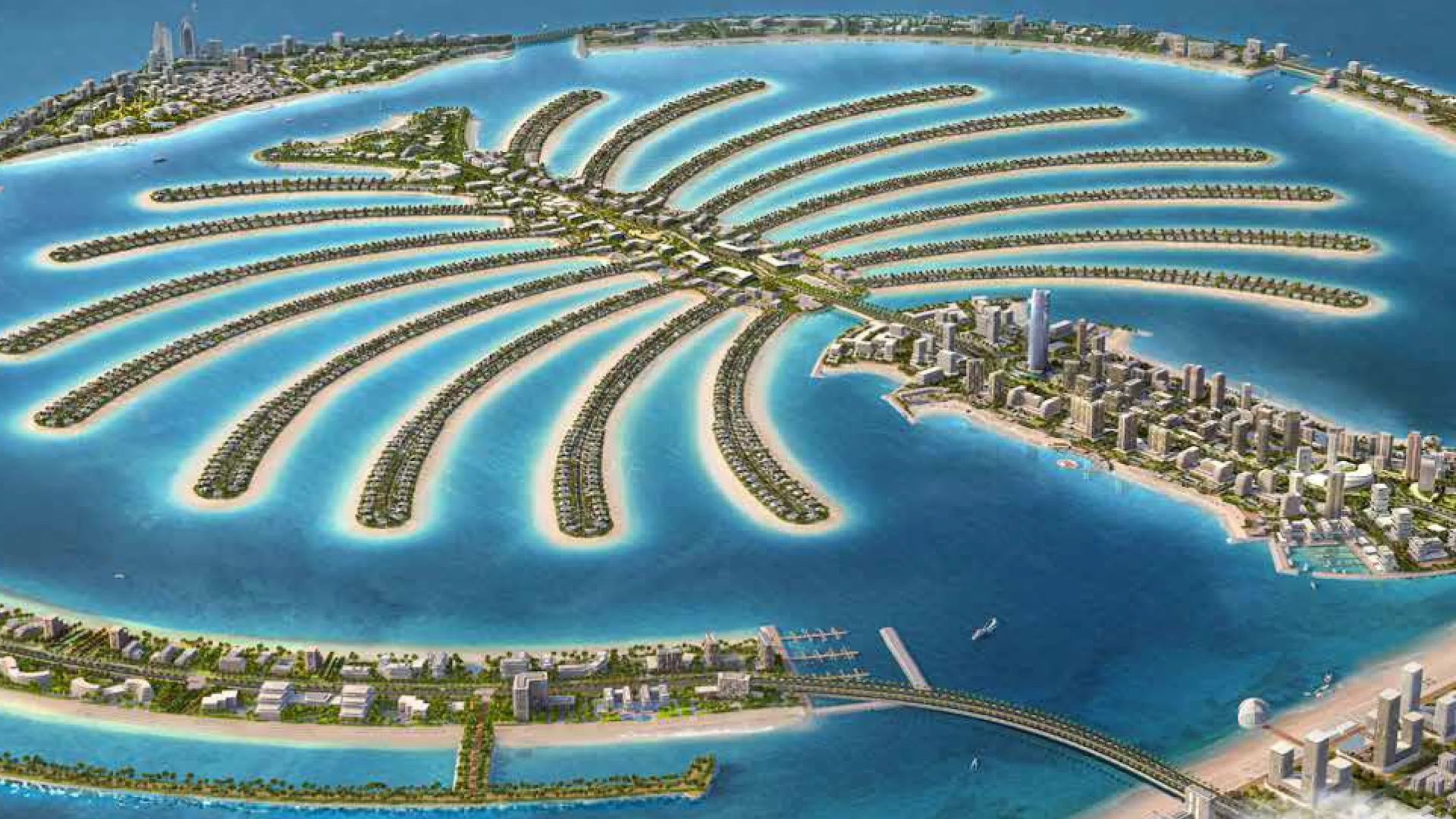
Best for: premium end-users and UHNWI buyers, distinctive two-bed-plus apartments with views.
Pros: scarcity, global brand recognition, lifestyle premiums tenants will pay for.
Watch-outs: service charges; premium tenant expectations mean upkeep costs are real.
Dubai Creek Harbour (DCH)
Special skyline views and new urban-core energy.

Best for: medium-term believers in the “new Downtown” thesis, balanced buy-to-hold.
Pros: ongoing infrastructure, waterfront draw, brand-new stock.
Watch-outs: lease-up periods can be uneven around handovers; pick buildings with easy access.
Arabian Ranches / Ranches 2 & 3
The classic suburban family choice.
Best for: end-users or long-term landlords comfortable with villa dynamics.
Pros: greenspace, schools, community feel.
Watch-outs: yields typically lower than urban apartments; maintenance diligence matters.
Dubai South / Expo Corridor
A bet on long-arc infrastructure, with the airport expansion narrative at its centre.
Best for: patient investors with a 5 to 10-year lens.
Pros: entry pricing, improving jobs base, logistics tailwinds.
Watch-outs: timelines. Momentum can be lumpy, so choose credible sponsors.
Off-plan vs ready, expanded risk matrix
| Risk vector | Off-plan (developer sales) | Ready / resale (secondary) | Mitigations that actually help |
|---|---|---|---|
| Delivery timing | Medium (timeline drift is common) | Low (immediate handover) | Demand a detailed milestone schedule; escrow checks; conservative completion buffers |
| Price at exit | Medium-high (handover clusters) | Medium (market-linked) | Avoid crowded typologies; underwrite exit at a haircut; prefer a unique stack or line |
| Legal & contracts | Medium (assignments vary) | Low-medium | Lawyer review; confirm assignment fees and rights; snagging protections |
| Service charges | Unknown (estimate only) | Known (but rising risk) | Model 3-7% annual increase; compare to peer towers |
| Liquidity | Medium (pre-handover buyer pools) | High (if mainstream or prime) | Pick liquid districts; verify days-on-market history |
| Build quality | Unknown (on paper) | Visible (inspectable) | Third-party snagging; deep dive on sponsor track record |
| STR feasibility | Policy-sensitive | Building and community specific | Confirm HOA and permit rules before purchase |