
Foreign buyers who own property worth AED 750,000 or more may apply for a 2-year renewable investor residence visa. Buyers with property worth AED 2 million or more may apply for a 10-year Golden Visa, subject to the applicable rules and documentation. Dubai Land Department states both thresholds directly in its investor visa services. So yes, foreigners can buy property in Dubai, and it can be straightforward.
That is the short version. The useful answer is more nuanced. Buying here works cleanly only if you understand where foreigners can buy, what type of ownership you are actually getting, and how the total acquisition cost stacks up beyond the headline sale price.
Why foreign investors keep looking at Dubai
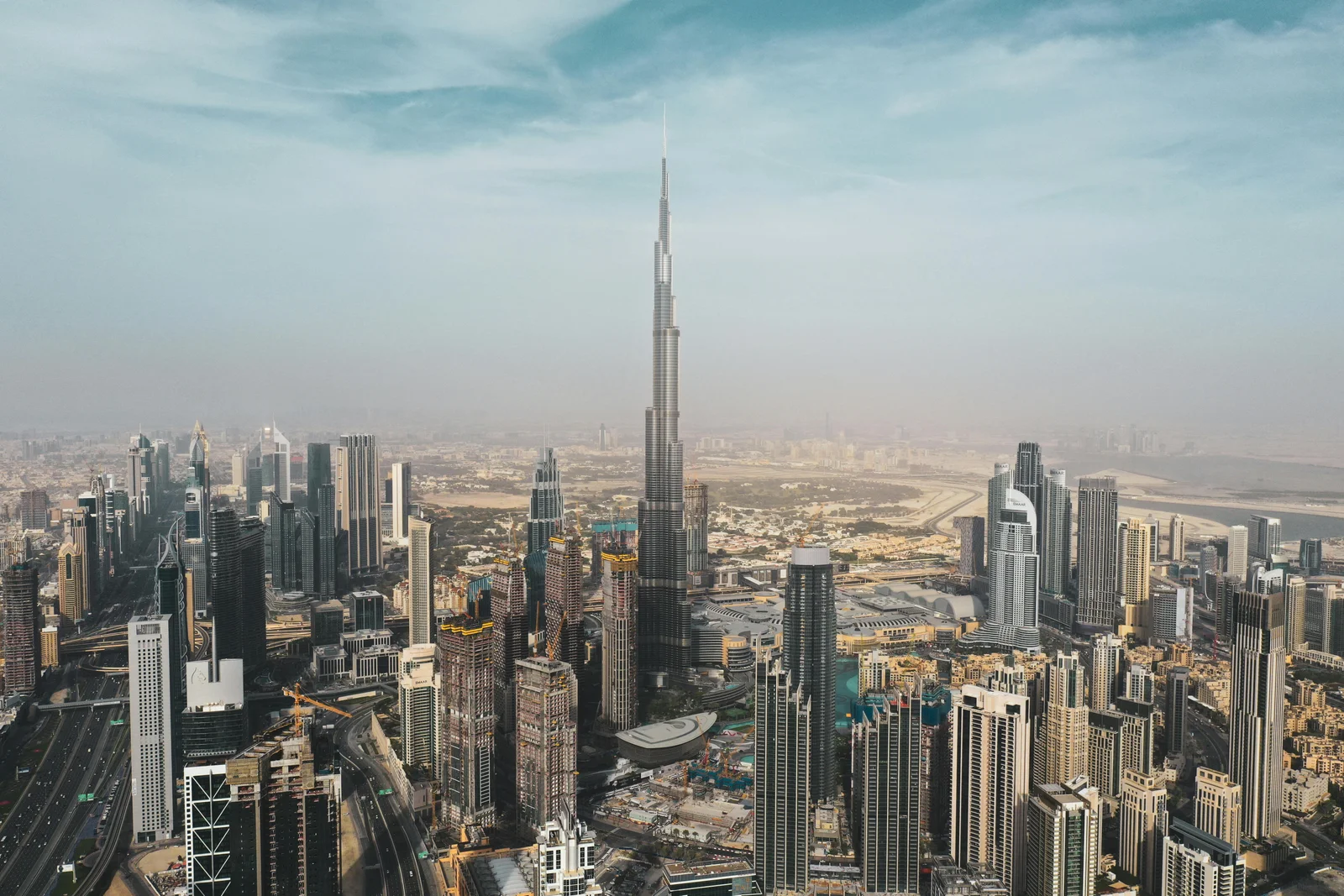
Part of the appeal is obvious. Dubai offers a globally recognised market, broad foreign-buyer access in designated areas, and a registration system that puts title and transfer under Dubai Land Department. The other reason is momentum. On the emirate’s official figures, Dubai recorded more than AED 917 billion in real estate transactions in 2025, its strongest year to date, while the rental sector grew in both contract volume and value. That does not erase risk, but it does show a market with depth, liquidity, and continued international participation.
For many overseas buyers, Dubai sits in an unusual middle ground. Not purely a yield market, not purely a lifestyle market. It can be both, which is why the real question is no longer “can foreigners buy property in Dubai?” but “which type of Dubai property fits my objective?” That distinction matters more than people think.
Can foreigners buy property in Dubai legally?
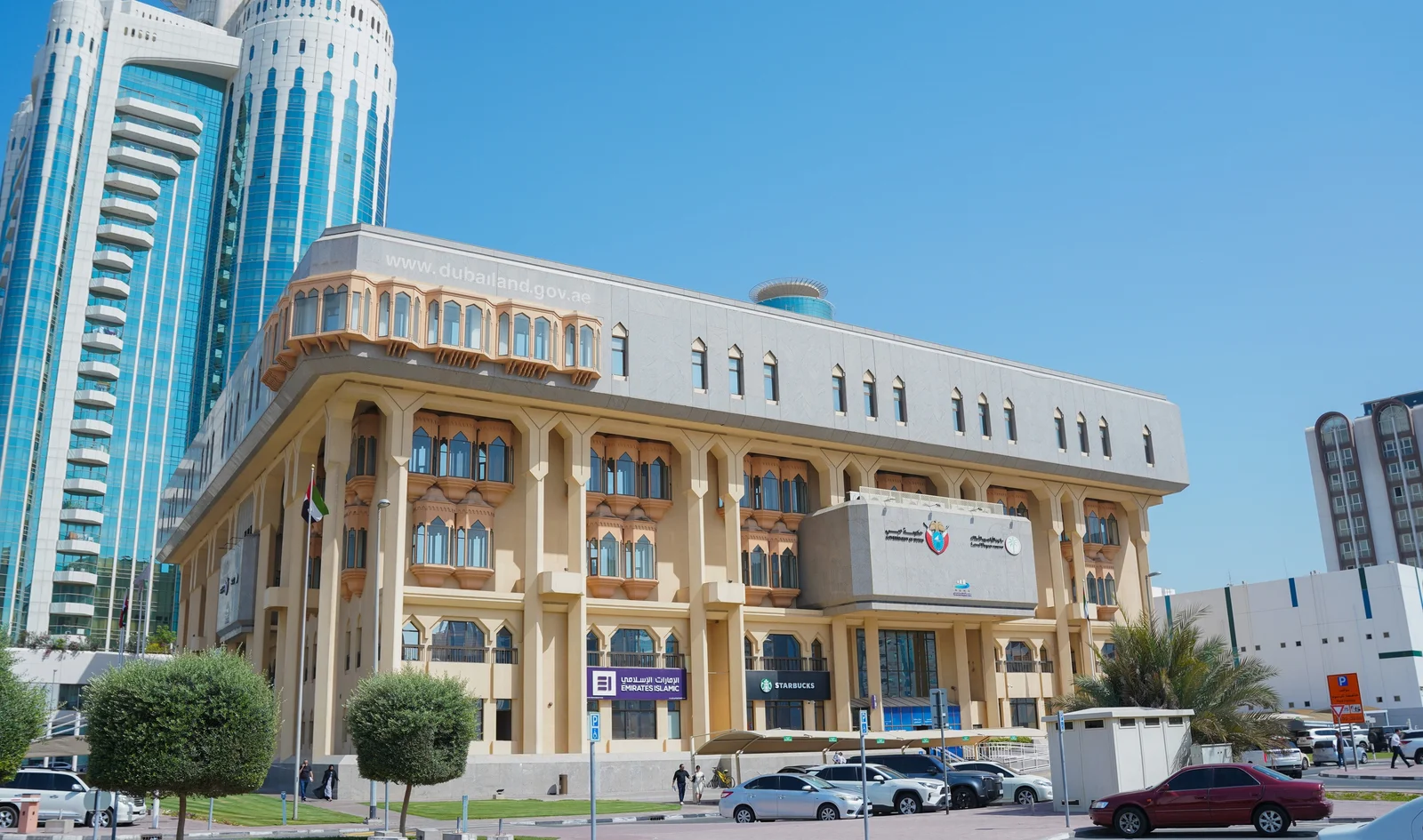
Yes. Dubai Land Department states that foreign ownership is allowed in freehold areas, and Dubai’s legal framework requires real estate transactions to be registered in DLD’s records to protect investor rights. The legality is clear. The location and registration details are what determine whether a purchase is valid and enforceable.
The broader legal basis goes back to Dubai’s real property framework and Regulation No. 3 of 2006, which identifies designated areas for foreign ownership. The UAE government also states that expatriates can buy property in Dubai in areas designated as freehold.
So the answer is yes, but not everywhere. This is where some buyers get confused. They hear “foreigners can buy in Dubai” and assume any plot, any district, any property type. It does not work that way. The safer framing: foreigners can buy in approved freehold areas, and should confirm title, ownership type, and registration path before paying a deposit.
Freehold vs leasehold, the distinction that changes everything
This affects ownership rights, investment strategy, exit value, and how confidently you hold long term. Dubai offers both freehold and leasehold structures to foreign buyers in the relevant areas, but they are not interchangeable.
| Ownership model | What it means for a foreign buyer | Typical use case | Main advantage | Main caution |
|---|---|---|---|---|
| Freehold | Full ownership of the property, and in many cases the land interest tied to it, with no fixed expiry | Long-term holding, family wealth, rental income, resale | Stronger ownership rights and easier long-term positioning | Usually higher entry pricing in prime districts |
| Leasehold | Right to use the property for a long fixed period, commonly up to 99 years | Lower entry cost or specific district access | Can reduce the upfront price | Ownership is time-limited and may be less attractive for some long-term investors |
Dubai Land Department describes foreign ownership in freehold areas, while Dubai legislation also provides for long-term leasehold or usufruct rights up to 99 years in the relevant contexts. Engel & Völkers frames the foreign-buyer choice around the same two structures.
For most international investors focused on capital preservation, inheritance, resale flexibility, and clean title, freehold is the more straightforward route. Leasehold is not bad, but it needs a more careful read of the legal and practical implications. Many summary-style articles glide over that too quickly.
Key aspects of investing as a foreigner
1. Ownership rights
In designated freehold areas, foreigners can own property legally and register that ownership through DLD. That is the backbone of the case. Without secure ownership registration, everything else, yield, visa, resale, financing, sits on weaker ground.
2. Property choice is broad
Foreign buyers are not boxed into one format. Market guides consistently point to apartments, villas, townhouses, serviced units, and in many areas commercial property. The practical choice usually comes down to whether you want rental income, personal use, or a blend of the two.
3. Rental yields remain a real part of the story
Dubai’s average residential rental yields stay competitive, with Engel & Völkers citing an overall average of 6.76%, and apartments averaging 7.07% in the referenced snapshot. Not every property hits those figures, but it explains why yield-focused foreign capital keeps arriving.
4. Residence visa pathways are real, but should not be oversold
A lot of articles oversimplify this. The visa route is attractive, but treat it as an added benefit, not the whole thesis. DLD’s current services state AED 750,000 for the 2-year investor residence route and AED 2 million for the 10-year Golden Visa investor route. Always verify the latest eligibility documents and paid-value requirements at application stage.
5. Tax is one reason Dubai stands out
The UAE government states that the UAE does not levy income tax on individuals. For a foreign property investor, that makes Dubai especially appealing next to jurisdictions where rental income is cut by personal income tax from day one. Your home-country tax position may still apply, but the UAE side of the equation is a major advantage.
Best areas to invest as a foreigner
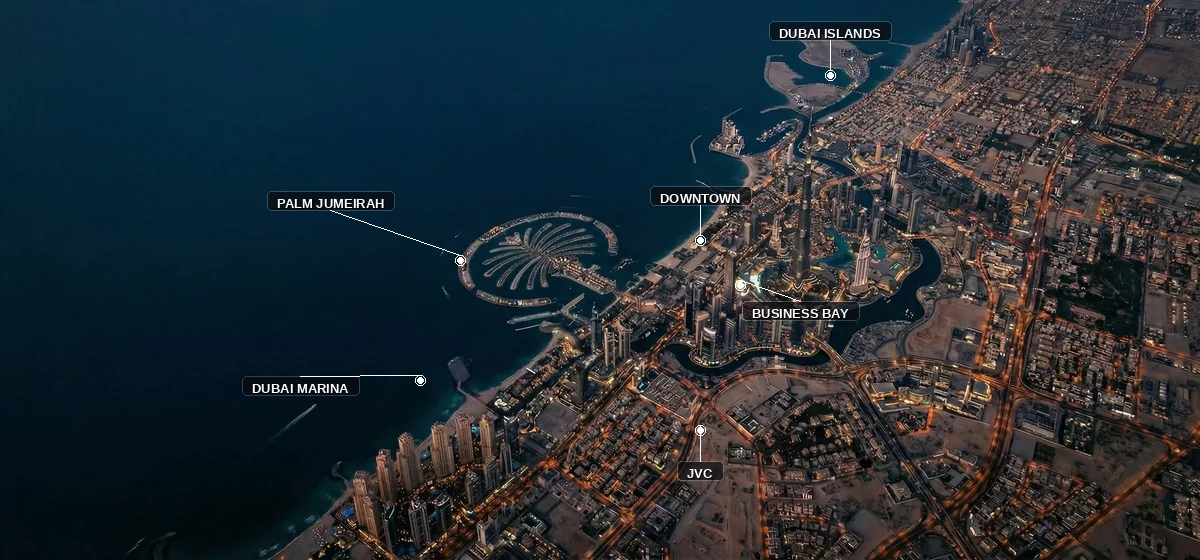
Once the legal side is clear, the sharper question is where to actually buy. That depends less on hype and more on intent. Some areas are better for liquidity and tenant demand, some for prestige and wealth preservation, some simply for yield. Dubai is not one market. It is several sub-markets under one skyline.
If the goal is rental income first, mid-market communities often make more sense. If the goal is a trophy asset, a legacy hold, or branded waterfront exposure, prime districts usually win, even with softer yield. That trade-off matters. You do not buy a Palm Jumeirah apartment expecting JVC-style yield, and you do not buy a small JVC unit expecting Palm-level scarcity pricing.
| Area | Typical positioning | Avg price per sq. ft. | What it tends to suit best |
|---|---|---|---|
| Dubai Marina | Established waterfront high-rise district | AED 2,061/sq. ft. | Short to mid-term rental demand, broad resale audience |
| Downtown Dubai | Prime central district around major landmarks | AED 2,980/sq. ft. | Prestige, prime-city exposure, strong end-user demand |
| Palm Jumeirah | Ultra-prime beachfront and branded luxury | AED 4,153/sq. ft. for apartments | Wealth preservation, trophy ownership, luxury short stays |
| JVC | Mid-market, yield-oriented residential community | AED 1,448/sq. ft. | Entry-level investing, higher yield focus, broad tenant base |
| Dubai Islands | Emerging waterfront master development | Around AED 2,800/sq. ft. | Early-entry coastal positioning, growth-led waterfront thesis |
Community pricing above comes from the latest area averages published by Engel & Völkers for Dubai Marina, Downtown Dubai, Palm Jumeirah, and JVC, while Totality’s Dubai area pages currently place Dubai Islands at roughly AED 2,800 per sq. ft., with an indicated average rental yield around 8% on the site’s area data.
Dubai Marina
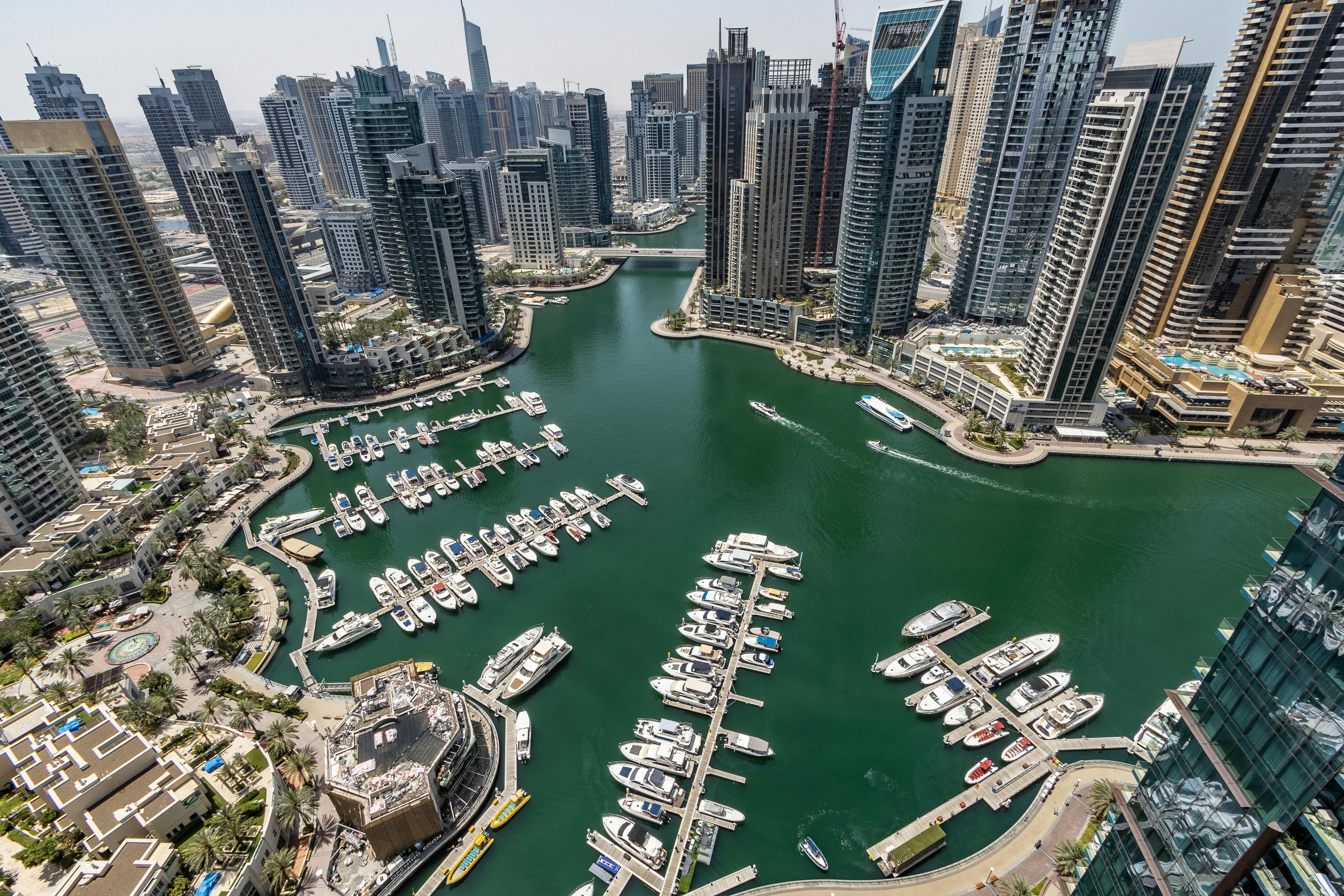
Dubai Marina is one of the easiest areas for a foreign buyer to understand. Mature, globally recognisable, heavily apartment-led, and backed by a real lifestyle ecosystem rather than just marketing. Visit Dubai describes it as a district of soaring skyscrapers, watersports, family activities, and dining, while Engel & Völkers shows December 2025 average selling prices at about AED 1.38 million for studios, AED 1.88 million for one-beds, and AED 2.70 million for two-beds. That makes it a relatively accessible prime waterfront market by Dubai standards, especially against Palm Jumeirah.
For foreign investors, Marina works well when the objective is a mix of recognisable location, strong rental demand, and easier resale liquidity. Not the cheapest district, but it has depth, and depth matters when the market gets less euphoric. Being established also means you are underwriting a known market rather than a promise.
Downtown Dubai
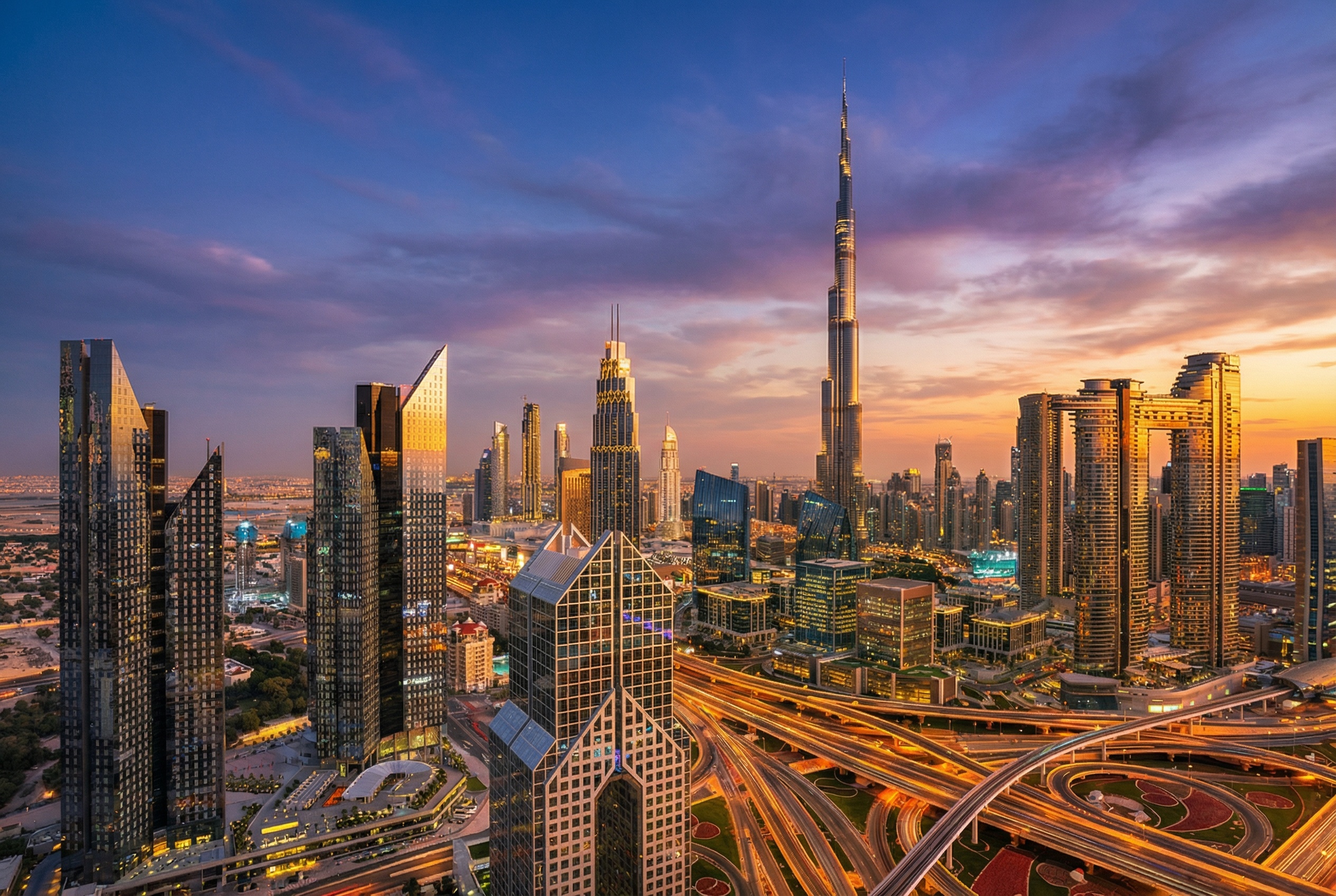
Downtown is a different proposition. You are paying for centrality, landmark value, and brand gravity. Visit Dubai describes it through iconic landmarks, world-class shopping, and promenades, which fits, because its appeal is tied directly to place identity. Engel & Völkers currently puts average pricing around AED 2,980 per sq. ft., substantially higher than Dubai Marina and far above JVC.
If a foreign buyer wants a prime Dubai address that reads clearly to almost any international tenant or buyer, Downtown sits near the top of the list. It suits investors who care about prestige, centrality, and resilient end-user demand more than maximum gross yield. Less about a bargain entry, more about the quality of demand.
Palm Jumeirah
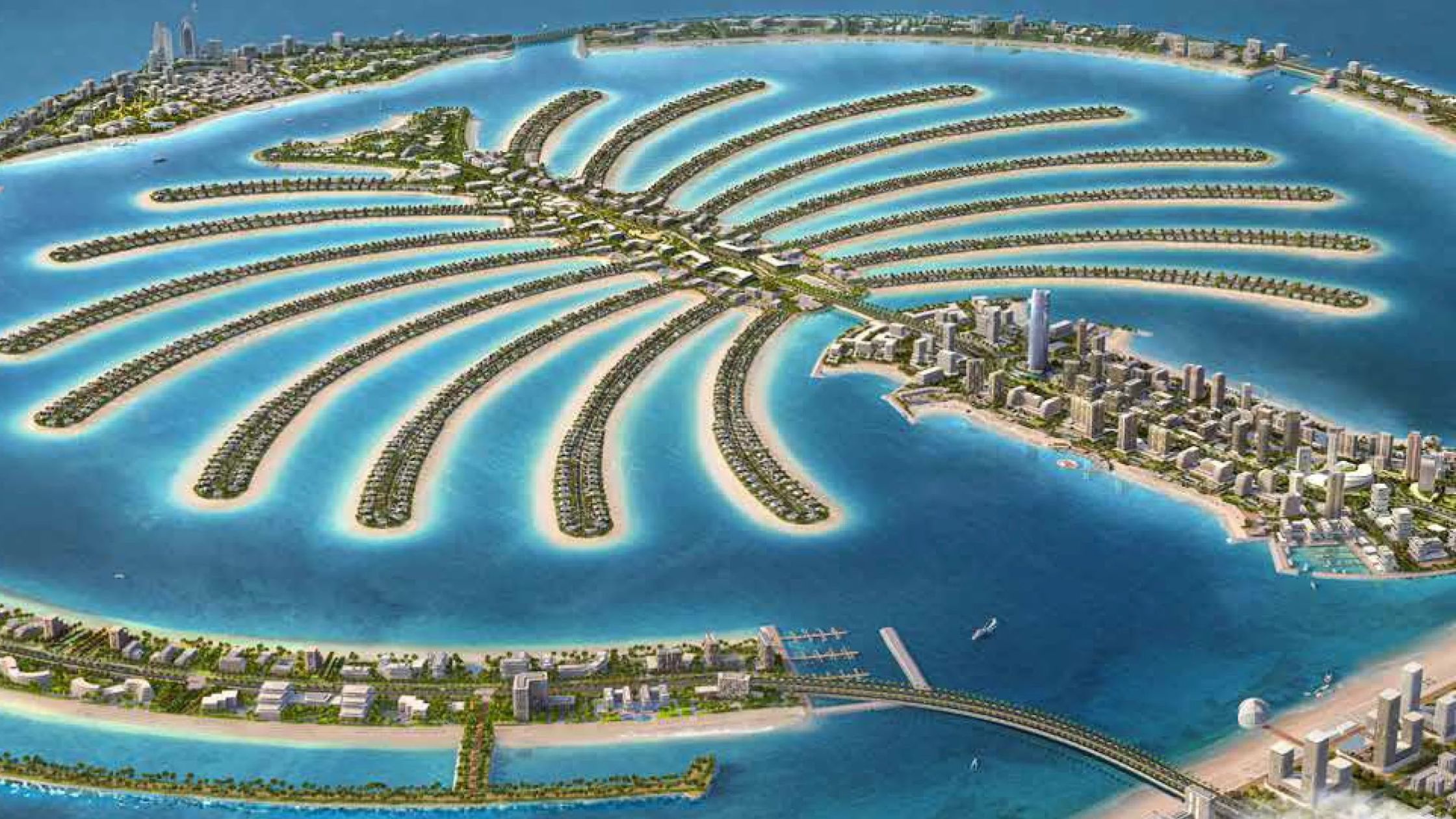
Palm Jumeirah is the premium end of the foreign-buyer conversation. Visit Dubai frames it around high-end hotels, beach clubs, and island living, and Engel & Völkers’ data reflects how expensive that positioning is, with average apartment pricing of about AED 4,153 per sq. ft. and very high absolute ticket sizes for larger units. Even one-bedroom average sale values in the latest Palm guide sit well above many investors’ comfort zone.
Palm can work extremely well, but usually for the right reason. It is a scarcity, prestige, and luxury-demand story more than a pure cash-yield story. Buyers after a signature asset, branded residence exposure, beachfront living, or a long-term hold often find it compelling. Buyers chasing efficiency sometimes find the numbers feel tighter once service charges and true net yield are modelled honestly.
Jumeirah Village Circle (JVC)
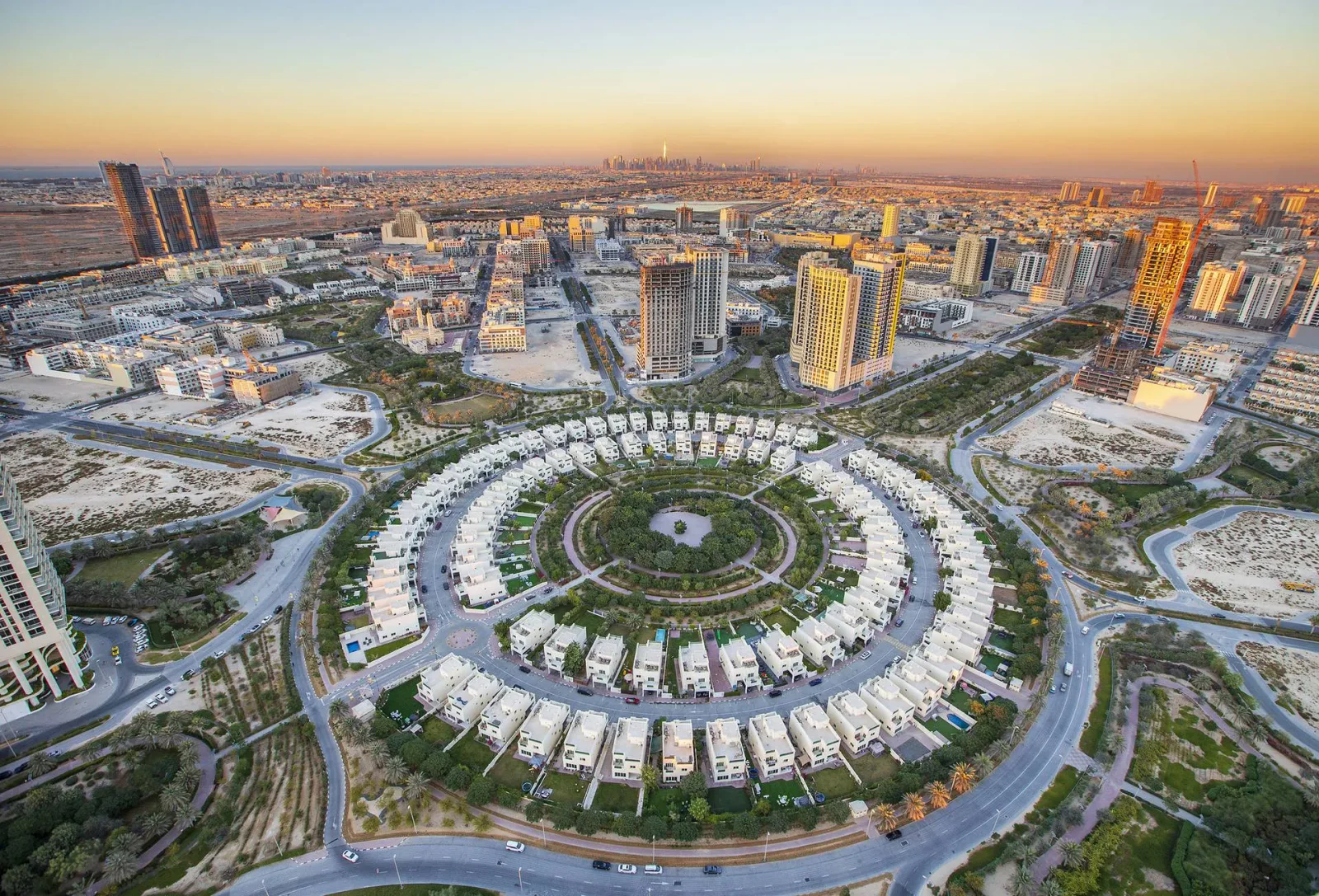
JVC is where the conversation shifts from glamour to math. Engel & Völkers describes it as a mid-market residential community known for relatively affordable apartments, strong rental yields, and ongoing development, with average pricing around AED 1,448 per sq. ft. As of December 2025, the same guide showed average apartment sale prices from roughly AED 692,774 for studios and AED 1,099,469 for one-beds.
That is why JVC keeps appearing in investor discussions. Not because it is the most famous district, but because the entry point is more manageable, the tenant pool is broad, and the yield case is usually more convincing. For a foreigner buying a first Dubai asset, or an investor who prefers two or three cash-flowing units over one expensive trophy, JVC deserves serious consideration.
Dubai Islands
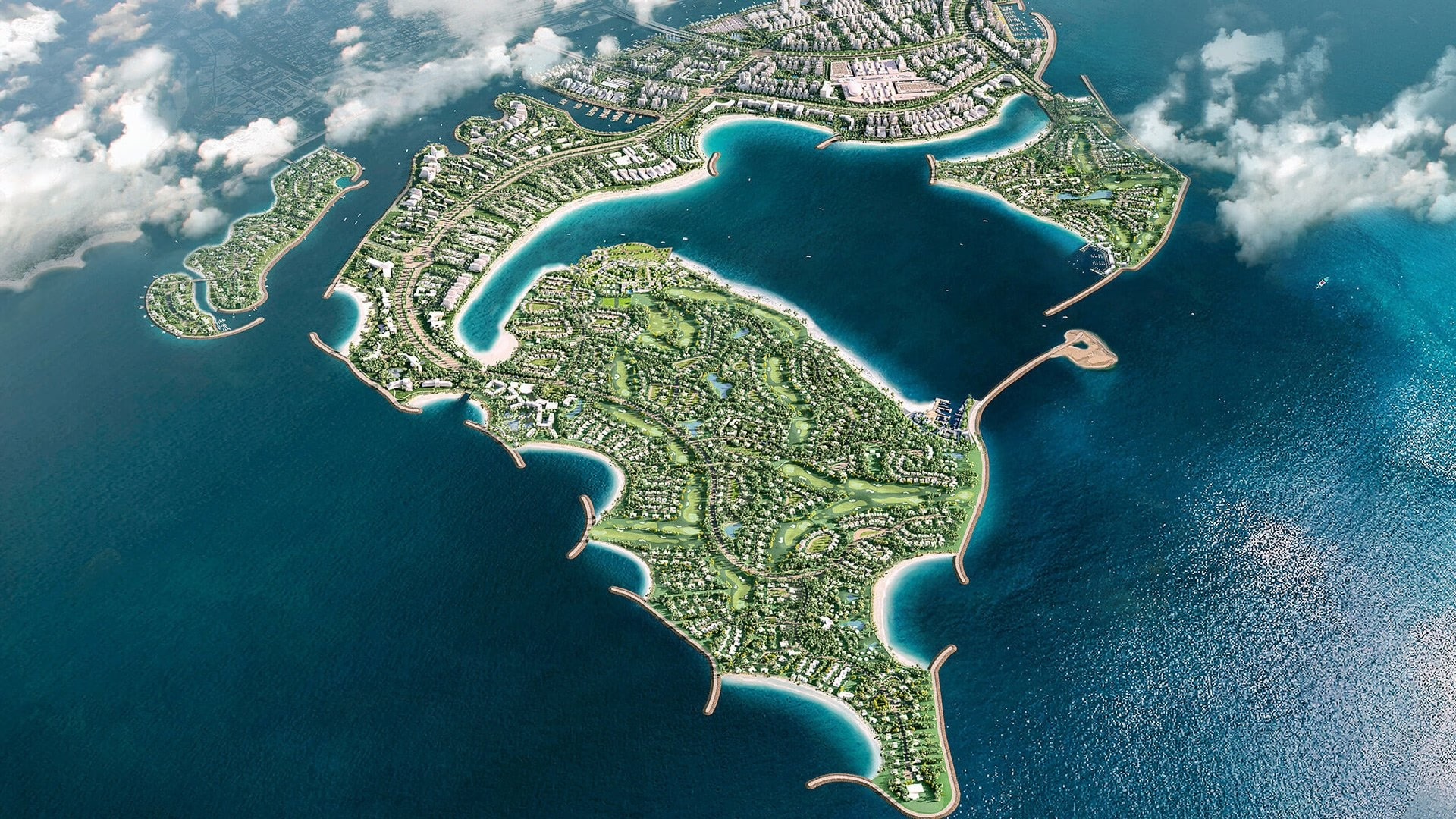
Dubai Islands sits between current reality and future positioning. Totality’s area page describes it as a large five-island waterfront development off the Deira coastline, and the site’s broader Dubai areas data currently places it around AED 2,800 per sq. ft. with an indicated average rental yield near 8%. Neither bargain-basement nor fully saturated prime, which is probably why investors keep circling back to it.
For foreign buyers who want waterfront exposure without paying Palm Jumeirah pricing, Dubai Islands can be interesting, especially paired with a longer holding period and a view on coastal infrastructure, hospitality demand, and future place-making.
Step by step, how foreigners buy property in Dubai
The process is not especially complicated, but it needs to be handled properly. DLD’s sale registration services make clear the transaction is formal, document-driven, and registered through official channels. Non-resident buyers are explicitly accommodated: DLD allows buyer information to be entered by Emirates ID or passport, and its initial sale registration requirements list a valid passport for non-residents.
1. Choose the asset and confirm the ownership type
Before anything is signed, confirm the property is in a designated freehold area, and establish whether it is a ready property or an off-plan unit. Basic, but it changes the whole risk profile. Ready property leads toward title deed transfer, while off-plan usually begins with provisional registration in Oqood and calls for more attention to project status, escrow, and delivery risk. DLD provides both project status enquiry and Dubai REST tools for this.
2. Agree terms and sign the sale agreement
In resale deals, buyer and seller typically agree commercial terms and sign the Memorandum of Understanding, commonly known as Form F. DLD’s broker guidance specifically covers the creation of Contract F, which is why it stays central to the flow. At this stage the buyer usually pays a reservation or security deposit, often 10%, though the exact arrangement depends on the deal.
3. Verify documents and clear pre-transfer conditions
For a clean transfer, the parties need the right documentation and, in many resale cases, a developer NOC or other clearances before transfer. DLD’s service materials show the transaction is processed through official registration channels and supported by required identification and property documentation. For non-residents, passport-based processing is clearly supported.
4. Register the sale with Dubai Land Department
This is the moment that really matters. DLD’s Property Sale Registration service allows registration of a sale between seller and buyer, and the legislation compendium still reflects the key statutory fee of 4% of the sale contract value for registering a real property sale contract. For many completed-unit transfers, trustee-related processing fees also apply, commonly AED 2,000 plus VAT under AED 500,000 and AED 4,000 plus VAT at AED 500,000 and above, depending on the service and transaction type.
5. Receive ownership evidence
For completed property, the end point is title registration and the issuance or update of the title deed in DLD records. For off-plan, the initial stage is recorded through the interim register before final title is issued on completion and entry into the main property register. That distinction is one foreign investors should understand early, not after wiring funds.
| Stage | What happens | Why it matters |
|---|---|---|
| Shortlist | Confirm area, budget, freehold eligibility, ready vs off-plan | Aligns the asset with the investment objective |
| Offer and agreement | Negotiate price and sign Form F or SPA | Sets the legal and commercial terms |
| Due diligence | Check seller, title, NOC, project status, service charges | Reduces legal and operational surprises |
| Registration | Pay DLD-related fees and register the transfer | Makes the ownership legally effective |
| Post-transfer | Receive title deed or interim registration | Confirms the buyer’s registered interest |
This sequence is consistent with DLD’s registration flow, document requirements, title issuance framework, and project-status tools.
Costs, benefits, risks, and visas
What foreign buyers underestimate is not the legal right to buy. That part is clear in Dubai. It is the total cost stack, the gap between gross and net return, and the timing of when benefits like residency actually become available. This is where otherwise decent articles get too neat.
Full cost breakdown
The largest government transaction cost on a standard purchase is the DLD registration fee, which the service page presents as 2% payable by the seller and 2% payable by the buyer, effectively 4% of the sale value in total. On top of that, DLD lists additional charges including AED 250 for title deed issuance, AED 225 for the unified map under Dubai Municipality, AED 250 for villas and apartments, plus the standard AED 10 knowledge fee and AED 10 innovation fee. DLD also lists service partner fees of AED 4,000 + VAT if the sale value is AED 500,000 or more, and AED 2,000 + VAT if it is below.
In real dealmaking, you still read the paperwork carefully, because while the official structure is 2% and 2%, the commercial burden is often shifted by agreement. Some deals end up with the buyer carrying most or all of that 4% in practice. Not a contradiction, just a reminder that the legal fee structure and the negotiated allocation are not always the same thing.
Budget for broker and conveyancing costs from the start too. The current Dubai cost guide states agency fees are typically 2% of the purchase price plus 5% VAT, while conveyancing for residential deals commonly runs AED 6,000 to AED 10,000 depending on scope. That is worth flagging, because buyers fixate on price per square foot and forget that transaction friction adds a meaningful amount to the upfront cash.
Agency fees, resale vs developer purchases: the 2% + VAT applies to resale transactions only, where you buy from an existing owner. Buy directly from a developer on a new-launch or off-plan project and you pay no broker commission, because the developer covers the agent’s fee. That is a meaningful difference when comparing the two routes.
If financing is involved, the stack gets heavier. Engel & Völkers notes mortgage arrangement fees are usually about 1% of the loan amount plus 5% VAT, with valuation fees typically around AED 2,500 to AED 3,500 plus VAT. DLD’s mortgaged sale registration service also lists a mortgage fee of 0.25% of the mortgage value. For a leveraged foreign buyer, these matter, because a high headline yield looks a lot less impressive once finance, service charges, and vacancy are modelled properly.
Check the building’s service charges before treating any unit as a yield play. DLD provides an official Service Charge Index, and its service description makes clear that approved fees for jointly owned properties can be queried through the DLD system. Two apartments with similar rents and sale prices can produce very different net returns once annual building charges are factored in.
| Cost item | Typical or official basis | Notes |
|---|---|---|
| DLD registration fee | 4% total, shown as 2% seller and 2% buyer | Confirm who pays what in the contract |
| Title deed and map related charges | AED 250 title deed, AED 225 unified map, AED 250 villas/apartments, plus small knowledge and innovation fees | Official DLD charges |
| Service partner fee | AED 4,000 + VAT at AED 500,000+, AED 2,000 + VAT below AED 500,000 | Official DLD trustee-related fee |
| Agency fee | Resale only, typically 2% + 5% VAT | Not applicable when buying directly from a developer |
| Conveyancing | Often AED 6,000 to AED 10,000 | Varies by provider and complexity |
| Mortgage registration | 0.25% of mortgage amount | Only if financed |
| Mortgage arrangement and valuation | Around 1% of loan + VAT, valuation AED 2,500 to 3,500 + VAT | Common lender cost range |
The table above combines DLD’s current official service charges with common transaction costs.
Off-plan vs ready property, which is better for foreigners?
This is probably the most practical comparison here, because many foreign investors are not really choosing between “Dubai or not Dubai”. They are choosing between off-plan and ready. Very different strategies, even when the building, developer, or area looks similar on paper.
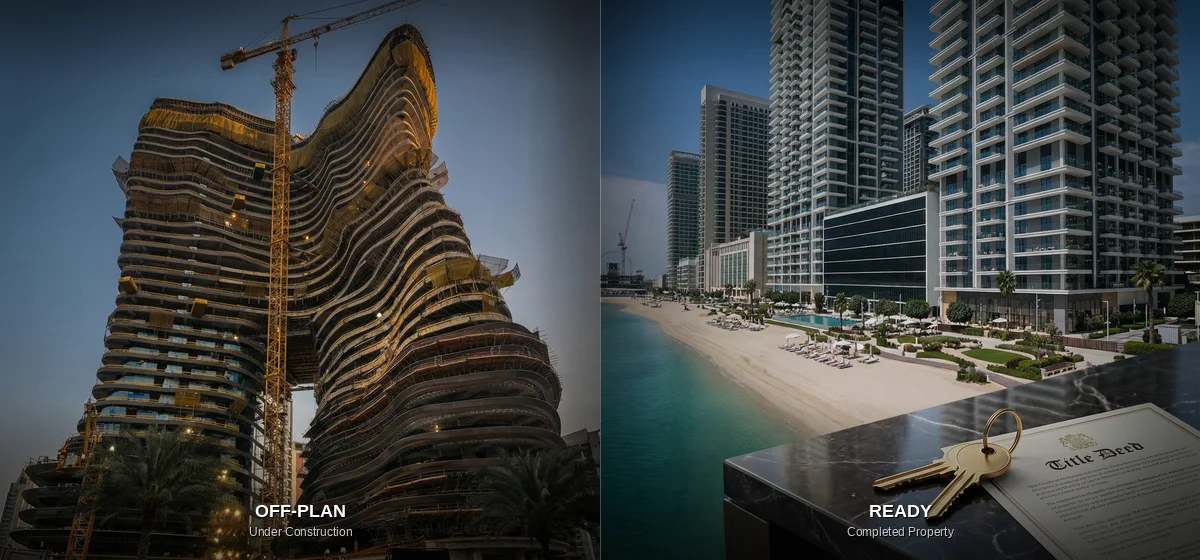
| Factor | Off-plan property | Ready property |
|---|---|---|
| Registration stage | Initial sale is registered through the provisional system | Sale is registered through DLD for completed property |
| Ownership evidence | Interim or provisional registration, commonly linked to Oqood | Final title deed |
| Cash flow timing | Usually no rent until completion | Potential immediate rental income |
| Construction risk | Yes, timeline and delivery quality matter | Much lower development risk |
| Due diligence focus | Developer track record, escrow, completion percentage, project status | Building quality, service charges, actual rents, seller title |
| Visa timing | Do not assume residency benefits before title deed stage | Usually clearer path if title deed and value thresholds are met |
| Best suited for | Buyers prioritising staged payments and early pricing | Buyers prioritising immediate use, rent, and visibility |
DLD’s initial sale registration service shows the provisional registration route for under-construction purchases, while its property sale registration and title deed services reflect the final registration path for completed assets. DLD also states that Dubai REST provides off-plan buyers with project completion percentage, real project images, escrow account number, and payment information, which makes it one of the most useful due-diligence tools in the market.
My own view is fairly simple. If you want immediate income, cleaner underwriting, and fewer moving parts, ready property usually makes more sense. If you want lower initial outlay, staged payments, and a longer-dated growth thesis, off-plan can be compelling, but only if the developer and project quality are genuinely strong. That second part cannot be assumed.
Benefits of investing as a foreigner
Dubai still has one of the clearest foreign-investor propositions in global real estate. The UAE’s official government platform states the UAE does not levy income tax on individuals, which remains one of the most cited reasons international buyers look here first. Add legal foreign ownership in freehold areas and the city’s strong 2025 market performance, and the case gets easier to understand.
The income side matters too. Engel & Völkers’ current data puts Dubai’s average rental yield at 6.76%, with apartments averaging 7.07% and communities like JVC at 7.59% in its cited snapshot. Not every purchase hits those numbers, but it explains why Dubai gets discussed as both a lifestyle market and an income market, which is relatively unusual.
Risks foreign buyers should take seriously
None of this means Dubai is risk-free. It is regulated, active, and internationally visible, but it is still a real estate market, and real estate markets move in cycles. Recent reporting has shown transaction volumes can soften quickly during periods of regional uncertainty, a reminder that sentiment risk is real even in strong markets.
The other risk is simpler and more common: buying the wrong asset in the right city. Gross yield stats can look attractive, but net returns depend on service charges, vacancy, furniture standards for short-term rental use, and how competitive the exact building really is. DLD’s Service Charge Index exists for a reason. Use it.
Residence visa rules for foreign property investors
For the 2-year investor residence route, DLD’s Taskeen service currently states a minimum real estate value of AED 750,000. For a mortgaged property, at least 50% of the property value must be paid to the bank, or the paid amount must equal AED 750,000, with a no-objection letter and mortgage account statement. DLD further states that spouses can jointly own one property and still qualify if the value is AED 750,000 or more, subject to a certified marriage contract.
For the 10-year Golden Visa, DLD’s investor Golden Visa service states the investor must own property with a purchase value of AED 2 million or more at the time of purchase, and mortgaged cases require proof that AED 2 million has been paid. The spouse, children, and parents can be sponsored.
One important nuance, worth saying clearly: DLD’s 2-year investor visa service lists an e-Certificate of Title or Title Deed among the required documents. So off-plan buyers should not assume they automatically receive investor residency benefits during construction. In many cases, the cleaner path comes once title documentation exists.
| Visa | Minimum value | Key conditions |
|---|---|---|
| 2-Year Investor Residence | AED 750,000 | Renewable. Mortgaged properties require 50% paid or AED 750,000 paid to the bank |
| 10-Year Golden Visa | AED 2 million | Minimum purchase value. Spouse, children, and parents can be sponsored |
FAQs
Can foreigners legally invest in Dubai property?
Yes. Foreigners can legally buy property in designated freehold areas in Dubai, with ownership registered through Dubai Land Department.
How much do foreigners need to invest for a Dubai property visa?
For the current 2-year investor residence route, DLD states a minimum of AED 750,000. For the 10-year Golden Visa investor route, DLD states AED 2 million or more.
Is off-plan or ready property better for foreigners?
Ready property usually suits buyers who want immediate rental income and clearer underwriting. Off-plan usually suits buyers who want staged payments and earlier pricing, but it carries construction and delivery risk.
What are the main buying costs in Dubai?
The main costs typically include the 4% DLD registration fee, trustee-related fees, agent commission, conveyancing, and mortgage-related fees if financing is used. Note that agent commission applies to resale transactions only. Buyers purchasing directly from a developer do not pay any broker fee.