

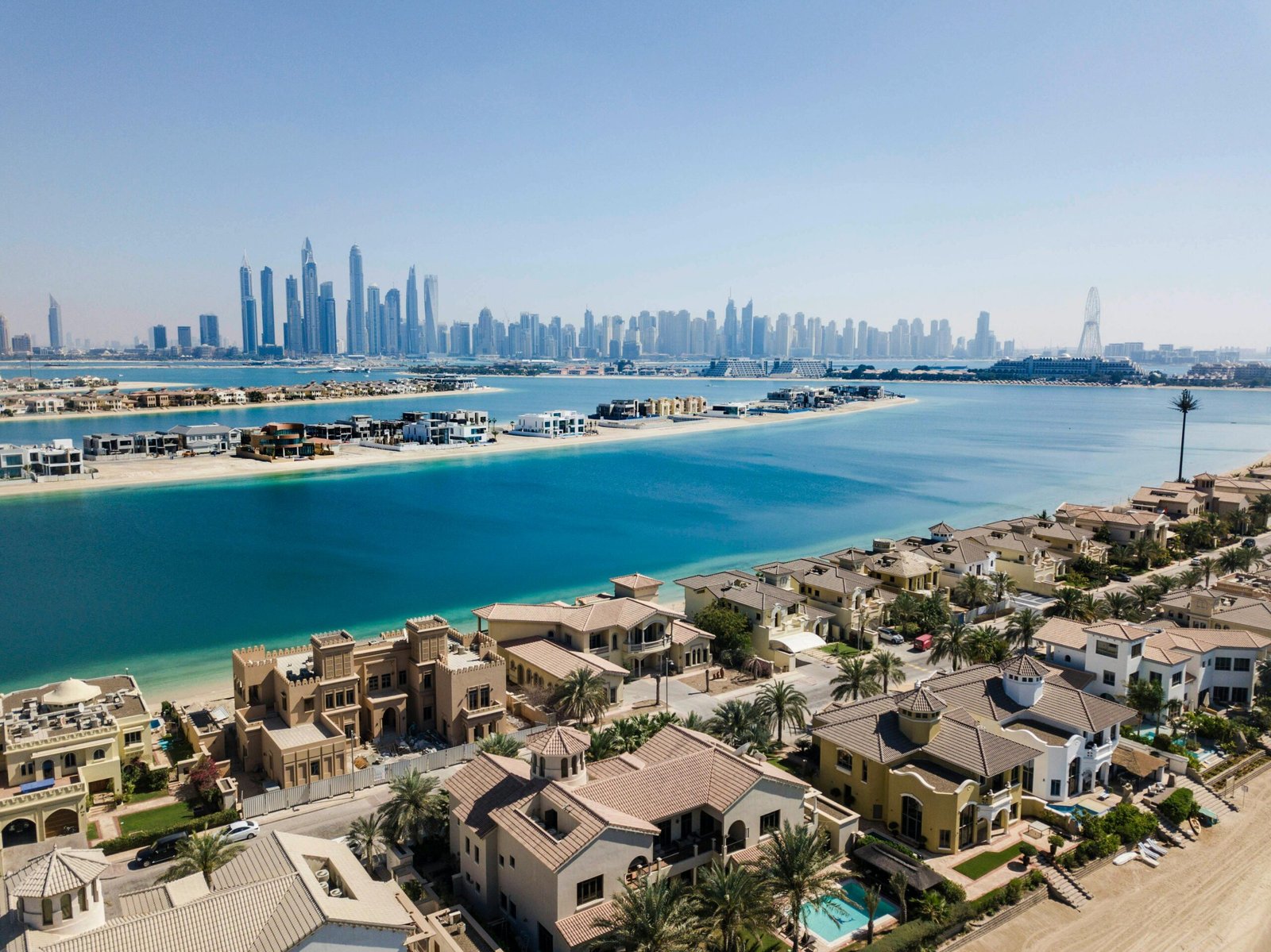
Dubai earns its reputation with investors for concrete reasons: high rental yields, tax-free rental income, modern infrastructure, and rules that welcome foreign buyers. The catch is the process. The legal, financial, and procedural steps can feel opaque if you have never dealt with local property law or the terminology that comes with it, and that is where most first-time overseas buyers get stuck.
This guide walks the whole thing end to end, in plain language. Key terms, the government rules, the paperwork, financing, visa routes, and what to do once you actually own the place. Every step points to the official source so you are not taking my word for it, and I have linked the forms and portals you will need.
Whether this is your first property abroad or another line in an existing portfolio, the aim is the same: strip out the mystery so you can make decisions with your eyes open, one step at a time.
Glossary of Key Terms and Acronyms
The rest of the guide leans on these, so here they are in plain English first.
DLD, the Dubai Land Department. The government authority that runs all real estate records, property transfers, and ownership law in Dubai.
https://dubailand.gov.ae/en
RERA, the Real Estate Regulatory Agency. Part of the DLD. It regulates the market, licenses brokers and developers, and enforces the rules that protect buyers and sellers.
https://dubailand.gov.ae/en/about-us/partners/rera/
MoU, Memorandum of Understanding. A non-binding agreement signed by buyer and seller confirming they intend to go ahead. In Dubai this is officially Form F, issued by RERA.
SPA, Sale and Purchase Agreement. The legal contract that locks in the purchase. For ready property it may be Form F. For off-plan projects it is a contract between you and the developer.
NOC, No Objection Certificate. Issued by the property’s developer to confirm there are no unpaid charges or disputes. You cannot transfer ownership without it.
LTV, Loan-to-Value ratio. The share of a property’s value a bank will lend you. In Dubai:
- Expats: typically up to 75%
- UAE Nationals: up to 80%. You cover the rest as a down payment.
Escrow Account. A government-regulated bank account, used mainly for off-plan. It holds your money and only releases it to the developer as legal construction milestones are met.
Ejari. The mandatory system for registering rental contracts in Dubai. Without it, your tenancy agreement is not legally enforceable.
https://www.ejari.ae/
Title Deed. The legal ownership certificate the DLD issues once your purchase completes. This is your proof of ownership.
Dubai REST App. The DLD’s official app for managing your portfolio, verifying ownership, checking service charges, and more.
https://dubailand.gov.ae/en/about-us/smart-services/dubai-rest/
RERA Forms A, B, F. The standard forms for a legal transaction:
- Form A: agreement between seller and their agent
- Form B: agreement between buyer and their agent
- Form F: agreement between buyer and seller (the MoU or SPA)
https://www.bayut.com/mybayut/guide-rera-forms-dubai/
Step 1: Define Your Investment Goal
Before anything else, write down why you are buying. Rental income, capital growth on a future resale, or a residency visa. Be specific. Something like: “I want a studio in Dubai Marina to rent out long-term for passive income.” That one sentence sets your budget, your location, and your property type, so do not skip it.
Step 2: Set a Realistic Budget
List your total available funds in dirhams, then add the costs that catch people out:
- 4% of the price for the Dubai Land Department transfer fee.
- 2% of the price for the agent’s commission.
- Admin fees: trustee registration (around AED 4,000), the NOC (usually AED 500 to AED 5,000), and mortgage registration if you are financing (0.25% of the loan value).
- If you are letting it furnished, budget 5 to 10% of the property value for furniture and setup.
- Hold back another 5 to 10% as contingency.
If you are not paying cash, expect to put down at least 25% of the price as a non-resident, on top of the fees above.
Step 3: Research the Dubai Market
Filter listings by your budget and your goal, and stick to areas where foreigners can buy freehold. Common freehold areas include Jumeirah Village Circle, Dubai Marina, Downtown Dubai, Business Bay, and Arjan.
Look past the headline price. Check size, price per square foot, service charges, and the developer’s reputation. Save three to five listings that interest you. Take a day or two over it. Rushing this stage is how people overpay.
Step 4: Contact a Licensed Real Estate Agent
Open one of your saved listings and note the agent’s name. Go to dubailand.gov.ae, find the Real Estate Brokers section (Services > Real Estate Services > Brokers List) and search the name to confirm they are registered with RERA.
Then get in touch. Ask if the property is still available and request similar options in your range. If you are overseas, ask for a virtual viewing; if you are in Dubai, go and see it. Deal only with licensed agents or established brokerages, and never send money or documents until you have verified them.
Step 5: Get Mortgage Pre-Approval (Optional)
If you need financing, sort the pre-approval now. Have these ready:
- A clear scanned copy of your passport.
- Proof of income, such as salary certificates or a business licence.
- Six months of personal bank statements.
- A credit report from your home country, if applicable.
Go direct to a UAE bank or use a mortgage broker. The pre-approval letter confirms how much you can borrow and the general terms, and it usually holds for 60 to 90 days. It also lets you move fast when the right unit appears. Paying cash? Skip this.
Step 6: Choose a Property and Make an Offer
Once you have settled on the property, tell your agent you are ready to offer. The agent prepares the Memorandum of Understanding (Form F), which sets out the terms, the property details, and who is responsible for what.
You will pay a deposit to reserve it, typically 5 to 10% of the price, held in escrow or by the agent. Read Form F line by line before you sign: property number, price, transfer date, and who pays which fee all need to match what you agreed. Once both sides sign, the property is reserved for you.
Step 7: Obtain a No Objection Certificate
Your agent or the seller now applies to the developer for the NOC. The developer issues it once it confirms there are no outstanding service charges or violations on the property. The buyer usually pays the fee, which runs from AED 500 to AED 5,000 depending on the developer. You cannot transfer at the DLD without this.
Step 8: Finalize the Property Transfer
Your agent books a transfer appointment at a DLD-approved Trustee Office, where ownership officially moves into your name. Bring:
- Your original passport.
- A copy of the signed Form F.
- The No Objection Certificate.
- A manager’s cheque for the purchase amount, made out to the seller.
- Any mortgage paperwork, if you are financing.
You will also pay:
- The 4% DLD transfer fee.
- The trustee registration fee (around AED 4,000).
- The mortgage registration fee, if applicable.
Once the formalities are done, you receive a new Title Deed in your name. That document confirms you are the legal owner.
Step 9: Register the Tenancy Contract (Ejari)
If you plan to rent the unit out, short-term or long, you must register the tenancy in Ejari. To do it:
- Go to the Ejari portal at ejari.dubailand.gov.ae or use the Dubai REST app.
- Create an account if you do not have one.
- Upload the documents: the signed tenancy contract, a copy of your Title Deed, your passport, your Emirates ID if you have one, and the DEWA (Dubai Electricity and Water Authority) premises number.
- Pay the registration fee online (around AED 220).
- Receive your digital Ejari certificate once it is approved.
You need this certificate for utility registrations, visa applications, and to let the unit legally.
Step 10: Set Up Utilities and Services
With Ejari done, open a DEWA account to switch on water and electricity:
- Go to dewa.gov.ae and choose “Move In” services under the Consumer tab.
- Apply as a new customer using your Ejari certificate, Emirates ID or passport copy, and Title Deed.
- Pay the security deposit, currently AED 2,000 for apartments or AED 4,000 for villas.
- DEWA usually activates within 24 to 48 hours.
In a new building you may also need to arrange air conditioning, telecoms, and chiller connections separately, depending on the developer.
Step 11: Apply for a Residency Visa (Optional)
If your purchase qualifies, you can apply for a renewable residency visa through the DLD. The basic criteria:
- Own one or more properties worth at least AED 750,000 combined.
- The property must be completed and either unmortgaged or with at least 50% of the mortgage paid.
- It must be residential, not commercial or off-plan.
To apply:
- Go to dubailand.gov.ae and find Investor Visa Services, or use the Dubai REST app.
- Upload your Title Deed, passport and a recent photo, your current visa or entry stamp if you are in the UAE, and bank statements showing proof of payment where required.
- Wait for initial DLD approval.
- Once approved, complete the medical test at an authorised centre, Emirates ID biometric scanning, and visa stamping in your passport.
The visa runs for 2 or 10 years depending on property value, and renews as long as you keep the property. Note that you have to be inside the UAE for part of the process. A visa consultant or your broker can help for an extra fee.
Step 12: Rent Out or Manage Your Property
With the legal work behind you, you can let the property yourself or hand it to a management company. Two main routes:
1. Long-term rental (one-year contracts):
- Sign a standard tenancy agreement with a tenant.
- Register it with Ejari.
- Collect annual rent by post-dated cheques or bank transfer.
- Handle maintenance and tenant communication yourself or through an agent.
2. Short-term rental (Airbnb-style):
- Register the property as a Holiday Home with Dubai’s Department of Economy and Tourism.
- Get a short-term rental permit via visitdubai.com or the DET e-services portal.
- Furnish it fully and list on Airbnb, Booking.com, or through a licensed operator.
- Run it yourself or appoint a licensed short-term rental firm.
If you are not living in Dubai, a property manager takes the leasing, maintenance, and tenant work off your plate.
Step 13: Maintain Compliance and Financial Records
Once the property is let, keep on top of the housekeeping:
- Renew your Ejari contract every year.
- Keep utility bills paid and maintenance current.
- Record rental income and expenses for tax or reporting back home.
- Respond promptly to any notices from the DLD or the community management company.
- Renew your visa or trade licence if the property supports your UAE residency.
Step 14: Understand Ongoing Ownership Obligations
Owning here comes with recurring obligations whether or not you live in the unit:
- Service charges. Paid annually to the building or community management company for security, cleaning, amenities, and common-area maintenance. They are based on your unit’s square footage and are due even if it sits empty. Check current rates through the Oqood system (via the Dubai REST app or dubailand.gov.ae).
- Utility bills, if not rented. If the unit is vacant, keep the DEWA account paid or arrange a proper temporary disconnection to avoid penalties.
- Community rules. If you want to let short-term, confirm your building actually allows holiday homes. Not all do, and breaking the rule can bring fines or a cancelled licence.
- Property insurance. Optional but sensible, covering fire, flood, or tenant damage. Not required by law, though a mortgage lender may insist on it.
Step 15: Renew Licenses, Visas, and Contracts
Set annual reminders for these:
- Ejari registration. Renew yearly when you renew or change tenants. Let it lapse and you risk utility disconnection.
- Holiday Home permit. If you let short-term, renew it each year through the Department of Economy and Tourism.
- Investor or residence visa. Renew before it expires. Renewal usually needs proof you still own the property and that it still meets the minimum value.
- DEWA account. Keep bills paid, or request a temporary disconnection if the unit is empty for a long stretch.
Step 16: Keep Records for Your Home Country
Dubai has no property tax, but your home country may still want you to declare foreign property income. So:
- Keep a digital folder with the purchase agreement (Form F), the title deed, every fee receipt (DLD, agent, trustee, NOC), tenancy agreements and rental income records, and mortgage payment summaries if relevant.
- Talk to a tax professional at home about whether and how to declare your Dubai income and ownership.
- Check for a Double Taxation Agreement. The UAE has them with several countries, and where one applies your liability may be reduced or waived.
Step 17: Plan Your Exit or Reinvestment Strategy
When the property has done its job, you sell or reinvest.
To sell:
- Get a fresh valuation through your agent.
- Clear any service charges and maintenance dues.
- Run broadly the same process as buying: draft Form F, obtain a new NOC, attend the DLD Trustee Office for transfer, and cancel the existing Ejari and any linked visa.
To reinvest:
- Use profit or equity from one property as the down payment on another.
- Some banks allow equity release or refinancing on Dubai property once its value has risen.
- Reapply for your visa or transfer it to the new property.
Step 18: Common Mistakes to Avoid
Most first-timers who run into trouble did so by rushing or planning poorly. The usual traps:
- Not confirming the agent’s RERA licence. Always check on dubailand.gov.ae under Real Estate Brokers.
- Buying in a non-freehold zone. Foreign buyers can only own in designated freehold areas.
- Underestimating fees. DLD, agent, NOC, mortgage registration, and admin can add 6 to 8% or more on top of the price.
- Failing to register Ejari. That leads to legal and utility problems.
- Ignoring service charges. High annual charges eat straight into your return.
- Self-managing remotely with no experience. If you are not in Dubai, hire a licensed manager.
- Assuming the residency visa is automatic. There are financial thresholds and rules. No property grants it by default.
Completion and Compliance Checklist
Run through this to confirm you have covered every legal step:
- Defined a clear investment goal (rental income, resale, visa)
- Set a full budget including fees and deposits
- Researched listings and identified preferred areas
- Verified the agent’s licence with RERA
- Obtained mortgage pre-approval, if applicable
- Submitted the offer and signed Form F (MoU)
- Paid the deposit and reserved the property
- Received the developer’s NOC
- Attended the transfer appointment and received the Title Deed
- Registered the Ejari tenancy contract
- Activated DEWA and other utilities
- Applied for and received the investor visa, if eligible
- Rented out or appointed a property manager
- Saved all documentation and prepared for tax obligations
- Set reminders for every annual renewal (Ejari, licence, DEWA, visa)
For country-specific walkthroughs of investing in Dubai real estate: