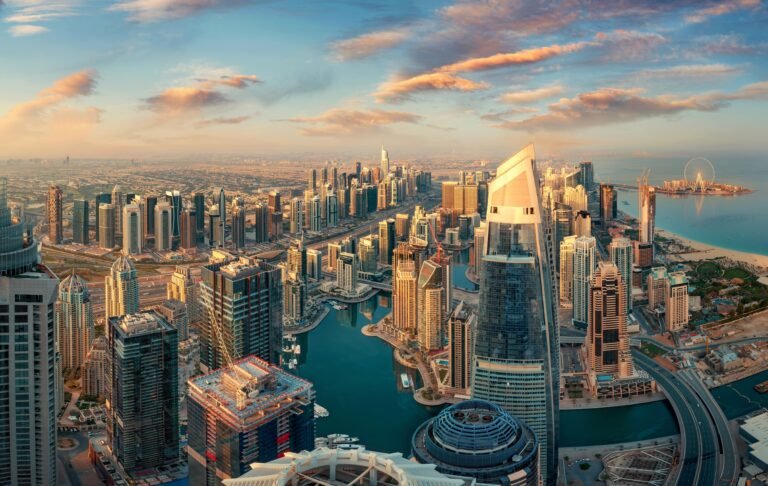

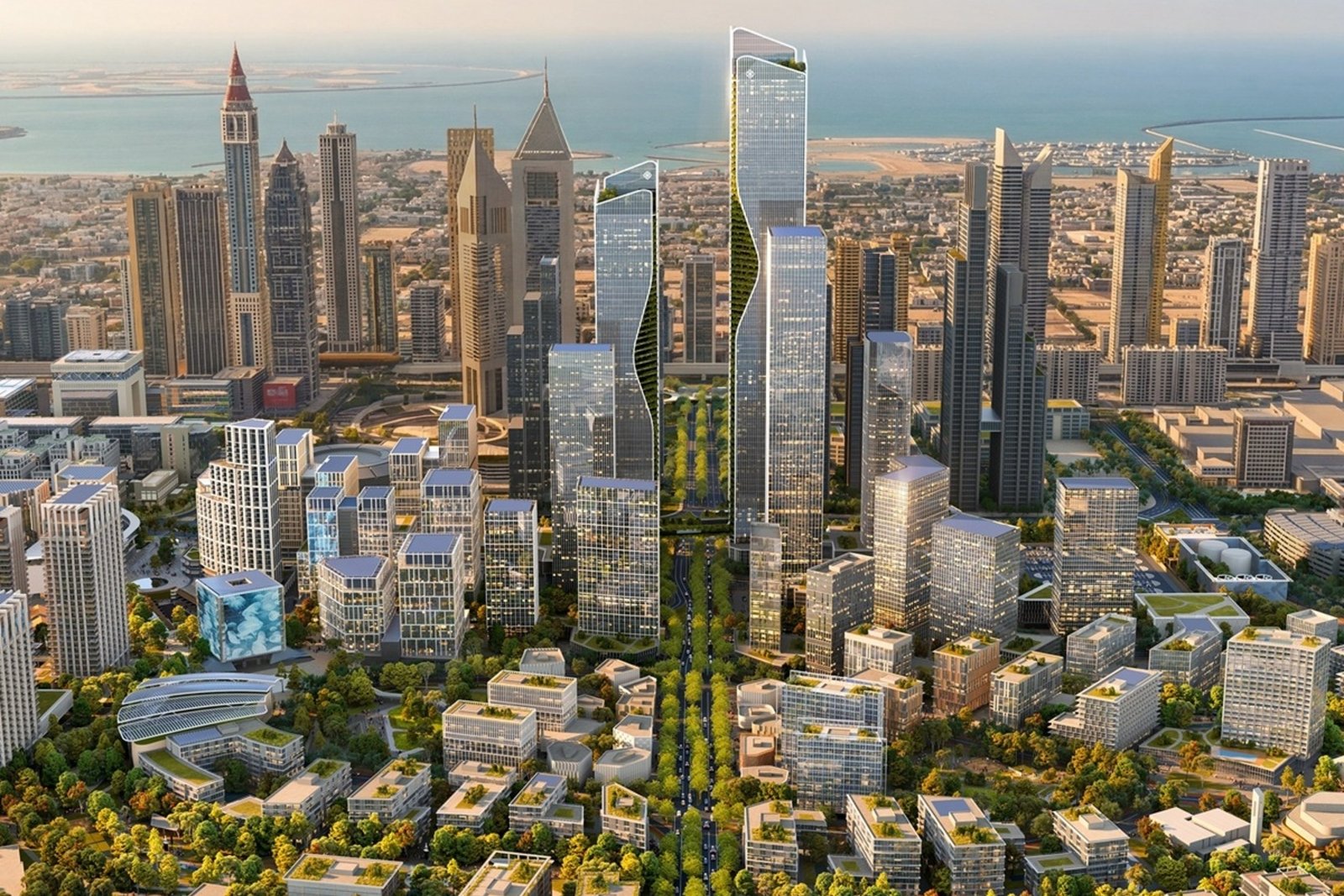
What comes up again and again with wealthy clients is friction, or the lack of it. Dubai makes it easy to live well, run a business globally, and plan for the long term, and for people at that level, ease is worth a great deal.
Safety is a big part of the feeling. With the usual caveat that some safety indexes are perception-based, Dubai ranks very high on the common benchmarks. Numbeo’s Safety Index by City puts Dubai near the top of its 2025 list, and on the broader stability measure, the UAE recorded one of the largest improvements in the 2024 Global Peace Index.
Then there is residency. The UAE’s Golden Visa is a long-term residence option for eligible categories, and for most investors the property route is the easiest one to understand. Dubai Land Department’s investor Golden Visa service describes eligibility for real estate investors owning property with a purchase value of AED 2 million or more, and notes that mortgaged property can be accepted with supporting bank documentation.

You have probably seen the wealth migration headlines too. Henley & Partners’ 2025 reporting describes the UAE as a leading destination for relocating wealth, projecting a net inflow of +9,800 high-net-worth individuals in 2025.
So why now, and why Dubai specifically? Here is how it actually breaks down, without pretending every move is purely about tax or purely about lifestyle. It is usually both, plus a few personal reasons people do not say out loud.
The pitch in plain English
Dubai’s offer to the ultra-wealthy is remarkably consistent:
- Keep more of what you earn, because the UAE does not levy personal income tax on individuals.
- Feel safer, because safety, policing, and public order are treated as a national priority, and the indices reflect that.
- Live well, on infrastructure built for speed and comfort, with a service culture optimised for convenience.
- Get long-term residency, through clear pathways including property investment at set thresholds.
- Operate globally, from a time zone that puts Europe, Asia, and Africa within one working day.
That is the headline. The deeper story is why these points matter more now than they did ten years ago.

The main reasons wealthy families relocate
1. The tax picture, and why 0% is only the start
Start with the obvious one. The UAE does not levy income tax on individuals. That is not a rumour, it is stated plainly on the UAE government’s official platform.
If you are a founder or investor whose income is a messy blend of dividends, distributions, bonuses, carried interest, and capital events, the simplicity can feel almost surreal. In many countries the tax conversation becomes the conversation. In Dubai it fades into the background, which is the whole point.
A few nuances people trip over:
- The UAE has VAT on goods and services, with a standard headline rate of 5%.
- The UAE introduced corporate tax in recent years, so “Dubai is tax-free” is an oversimplification depending on structure. The personal income tax point still holds, but businesses need proper advice.
- Wealthy families often care about predictability as much as rate. A stable, legible system is a feature in itself.
For many the motivation is comparative. When other jurisdictions tighten rules, remove special tax statuses, or lean into more aggressive anti-wealth politics, Dubai can feel like an exit ramp. Advisers describe clients feeling more scrutinised at home and more comfortable operating here.
2. Safety, and the psychology of low-friction living
This is the one people underestimate until they spend time here. There are different ways to measure safety: some perception-based, some conflict-based, some about trust in policing and lived experience. Dubai does well across most of them.
- Numbeo’s mid-2025 rankings placed the UAE at the top of its Safety Index by Country and highlighted a very low Crime Index score. Numbeo is crowd-sourced, so it is useful as perception rather than a perfect crime-stat substitute.
- Gallup’s Law and Order framing looks at how safe people feel, confidence in police, and reported experiences of theft or assault, and the UAE scores strongly in that regional context.
- The Global Peace Index, a different lens focused on societal safety and conflict, has shown notable improvement for the UAE in recent years.
Why does this matter to a billionaire? Because wealth is portable and families are not. A place that feels safe for children, spouses, staff, and visiting relatives becomes a deciding factor, not a nice-to-have. There is also a slightly awkward truth: in Dubai, luxury is normalised, which removes some of the social tension wealthy people feel elsewhere. It is not always admirable, but it is real, and it shows up in relocation stories repeatedly.
3. Lifestyle and infrastructure, the “it just works” factor
Dubai sells lifestyle, but the more durable selling point is infrastructure. Roads, airports, digital government services, delivery, hospitality, private healthcare, gyms, beach clubs, events, dining. If you are used to places where everything takes three appointments and six weeks, Dubai feels oddly efficient.

International schooling is a huge driver for families. People talk about yachts and penthouses, but the day-to-day is more like: can my kids get a top-tier education, can we access healthcare quickly, can my team move easily, can we travel without headaches? If you want to build a genuinely global life, Dubai is built for that rhythm.
Dubai vs the traditional wealth hubs
A simplified snapshot, but a useful one:
| Factor | Dubai (UAE) | London (UK) | New York (USA) | Singapore |
|---|---|---|---|---|
| Personal income tax | 0% personal income tax (federal) (U.AE) | High, progressive | High, federal plus state/city | Progressive |
| Residency pathway for investors | Golden Visa routes, incl. property value thresholds (Dubai Land Department) | Investor options changed over time | Complex, varies by visa type | Structured, selective |
| Safety perception | Very high in several indices (Gulf News) | Mixed | Mixed | High |
| “Global connector” time zone | Strong for EU, Asia, Africa | Strong for EU | Strong for Americas | Strong for Asia |
| Lifestyle for UHNW | Extremely strong, luxury mainstream | Strong, legacy appeal | Strong, but high friction | Strong, orderly |
You could argue with parts of this table, and that is fair. The point is that Dubai competes by reducing friction, not by copying the West.
Further reading
- Foreign buyer steps and due diligence
- Community deep dives for lifestyle buyers
- Investor-focused community guide
- Seller pain points and market reality

4. The Golden Visa, where plans start to feel real
A lot of wealthy people do not just want a nice place to visit. They want somewhere they can settle, build routines, base staff, enrol kids, and know they are not one election cycle away from a rule change that upends their life. That is why Dubai’s long-term residency options matter so much, especially the 10-year Golden Visa.
The UAE’s Golden Visa programme offers long-term residency for eligible categories, including investors and specialised talent, and it is positioned as part of the country’s strategy to attract and keep global capital and expertise. For most investors the property angle is the simplest mental model, even if it is not the only path.
Strip away the marketing and investors usually want clarity on five things:
- What is the qualifying threshold?
- Does it need to be paid in full, or can it be mortgaged?
- Is it based on purchase price, market value, or title deed value?
- How long does it take, and what is the process?
- Can family be sponsored, and what about domestic staff?
The Golden Visa is not only a visa. It is permission to plan long-term, and planning is a large part of wealth preservation. One thing I have noticed: people who say they do not care about residency tend to care a lot once they start thinking about schools, medical coverage, and opening local bank relationships. It sneaks up on them.
Dubai Golden Visa vs typical residency elsewhere
Not a legal chart, a reality chart.
| Feature | Dubai (Golden Visa) | Many Western hubs |
|---|---|---|
| Residency timeline | Long-term options designed to retain investors | Often slower, more conditional |
| Stability perception | High, policy direction is pro-investment | Can shift with politics |
| Lifestyle integration | Fast, service-heavy infrastructure | Can be high-friction |
| Family planning | Usually structured for family residency | Often complex and slower |
The “designed to retain investors” part is key. Dubai is competing for talent and wealth, and it shows.
5. A real business hub, not just a luxury playground
Some coverage makes Dubai sound like a giant holiday brochure. That is a mistake, and the fastest way to lose credibility with serious readers. Dubai’s real appeal is an ecosystem where wealthy people can do three things in one city:
- live comfortably
- invest confidently
- operate globally

The geography advantage
Dubai sits in a time zone that makes the world reachable. A founder can take Asia calls in the morning, Europe in the afternoon, and still catch part of the US day. It sounds small, but if you are managing global assets or companies, that rhythm matters. Airport connectivity is a genuine asset for wealth mobility too. When people say “global citizen,” they often mean “I need to move without losing my week.”
Built to attract, not merely tolerate
There is a psychological difference between a country that allows wealth and one that actively competes for it. Dubai is in the second group. That does not mean it is lawless, it means the incentive structure is intentional. You see the same logic in wealth migration reporting, where the UAE is consistently positioned as a major destination for high-net-worth relocation. Put plainly: Dubai is considered a wealth hub because it combines tax advantages for individuals, high safety, investor-friendly residency pathways, and global connectivity, all inside modern infrastructure and a luxury lifestyle.
6. Real estate as a wealth strategy
This is where you can separate investors from tourists. Billionaires rarely buy in Dubai for one reason. It is usually a stack:
- a base for family and work
- currency diversification
- a real asset in a jurisdiction they expect to stay stable
- lifestyle access: waterfront, branded residences, prime communities
- yield, but with upside
And yes, the tax position makes real estate feel cleaner from a planning perspective for many, though every situation differs.

What they actually weigh
| What they care about | What they ask in practice | What to check |
|---|---|---|
| Capital preservation | “Will this hold value in a downturn?” | Community fundamentals, demand drivers, supply pipeline |
| Liquidity | “Can I exit quickly if needed?” | Resale depth, realistic absorption, comparable inventory |
| Yield | “What’s my net yield after costs?” | Service charges, furnishing, occupancy assumptions |
| Status and lifestyle | “Does it feel premium?” | Branded, waterfront, landmark districts |
| Residency utility | “Does this help residency plans?” | Golden Visa thresholds and documentation flow |
An honest note
Dubai is not only upside. Some projects are overpriced. Some launches are pure hype. Some investors buy the wrong unit type in the wrong building and then blame the city. Any honest account has to admit that. You do not need to be negative, but you do need to sound like you have seen real transactions, because that is where trust comes from.
7. Push versus pull, why they are leaving now
Here the story gets more human and less tidy. Dubai is attractive, but people also leave because their home environment feels increasingly unpredictable. The wealth migration narrative usually points to rising taxes, shifting regulation, and concerns around safety or social stability, alongside the UAE’s pull factors.
Pull factors (Dubai)
- 0% personal income tax framework for individuals
- long-term residency pathways like the Golden Visa
- strong safety perception
- luxury lifestyle and infrastructure
Push factors (home countries)
- tax pressure, more scrutiny, and reduced flexibility
- regulation creep and reporting complexity
- quality-of-life friction, safety concerns in certain cities
- political polarisation and uncertainty
Not every country is bad, plenty are still excellent. But for a billionaire trying to protect family and capital, excellent is not enough. It has to be stable, predictable, and easy to operate in. That is the pattern you keep seeing.
8. Tax residency, what wealthy people quietly sort out
It is tempting to say “Dubai has 0% personal income tax, done.” The UAE government does state it does not levy income tax on individuals, and it also notes VAT at 5% on goods and services. But for high-net-worth families the real question is usually: how do I make my life and my paperwork match?
Your home country might still care where you live, where you manage assets, where your companies are controlled, and whether you actually changed residency or just changed your Instagram location. That is where people get messy, and where disciplined families pull ahead.
The UAE Tax Residency Certificate
If you need evidence for treaty purposes, the UAE Federal Tax Authority runs a process for issuing a Tax Residency Certificate, with criteria around days spent in the UAE and documentation such as Emirates ID, passport, and entry-exit reports. The Ministry of Finance also highlights the UAE’s extensive network of Double Taxation Agreements as part of its competitiveness strategy. Not everyone needs a TRC, but wealthy movers often want the option and a clean, defensible file.
Corporate tax exists, but personal investment income is treated differently
This is where the internet gets noisy, so keep it clean. The Federal Tax Authority explains that a natural person may be subject to Corporate Tax only if they conduct business in the UAE and exceed a turnover threshold, and it clarifies that sources like wages, personal investment income, and real estate investment income are not considered “Business or Business Activities” for this purpose. That distinction matters for investors. It does not replace professional advice, but it helps people stop repeating outdated one-liners.
A tax-clarity table
| Topic | What people assume | The reality |
|---|---|---|
| Dubai is tax-free | “No taxes at all” | The UAE does not levy personal income tax, VAT exists, and businesses can be subject to corporate tax depending on facts |
| Residency is automatic | “Buying a condo makes me resident” | Residency pathways exist, but tax residency is a separate concept and may require days and documentation |
| My home country stops taxing me | “I moved, so I’m done” | Many countries use their own residency tests. Get professional advice and keep your file clean |
9. Is Dubai really safe?
Safety is a strange thing to write about because it is both measurable and emotional. Still, a lot of global indices and perception measures place the UAE very high on safety and law-and-order sentiment, and Dubai benefits from that environment. For billionaires the practical outcomes are what matter:
- families feel comfortable moving around
- visible wealth does not create the same level of risk anxiety
- visiting relatives and staff can operate with fewer rules
It is not that crime does not exist. It is that the baseline experience, for most people, feels unusually calm.
10. The wealth migration headline is real, but it is not only billionaires
The widely cited number is +9,800 millionaires moving to the UAE in 2025. That figure comes from Henley & Partners’ Private Wealth Migration Report 2025, and mainstream media repeats it, including NDTV referencing the same projection. Two points worth keeping straight:
- The figure covers millionaires broadly, not only billionaires.
- It matters anyway as a signal, because it suggests Dubai is winning the destination competition for high-net-worth relocation.
11. Who Dubai suits, and who might not love it
| Profile | Dubai tends to be a strong fit when… | Dubai may feel frustrating when… |
|---|---|---|
| Founders and operators | You want a global base, fast services, and investor-friendly residency pathways | You need deep legacy ecosystems in one niche, or dislike “new city” energy |
| Investors | You want personal tax simplicity, asset diversification, and real estate optionality | You want ultra-low cost living, or you prefer sleepy markets |
| Families | You value safety, private healthcare access, and international schooling options | You want a slower pace, or you dislike heat and summer seasonality |
| Public figures | You want privacy, security, and a place where wealth is not socially punished | You want a culture deeply similar to your home environment |
12. How wealthy people actually relocate
A high-level sequence:
- Clarify your goal: tax, lifestyle, security, business, or all of the above.
- Get proper cross-border advice, because your home country rules still matter.
- Choose the residency route: Golden Visa, employment, company setup, family sponsorship.
- Set up banking and a documentation trail, and keep it clean.
- Decide where you will live, because community choice affects daily happiness more than most people admit.
- If buying, do due diligence properly: title, developer track record, payment plan, exit liquidity.
- If pursuing Golden Visa via property, align value and documentation. DLD’s investor Golden Visa terms reference a AED 2 million property value threshold and note that a mortgaged property can be accepted with a bank no-objection letter.
- Sort schooling and healthcare, which is often the real timeline driver.
- Establish day-count discipline, especially if you need tax residency evidence later.
- Create a “life ops” setup: drivers, assistants, property management, security, the boring stuff that makes life smooth.
13. Common misconceptions
“Dubai is only for luxury and influencers”
Dubai does luxury extremely well, but it is also built as a serious business and investment environment. The wealth migration numbers are part of that story, not separate from it.
“Golden Visa is automatic if I buy anything”
The criteria are specific. The DLD investor Golden Visa service states terms like the AED 2 million property value and outlines mortgage NOC requirements if the property is mortgaged.
“If I move to Dubai, my home country can’t tax me”
Sometimes yes, sometimes no. It depends. That is why serious people get advice and document their residency properly, including using UAE TRC processes when relevant.
FAQs
Why are billionaires moving to Dubai right now?
Mainly for personal tax advantages, safety, long-term residency options, and a high-end lifestyle with strong global connectivity. The UAE is also projected to lead global millionaire net inflows in 2025, which reinforces the trend.
Do you pay income tax in Dubai?
The UAE government states it does not levy income tax on individuals. VAT applies to goods and services.
Is Dubai safe for families?
Dubai benefits from a broader UAE environment that scores very highly on multiple safety and law-and-order perception measures.
What is the Dubai Golden Visa?
The UAE government describes the Golden Visa as a long-term residence visa that lets eligible people live, work, or study in the UAE while enjoying certain benefits.
Can I get a Golden Visa if I buy property in Dubai?
Dubai Land Department’s investor Golden Visa service outlines a property value threshold of AED 2 million, including conditions such as how mortgaged property may be treated with a bank NOC letter.
Is Dubai a good place to buy real estate for wealth preservation?
It can be, especially for investors seeking asset diversification, a global base, and stable demand in prime districts. But unit selection and project fundamentals matter. Use real comps, not hype.
What is a Tax Residency Certificate in the UAE?
The Federal Tax Authority provides a process for issuing tax certificates for tax residency, with criteria around physical presence and documentation.
How many millionaires are moving to the UAE?
Henley & Partners’ 2025 reporting cites a projected net inflow of +9,800 relocating millionaires to the UAE in 2025.
The bottom line
Strip away the hype and Dubai’s advantage is that it is designed to be a destination, not a temporary parking spot. It combines personal tax simplicity for individuals, long-term residency tools like the Golden Visa, strong global connectivity, and a lifestyle that genuinely works for busy families. The trend looks durable too. When a city starts attracting not just residents but family offices, entrepreneurs, and multi-generation plans, it tends to build momentum, and the Henley projection of +9,800 net inflows in 2025 is one of the clearest signals of it.
I will still say the quiet part. Dubai is not automatically a good decision for every investor. The difference between a great outcome and a frustrating one is usually selection and structure: which community, which building, which unit type, what payment plan, what exit liquidity, and how you document your residency and tax position.
If you want help turning the Dubai idea into an actual plan, including shortlisting projects, comparing payment plans, and mapping a realistic path to long-term residency, you can reach out to me directly.