

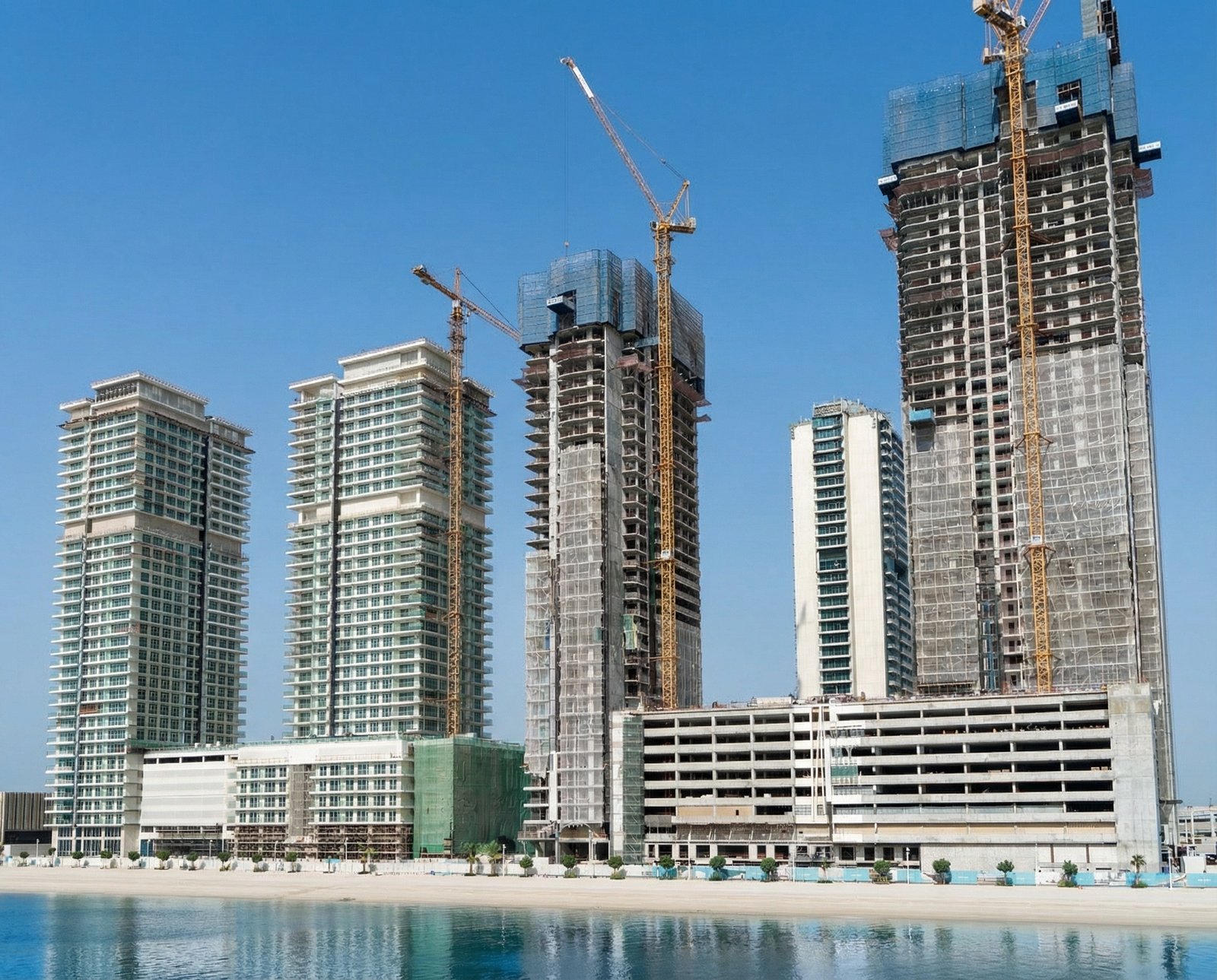
Off-plan in Dubai used to forgive a lazy buyer. You bought almost anything in a rising market, waited, and the tide carried you. In 2026 the tide is not doing that job anymore. The people who still do well are the ones who pick a strong developer, choose a micro-location that will still feel premium when the next five towers arrive, and read the contract and the cost structure before they sign a thing.
Before you sign, it helps to know your exit; the off-plan assignment playbook covers the fees and thresholds that decide it.
It also helps to see what is launching right now, so keep the off-plan projects across Dubai we are currently tracking open as you read through these.
None of that means off-plan is a bad idea now. It means the easy wins are gone and the details decide the outcome. Here are the fifteen things I would want a buyer to have straight before committing this year.
Off-plan vs ready in 2026, the quick comparison
| Factor | Off-plan (2026 reality) | Ready/resale (2026 reality) |
|---|---|---|
| Cash flow | Staged payments, but you may pay rent and instalments at the same time | Usually mortgage or full payment, rent can start immediately |
| Pricing | Sometimes below future market, sometimes not, depends on supply and developer | Transparent comps, easier to negotiate off listings |
| Risk | Delivery, specs, delays, area oversupply | Building condition, service charges, tenant profile, maintenance |
| Paperwork | SPA, escrow, Oqood, then title deed at handover | Trustee transfer, title deed issued at transfer |
| Best use case | You want payment flexibility and you believe in the area’s future demand | You want immediate rent, lower uncertainty, easier valuation |
1) Stop assuming the market will carry you
The mood in 2026 is different. Demand is still there, and Dubai is still Dubai, but the phase where everything went up fast tends to cool as supply rises and the market matures. Some forecasts still point to mid-single-digit growth in many communities, roughly 5% to 8%, which is a very different world from the double-digit years. On the other side, there are warnings of a supply-driven correction. Fitch has previously flagged potential double-digit declines into 2026 in a downside scenario. The takeaway is not panic. It is underwrite the deal properly. Your entry price and your unit selection matter more than your optimism now.
Want a vetted off-plan shortlist for your budget? Send me your target price and preferred handover window.
2) Location analysis is no longer optional
You will see confident numbers thrown around online, and they can make your head spin. One recent local report discussed around 55,000 units expected to hand over in 2026, and more in 2027. Other coverage points to much larger planned volumes, sometimes well above 100,000, depending on how “planned” is defined against “delivered.” What matters to you is simpler than any headline: will your building, your view, your tenant pool, and your resale competition still look attractive when a lot of keys get handed over nearby? Ignore that and you can end up in a perfectly nice apartment competing with six newer ones offering better layouts and incentives. That is where rent gets squeezed and resale drags.
Request a 10-minute off-plan safety check. I will verify registration, escrow, payment plan, and resale rules.
3) Follow the demand engine, not the hype
People love naming “hot areas.” I find it more useful to ask a slightly boring question: what is the demand engine here? In 2026 the stronger plays usually have at least two of these:
- a transport and access story, roads, airports, business hubs
- a lifestyle story that survives cycles, waterfront, parks, walkability, mature retail
- a scarcity story, limited plots, limited comparable inventory
- a brand story, top developers, branded residences, well-run masterplans
Corridors many investors keep watching include Dubai South, Dubai Creek Harbour, and Palm Jebel Ali, but that only helps if you go a step deeper and choose the right building and unit within the corridor. I have watched buyers get this wrong in a funny way: they buy the area, not the unit, then discover their unit faces future construction or sits beside a service road. It happens more than people admit.
Want access to pre-launch pricing and allocations? Message me your budget and preferred areas.
4) The pre-completion flip gate is tighter
You can still resell before handover, but developers are generally stricter about assignment in 2026. A common pattern: resale is only allowed after you have paid a meaningful portion of the price, often 30% to 40%, and after clearing admin requirements like the NOC and transfer fees.
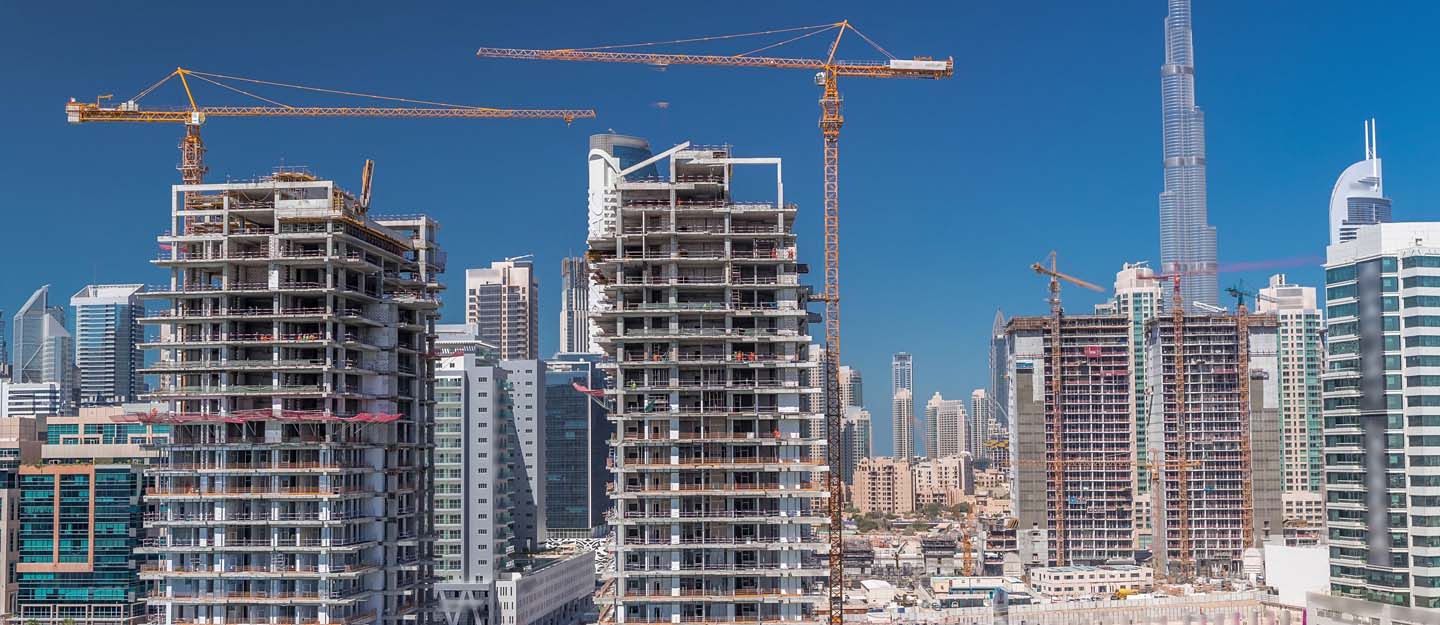
So do not build your whole strategy around a fast flip unless you have confirmed, in writing, the developer’s assignment threshold and process timeline. If flipping is genuinely part of the plan, you want three things: a developer with a clear and consistent resale process, a unit type that stays liquid (usually the most rentable formats), and a community where a lot of similar stock is not launching right behind you.
5) Yields can be strong, but oversupply compresses the easy ones
Plenty of investors still target 6% to 7% yields in good areas, and that is realistic in the right product. But 2026 is not the year to assume every new building prints the same number. Yield compression usually shows up first in investor-heavy towers with identical layouts, in areas where many handovers cluster together, and in buildings with higher-than-expected service charges. A simple stress test before you buy:
- If rent drops 10%, are you still happy?
- If service charges come in higher than the estimate, does the cash flow still work?
- If you need six months longer to resell, are you comfortable?
If any answer is no, you do not necessarily walk away. You negotiate harder, choose a different unit, or pick a different building.
6) Developer reputation is not negotiable
This sounds obvious, and it is still the single most repeated lesson in Dubai off-plan. In 2026 the gap between great delivery and disappointing delivery feels wider, because buyers have more alternatives. The safe behaviour is boring behaviour: stick with developers who consistently deliver and maintain quality, be cautious with unknown names offering deals that look too good, and look at delivered communities, not only renderings. Verify the basics too, project registration, escrow, and the official status trail, not just the sales narrative. Dubai’s framework is built around registered projects and escrow accounts. The Dubai Land Department explicitly states that developers selling off plan and receiving payments must open an escrow account under the escrow account law.
7) Confirm the project is RERA registered
Basic, and exactly where first-time buyers quietly get sloppy. You want the project to have a clear official footprint: registered, trackable, and visible in the right places. One practical tool is the Dubai REST app, which the Dubai Land Department positions as a way for off-plan beneficiaries to get real-time project information, completion percentage, actual photos, escrow account number, and payments due.

DLD also points buyers to Project Status (Mashrooi) inside Dubai REST for checking project status. So yes, ask the agent for details, but verify independently. It is not about being suspicious. It is about staying calm. When you can see what is real, you stop getting dragged around by timelines and marketing.
Quick verification checklist
| What to verify | Why it matters in 2026 | What “good” looks like |
|---|---|---|
| Project status in Dubai REST (Mashrooi) | Confirms the project exists in the official system, shows progress | You can see completion %, project details, official info |
| Escrow account number | Protects you from the most avoidable payment mistake | Escrow exists, project-specific, not a private account |
| Developer and broker licensing | Basic compliance, basic professionalism | Licensed parties, consistent paperwork trail |
Internal read that helps buyers avoid mistakes: The Off-Plan Buying Process in Dubai
8) Never pay into a private account
If you remember one thing here, make it this: your off-plan payments go into the project’s escrow account. Not a random company account, not someone’s “collection account,” not a workaround. Dubai’s escrow framework is not vague. The Escrow Law, Law No. 8 of 2007, states that any developer wishing to sell units off-plan must submit a request to open an escrow account with the Department. Dubai REST is designed to surface escrow account information for off-plan beneficiaries, which genuinely reduces confusion.
The small mistake that becomes a big headache: a buyer pays a booking amount, assumes it is fine because it is “just a small amount,” then discovers the paper trail is messy or the payment path is not what it should be. Usually it gets resolved, but it creates stress you did not need. Even when you feel over-cautious, insist on the clean path. Your future self will thank you.
9) Track construction milestones like an investor, not a fan
Off-plan marketing wants you to follow the project like a sports team, big announcements, drone shots, topping-out celebrations. Fun, but what you actually care about is whether progress matches the payment schedule and the promised handover window. Dubai REST shows completion percentage and actual project photos, so you are not forced to rely only on sales updates. If the plan is construction-linked, your payments are meant to follow progress. If progress slows but the schedule does not, understand why early, not at month 18 when you feel trapped. Healthy behaviour: check progress periodically rather than obsessively, document everything, receipts, emails, amendments, and keep a buffer fund so delays do not become personal emergencies.
10) Analyse future supply in the micro-location, not the “area”
This feels boring until it costs you money. A lot of handovers are expected across Dubai, and even when the macro market is fine, oversupply hits specific pockets hard, especially investor-heavy segments with repetitive unit types. The real question is what else is being delivered near your tower, in your view corridor, in your exact tenant bracket.
- What is launching and handing over within a 5 to 10-minute drive?
- Are there multiple towers with identical one-bed layouts hitting the market at once?
- Is your unit’s view likely to be blocked or softened by future phases?
- Are new buildings offering stronger incentives that will pressure your rent?
This is where a good buyer sometimes does something that feels counterintuitive: pay slightly more for a unit that is harder to replicate. A cleaner view, a better layout, a quieter orientation, a stronger building brand. Not always, but often.
11) Budget the total cost, not the price
Off-plan pricing is seductive because it looks like a single number, AED per square foot, nice payment plan, nice render. Your real cost of ownership is a bundle: registration fees, admin fees, agency fees, trustee or processing fees in some pathways, service charges at handover and onward, furnishing and snagging if you plan to rent quickly, plus utility deposits and move-in costs.
Cost planning table
| Cost item | When it usually hits | Why it matters |
|---|---|---|
| DLD registration fee (often discussed as 4%) | Early in the process, varies by developer structure | Big cash item, do not ignore it |
| Developer admin fees | Booking, SPA, or assignment | Can be meaningful, varies a lot |
| Oqood registration related costs | During off-plan registration | Impacts resale readiness and paper trail |
| Service charges | At handover, then ongoing | Directly impacts your net yield |
| Snagging and rent-ready setup | At handover | Speed to revenue, quality control |
| Holiday home compliance costs (if applicable) | Before short-term rental | Impacts feasibility of an Airbnb-style strategy |
Internal read that helps a lot for budgeting: Dubai Property Fees and Charges Breakdown
12) A payment plan is only a gift if you can survive the timeline
I like payment plans, and most investors do. They make entry easier and can improve ROI when the asset performs. The risk in 2026 is not the plan itself, it is your ability to keep paying if timelines shift, if your personal situation changes, or if the rental market is softer at the exact moment you planned to refinance.
Payment plan types buyers compare most
| Payment plan type | Why people like it | The hidden stress test |
|---|---|---|
| 60/40 construction-linked | Feels aligned with progress | What if progress slows but payments still come? |
| 1% monthly style | Predictable cadence | Easy to commit to, harder to exit if you change your mind |
| Post-handover plans | Lower upfront pressure | Make sure the handover product is rentable at that price |
If you want to be conservative, do this one thing: assume handover is later than the brochure suggests, then check you are still comfortable.
On the Golden Visa, which comes up constantly: the Dubai Land Department’s investor service description states that owning a property valued at AED 2 million or more at the time of purchase lets you apply for a 10-year renewable residence permit, with requirements noted for mortgaged property too. The UAE government’s official Golden Visa page outlines the wider framework. My advice is simple. Treat the visa as a bonus, not the reason you buy. Buy because the unit and the numbers make sense, then if you qualify, good.
13) Treat the SPA like the real product, because it is
The Sales and Purchase Agreement is where the deal becomes real. Not the brochure, not the WhatsApp voice note, not the showroom pitch. In 2026, when delivery timing and competition from new supply can make or break your outcome, the SPA is your risk map. If you do nothing else, read these parts slowly, even if it is painful. Many SPAs include an anticipated completion date plus an extension or grace period for defined reasons, and if completion runs beyond that window, cancellation rights and remedies can become relevant.
SPA clause checklist
| SPA section | What you are checking | Why it matters in 2026 |
|---|---|---|
| Handover date, completion definition | Is handover “notice to complete,” “completion certificate,” “ready for occupation,” or something else | You want clarity on what counts as delivery, not vague timing |
| Extension or grace period | How long can the developer extend, and for what reasons | This is often the real timeline, not the headline one |
| Specification and variation clause | How much can layout, size, view, finishes change, and what compensation exists | Protects you from “it’s similar” surprises |
| Penalties, remedies, termination | What happens on delay, and what triggers cancellation or compensation | You need a plan before you get frustrated |
| Assignment and resale rules | What % must be paid before resale, what fees, what approvals | Flipping assumptions die here; this clause decides liquidity |
| Escrow and payment instructions | Confirm the escrow pathway is explicit | Escrow is the backbone of buyer protection |
Buying from abroad, or buying large relative to your liquidity? It is usually worth having a qualified lawyer review the SPA. Not because you expect drama, but because you want to know exactly what you agreed to before emotions get involved.
14) Oqood affects resale, financing, and peace of mind
This is where buyers nod politely and move on, until they want to resell or apply for something that needs proof. Oqood is the interim registration for off-plan sales. It records your contract and your interest in the unit while it is still under construction, and it is commonly described as the step that turns a signed agreement into a more protected buyer right. Think of it this way: the title deed is the end state, Oqood is the “you are officially on record” state while the building goes up.
Oqood to title deed timeline
| Stage | What happens | What you should keep |
|---|---|---|
| Booking and reservation | Initial reservation, booking payment, unit is blocked | Receipt, unit details, terms sheet |
| SPA signing | Contract signed, payment plan confirmed | Signed SPA, payment schedule, escrow details |
| Oqood registration | Developer submits sale details, DLD records it in the interim register, you get a provisional certificate | Oqood certificate or confirmation, DLD references |
| Construction and milestones | Payments progress, completion % updates | Receipts, statements, milestone notices |
| Handover and final transfer | Unit delivered, final transfer and title deed issued | Handover docs, snag list records, title deed |
Two tips that feel too simple but save headaches. Make sure your name and passport details match exactly across every document, because small inconsistencies create admin delays later. And do not assume Oqood just happens. Ask when it will be processed, and get confirmation once it is. Use Dubai REST to keep an eye on official project status while you wait; it surfaces completion percentage, actual pictures, escrow account number, and due payments.
15) Service charges quietly control your real yield
People obsess over price per square foot, but if you are investing, service charges deserve the same attention, sometimes more. This is the number that decides whether a “great” gross yield survives contact with reality. The Dubai Land Department runs a Service Charge Index that lets you inquire about approved service fees for jointly owned properties, through RERA. So instead of guessing, you can validate the fee indicator once it is available for the property type and budget year. Net yield is what you keep, not what you advertise.
Service charge impact
| Item | What it affects | Investor takeaway |
|---|---|---|
| Annual service fees | Net yield, tenant affordability, resale attractiveness | High fees can crush a “good” gross yield |
| Building quality and amenities | Fees can be justified, or not | Pay for value, not for complexity |
| Efficiency of layouts | Sellable area vs payable area | Some units feel small for what you pay yearly |
| View durability and building positioning | Rent premium longevity | Better views hold rent better, which offsets costs |
For a second reference point when underwriting rents, DLD’s Rental Index tool exists for benchmarking by area and building.
Long-term rent vs holiday homes in 2026
Not part of the “15 things” headline, but in practice one of the most expensive decisions buyers make after handover. Short-term rentals can be strong in the right building, but you cannot treat it informally. DET’s guidance is clear that apartments and villas must be registered and approved before listing, through the holiday home permit process. And this one catches people off guard: permits may not be issued where the SPA prohibits short-term rentals, so building rules and contractual restrictions matter.
| Factor | Long-term lease | Holiday homes, short-term |
|---|---|---|
| Income pattern | Stable, predictable | Higher upside, more variable |
| Workload | Lower | Higher, pricing, cleaning, guest turnover |
| Compliance | Standard tenancy pathway | Must be registered and approved under the DET holiday homes system |
| Best fit | Investors who want calm cash flow | Investors who accept operational intensity |
| Biggest risk | Rent softness in supply clusters | Building restrictions, compliance misses, seasonality |
Start with one message. Send “OFF PLAN 2026” and your budget, I will take it from there.
Handover and snagging, do not rush it
When handover comes, people get excited, and I understand it. You finally see the unit, you start imagining tenants, furniture, the first rent payment. This is exactly when to slow down. Most developers provide a defect liability period for workmanship, often described as roughly 6 to 12 months depending on the contract and defect category. Structural liability is usually longer, with Dubai commentary commonly pointing to a 10-year period for structural parts in jointly owned properties. So the practical approach is:
- do a snagging inspection, ideally with photos and a numbered list
- submit the snag list in writing, keep the timeline clear
- track responses and fixes like a project, not like a complaint
Copy-paste mini checklists
Pre-booking
- Confirm project status via Dubai REST or official references
- Confirm the escrow account is project-specific; do not pay into private accounts
- Ask for assignment rules in writing, especially minimum paid % and fees
- Budget full costs, not only price, including fees and service charge expectations
SPA
- Handover definition, extension period, remedies
- Variation clause, specs, and what “equivalent” means
- Assignment clause, NOC, admin fees
- Payment default consequences and timeline
Handover
- Snagging inspection, photos, numbered list
- Confirm the DLP process, where to report, expected response time
- Get the service charge estimate and payment schedule
- Plan your rental route, long-term or holiday home compliance
FAQs
Is buying off plan in Dubai safe in 2026?
It can be, if the project is properly registered, payments go into the project escrow account, and you understand your SPA clauses. Dubai’s escrow framework and Dubai REST project tracking are built to reduce buyer risk.
How do I check if a project is real and registered?
Use Dubai REST’s Project Status (Mashrooi) and verify the project details, status, developer details, and escrow account details.
What is Oqood, and why does it matter?
Oqood is the interim registration record for off-plan purchases. It formalises your registered interest before the title deed is issued.
Can I resell an off-plan unit before handover?
Often yes, but the developer’s assignment rules decide when. Many require a minimum paid percentage plus an NOC and fees, so confirm in writing before assuming it is an easy exit.
How do service charges affect my yield?
They reduce net income directly, and higher fees can also cut tenant affordability and resale appeal. Use the Service Charge Index to validate approved fees when available.
Can I run an Airbnb-style holiday home in any off-plan unit after handover?
Not automatically. DET requires registration and approval before listing, and some properties are restricted by the SPA or building rules.