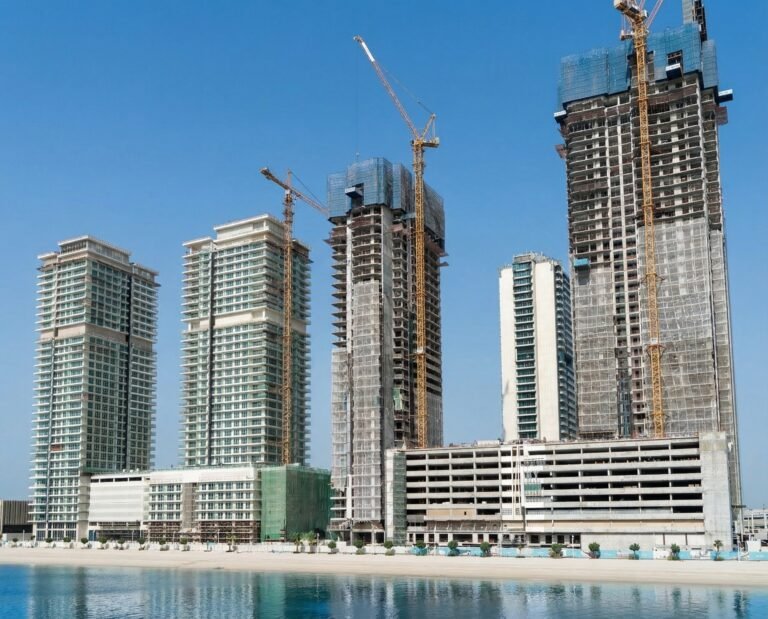


Before you fall for a glossy render or a limited-time launch price, sort out who you are actually working with. Check that your agent and future property manager are RERA-licensed, look for real reviews rather than filtered testimonials, and ask for a transparent fee sheet. Clear communication, tech-forward operations like owner portals and photo-logged inspections, and a strong local network are still the best early signals that you picked the right partner. That matters more with off-plan than anything else, because you are relying on people long before you ever hold keys.
What off-plan really means in Dubai
You are buying before the building is finished, sometimes before the first pile goes in. Payments are staged against construction milestones and held in escrow accounts overseen by the Dubai Land Department and RERA. By law, developers selling off-plan must run buyers’ funds through project escrow, and banks release money only when verified milestones are met. That mechanism came out of earlier, messier cycles, and it sharply reduces the “developer vanishes with my deposit” risk. It does not remove delays or market swings.
On fees, plan for this early. DLD registration is 4 percent of the purchase price, plus small knowledge and innovation fees. Developers sometimes run “DLD waiver” promotions, but the statutory baseline is still 4 percent. You can confirm the mechanics through the Dubai Land Department.
And yes, the 10-year Golden Visa is available to property investors holding AED 2M or more in qualifying real estate, single or multiple properties, subject to conditions. If the property is mortgaged, you will need a bank NOC confirming the paid amount and outstanding balance.
Where off-plan earns the “goldmine” reputation
Lower entry, flexible plans. Off-plan is often priced below comparable ready stock and paired with phased plans like 60/40 or 50/50. That spreads your cash calls and leaves room for appreciation during the build.

Appreciation while you wait. A well-chosen launch in a demand corridor can step up in value before handover, as marketing, construction progress, and scarcity at each release nudge prices. Common, not guaranteed. Location and developer quality have to line up.
Yields that compete. Dubai apartment yields commonly sit around 5 to 7 percent, villas around 4.5 to 6 percent, per the major consultancies. UK buy-to-let averages hover near 5 to 6 percent nationally, so Dubai can out-yield for the right unit at the right price.
Tax and residency. No personal income or capital-gains tax on Dubai residential property, and at AED 2M or more you may qualify for the 10-year Golden Visa under standard eligibility rules.
Currency timing. Because the AED is pegged to the USD, GBP/AED swings change your effective cost. If sterling strengthens against the dollar during your payment schedule, each instalment can cost less in pounds. The reverse is also true, so hedge or pace your transfers.
Where it turns into a death trap
Project delays. Even in a tightly policed system, delays happen and can run months. Your plan should absorb slippage without breaking your cash flow or your rental and exit timelines.
Developer reliability and spec drift. Track record matters: handover punctuality, build quality, after-sales support. Brochure specs are indicative. Tie finishes and appliances to the contract wherever you can.
Market cycles. Buy at a peak and hand over into oversupply, and paper gains can compress or reverse. Treat any pre-handover premium as potential, not a promise.
No income during construction. Budget for the holding period. You earn only at completion, unless you assign earlier, which is subject to NOC thresholds and developer rules.
Resale and assignment limits. Many developers require you to pay a set percentage of the price before allowing resale. That protects the project from pure speculation, but it limits flipping.
Hidden or underestimated costs. Beyond price: 4 percent DLD, possible agency fee, Oqood registration, service charges at handover, snagging, furnishing, and DTCM permits if you plan short-lets. The 4 percent DLD is the constant. Developer waivers are promotional.
Off-plan vs ready, at a glance
| Criterion | Off-plan (launch / under construction) | Ready (completed) |
|---|---|---|
| Entry price | Often 10 to 30 percent below similar ready stock at launch, project and phase dependent | Priced to current market, fewer developer incentives |
| Cash flow | Milestone plans like 60/40 or 50/50, interest-free instalments | Upfront heavy, mortgage or cash, immediate |
| Income | None until handover | Immediate rental possible |
| Appreciation path | Potential pre-handover gains if demand stays strong | Tied to broader market moves |
| Risk profile | Construction risk, timeline slippage, spec variance | Lower construction risk, more due diligence on building condition |
| Flexibility | Assignment rules vary, NOC thresholds apply | Easier to sell or lease immediately |
Payment plan patterns you will actually see
- 60/40: 60 percent during build, 40 percent at handover.
- 50/50: balanced.
- Post-handover: for example 60/40 with a portion payable over 2 to 3 years after keys.
These are attractive because the instalments are interest-free. Still, map them against your own cash-in schedule, your currency plan, and a realistic delivery quarter. A phased remittance strategy from the UK can dampen FX surprises, and your bank or broker can help set it up.
One quiet trap: compare price-per-sq-ft across similar ready buildings nearby. Some “1 percent per month” headline plans embed a higher PSF that cancels out the convenience.
Where the numbers tend to work
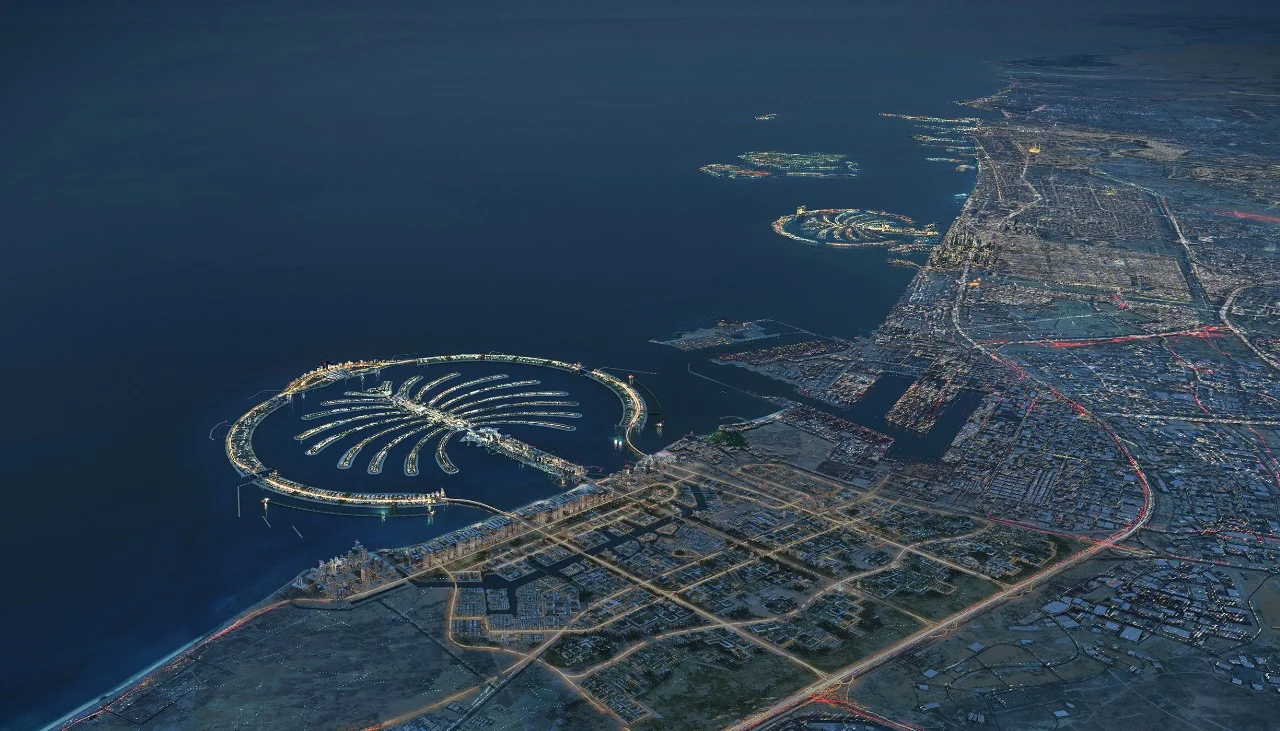
Communities with both depth of demand and ongoing infrastructure produce the cleanest off-plan theses: liquidity at every phase, a diverse tenant pool, and branding that ages well. Think Business Bay for the urban core, JVC for value mid-market, and Dubai Creek Harbour for the waterside masterplan. These names come up again and again through 2025, with the same caveat every time: yield and premium depend on the exact tower, aspect, and developer.
The regulatory safety net, and its limits
| Protection | What it does |
|---|---|
| Escrow accounts (Law No. 8 of 2007) | Your payments sit in a project-specific escrow account, released only against certified progress. It is the backbone of Dubai’s off-plan risk controls. |
| Project tracking and Oqood | You get interim registration and visibility into progress through DLD and RERA portals. Use it, do not rely on marketing WhatsApps. |
| Golden Visa linkage | Property value of AED 2,000,000 or more can open a 10-year residency route, subject to official criteria. |
None of that removes market risk or the chance of a late finish. It does make outright bad-actor scenarios far less likely than a decade ago.
Costs to model
| Cost | Typical figure | Notes |
|---|---|---|
| DLD registration | 4 percent of purchase price | Statutory, sometimes developer “waived” in promos |
| Oqood / admin | Project-dependent | Usually a few thousand AED, check the SPA |
| Agency fee (if any) | Resale only, 2 percent plus 5 percent VAT | Varies, confirm scope and VAT |
| Service charges | Varies by building (AED/sqft) | Ask for provisional budgets before buying |
| Snagging and handover | Variable | Snag list, rectifications, meter deposits |
| Furnishing | From AED 35k to 120k plus | Depends on size and standard, short-let needs durable spec |
One point buyers miss: the 2 percent agency fee applies to resale, the secondary market, only. Buy directly from a developer on a new launch and you pay no broker commission. The developer pays the agent.
Helpful reads
- Dubai 2040 Master Plan: Impact on Real Estate, how future zoning shapes where off-plan value accrues.
- Dubai Real Estate Investment Guide, yield corridors and tenant demand patterns you inherit at handover.
- How to Choose a Dubai Property Manager, what to check before handover so leasing starts smoothly.
- Talk to Totality, bring a short list and we will pressure-test the numbers.
A quick reality check
Still undecided after five minutes of reading? Normal. Off-plan is equal parts numbers and nerves. I have watched cautious buyers land outsized wins because they picked a good developer and held through the noise, and I have watched impulsive flips stall because the assignment threshold was higher than expected. Both are true at once.
UK-specific pitfalls, and how to sidestep them
If you are wiring money from the UK, two things quietly eat returns: FX timing and payment cadence. The dirham is pegged to the dollar, so with each milestone you are effectively taking a GBP-to-USD view. If sterling is strong when your 10 percent deposit is due and weaker at handover, the same AED figure costs you materially more in pounds. I tend to spread conversions, stage transfers alongside construction calls, keep a small AED buffer for surprise calls like Oqood and admin, and, if you want to be precise, talk to your bank or a currency specialist about simple forwards. No derivatives wizardry, just avoid dumping everything into one unlucky day.
The second watch-out is paperwork assumptions. UK conveyancing habits do not map onto Dubai. You will not exchange and complete in the same rhythm, and you cannot skip RERA and DLD touchpoints. For off-plan, all payments must go to the project’s escrow, not a random company account, not cash, not “to hold the unit.” That rule comes from Law No. 8 of 2007, and it is the backbone of buyer protection here. If anyone asks you to pay outside escrow, walk away.
DLD registration is 4 percent of the purchase price, the statutory baseline, sometimes softened by a developer “waiver” promo. It runs through trustee centres, with admin and trustee fees on top. And if residency is part of the plan, the 10-year Golden Visa route for real estate investors needs AED 2 million or more in property value, with specific documentation and, if mortgaged, a bank letter confirming the paid-up amount. Start with the official portals, not hearsay.
Developer due diligence, a fast checklist
You do not need a forensic lab, just a method.
A) Identity and licensing
- Verify the developer is licensed on the DLD portal and the project is registered. Cross-check on Dubai REST before booking.
B) Escrow and approvals
- Confirm the project escrow account, its name, bank, and account number, appears on official paperwork. Escrow is mandatory for off-plan sales in Dubai.
- Ask for the Oqood details, the interim registration DLD uses to record off-plan sales and track progress.
C) Track record and specs
- Pull 2 to 3 handover references from the same developer: buildings actually delivered, not brochures.
- Get spec sheets for finishes and appliances written into the SPA wherever possible.
D) Payment plan reality
- Map milestone dates to your calendar and add a 90-day buffer.
- If the plan is skewed, say 80 to 90 percent during construction, challenge it or pass.
E) Exit rules
- Assignment before handover usually needs an NOC and a minimum percentage paid, commonly 30 to 40 percent, sometimes 50. This is developer-specific, so get it in writing.

Red-flag matrix
| Signal | Why it matters | Action |
|---|---|---|
| “Pay to a non-escrow account” | Off-plan buyer funds must go to escrow under Law No. 8 of 2007 | Decline, insist on escrow or exit |
| No Oqood or registration clarity | Weakens your interim protection and traceability | Ask for the Oqood reference and status |
| “Guaranteed 12 to 15 percent rent” with no operator | Usually marketing spin, short-let licenses, seasonality, and costs ignored | Request a binding contract, operator license, and net-of-fees math |
| 80 to 90 percent due pre-handover | Concentrates your risk if delays hit | Negotiate a milestone-sensible plan or move on |
| Vague spec sheets | Rendered interiors are not contractual finishes | Include finishes and appliances in an SPA annex |
| NOC rules hidden | You may not be able to assign when you want | Get the assignment threshold and fees in a developer letter |
What you will actually pay, baseline
| Line item | Typical figure | Notes |
|---|---|---|
| DLD registration | 4 percent of purchase price | Statutory baseline, promo “waivers” exist but the rule is 4 percent |
| Trustee / admin | Around AED 2,000 to 5,000 plus admin | Varies by off-plan vs ready, trustee centre schedule |
| Oqood / registration admin | A few thousand AED | Check the SPA and developer portal |
| Agency fee (if any) | Resale only, around 2 percent | Direct-from-developer can differ |
| Service charges | Building-specific (AED/sqft) | Ask for the latest budget before you buy |
ROI sandbox, three scenarios
Illustrative only, so swap in your own figures before deciding.
- Target unit: 1-bed in an established master community
- Ready market price today: AED 1,950,000
- Off-plan launch price: AED 1,800,000, on a 60/40 plan, 24 months to keys
- Gross rent at handover: AED 115,000 a year, conservative for a quality 1-bed in the prime-mid segment
- Service charges and running costs: AED 18,000 a year, estimate
- DLD fee: 4 percent, ready or off-plan
- Yield context: apartments around 5 to 7 percent, villas around 4.5 to 6 percent in 2025 commentary
Scenario A, buy ready now and rent from month one
| Price | 1,950,000 |
| DLD 4 percent | 78,000 |
| Other fees (approx) | 6,000 |
| Total cash in, before furnishing | ≈ 2,034,000 |
| Gross rent, year 1 | 115,000 |
| Net after 18k run-rate | 97,000, net yield ≈ 4.8 percent |
| Upside | Income starts immediately, lower build risk |
| Downside | Higher entry price, fewer developer incentives |
Scenario B, buy off-plan, 60/40, 24 months to keys
| Price | 1,800,000 |
| During build (60 percent) | 1,080,000 in milestones |
| Handover (40 percent) | 720,000 plus DLD 4 percent = 72,000, paid near registration |
| Income during 24 months | No rent, possible paper appreciation while building |
| If market lifts 10 percent by handover | Value ≈ 1,980,000 |
| On day-1 rent | 115,000 gross, 97,000 net, net yield on price ≈ 5.4 percent |
| Upside | Lower entry, appreciation potential through the build |
| Downside | Timing risk, you carry instalments without income |
Scenario C, off-plan with a post-handover plan (60/40 with 20 percent over 2 years post-keys)
- Cash flow eases after keys, but net cash yield dips while you are still paying principal post-handover.
- Rent may cover part of those post-handover payments. Call it self-amortizing lite, and run the numbers so you are not cash-negative.
If you value income now, Scenario A is cleaner. If you value equity build and flexibility, B or C can outperform, provided the developer, location, and payment profile are strong.
Assignment and resale before handover
To resell pre-handover you need a developer NOC and to have paid a minimum percentage of the price, commonly 30 to 40 percent, some projects 50. Expect NOC fees, and the incoming buyer typically pays the 4 percent DLD transfer on the assignment. All of it is project and developer specific, so get it written into your SPA or a developer letter before you buy, so your exit path is clear.
Where yields settle
Leading consultancies peg apartment gross yields around 5 to 7 percent in Dubai for 2025, with villas slightly lower on average. If your pro-forma needs 9 to 10 percent on a mainstream 1-bed in a prime location to work, either the acquisition price is too high or the rent is too optimistic. Anchor your assumptions to credible ranges.
Handover playbook, so rent starts fast
| Step | What to do |
|---|---|
| 1. Snag early | Pre-inspection, with a clear rectification timeline |
| 2. Property-manager shortlist | 60 days before keys, verify DET and RERA licensing, fee schedule, and STR capability if relevant |
| 3. Marketing pack ready | Pro photos, floor plan, community notes for day-1 listings |
| 4. Furnishing | If STR or furnished long-let, order before keys, install within 5 to 7 days of final snag |
| 5. Pricing cadence | Weekly adjustments in month 1, then bi-weekly until stabilised |
Community-by-community playbook
Pick your “why” first, yield vs prestige vs flip potential, then choose the community that naturally delivers it.
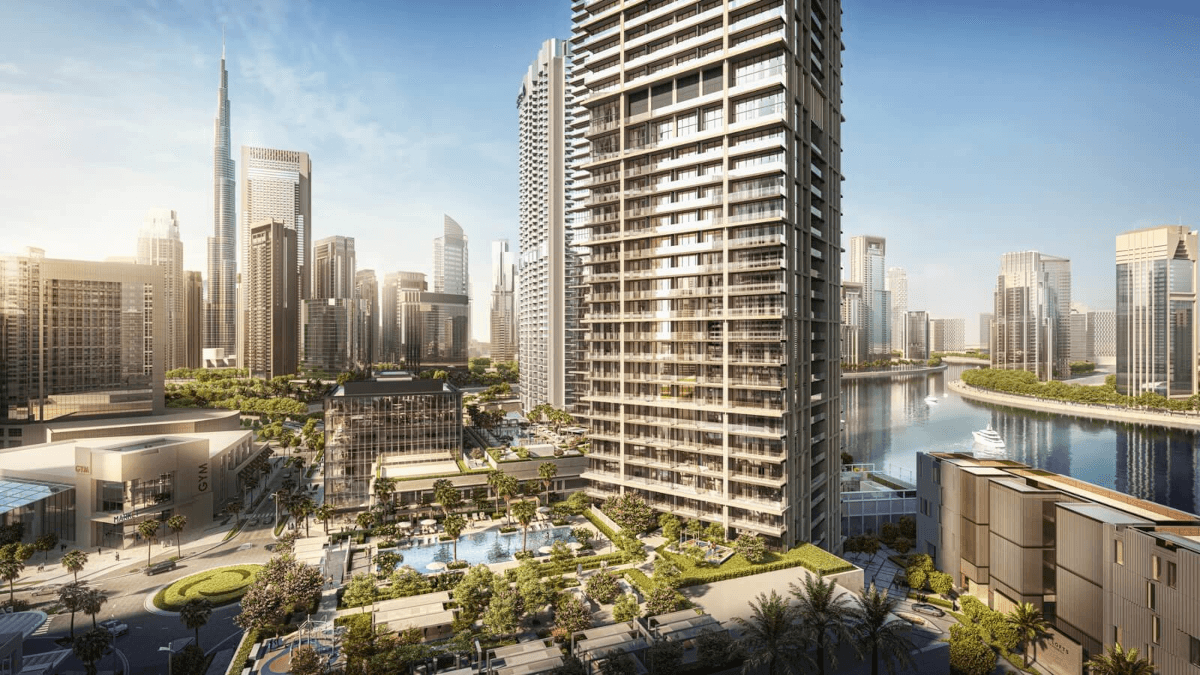
Business Bay, urban core, DIFC and Downtown adjacency
- Who it suits: professionals and investors wanting liquidity plus centrality.
- Why it works: dense tenant pool, business-hub proximity, year-round leasing.
- Signals to track: tower brand, access to SZR, traffic noise, canal frontage, the retail mix downstairs.
- Indicative rents: studios around AED 68k, 1BR around AED 92k, 2BR around AED 130k, mid-2025 averages.
- Yields: studios and 1BRs often test around 6 percent gross, larger types taper lower. Several 2025 round-ups put Business Bay averages near 6 percent. Sanity-check with building-level comps.
- PSF trend: mixed in 2025, some sub-markets slightly down year-on-year, but absorption stays healthy.
Thumb rule: stick to well-managed, brand-credible towers and avoid compromised stacks with low light, noise, or long walks to the lifts. Yield is in the details.

Jumeirah Village Circle, the value engine
- Who it suits: yield-focused buyers who want value per dirham and constant tenant demand.
- Why it works: mid-market price points, steady handovers, decent last-mile connectivity.
- Market color: Q3 2025 resale activity was heavy, average resale around AED 1,302 psf, up 14.6 percent year-on-year. Not a promise, just a sign of market depth.
- Yield range: many sources place JVC at 6 to 8 percent gross, studios and 1BRs often at the top. Treat outlier “9 percent plus” claims with caution and verify building by building.
Thumb rule: avoid quirky floor plans. Go for efficient 1BRs with balconies and covered parking, and check the service-charge AED/sqft, because that is where paper yields quietly shrink.
Dubai Creek Harbour, brand-led waterfront, longer arc
- Who it suits: buyers prioritising brand, views, and long-horizon capital growth over top-quartile yield.
- Why it works: master-planned waterfront by a blue-chip developer, with lifestyle, museums, and retail arriving in phases.
- Market color: reported averages swing in the AED 2,270 to 2,400 psf band in 2025 snapshots, with moderate year-on-year increases and bursts around new handovers. Yields typically 5 to 6 percent depending on tower and aspect.
Thumb rule: pay for the view and stack that photograph well for leasing. Cut corners on furniture, not on the outlook.
Flip vs hold, with assignment reality
Flipping, pre-handover assignment
- Works best in phase 1 to 2 of big masterplans, when later price lists float up.
- Real constraints: you usually need a developer NOC and to have paid a minimum percentage, often 30 to 40 percent, sometimes 50, before assignment. Fees apply, and the incoming buyer typically pays 4 percent DLD on the transfer. Get the exact threshold and fees in writing for your project before you buy.
Holding, rent, refinance, or sell post-handover
- Benefits: a full market audience of mortgage buyers and tenants, easier comping, less policy risk.
- Trade-off: you carry the full 4 percent DLD, furnishing, snagging, and the actual service-charge reality. Do the line-item math before committing.
Market caveat: macro houses flagged the risk of a mid-decade pullback as supply lands, with downside scenarios up to around 15 percent mentioned in 2025. Sensible leverage and conservative exit pricing make a flip survivable even if the tide ebbs.
Furnished vs unfurnished, and STR compliance
Unfurnished long-let: lower capex, fewer moving parts, faster to list. Yields are more predictable but usually lower headline revenue than STR.
Furnished long-let: higher rent potential in many mid-core buildings, though durability matters. Budget for hard-wearing items and a refresh cycle.
Short-term rental: you or your operator must register with Dubai’s Department of Economy and Tourism (DET). Every unit needs a Holiday Home permit before listing, and the operator needs the appropriate license or track. Compliance includes classification and Tourism Dirham remittance. If you plan to scale beyond a handful of units, you end up on the professional-operator track, a company license plus permits per unit. Always check the HOA and building rules before you buy. Not all towers allow STR.
Handover checklist you can actually use
60 to 90 days before keys
- Shortlist two RERA and DET-licensed property managers. Ask for fee tables, SLAs, and sample inspection reports.
- Lock your FX plan for the remaining milestones and expected furnishing capex.
- Order snagging, third-party or in-house. Get the scope and turnaround in writing.
30 days
- Finalize utilities setup, DEWA and chiller if applicable.
- Confirm DLD and Oqood paperwork is complete and the SPA addenda match the delivered spec.
- Sort delivery-day logistics: access cards, parking, elevator booking for furniture.
Key day
- Walk with the snag list and photograph everything.
- Collect warranties and appliance manuals, make a defects log, confirm the rectification window.
- If letting furnished or STR, arrange pro photos within 72 hours.
Week 1 to 2 after keys
- Launch listings, adjust price weekly until the first offer, then move to bi-weekly.
- Approve the first qualified tenant rather than waiting for a perfect premium. Vacancy is your biggest drag.
Two comparison tables
| Community | Typical buyer goal | PSF / rent snapshot | Yield feel | Core risk |
|---|---|---|---|---|
| Business Bay | Liquidity plus centrality | 1BR around AED 92k/yr average, strong studio demand | Around 6 percent on compact units | Tower and stack selection, traffic and noise |
| JVC | Value plus yield | Q3 2025 average resale AED 1,302 psf | 6 to 8 percent | Operator variance, service-charge creep |
| Creek Harbour | Brand plus waterfront | Around AED 2,270 to 2,400 psf snapshots | 5 to 6 percent | Pay for the correct view and stack |
| Strategy | What must be true | What can go wrong | Fix / hedge |
|---|---|---|---|
| Flip pre-handover | Strong phase-to-phase repricing, NOC at 30 to 40 percent plus paid | Thresholds or fees change, demand cools | Get thresholds in writing, price realistically, keep a plan B to hold and rent |
| Hold and rent, long-let | Realistic rent vs service charges, a good PM | Vacancy between seasons | Price to let in 30 days, switch operators if KPIs slip |
| STR, holiday home | DET license plus permit per unit, building allows STR | Non-compliance fines, HOA blocks | Use the DET portal, keep permits current, respect building rules |
Final notes
You do not have to nail everything on day one. Pick one clear goal, yield, equity growth, or simply owning something you love using twice a year, then pick the community that naturally delivers it. Still torn? Run two shortlists through the same ROI template and let the numbers and your gut have an honest conversation.
And check the official bits yourself: escrow is mandated under Law No. 8 of 2007, DLD registration is 4 percent, and the Golden Visa via real estate sits at AED 2M or more with specific documentation.
FAQs
Why do UK investors consider Dubai off-plan properties?
Lower entry prices with 60/40 or 50/50 payment plans, strong mid-single-digit rental yields, tax efficiency, and potential eligibility for the 10-year Golden Visa at AED 2M or more.
How does RERA escrow protect my payments?
All off-plan instalments go into a project-specific escrow account and are released to the developer only when certified construction milestones are met, which greatly reduces misuse of funds.
What is Oqood and why does it matter?
Oqood is the Dubai Land Department’s interim registration for off-plan sales. It records your purchase before title issuance and gives you traceability during construction.
What total costs should I budget beyond the headline price?
Plan for DLD registration at 4 percent, trustee, admin and Oqood fees, any agency fee around 2 percent, service charges in AED/sqft, snagging and furnishing at handover, and utilities setup.
Which payment plan structure is best?
There is no universal best. 60/40 is common and balanced, 50/50 can improve cash flow, and post-handover spreads payments after keys but dampens early net yield. Match the plan to your cash-flow and FX strategy.
Can I resell my off-plan unit before handover?
Often yes, via assignment, but you need a developer NOC and to have paid a minimum portion of the price, commonly 30 to 40 percent, sometimes 50. Expect NOC and transfer fees, and price realistically.
What yields are realistic at handover?
Apartments typically land around 5 to 7 percent gross, with studios and efficient 1BRs often at the top of the band. Community and building choice matter: Business Bay for liquidity, JVC for value and yield, Creek Harbour for brand and waterfront.
Does buying off-plan help me get the Golden Visa?
If your qualifying property or properties total AED 2,000,000 or more, you may be eligible for the 10-year Golden Visa. Criteria apply, and mortgaged assets need a bank letter confirming the paid amount.
Are short-term rentals allowed once I get keys?
Yes, if the building and HOA permit STR and you or your operator obtain the DET Holiday Home license plus a permit per unit, and comply with classification and Tourism Dirham rules.
What should my handover-to-rent plan include?
Pre-book snagging, line up a RERA and DET-licensed property manager, prepare furnishing if needed, get professional photos and listings ready for day one, and adjust pricing weekly in month one to keep vacancy down.