

Serious capital does not chase sunshine. It chases retention. What Dubai actually sells to the investors who matter is a set of conditions that let money stay whole: no personal income tax, clear freehold title in the zones that count, a regulator you can check against, and a demand base that is not one storm away from collapse. The brochures lead with towers and beaches. The people writing eight and nine figure cheques are looking at something duller and far more important.
Nobody sophisticated moves on a single headline benefit. They move when several things line up at once. In Dubai they do. Tax efficiency, workable yields, foreign ownership, a residency route, a diversified economy, and demand that comes from tourism, migration, and business formation rather than just local buyers. Dubai was ranked number one globally for greenfield FDI projects in 2023, the third year running, in Invest in Dubai’s official report. Capital notices where other capital is already landing, and that ranking is exactly the kind of signal that gets an allocation committee’s attention.
The short version, before the detail
Six things do most of the work here. There is no personal income tax in the UAE, and direct personal real estate investment income generally sits outside corporate tax scope. Residential gross yields run around 6 to 8 percent, better than most mature gateway cities. Foreigners can hold freehold title in designated areas. The Golden Visa opens a long-term residency route for investors with AED 2 million or more in qualifying property. Demand is deep: a record 19.59 million international overnight visitors in 2025, a resident population of 4.25 million, and a peak active population near 5.94 million. And Dubai has ranked first globally for greenfield FDI for years in a row. That is the convergence. The rest of this explains why each piece holds up under actual underwriting, and where it does not.
Tax efficiency, which is not the same as free
This is usually where the conversation starts, and it usually gets oversimplified within two sentences.
The UAE government does not levy income tax on individuals. For anyone arriving from a jurisdiction where income gets clipped several times before capital can be redeployed, that alone reframes how they think about holding wealth. Federal Tax Authority guidance says personal investment income and real estate investment income are not treated as business activity for a natural person. Invest in Dubai’s tax material goes further, noting that income and capital gains from real estate are generally outside corporate tax when the property is held directly by an individual and not through a licensed business that would require different treatment.
Now the part the “tax free” posts skip. Dubai is not cost free. There are registration fees, trustee fees, service charges, and VAT considerations depending on the asset and structure. Even Invest in Dubai’s own material stresses that structuring matters, because a company can fall under corporate tax while an individual holding qualifying real estate directly is treated differently. So the sharp question is never “Is Dubai tax friendly?” It is “Tax friendly for whom, under what structure, with what compliance behind it?” For a private buyer purchasing residential property in their own name, the answer is usually good. For a corporate vehicle, it depends. That distinction is worth more than most articles admit, because lower friction does more than lift net returns. It lets you rotate capital faster and hold longer without the drag deciding your timing for you. That is a large part of why family offices and post-liquidity founders keep circling back.
Yield that comes from real demand, not marketing
The second reason is income. DXBinteract’s widely cited commentary puts average Dubai residential rental yields around 6 to 8 percent, and that figure keeps reappearing because it compares well against gateway cities where yields are often much thinner.
Averages hide a great deal. Not every submarket performs the same, not every tower deserves the same underwriting, and plenty of “high yield” listings stop looking attractive once you price in service charges, vacancy, furnishing, leasing friction, and exit liquidity. But at the market level the yield profile is genuinely one of the biggest reasons capital stays interested. The demand behind it is not thin. Dubai’s official 2024 population estimate reached 4,248,200 residents, with a peak-hour active population near 5,937,800, which tells you how much larger the daytime economy runs than the resident base. On top of that, Dubai took 19.59 million international overnight visitors in 2025, a record, according to the Dubai Media Office. Resident demand, visitor demand, and business activity stacked together are why rents hold across several product types.
Here is where selection starts to matter. A compact apartment in a well-connected district with sensible service charges and broad tenant appeal will often out-earn a more glamorous asset with weak end-user depth. You are not just buying square footage. You are buying whether the area still matters in five to ten years. Dubai’s investment story ties growth to infrastructure, logistics, and urban expansion, and smart money tends to follow infrastructure before the wider market has finished pricing it in.
Safety means process, not just clean streets
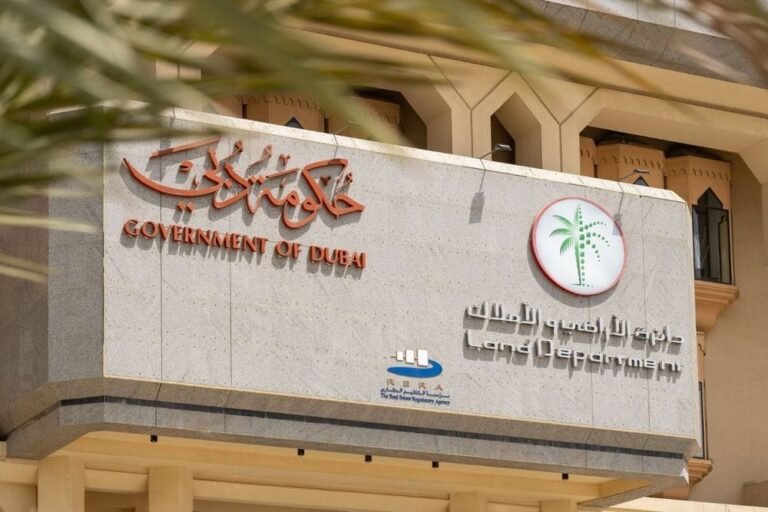
Yield brings capital in. Predictability keeps it there. Serious money dislikes opaque title, unclear ownership rights, and off-plan environments where you are expected to trust a brochure over a regulator. Dubai has built a more transparent framework than most outsiders assume. The Dubai Land Department lets you verify project status, and the Dubai REST platform gives off-plan buyers real-time project information: completion percentage, project photos, escrow account number, and owner payment details.
That changes behaviour. When you can check progress instead of relying on a sales pitch, underwriting gets more disciplined. The DLD’s FAQ states that the escrow account law applies to all developers selling off-plan in Dubai, that buyer payments go into the project escrow account, and that disbursements are tied to construction progress. That framework is a big part of why Dubai is treated as a relative safe haven within the region. Most articles frame safety in lifestyle terms, low crime and easy day-to-day living, which is true and beside the point. Institutional and high-net-worth capital asks first about process safety. Can ownership be verified? Can the project be tracked? Is there a regulator, and are the rules legible? In Dubai the answer is yes more often than first-time buyers expect.
Foreign ownership, and why it changes the conversation
Foreigners can own property in designated freehold areas. The Dubai Land Department’s FAQ states this directly under the Real Estate Registration Law. For internationally mobile buyers that matters, because capital prefers jurisdictions where control is clear and there is no reliance on nominee structures or legal workarounds.
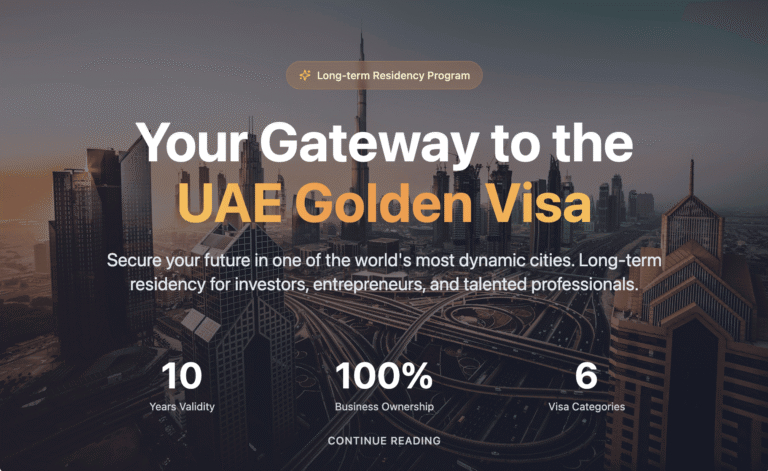
The ownership story gets stronger when you pair it with residency. The UAE government’s Golden Visa guidance says investors can qualify under the investor category with minimum capital of AED 2 million, and ICP guidance notes that real estate investors may qualify with one or more properties valued at AED 2 million or more. So Dubai is not only a place to park capital. It can become a base to live, work, or run regional activity from. In many markets you get an asset and nothing else. Here you can get an asset, a business base, lifestyle optionality, regional access, and a possible long-term residency route. That is why Dubai wins capital that could have gone elsewhere.
Appreciation, backed by who keeps arriving
Yield gets the attention. Appreciation is what actually excites the money. Dubai’s population reached 4,248,200 at the end of 2024, per the Dubai Data and Statistics Establishment, with an estimated 5,937,800 active individuals during peak daytime hours. A city pulling in residents, workers, and business at that scale keeps generating demand for housing, hospitality, retail, and the infrastructure around them.
Tourism adds another layer. The 19.59 million overnight visitors in 2025 were up 5 percent year over year, per the Dubai Media Office. That supports branded residences, short-term rental demand, retail, food and beverage, and general confidence in the city’s relevance. People who visit repeatedly often end up investing. This is also where selection sharpens again. Not every part of Dubai appreciates at the same rate. Some locations benefit more from infrastructure, waterfront scarcity, school catchments, or future commercial gravity. The useful question is not “Is Dubai going up?” It is “Which submarket is gaining relevance faster than the market average, and why?”
Location and the D33 agenda
Invest in Dubai describes the city as a pro-business hub with access to critical economies, uniting East and West. That is promotional, and it is also true. Dubai has spent decades building itself into a connector city rather than a local market, and capital, people, and companies move through it efficiently. That reinforces the value of the real assets sitting in it.
The D33 Agenda extends the story. Invest in Dubai states that the Economic Agenda D33 aims to double the size of the economy by 2033 and put Dubai among the top three cities globally for living, investing, and working. Whether every target lands on schedule almost does not matter. What matters is that there is a visible, policy-led growth framework behind the city’s expansion, not just a sales cycle running on sentiment. That is why infrastructure-led investing works so well here. Track where roads, metros, commercial nodes, and lifestyle anchors are pulling future demand, and try to buy before the area feels obvious.
Not a one-sector bet
A final reason is diversification at the city level. Invest in Dubai’s industry pages span construction and real estate, finance and wealth, food and agriculture, retail and e-commerce, technology and ICT, trade and logistics, healthcare and pharmaceuticals, and design, media and entertainment. Dubai is presenting itself as a multi-engine economy, not a one-note property story.
Sophisticated investors prefer real estate markets fed by several demand sources at once. Residents plus tourism plus logistics plus finance plus entrepreneurship creates a deeper tenant pool and a more resilient demand narrative than residents alone. Invest in Dubai says the city hosts the region’s largest hub for private wealth and 75% of the region’s family offices, with access to US$3 trillion in private wealth. Allow for the promotional framing and the message still holds: capital is clustering here, and capital attracts more capital. The FDI rankings reinforce it. Dubai ranked first globally for greenfield FDI projects in 2023, and its 2024 highlights again point to a number one global ranking in greenfield FDI attraction.
What smart money actually screens for
Strip out the slogans and this is how the money thinks. It wants a jurisdiction where capital can be retained efficiently, ownership is clear, demand is deep enough to hold rents, and long-term policy is actively trying to make the city bigger and more globally important. Dubai checks a surprising number of those boxes at the same time.
The comparison to legacy gateway markets is not “Dubai versus the world.” Serious investors do not think in those terms. They compare friction, net retention, demand depth, liquidity, and future relevance. On that screen Dubai keeps looking efficient. No personal income tax, foreign ownership in designated freehold areas, and a growth story tied to policy through D33 and sustained FDI attraction. In 2024 Dubai retained the top global position for greenfield FDI projects for the fourth consecutive year, per Invest in Dubai’s annual report. London and New York do not stop mattering. But Dubai compresses several advantages into one place, and that is hard to ignore.
Who “smart money” actually means
In practice it is a mix: family offices, founders after a liquidity event, high-net-worth individuals, internationally mobile operators, and institutional or quasi-institutional capital wanting exposure to a growth hub. The 75% family-office figure and the US$3 trillion in private wealth sit alongside the FDI rankings and Knight Frank’s ultra-prime sales data. This is not only retail enthusiasm. Serious capital is here too.
There is a behavioural point underneath it. Smart money rarely buys because a city is fashionable for twelve months. It buys where several long-cycle forces overlap: migration, business formation, policy support, tourism, and asset scarcity. The 2024 population estimate of 4,248,200 and the 19.59 million visitors in 2025 are two of those forces showing up in the same market. That breadth is why many investors treat Dubai as a multi-layered income and appreciation market rather than a speculative trade.
Where Dubai Islands fits the thesis
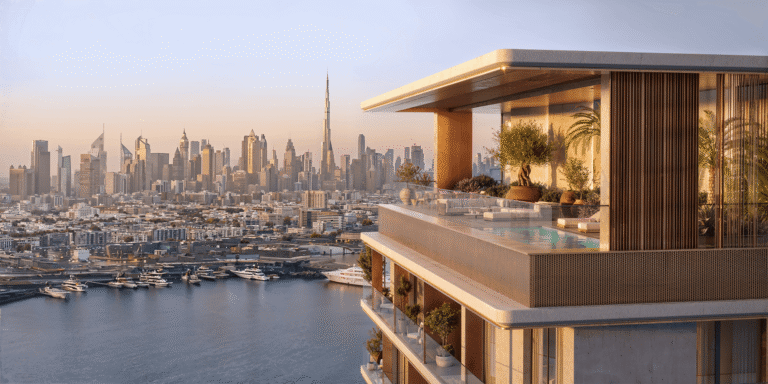
Dubai Islands is not interesting simply because it is waterfront. Dubai already has waterfront. The stronger case is that it combines scale, scarcity, official master-planning, and long-duration relevance in a market where premium coastal land is never unlimited. Nakheel describes it as a five-island waterfront destination aligned with Dubai’s 2040 vision. Official project material puts the broader plan at about 17 square kilometres, with over 60 kilometres of waterfront and more than 20 kilometres of beaches.
That matters because master-planned areas let future desirability be built deliberately rather than left to chance. Dubai Islands is being framed around resorts, beaches, marinas, cultural and lifestyle components, and connectivity. Nakheel’s material cites roughly 20 minutes to Dubai International Airport and about 24 minutes to Downtown Dubai. Resort-style scarcity with real city access is usually a powerful long-term combination. The honest framing is that smart money likes places with room to mature, not just places that are already prestigious. Large-scale coastal planning, vision alignment, tourism relevance, and limited true beachfront supply inside Dubai give it that shape. Not a guarantee. But exactly the kind of setup patient capital tends to start with.
The conflict is real. The window is rarer.
Since February 28, 2026, the UAE has been targeted by the largest drone and missile campaign in Gulf history. Tourism has slowed. The resale market is showing discounts. Retail investors are sitting on their hands. This is exactly when serious money moves, and there is a mechanic underneath it that almost nobody is connecting.
Banks are currently applying a 10 to 15 percent conservative risk discount on off-plan valuations at handover, regardless of what the developer originally sold the unit for. At the same time, motivated sellers in the resale market are accepting 25 to 30 percent discounts to transact quickly. Add cash-only transaction costs of 6 to 7 percent that cannot be financed, and the gap between headline pricing and real acquisition cost has rarely been wider. For a cash buyer who underwrites off secondary-market comps rather than developer projections, those three forces converge into a single entry window with unusual structural depth. The institutional buyers who see it are already positioned. The retail market is still reading the headlines.
Risks and misconceptions worth getting right
“Tax free” does not mean cost free
The biggest misconception in the whole topic. There is no personal income tax, and direct real estate investment income for a natural person generally sits outside corporate tax when it fits the qualifying framework. But acquisition costs still exist and structure still matters. Budget for registration costs, Oqood or transfer charges depending on the transaction, agency fees where relevant, and ongoing service charges. The friction is lower here. It does not vanish.
Yield figures are usually gross
Dubai is widely cited at 6 to 8 percent gross residential yield, and it is one of the strongest hooks in the market. But you underwrite net cash flow, not brochure yield. Subtract service charges, vacancy, furnishing, management, maintenance, and honest leasing depth. A building with broad tenant appeal and sensible operating costs will beat a glamorous address that reads better in marketing than in a spreadsheet.
Foreign ownership is real, but not universal
The DLD is clear that foreign ownership applies in designated freehold areas. That is a strength. It is also more precise to say foreigners can acquire freehold title in designated areas, and other qualifying interests elsewhere depending on the asset and legal structure. “Foreigners can buy in Dubai” is true in the broad sense. Precision matters when you are signing.
Off-plan is compelling only when verified
Dubai gives buyers more tools than most markets. Project Status Enquiry runs through Dubai REST, the escrow framework is regulated, and the DLD states the escrow system exists to regulate construction and off-plan sales and secure buyers’ rights. None of that replaces due diligence. Check the developer, project status, escrow visibility, construction progress, payment-plan logic, and the eventual exit pool.
Visa pathways are not automatic at every price
The Golden Visa is part of the attraction, but it is not a slogan. The official UAE guidance ties the long-term investor route to qualifying criteria, including real estate thresholds such as AED 2 million. The residency story is strong, but it has to match the actual purchase structure and the rules current at the time you apply.
FAQs
Is Dubai really tax free for property investors?
Tax-efficient is the more accurate word. There is no personal income tax in the UAE, and qualifying direct real estate investment income for a natural person generally sits outside corporate tax. But you still face acquisition costs, service charges, and transaction fees depending on the structure and asset.
Can foreigners own property in Dubai?
Yes, in designated freehold areas. The Dubai Land Department states this clearly, and that framework is a main reason international capital finds the market accessible.
Do Dubai rental yields really reach 6% to 8%?
On a gross basis, yes, and that range is widely cited in current market commentary. Underwrite the net figure after service charges, vacancy, management, and maintenance, because not every asset that looks high-yield on paper holds up in practice.
Does buying Dubai property automatically qualify someone for a Golden Visa?
No. The official Golden Visa guidance ties investor eligibility to qualifying criteria, including property-value thresholds such as AED 2 million. Verify the current rules at the time of purchase or application.
Why are investors paying attention to Dubai Islands?
It has several traits sophisticated buyers look for: waterfront scarcity, large-scale master planning, alignment with Dubai’s long-term urban vision, strong tourism relevance, and practical connectivity. Official project material points to five islands, over 60 kilometres of waterfront, more than 20 kilometres of beaches, and access to DXB and Downtown within a short drive.